
Industrial Wedding Venues: Styles, Standouts, and Planning Tips
Industrial wedding venues pair the character of a warehouse, factory, or loft with the freedom to shape your own celebration. An industrial wedding venue gives you a distinctive architectural backdrop, with features such as brick walls, steel details, and open floor plans that suit a modern industrial wedding.
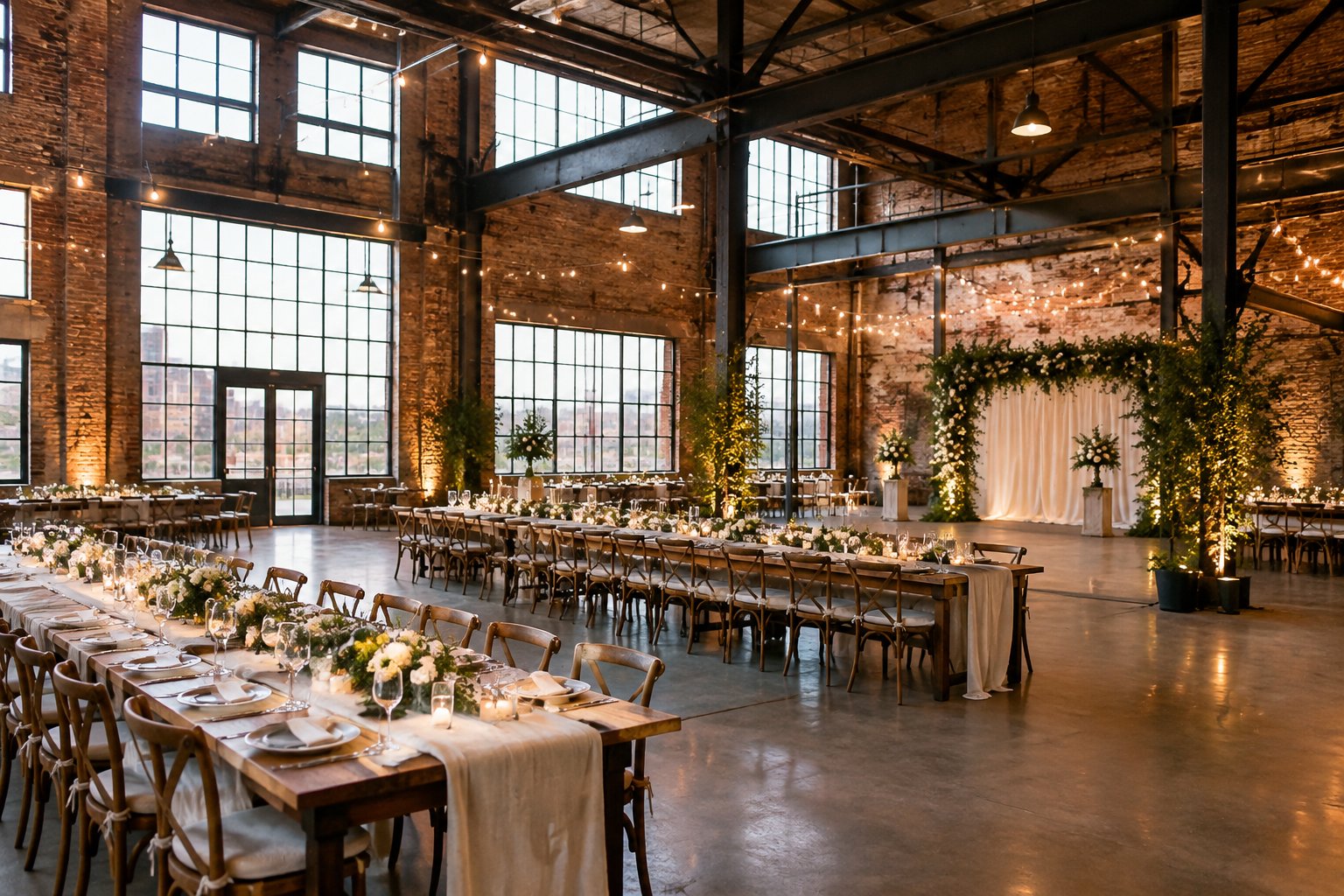
You can keep the design sleek and minimal or soften the space with flowers, warm lighting, and personal details. As you build your shortlist, save spaces that fit your guest count and style, then arrange a tour to see how each one feels in person.
What Makes a Venue Feel Industrial?
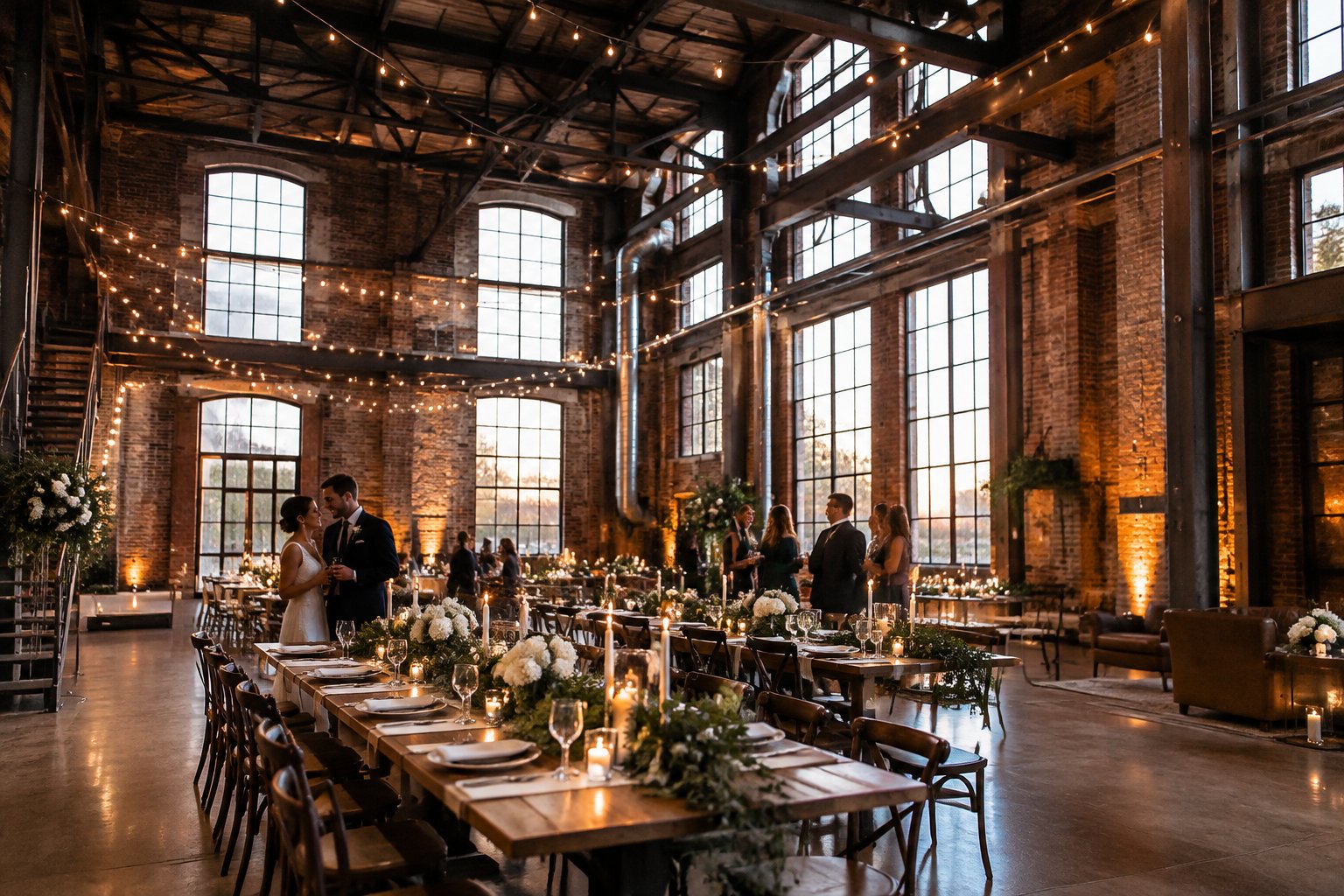
A venue feels industrial when its structure and materials remain part of the design. Exposed brick, concrete floors, steel beams, and large windows give the room a bold, open character; historic buildings add a sense of place and age.
Which Architectural Details Define the Look?
Look for details that appear to belong to the building, such as original brickwork, visible beams, factory-style windows, and sturdy floors. High ceilings and open layouts add a sense of scale, while metal fixtures and visible pipes can reinforce the industrial feel.
Pay attention to the condition of these features during your tour. Ask whether the venue plans to cover or alter any of them, and check how the room looks in daylight and after dark. Natural light through large windows can change the mood of your ceremony and reception, while brick and steel bring a strong backdrop to photos.
Why Do Historic Buildings Make Memorable Backdrops?
Historic buildings give your celebration a connection to the area’s past through their original materials and architectural details. A former mill, factory, or warehouse may retain features that make the space feel distinct, from old masonry to tall windows.
Ask how the building has been updated for events, including changes to restrooms, entrances, and guest access. That history can add character while practical updates help you and your guests use the space comfortably.
Which Iconic Spaces Are Worth Shortlisting?
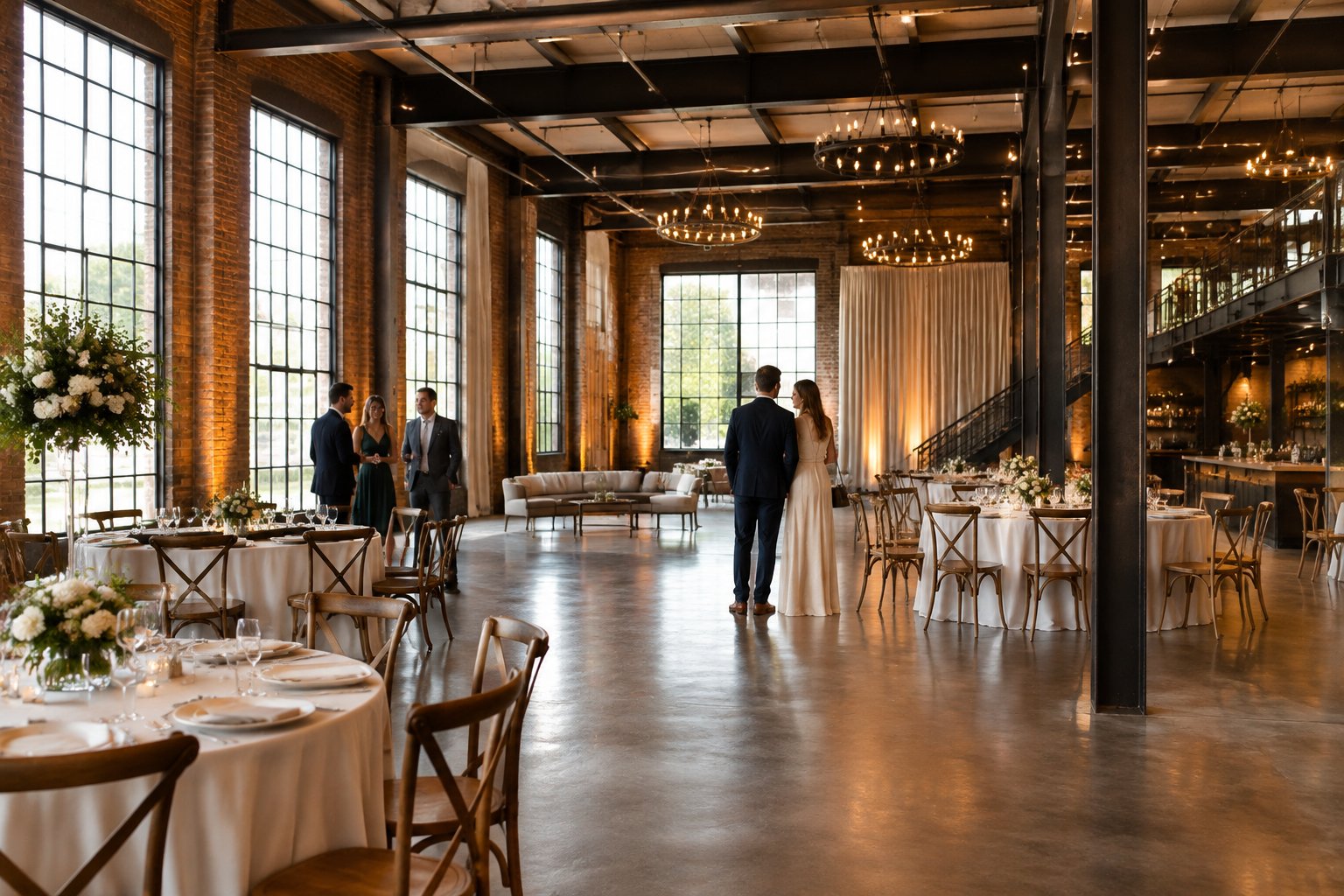
Start your shortlist with converted factories, lofts, and warehouses that match your preferred scale and setting. Names such as The Foundry, The Loft, The Century, Fame, The Warehouse, Moniker Warehouse, Sodo Park, and Mt. Washington Mill Dye House give you starting points for researching wedding venue ideas; confirm current location, capacity, and event details directly with each venue.
Historic Factories and Foundries
A former factory or foundry can make its architecture a central part of the event. The Foundry is one name to research if you want a space with industrial character; check its current event offerings, location, and layout before adding it to your list.
When you tour a historic site, ask which original features remain and what restrictions apply to decorations or installations. Those details help you picture your ceremony and reception in the actual space.
Lofts and Warehouse Conversions
Lofts and warehouse conversions range from compact rooms to expansive event halls. The Loft and The Warehouse are broad names used by different venues, so confirm the exact property and its location before comparing packages.
You can also look into Moniker Warehouse and Sodo Park as examples of venues to research. Check whether the room includes tables, chairs, getting-ready areas, and event staff. A large open floor gives you room to plan, while built-in features can affect how you arrange dining and dancing.
City Standouts Across the United States
Your search can reach beyond one city. Explore industrial-chic wedding venues in Brooklyn, New York, Seattle, Washington, and San Diego, California, or broaden your search to Minneapolis, Minnesota. The Century, Fame, and Mt. Washington Mill Dye House are additional names to investigate as you compare options.
Confirm each venue’s city, current operating details, and available dates through its own listing or event team. For a useful comparison, keep your preferred date and estimated guest count the same across inquiries.
How Do You Choose the Right Space?

Choose a space that fits your guest list, event flow, and access needs. A floor plan can reveal whether loft wedding venues support your ceremony, dining, and dancing without crowding the room.
Match Guest Capacity to Your Floor Plan
Ask for a floor plan showing the room’s capacity for a seated dinner, ceremony, and reception. A posted maximum may not reflect the number of guests who can sit comfortably once you include a dance floor, bar, stage, or lounge area.
Think through the movement between key areas. Guests should have a clear path from the entrance to their seats and from dinner to dancing. If you’re planning a smaller celebration, compare the room’s layout with tips for choosing a venue for a small wedding.
Check the Ceremony, Reception, and Vendor Setup
Ask whether you can hold your wedding ceremony and reception in one room or need a separate space. If the room changes between events, confirm who handles the reset and how much time the venue allows.
Review the vendor setup plan, too. Check where caterers can load in, where musicians can set up, and whether your vendors have access to power. A clear plan helps you avoid last-minute changes to the layout.
Compare Location and Guest Access
Consider how guests will reach the venue and move through it. Ask about parking, public transit, nearby hotels, accessible entrances, and any stairs or uneven floors along the main guest route. For a closer look at location factors, use this guide on how to pick a wedding location.
Visit at a time close to your planned event if possible. That gives you a better sense of traffic, nearby activity, and how easy it is to find the entrance.
How Can You Style the Space for Your Wedding?
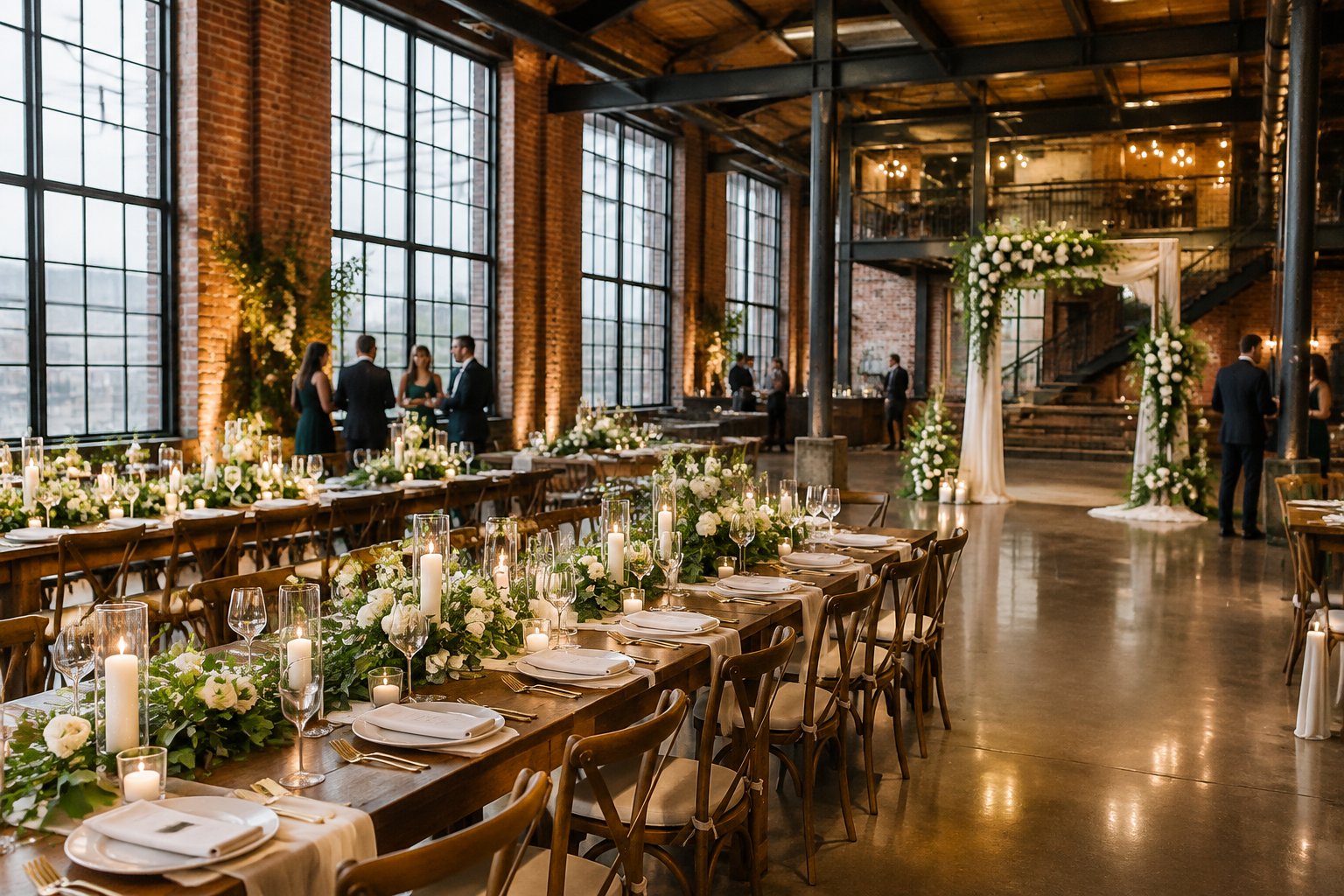
You can make a modern industrial wedding feel warm by pairing the venue’s hard surfaces with soft textures and personal details. Start with the architecture, then choose decor that supports your preferred mood without hiding the room’s defining features.
Balance Industrial Details With Soft, Personal Touches
Let exposed brick and steel beams set the tone, then bring in materials that add warmth. Linen, wood, greenery, and flowers create contrast against concrete and metal. Personal touches such as family photos, custom signage, or objects tied to your story help the space feel like yours.
Choose a focused palette to connect those details. Warm neutrals and greenery complement brick, while rich colors can add depth against steel and concrete. For tables, industrial wedding table decoration ideas can help you bring the look into your place settings and centerpieces.
Use Lighting and Decor to Shape the Atmosphere
Lighting helps define the room’s mood as daylight fades. Use warm bulbs, candles, or pendant fixtures where the venue permits them, and ask which lighting equipment is included in your rental. You can browse wedding lighting ideas for options that suit the room’s ceiling height and layout.
Plan decor at different heights so the space feels considered from the entrance to the tables. Keep walkways clear, and confirm that hanging pieces or candles meet venue safety rules. Large windows also affect your lighting plan, especially for a daytime ceremony.
What Should You Budget and Confirm Before Booking?
Review the full rental cost and the venue’s rules before signing. Historic buildings and converted warehouses can have specific requirements for access, equipment, and event setup, so ask for the details in writing.
Review Rental Fees and What Is Included
Ask for an itemized quote that lists the rental fee, included furniture, staffing, cleaning, security, and any required vendors. Confirm whether the price changes by date, event length, or guest count, and ask how overtime is charged.
A venue with a lower rental fee may require extra spending on rentals or services. Compare the full estimate for each space, including taxes and any minimum spend. A realistic wedding budget helps you weigh those costs against the rest of your plans.
Ask About Climate Control, Acoustics, and Backup Plans
Confirm how the venue manages heating and cooling in every room you plan to use. Ask whether the system can keep guests comfortable during your event and whether there are areas with limited airflow.
The materials that give an industrial room its character can also affect sound. Ask to hear how music carries through the space and whether the venue has sound limits or a required end time. If part of your event is outdoors, confirm the indoor backup plan and when you must decide to use it.
Confirm Vendor Rules and Access Times
Ask which vendors you can hire and whether the venue requires you to use an approved list. Confirm delivery windows, setup and breakdown hours, loading access, and any rules for decorations, open flames, or attaching items to walls and beams.
Before you book, review the contract’s payment schedule, cancellation terms, and access times. Make sure the written agreement matches the event plan and quote you discussed with the venue team.