
Is 2 Years a Long Time to Plan a Wedding? Understanding the Benefits and Considerations
Planning a wedding is an exciting journey, and the timeline can vary based on many factors. If you’re engaged and wondering if two years is too long to plan a wedding, the answer largely depends on your personal circumstances and preferences. Some couples find this timeline perfect for creating their dream day, while others may feel it’s excessive.
With two years to plan, you have the opportunity to really enjoy the process. You can take your time researching venues, exploring themes, and engaging in DIY projects. Many people appreciate this longer engagement as it allows for better budgeting and more thoughtful decision-making.
However, not every moment of that time needs to be focused on wedding planning. You can use the first year to save up or get settled in your relationship, and then dive into the details as your big day approaches.
Setting Your Wedding Timeline

Planning a wedding can feel overwhelming, especially when you give yourself plenty of time. A two-year engagement allows you to manage the details without rushing, leading to a smoother experience. Here’s what you need to know.
Understanding the Benefits of a Two-Year Engagement
With a two-year engagement, you have more time to explore your options. This means you can choose the perfect venue, consider different themes, and secure your favorite vendors without pressure.
A longer timeline helps reduce decision fatigue. Instead of feeling rushed, you have space to think through your choices. You can save money over time, allowing for a more budget-friendly approach. You can prioritize what’s most important to you and your partner, making the entire planning process more enjoyable.
Key Milestones in the Wedding Planning Process
Starting your wedding planning early means setting clear milestones. First, consider establishing a budget. This is crucial and should reflect your priorities.
Next, you might want to select a date range. Popular wedding dates can fill up quickly, so securing your venue early is wise.
Other important milestones include creating a guest list, booking vendors, and finalizing decorations. A two-year timeline gives you the chance to revisit your plans and make any necessary changes before the big day arrives.
Organizing the Logistics

When planning your wedding, it’s important to focus on key areas that ensure a smooth experience. You’ll need to think about choosing a venue and date, creating a detailed checklist, and hiring essential vendors. Here’s how you can tackle these logistics effectively.
Venue and Date Selection
Choosing the right venue and date is crucial. Start by deciding on a date or range of dates that work for you and your partner. Consider factors like weather and guest availability.
Next, explore various venues that match your style. Look for locations that offer the services you need, like catering and space for guests. Visiting venues in person can give you a better feel for the space.
Be sure to ask about availability on your chosen dates. The earlier you secure your venue, the better your chances of getting your ideal date.
Building a Comprehensive Wedding Checklist
Creating a wedding planning checklist helps keep you organized. Start with a master list of everything you need to tackle before your big day. Include tasks like setting a budget, choosing a theme, and deciding on your guest list.
Break the checklist into sections like venue selection, vendor hiring, and decoration planning. This will make tasks feel more manageable.
You can also use digital tools or apps to keep track of deadlines. This way, you won’t overlook important details like booking your photographers or florists.
Hiring Essential Wedding Vendors
Finding the right vendors is key to making your wedding special. Think about what services you’ll need, such as catering, photography, and floral arrangements.
Research local vendors by checking reviews and asking for recommendations. Schedule meetings to discuss your vision and get quotes. It’s important to secure your favorites as soon as possible, especially popular vendors who book up quickly.
Keep communication open with your chosen vendors to ensure everyone is on the same page. This will help create a cohesive plan for your wedding day, making it as memorable as possible.
Creating Your Dream Day
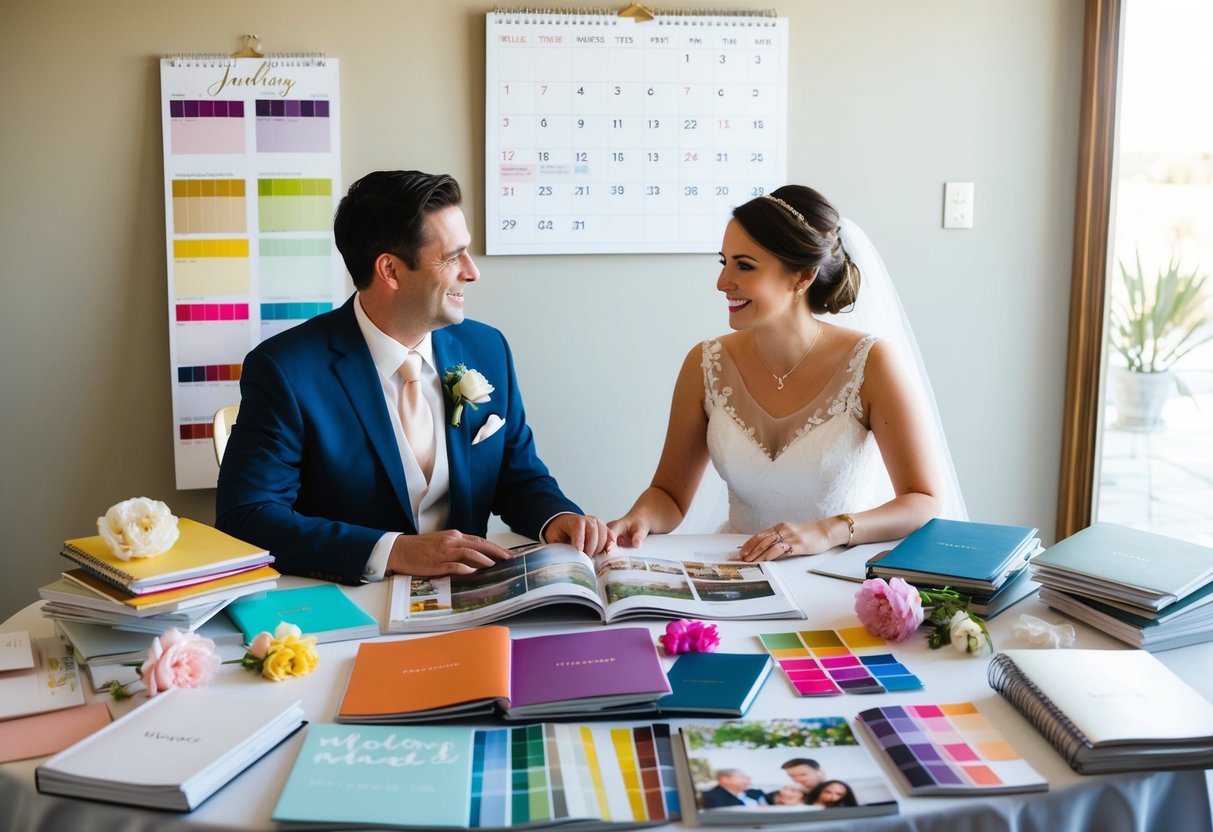
Planning a wedding can be exciting, especially when you have time to craft your dream day. Focus on the aesthetics and the personal touches that will make the day uniquely yours.
Designing Your Dream Wedding Aesthetics
Think about what styles and themes resonate with you and your partner. Colors, flowers, and decor are essential elements that set the mood.
- Color Palette: Choose colors that reflect your personality. Soft pastels or bold hues can shape the atmosphere.
- Venue Choice: A beach for a destination wedding or a cozy barn can enhance your theme.
- Lighting: Lighting can transform a space. Consider fairy lights, candles, or chandeliers.
Be sure your wedding dress matches your vision. Whether it’s a classic gown or something modern, choose a style that makes you feel beautiful.
Personalizing Wedding Details
Little touches can make your wedding day special. Think about how you can incorporate personal elements into your ceremony and reception.
- Wedding Favors: Consider custom gifts that represent you as a couple. Personal photos or favorite treats can delight guests.
- Vows: Write your own vows to express your love and commitment. This can make the moment even more memorable.
- Guest Experience: Think about how to make every guest feel welcome.
From planning each detail to sharing your journey, your wedding should reflect your unique love story. Take time to enjoy the planning process, and remember that it’s all about creating lasting memories.
Managing Wedding Details

Planning your wedding involves careful attention to detail. Two critical areas you’ll want to focus on are finalizing your guest list and coordinating the day-of events. These steps will help ensure everything runs smoothly.
Finalizing Your Guest List and Invitations
Creating your guest list is one of the first steps in wedding planning. Start by listing everyone you’d like to invite. After that, narrow it down based on your budget and venue capacity.
Once you have your list, consider sending out save the dates to give guests plenty of time to prepare. For formal invitations, design them to reflect your wedding style.
A wedding website can also be helpful. It allows you to share details about the venue, accommodations, and any special requests. Keep your guests updated on RSVP details, and remember to follow up with anyone who hasn’t responded.
Coordinating the Day-Of Event
The wedding day can be hectic. Having a clear timeline helps keep things organized.
Share this timeline with your wedding party and any vendors involved.
Consider hiring a wedding coordinator to manage tasks on the big day. This person can ensure that everything goes as planned, from setting up decorations to coordinating the ceremony.
Be sure to communicate the roles of your wedding party clearly. Assign specific tasks so everyone knows their responsibilities.
This way, you can focus on enjoying your special day without worrying about the details.