
Is 3 Hours Enough Time to Get Ready for a Wedding? A Timeline
Yes, 3 hours is enough time to get ready for a wedding when your beauty appointments are planned, your group is small, and travel is already handled. A larger wedding party, detailed hairstyles, or a long trip to the venue can push the schedule beyond that window.

Treat the three hours as a focused block for beauty services, getting dressed, photos, and final checks. Ask your artists how long they need for each person, then confirm the timing with your photographer or planner before you set the start time. You can also compare your plans with this guide to how long a bride takes to get ready.
What Three Hours Can and Cannot Accommodate
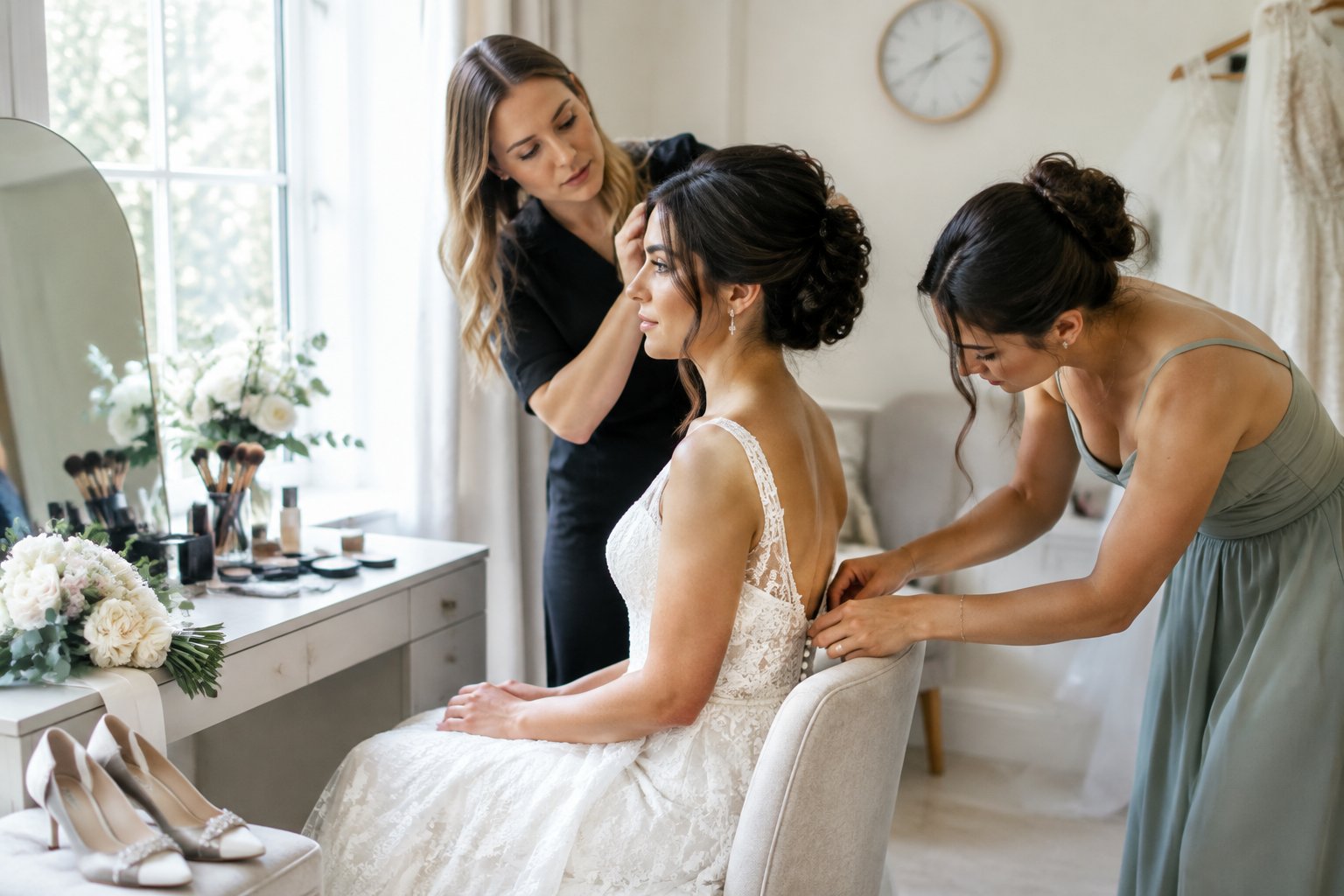
Three hours can cover a simple, well-organized getting-ready plan, while a full wedding party’s beauty appointments may need to start earlier. Your wedding planning should account for who needs professional services, how many artists you have, and when you must leave.
When a Three-Hour Window Can Work
A three-hour window works best when you have a small group, enough beauty professionals working at the same time, and a getting-ready location close to the ceremony. It also helps if your outfit is ready to wear and you’ve already gathered your shoes, jewelry, and other accessories.
Your own hair and makeup may take 45 to 90 minutes each, with some services happening at the same time when separate artists are available. Ask your team to confirm the timing for your chosen looks.
If you’re wearing a wedding dress with buttons, a lace-up back, or a long train, plan extra time to get dressed and check how everything sits.
Signs You’ll Need More Time
Plan for more than three hours if several attendants need hair and makeup, one artist must serve everyone in sequence, or you want a first look and a long portrait session before the ceremony. A separate getting-ready location also adds time for travel, parking, and gathering everyone before departure.
A tight schedule can leave little room for a late appointment or a dress adjustment. Use your ready-by time as a fixed point, then work backward to decide when beauty services need to begin.
Which Tasks Take Up the Getting-Ready Window?
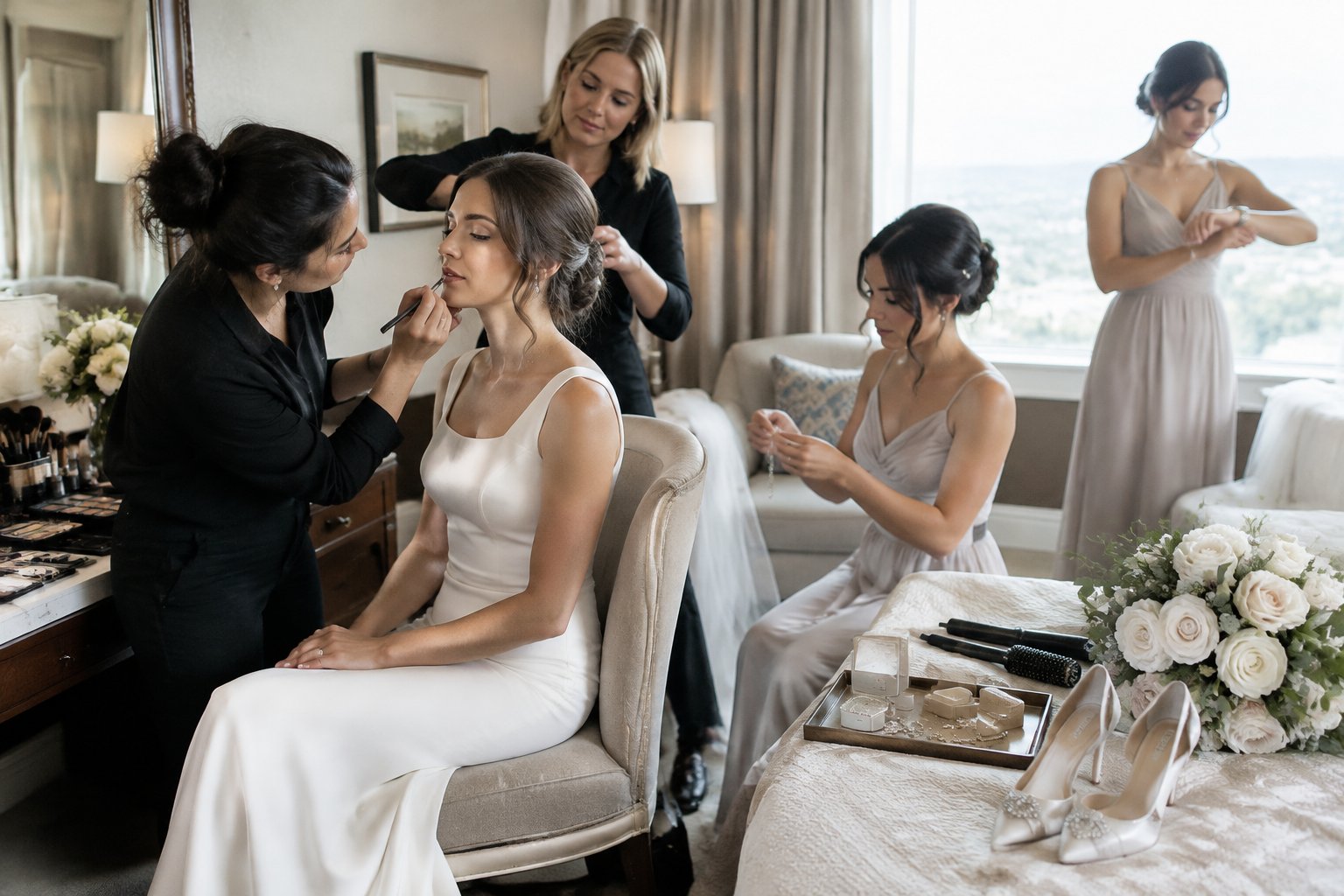
Beauty appointments take up much of the window, while dressing, photos, and last-minute checks fill the time around them. Your bridal party can help the schedule run smoothly when each person knows their role.
Hair and Makeup for the Couple and Wedding Party
Set aside about 45 to 90 minutes for your hair and a similar amount for makeup. Attendants’ services may take less time, but the total appointment block grows when one stylist works through several people. Ask your artists to build a schedule around the number of services and available staff.
Choose the order in advance and make sure everyone is present when their turn approaches. Your maid of honor should finish her own beauty services before helping you with your outfit.
Your partner’s preparation also needs a clear plan, with the best man assigned tasks such as holding the rings or helping with a tie.
Getting Dressed, Detail Photos, and Final Touch-Ups
Allow 20 to 30 minutes to put on your outfit and accessories, with extra time for a complicated closure or veil. Have your shoes, jewelry, and any special items together before dressing begins. A button-front shirt or robe makes it easier to change without disturbing finished hair and makeup.
Your photographer may take detail photos of your outfit and accessories, then capture you getting dressed. Keep those items in one spot and let your photographer know when you’ll be ready.
Finish with a quick check of your hair, makeup, and clothing before leaving the room. This wedding-day getting-ready order can help you plan who needs to be ready first.
What Does a Three-Hour Schedule Look Like?
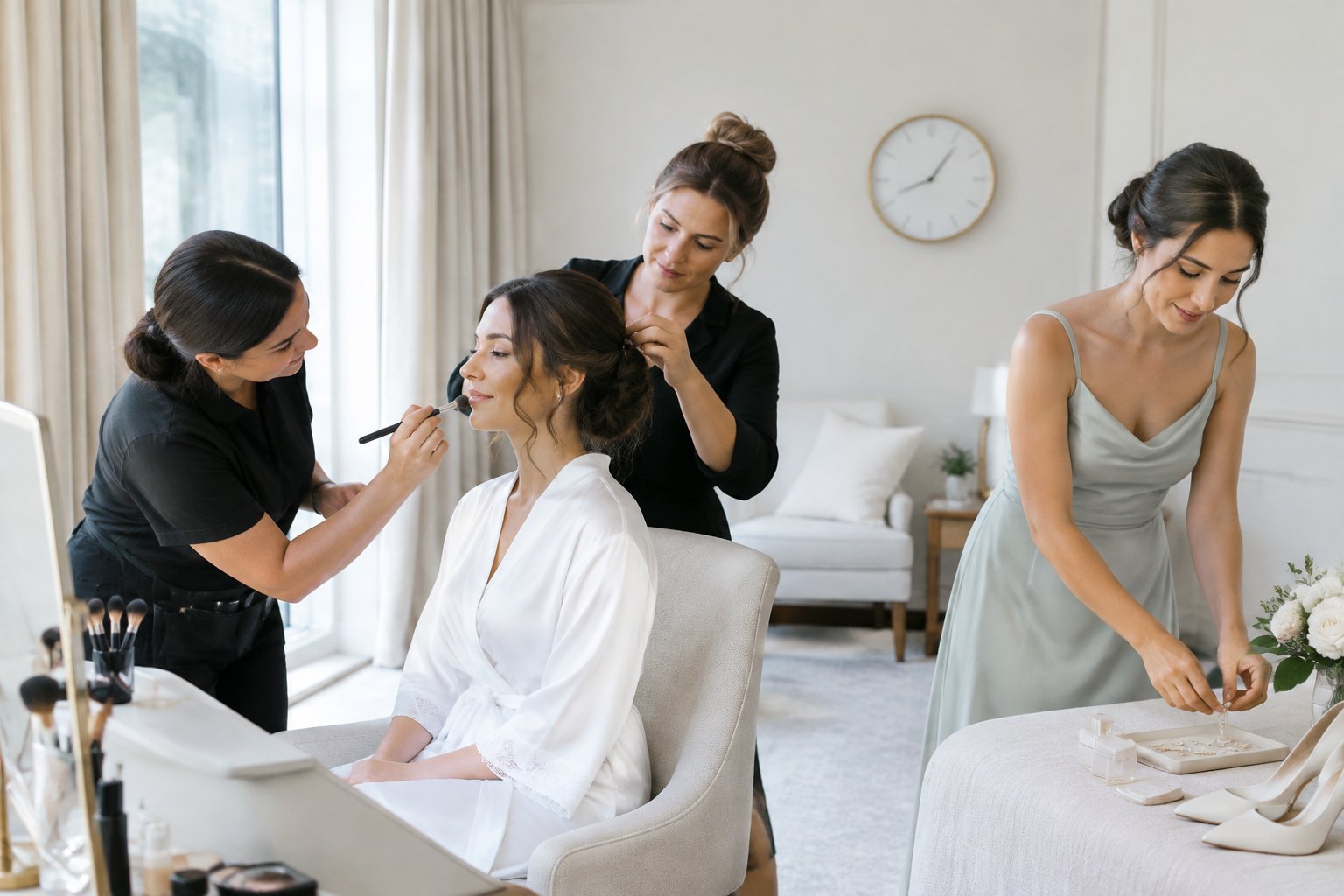
A workable three-hour schedule leaves time for beauty services, dressing, a few photos, and a buffer before the ceremony. Use this sample as a starting point, then adjust it for your artist’s timing and your venue’s travel needs.
A Sample Countdown to the Ceremony
This example assumes a small wedding party, separate hair and makeup professionals working in parallel, and a ceremony at the same venue where you get ready.
- 3 hours before: Hair and makeup appointments begin. Attendants take their scheduled turns while your artists work in parallel.
- 1 hour 45 minutes before: Your beauty services wrap up, leaving time for a quick adjustment or touch-up.
- 1 hour 15 minutes before: You begin getting dressed. Your maid of honor helps with fastenings and accessories.
- 45 minutes before: Your photographer captures getting-ready details and a few portraits.
- 30 minutes before: You finish touch-ups, use the restroom, and check your ceremony items.
- 15 minutes before: You move to the ceremony area and line up.
For more planning detail, use a wedding schedule that includes vendor arrival times and ceremony logistics.
Adjustments for a Larger Wedding Party
With a larger group, start beauty appointments earlier or add artists so more services happen at once. Ask your vendors to estimate the full service time for your group, then build the schedule around their answer. If the group still can’t fit into three hours, keep the final three hours for your own last appointments, dressing, and photos.
Your wedding timeline guide should also reflect the portraits you want. A first look or a full set of wedding party portraits may need a separate block before the ceremony, especially when people have to move between locations.
How Can You Keep the Morning on Schedule?
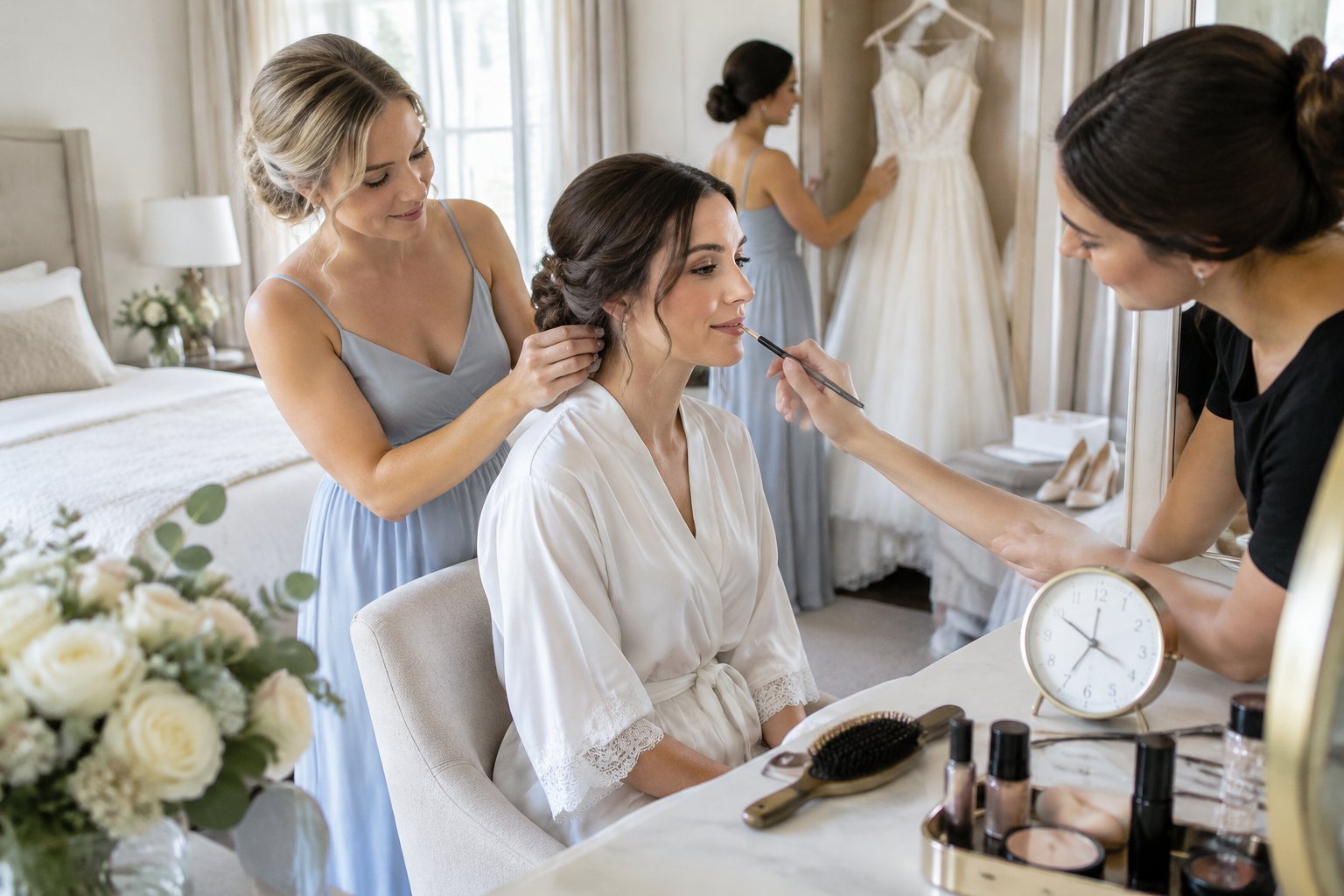
You can protect the schedule by confirming appointment lengths early and giving someone else responsibility for small tasks. A wedding planner or trusted helper can answer questions while you stay focused on getting ready.
Set Hair and Makeup Times With Your Artists
Give your hair and makeup artists the ceremony time, the address, the number of people receiving services, and your photo plans. Ask them to recommend a start time and number of professionals based on the looks you’ve chosen. Share the final schedule with everyone who has an appointment.
Plan for your artists to finish before dressing and photos begin. Keep food and water nearby, and make sure the room has enough outlets, mirrors, and space for the team to work.
Your wedding planning timeline should include artist arrival and setup, not just the time each service starts.
Assign Helpers and Build in a Delay Buffer
Choose one person to handle questions about deliveries, directions, and missing items. Your maid of honor can help with dressing, while a planner or coordinator keeps vendors and the wedding party on schedule. Give each helper a short list of duties before the wedding day.
Leave at least 15 to 30 minutes between the end of beauty services and your departure or first photos. That buffer gives you time to handle a small delay without losing your ceremony arrival window. Keep an emergency kit close by with items such as safety pins, fashion tape, and makeup for touch-ups.
How Does the Morning Affect the Rest of the Day?
Your morning schedule sets the time you can start portraits, family photos, and travel to the ceremony. Build the wedding timeline around those fixed points so a small delay doesn’t take time away from your cocktail hour or reception.
Work Backward From the Ceremony and Photos
Start with the ceremony time, then count backward from when you need to arrive, line up, and finish photos. Include travel time if you’re getting ready away from the venue. Talk with your photographer about the time needed for couple portraits, wedding party portraits, and family photos.
If you plan to take family photos before the ceremony, list the people who need to be there and set a clear meeting time. If those photos happen after the ceremony, tell your family where to gather so you can move into the next part of the day without searching for anyone.
Keep Delays From Taking Over Cocktail Hour and the Reception
A late departure can reduce the time available for portraits and push into cocktail hour. Protect that time by keeping the final touch-ups brief and asking your coordinator to handle schedule questions.
If a delay happens, your photographer and planner can help decide which photos to prioritize. Your wedding reception timeline can still include your first dance, cake cutting, and bouquet toss when the day runs on time.
Share the finished schedule with your vendors and wedding party so everyone knows where to be and when.