
Is 4 Months Too Long for Wedding Photos? What to Expect
Waiting for your wedding photos can feel especially long when you’re eager to revisit the day. Is 4 months too long for wedding photos? In most cases, yes: four months exceeds the common 4-to-12-week window for a full gallery, though your contract sets the delivery date you agreed to.
A longer wait can still fit a photographer’s stated timeline, especially during a busy season. Check your agreement first, then ask for a clear update if the promised date has passed.

Typical Delivery Windows for Wedding Photos
Most full wedding galleries arrive within 4 to 12 weeks, while previews may come sooner and printed albums take longer. Your photographer’s contract gives you the best guide to your own delivery date.

When Are Sneak Peeks Usually Ready?
Sneak peeks often arrive within a few days to two weeks after the wedding. These are a small group of edited images you can share while your photographer prepares the complete gallery.
Check your contract or booking details to see whether previews are included and when they’re due.
How Long Do Full Galleries and Albums Take?
A full digital gallery commonly takes 4 to 12 weeks. The exact timeline depends on the photographer’s workflow and the delivery window in your agreement. Albums arrive later because they may involve choosing images, reviewing a design, making changes, and printing.
Your gallery may include a curated selection of finished images. If you’re unsure whether your package includes every usable frame, review what your agreement says about the photos wedding photographers deliver.
How Does a Four-Month Wait Compare With Common Timelines?
Four months is about 16 weeks, which is longer than the common range for a full digital gallery. It may still match a longer timeline written into your contract, so compare the wait with the specific delivery terms before deciding it is late.
For more context on a four-month wedding photo wait, focus on the promised date and any updates you’ve received.
Why Post-Production Takes Time
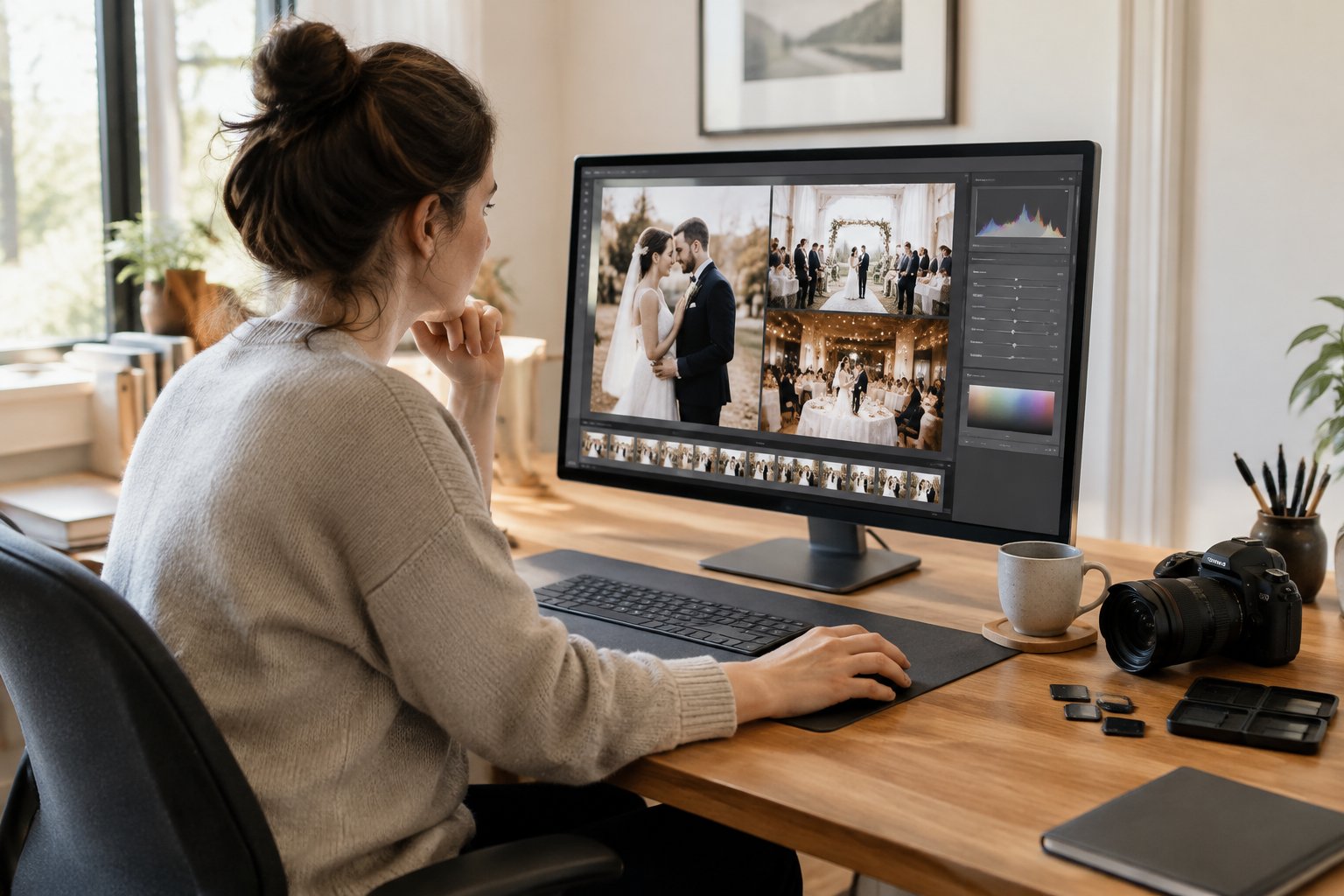
Your photographer spends substantial time reviewing, selecting, editing, and organizing images after the wedding. The number of photos and the photographer’s workload both affect how quickly the finished gallery is ready.
How Do Image Selection and Editing Affect Turnaround?
A wedding can produce thousands of images. Your photographer reviews them to remove duplicates and select the strongest frames, then adjusts color, light, and cropping so the final gallery feels consistent. Special retouching adds more time.
The finished gallery usually contains a chosen set of images, not every frame the camera captured. A well-organized wedding day photo checklist helps you plan key portraits and family groupings before the event, though it does not remove the editing work that follows.
How Do Wedding Season and Gallery Size Change the Wait?
A large gallery takes longer to review and edit, and a photographer with several weddings in the queue has less editing time for each one. Peak wedding months can add to that workload.
A packed event schedule can also mean more moments and images to sort through; planning the timing of your wedding day helps you set realistic expectations for photography coverage.
How to Check In When Your Gallery Is Late
Start by comparing the current date with your contract, then send a polite written message if the delivery window has passed. Ask for a specific update so you know what to expect.

What Delivery Date Does Your Contract Promise?
Look for the full-gallery deadline or delivery range in your signed agreement. Check whether the photographer gave a specific date or a number of weeks after the wedding. Review any separate terms for sneak peeks, albums, or prints, since each product may have its own timeline.
If the contract gives a range, calculate when that range ends using your wedding date. Save a copy of the agreement and any written updates.
What Should You Ask Your Photographer?
Keep your message friendly and direct. Mention your wedding date and the delivery window in your contract, then ask for the gallery’s status and a revised delivery date.
For example: “Hi, I’m checking in about our wedding gallery. Our contract listed delivery by [date]. Could you share an update and let us know when we can expect the gallery?” Email gives you a written record of the conversation.
When Is a Delay Cause for Concern?
A missed deadline deserves a follow-up, especially if you have received no update. Concern grows if the photographer ignores repeated messages, gives no clear revised date, or misses new dates without explanation.
Keep copies of your contract and messages, and stay focused on specific dates and commitments.
How to Make the Wait Easier
Guest photos can help you revisit the day while you wait, and a backup plan will protect your images once the professional gallery arrives. Ask guests to share their pictures, then download and store your finished files in more than one place.

How Can You Collect Photos From Guests?
Ask friends and family to send their favorite pictures and videos by email, text, or a shared folder. Give guests a simple deadline and explain how you want them to share files.
Their images can capture candid moments from different parts of the celebration while you wait for your edited gallery.
How Should You Save and Share Your Gallery Once It Arrives?
Download the full gallery while your access link is active. Save a copy on your computer and another on an external drive or trusted cloud storage, then share the gallery link with family and friends if you choose. You can also order prints or create an album after you’ve reviewed the images.