
Is a Hindu Wedding Ceremony Legal in the UK? Understanding the Requirements and Regulations
If you’re considering a Hindu wedding ceremony in the UK, you might wonder about its legal status. A Hindu wedding ceremony is not legally binding in the UK unless you also have a civil marriage registration. This means you’ll need to complete a civil ceremony before or after your traditional Hindu vows.
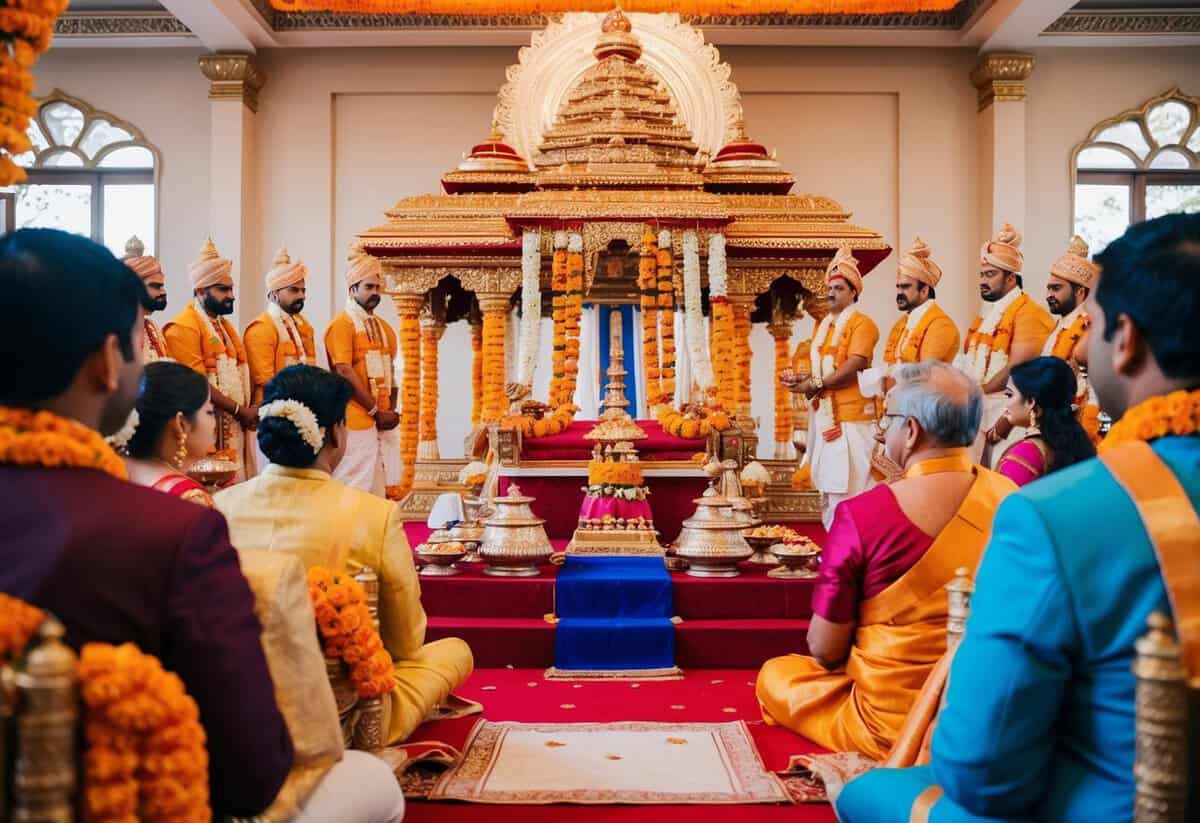
Understanding the legal aspects can help you plan your special day more effectively. Many couples choose to celebrate both aspects, combining the rich traditions of Hindu culture with the legal requirements of UK law.
As you dive into this topic, you’ll learn about the steps necessary to ensure your wedding is both meaningful and recognized by British law. Exploring the details of the Hindu ceremony will enhance your appreciation of this beautiful tradition.
Legal Recognition of Hindu Weddings in the UK
In the UK, the legal recognition of Hindu weddings depends on specific conditions outlined by English law. Understanding these legal requirements helps ensure that your marriage is valid and recognized. Both religious and civil ceremonies play critical roles in this process.
Understanding Valid Marriage in English Law
For a marriage to be legally valid in the UK, it must meet certain requirements. Under English law, a marriage must be conducted at a registered venue, which includes either a local register office or an approved religious site.
To start, you must give notice of your intention to marry at your local register office. This notice includes details like your names, addresses, and ages. You and your partner will need to provide valid identification, and at least two witnesses must be present during the ceremony.
The marriage certificate you receive after the ceremony serves as proof of your legally valid marriage. Make sure to keep this important document safe!
Civil Ceremony Vs. Religious Ceremony
In the UK, there are notable differences between civil and religious ceremonies concerning legal recognition. A civil ceremony is performed by a registrar and can take place at various licensed venues, such as hotels or register offices. This type of ceremony must follow the Marriage Act requirements to be legally recognized.
On the other hand, a Hindu wedding ceremony can be recognized legally if it is preceded by a civil ceremony. Many couples choose to have a traditional religious ceremony that reflects their cultural beliefs, but without a civil ceremony, that religious aspect alone does not confer legal recognition.
To ensure both aspects are covered, think about having a civil ceremony followed by your Hindu wedding ritual. This way, you embrace your culture while meeting all legal requirements.
Cultural and Ritual Significance in Hindu Weddings
Hindu weddings are rich in cultural and ritual significance. Each ceremony reflects deep values rooted in Hinduism and dharma. These traditions are not just ceremonial; they embody the essence of family, commitment, and spirituality.
Traditional Hindu Wedding Ceremonies
In Hinduism, weddings also represent a sacred journey known as vivah sanskar. This journey begins under a mandap, a specially decorated canopy symbolizing the cosmos. During the ceremony, important rituals like kanyadaan are performed, where the father gives away his daughter, marking her transition to a new phase of life.
Rituals like ashirvada, the blessing given by elders, are significant. The ceremony includes the exchange of garlands, known as jai mala, representing the couple’s acceptance of each other. The mangalsutra, a sacred necklace, symbolizes marital loyalty and commitment. Each ritual plays a role in strengthening family bonds and societal ties.
Central Rituals And Symbols
Several key rituals occur during Hindu weddings. The saptapadi, or seven steps, represents the couple’s vows to each other and their commitment together. This ritual is crucial as it binds the couple’s destinies.
Another significant practice is vivaha-homa, where offerings are made to the sacred fire, signifying purity and witness to the vows taken. The laaja homa, which involves feeding the couple with puffed rice, signifies prosperity and sustenance in the marriage.
Moreover, paanigrahan is when the groom takes the bride’s hand, symbolizing their union. The ceremony also features madhu-parka, where the bride is welcomed into the groom’s family, emphasizing warmth and acceptance.
Together, these rituals create a rich tapestry of meaning, guiding the couple into their new life as grihastha, or householder, in harmony with dharma and family values.
Social Considerations and Public Perception
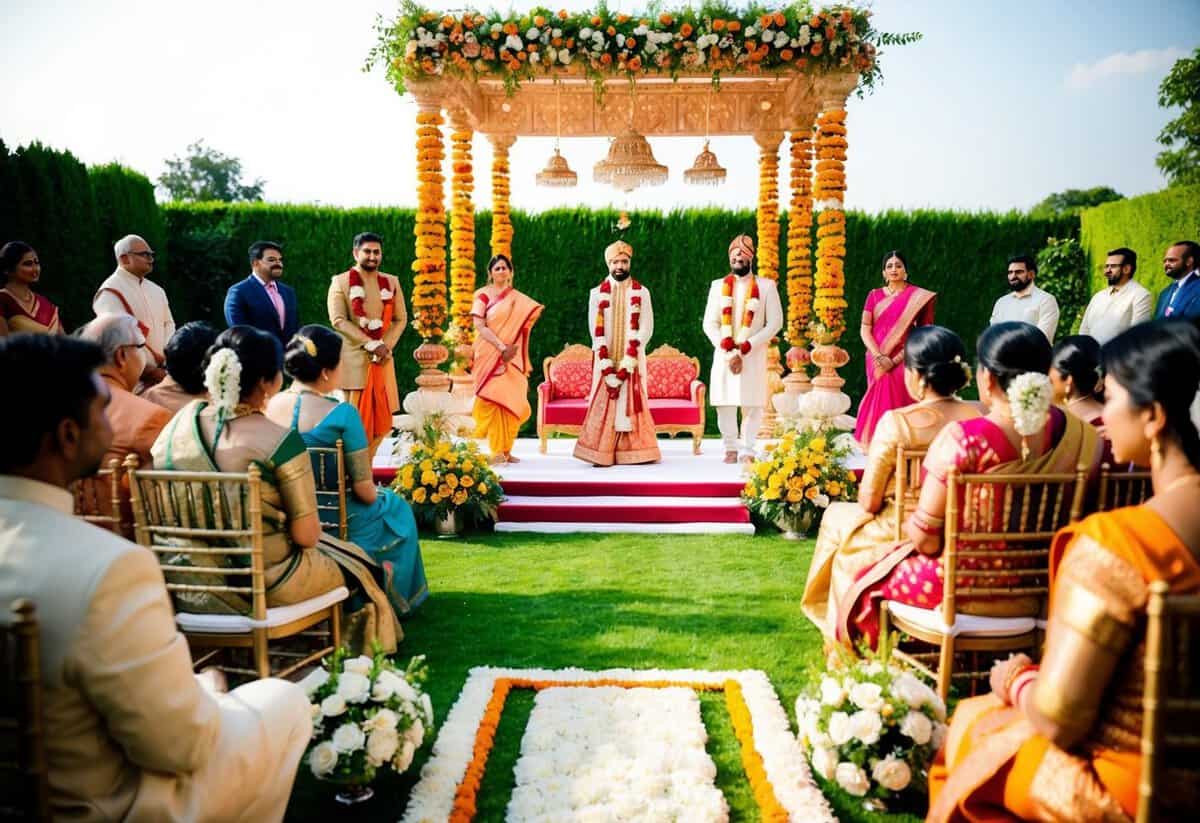
In the UK, the perception of Hindu wedding ceremonies is shaped by various social factors. These include arranged marriages and the acceptance of diverse relationship types. Understanding these aspects helps you navigate the complexities of cultural integration.
Intersections with Arranged Marriages
Arranged marriages are common in Hindu culture. Many families in the UK still follow this tradition, valuing familial input in the marriage process. This can create unique challenges when individuals engage in relationships outside of traditional norms.
You may experience pressure to conform to expectations while balancing personal choices. It’s important to note that arranged marriages can lead to successful, loving relationships. Yet, navigating arranged unions in modern UK society often means confronting stereotypes and misconceptions.
Education about these practices is essential for wider acceptance. Open conversations surrounding arranged marriages can help build understanding and bridge cultural gaps among communities.
Acceptance and Challenges in the UK
Acceptance of Hindu weddings in the UK varies among communities. Many people celebrate diversity, but some still face scrutiny if they choose to end or change their marriage status.
Challenges also arise, particularly with issues like divorce and remarriage. Polygamous marriages, while permitted in certain Hindu contexts, may present legal complications under UK law. The Marriage Act restricts such unions, often leading to misunderstandings about cultural practices.
Same-sex couples seeking recognition of their unions might also face barriers, even though civil partnerships have made strides toward equality. The need for clarity around legal rights is crucial in promoting acceptance.
Understanding Hindu marriage laws and cultural contexts can foster a more inclusive environment. As you engage with different perspectives, you contribute to a greater appreciation for diverse relationship dynamics within society.