
Is a Wedding by a Captain Legal? Understanding Maritime Ceremony Regulations
If you’re dreaming of a unique wedding at sea, you might wonder about the legalities of getting married by a ship’s captain.
In many cases, a captain cannot legally officiate a marriage unless they hold specific credentials, like being a judge or a recognized officiant. While some cruise ships allow their captains to conduct ceremonies, it typically hinges on the ship’s registration and the couple’s nationality.
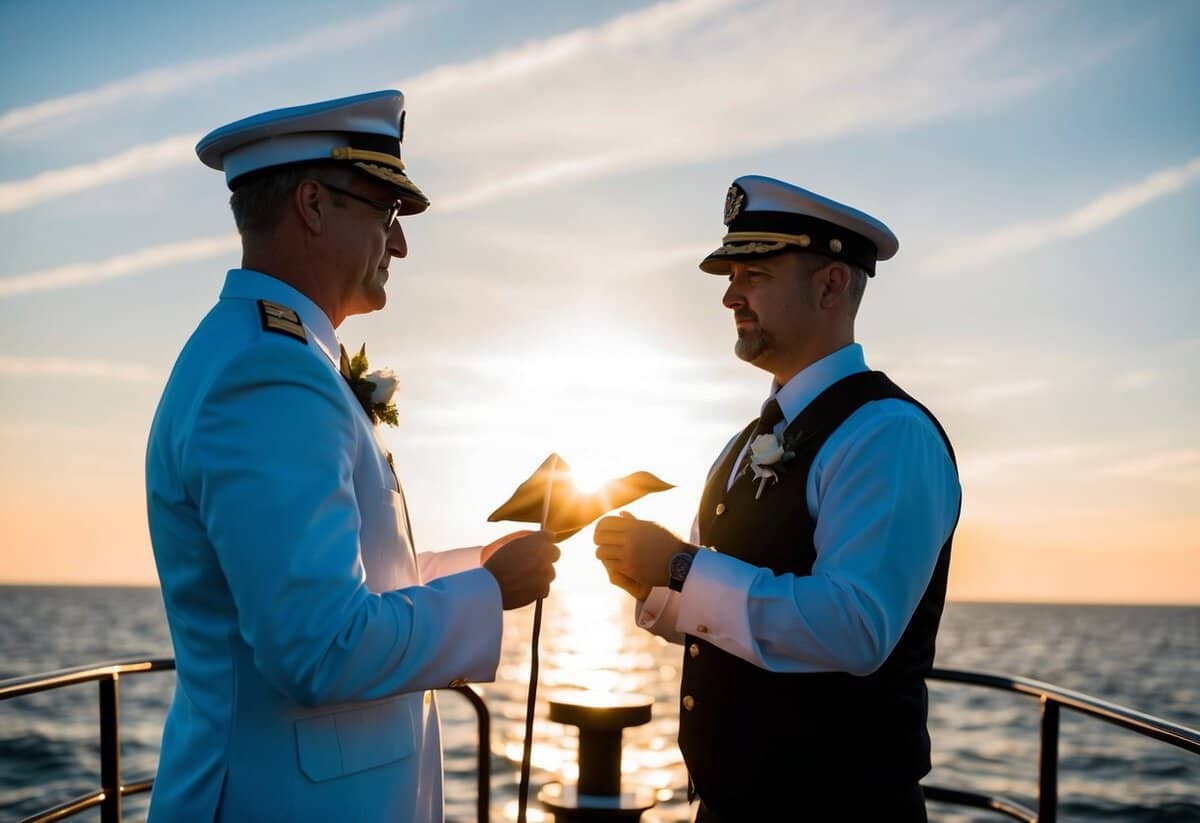
You might also be curious about international waters. Just being out at sea doesn’t guarantee a legal marriage.
If you find yourself on a Japanese ship, for example, the captain can officiate your marriage but only if you hold valid Japanese passports. This varies widely depending on the laws of different countries and maritime regulations.
As you explore the idea of a wedding at sea, knowing the legal requirements can guide your planning. Make sure to research the options available to you, so your special day is both memorable and recognized in the eyes of the law.
Legal Considerations for Maritime Weddings
When planning a maritime wedding, it’s essential to understand the legal aspects that can affect your special day. The authority of captains to officiate weddings varies by location and depends on several factors, including maritime laws, marriage licenses, and certificates.
Authority of Captains to Officiate
Most ship captains do not have the legal authority to officiate weddings simply by holding their maritime license. To legally perform a wedding ceremony at sea, a captain must also be a registered official, such as a judge, justice of the peace, or minister.
In some regions, like Bermuda, you might find captains authorized under specific laws. In Japan, a captain can officiate only if the couple holds valid Japanese passports. Always check the legal requirements specific to your location to avoid surprises.
International Laws and Waters
When you plan to get married at sea, international laws come into play. In international waters, the laws may vary significantly from those of the country of the ship’s registry.
If your chosen location is in international waters, you need to research the marriage laws of the country where your ship is registered. For example, a wedding performed on a cruise line may be subject to different rules than one on a private yacht.
Your ceremony could also impact the recognition of your marriage in your home country. It’s vital to understand these differences beforehand to ensure legality.
Marriage Licenses and Certificates
Obtaining the correct marriage license and certificate is crucial for a valid wedding. Most places require you to apply for a marriage license before your wedding day. This can often involve providing identification and filling out necessary paperwork.
Once you are married, you will receive a marriage certificate, which serves as official proof of your union. Be sure to familiarize yourself with the specific requirements for obtaining these documents in the jurisdiction where your marriage will take place.
This step is vital for ensuring that your marriage is recognized legally in your home country. Check the requirements well in advance to prepare all needed documentation.
Planning Your Wedding at Sea
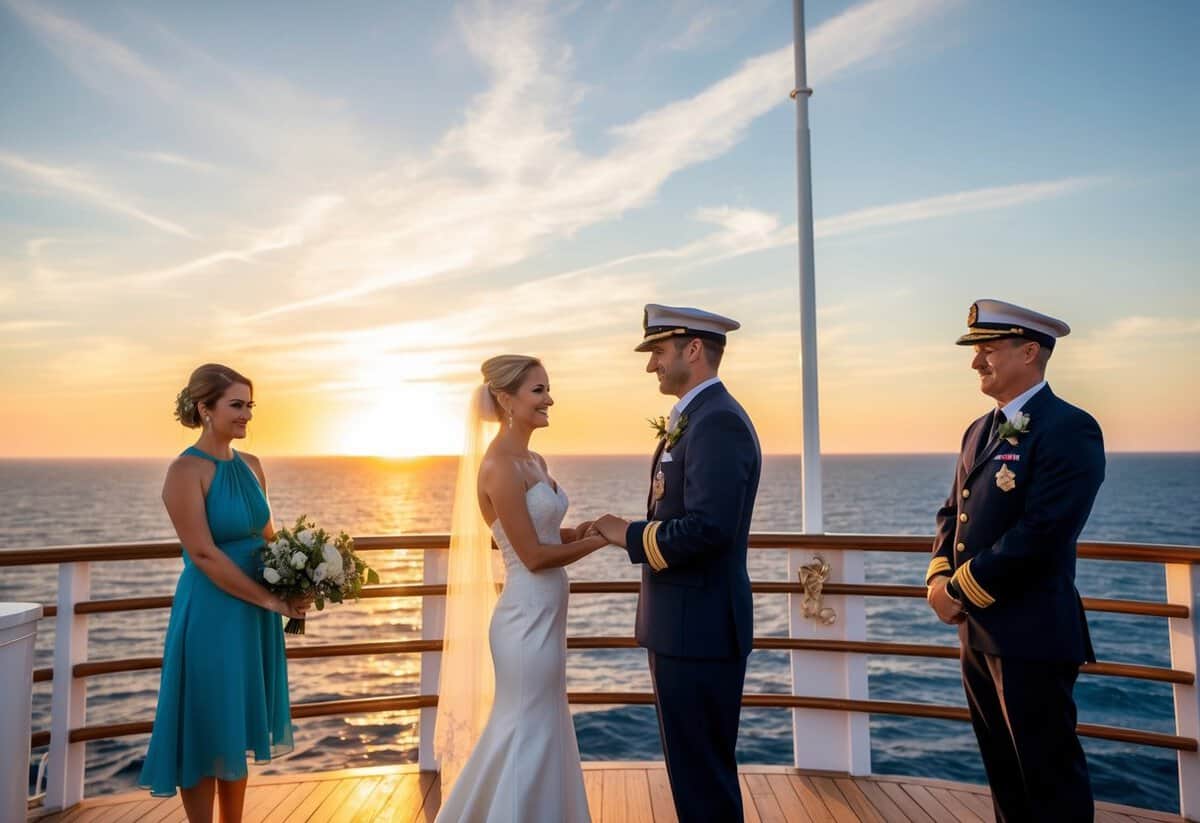
Planning your wedding at sea is an exciting adventure that combines the thrill of a cruise with the romance of a wedding. It’s essential to gather all the necessary information to ensure a smooth ceremony and celebration.
Selecting the Right Cruise Line
Choosing the right cruise line is crucial for your wedding at sea. Major cruise lines like Princess Cruises, Royal Caribbean, and Carnival Cruise offer various wedding packages.
Research their options, as some might include coordination for your ceremony, while others require you to arrange details independently.
Consider aspects such as the cruise destination, onboard amenities, and guest accommodations. Think about whether you’ll host a small gathering or a larger celebration.
Additionally, verify if the cruise line allows different types of ceremonies, including commitment ceremonies and those for same-sex couples.
Ceremony Details and Customs
Once you select a cruise line, focus on the details of your marriage ceremony at sea.
Every cruise line has specific rules about who can officiate the ceremony. Typically, a captain is not authorized unless they also hold an official title, such as a judge.
Be prepared to handle paperwork, including a valid marriage license. Many couples opt to renew their vows during the cruise, so you might require proof of your original marriage.
Customize your ceremony with personal vows, special readings, or unity rituals to make it meaningful for you and your guests.
Lastly, check customs related to weddings at sea, as they can vary by destination. By planning ahead, you can ensure everything goes smoothly on your special day.
Roles and Responsibilities on Board
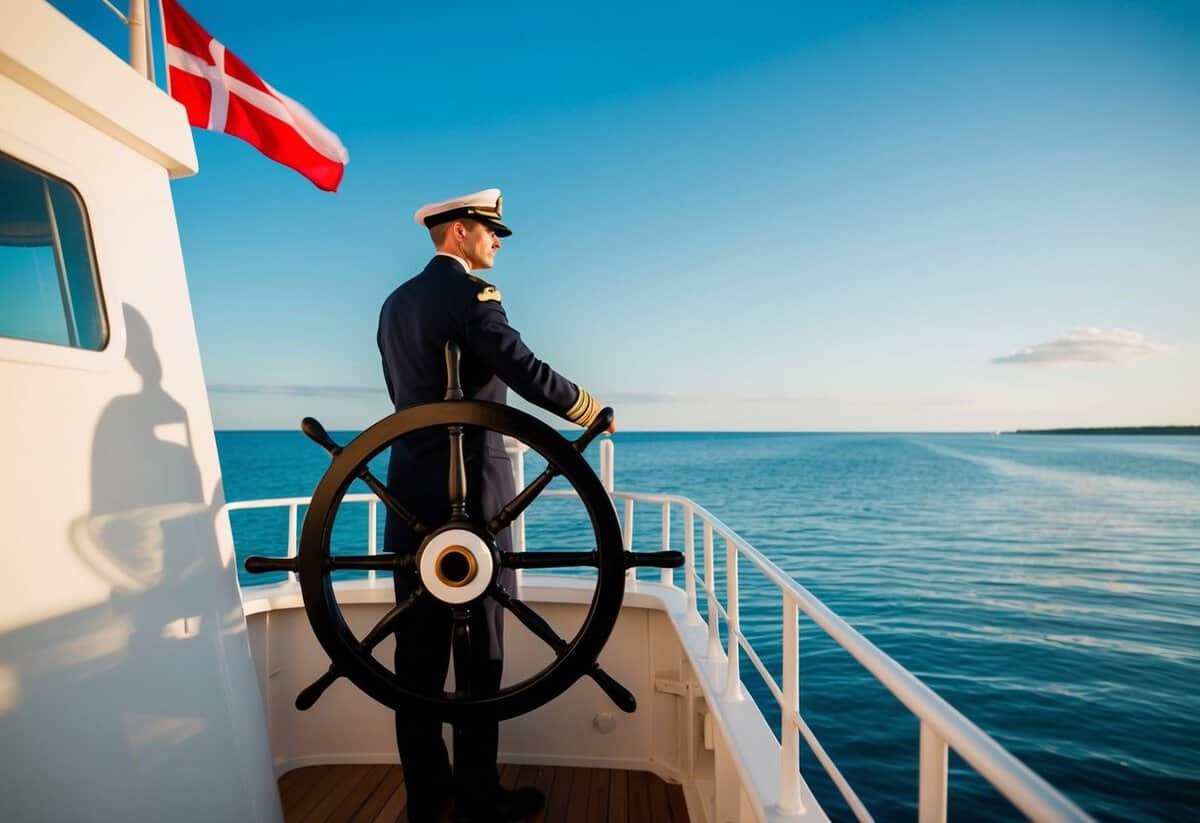
When considering the legality of a wedding by a captain, it is crucial to understand the roles and responsibilities on board a ship. The deck department and other crew members play significant parts in ensuring safe and smooth operations.
Maritime Crew Involvement
The ship’s crew, especially those in the deck department, have defined roles that support the captain. The captain navigates and oversees safety, while other crew members handle specific tasks.
If a captain is an ordained officiant, they may perform marriages. This depends on local laws and the ship’s registration. Alongside the captain, the event captain may assist in organizing the wedding. This crew member can help manage logistics such as seating, decorations, and timelines.
For a wedding at sea, the merchant navy personnel work to maintain safety protocols. They ensure that everything from navigation to emergency procedures is covered. Clear communication among the crew is essential to provide a memorable experience for everyone on board.