
Lakeside Wedding Venues on a Budget: Affordable Options
You can find lakeside wedding venues on a budget by keeping your guest list manageable and considering public parks, pavilions, campgrounds, or community spaces near the water. A modest site fee leaves more room for food, photography, and the other costs that shape your full wedding budget.
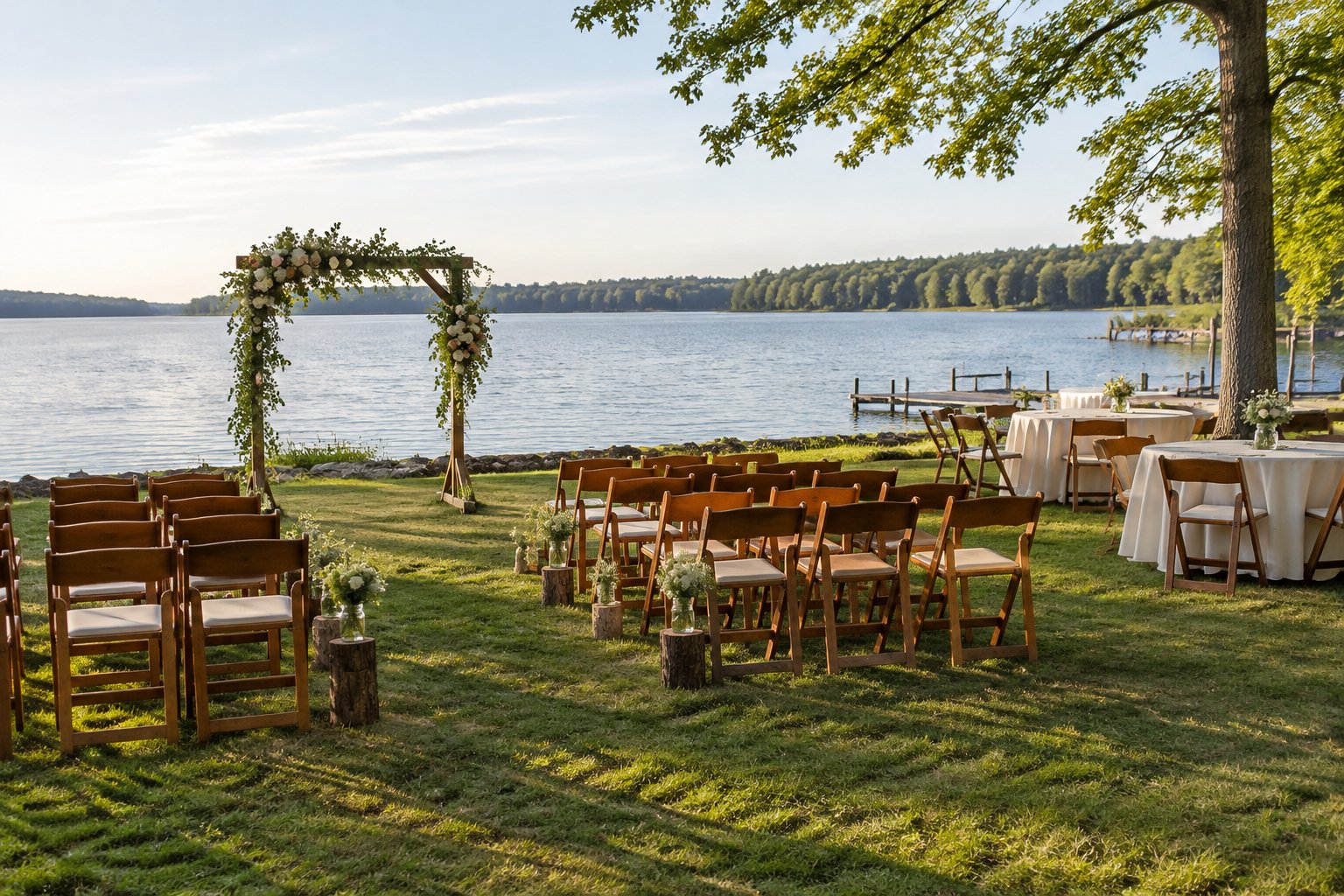
Start with a venue spending limit, then compare itemized quotes for the dates you can consider. Set your guest count first and contact local spaces to ask about availability, permits, and what the rental includes.
What Can Your Venue Budget Actually Cover?
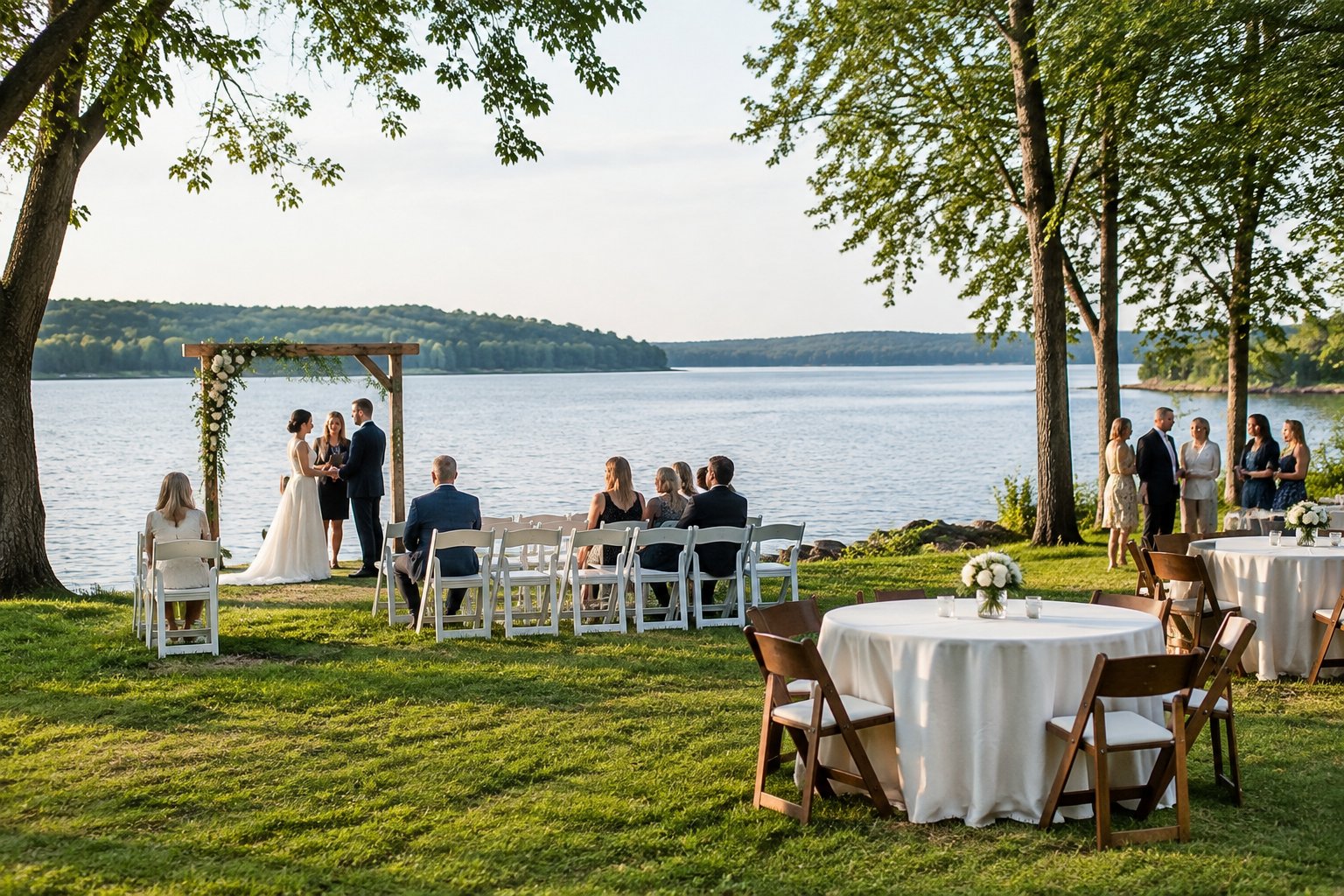
Your venue budget covers the site and any required services, while your full wedding budget must also account for food, rentals, and vendors. Start with a total spending plan, then set a venue cap that leaves room for the rest of the day. A guide to budgeting for your wedding can help you assign those amounts before you request quotes.
Venue Rental vs. Total Wedding Costs
A venue’s rental fee may cover only the space and a set time window. You could still need to pay for chairs, tables, linens, catering, and staff, so compare the full estimate with your budget. Reviewing what wedding venues cost can help you set a realistic starting point before touring.
A lower site fee can suit an intimate ceremony, especially when the setting already provides a scenic backdrop. If you are working with a total budget of $10,000, check how a lakeside venue fits alongside food, photography, attire, music, and a small reserve for last-minute expenses.
Fees and Extras to Budget For
Ask each venue for a written list of required charges. Check for a ceremony fee, setup or cleanup costs, overtime rates, parking charges, and insurance requirements. Waterfront sites may also set rules for sound, tents, open flames, or shoreline access.
Confirm whether you must use certain caterers or rental providers, and ask about fees for outside vendors. Get the tax, service charge, deposit schedule, and cancellation terms in writing. Then compare the final estimated price, not just the advertised rental rate.
Ways to Keep Costs Down
A smaller guest list can reduce the space you need, along with the number of meals, chairs, and place settings. Ask about weekday dates, Fridays, Sundays, and cooler months, when some venues have more availability.
Keep your decor plan simple and let the lake and landscape set the scene. You can compare options for lakeside weddings under $10,000 while checking whether each price covers the services your celebration needs.
Which Affordable Settings Offer Lake Views?
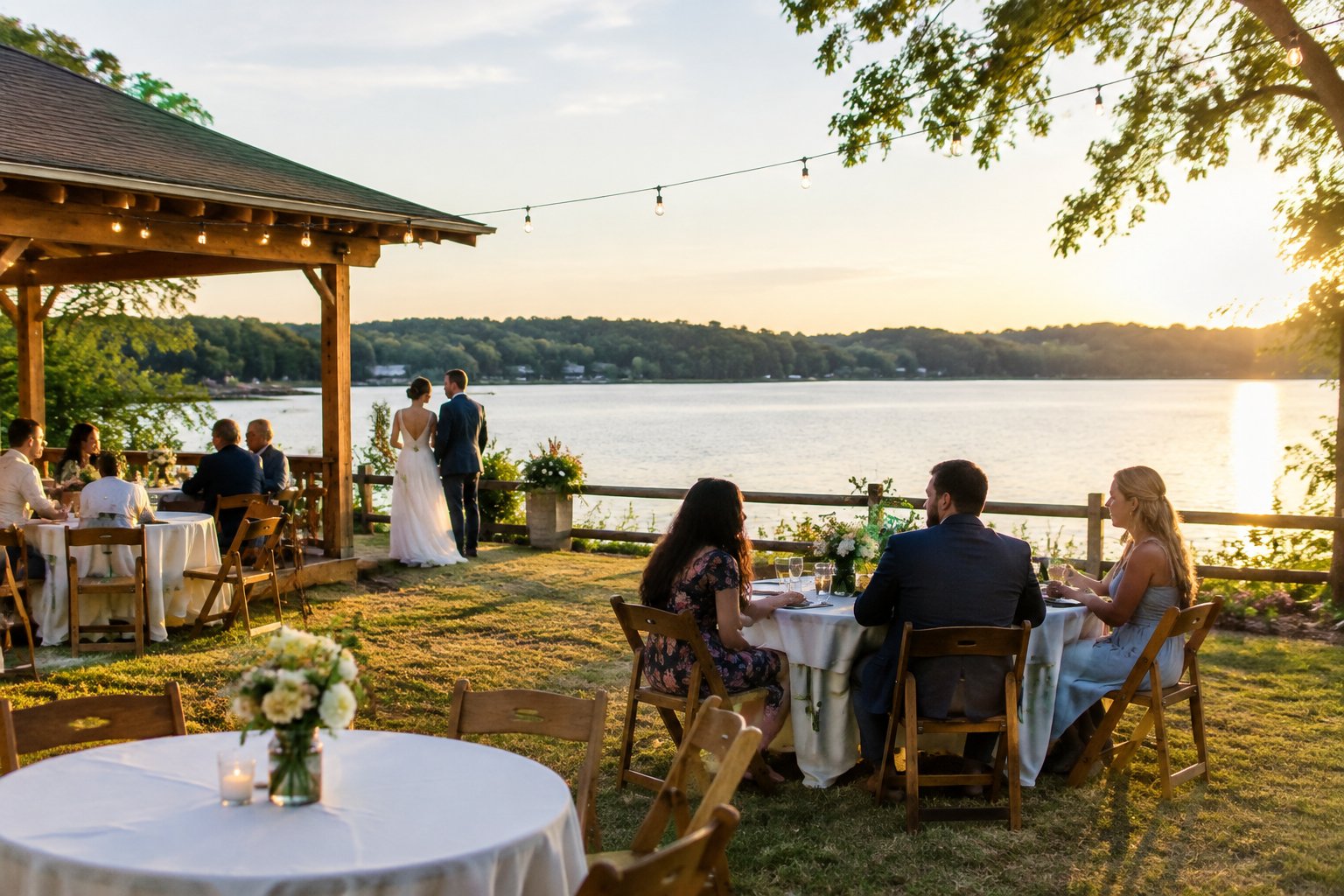
Public parks, community centers, campgrounds, and private gardens can all give you a water view at different price points. Compare the rental fee with the facilities and setup work each place provides before you choose a lakeside wedding venue.
Public Parks and Lakefront Pavilions
A public park with lake access can offer a scenic ceremony site for a permit fee. Some parks also have covered pavilions for meals or shelter. Ask the parks department about the event permit, guest limit, alcohol rules, parking, closing time, and whether another group can use nearby areas during your event.
A low permit cost can mean more planning for you. You may need to arrange chairs, food service, waste removal, and a rain plan. Walk the site and check the distance between the ceremony area, restrooms, and parking before reserving a date.
Community Centers Near the Shore
Community centers near a lake can provide practical features such as restrooms, parking, or an indoor room for part of your event. Their outdoor grounds may work well for a ceremony, while the building gives you a place to gather if the weather changes.
Ask what comes with the rental, including tables, chairs, kitchen access, and setup time. If your guest list is small, compare these locations with lakeside venues for intimate celebrations to find a space that fits your headcount.
Campgrounds and Small Retreats
Campgrounds and small retreats may offer picnic shelters, lodge rooms, or outdoor gathering areas near the water. They can suit a relaxed celebration, especially when you want guests to spend time together beyond the ceremony.
Check whether the event rate includes overnight stays or requires separate reservations. Ask about quiet hours, shared public areas, parking, and the route from guest lodging to the ceremony. Those details help you plan arrivals and keep the event within the site’s rules.
Gardens, Backyards, and Private Spaces
A garden or private backyard near a lake can give you a personal setting with room to shape the layout. These wedding venue ideas work best when the property has enough space for guests, vendors, and basic event needs.
Ask the property owner about event permission, restroom access, parking, power, and cleanup. You may need to bring in rentals or arrange for additional facilities. Compare those costs with affordable wedding venues that already provide some of the essentials.
How Do You Find Local Options?
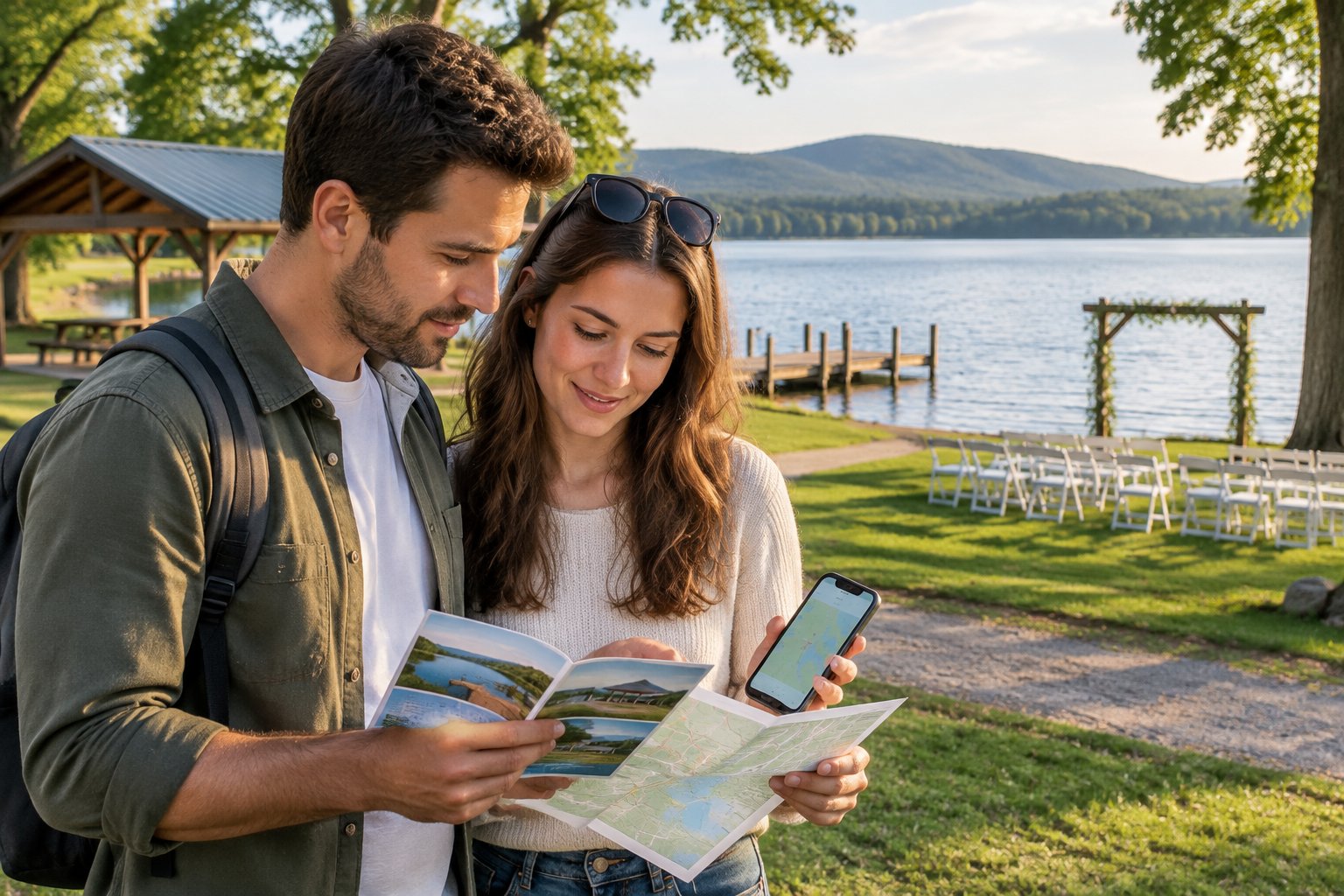
You can find local options by searching beyond wedding directories and asking the people who manage parks and community facilities. Use the same guest count, date range, and list of needs when you compare wedding venues near me.
Search Beyond Wedding Directories
Search for lakefront pavilions, park shelters, retreat centers, community halls, and gardens in the area you are considering. These spaces may not market themselves as wedding venues, yet some allow private events with advance approval.
Check the official website for rental rules, event contacts, and permit details. Local recreation departments and tourism offices can also point you toward public spaces with lake access. A directory of lakeside venues by area can help you expand your search across nearby communities.
Contact Parks Departments and Community Venues
Ask the parks department which locations allow ceremonies and receptions, how far ahead you can reserve, and what permits your event needs. For a community center, ask about indoor access, setup windows, cleanup duties, and any restrictions on food or alcohol.
Give each contact your expected guest count and preferred dates. Ask for the full fee schedule and the name of the person who can confirm event rules. That makes it easier to compare facilities with consistent details.
Compare Listings With Current Quotes
Treat online listings as a starting point, then request a current written quote. Rates and availability can change by date, season, guest count, and services included.
Use a simple comparison sheet with the rental fee, required extras, capacity, included furniture, and weather options. Mark each item as included, optional, or an added cost. This makes a low advertised price easier to assess against your full event estimate.
What Should You Check Before Booking?
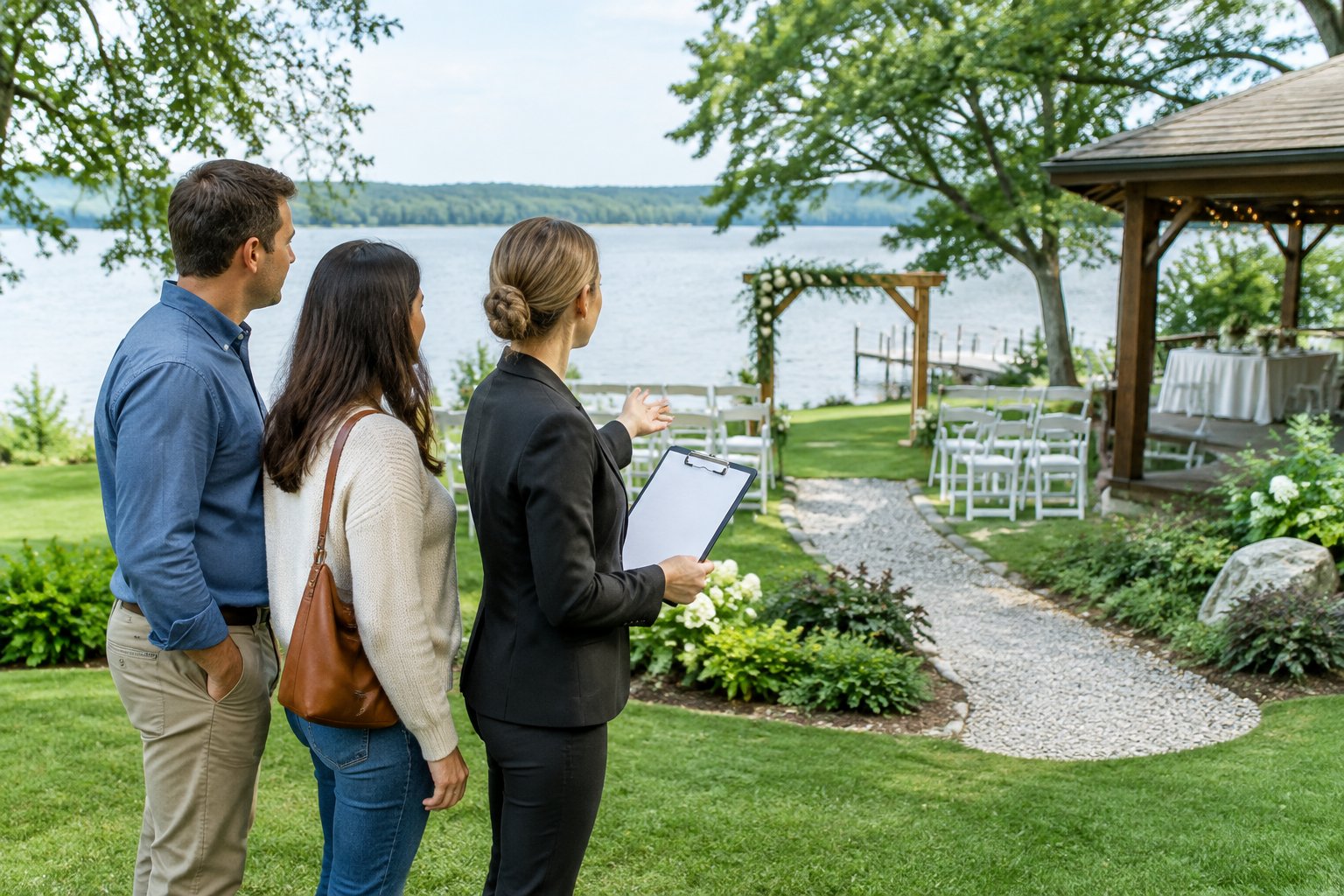
Before you book, confirm that the site fits your guest count and that you know which facilities and services come with the rental. For affordable outdoor wedding venues, clear rules and access details help you plan the day and avoid surprise costs.
Guest Capacity and Site Access
Ask for the capacity that applies to your event setup. A space may fit more guests standing than seated for dinner, and you also need room for vendors, a ceremony aisle, and dining tables.
Walk the route from parking to the ceremony area. Check the walking distance, slope, surface, lighting, and access for guests who use mobility aids. Confirm where vendors can unload and whether nearby paths or shoreline areas remain open to the public.
Included Furniture, Restrooms, and Setup
Request a list of included items, such as chairs, tables, restrooms, power access, and any indoor room. Confirm whether staff handle setup and cleanup, or whether you need to arrange those tasks yourself.
Ask how much time you receive for decorating and breakdown. If the site has no suitable restrooms or power source, include rental equipment and delivery costs in your estimate before signing.
Rules, Insurance, and Reservation Terms
Read the rental agreement and ask about required permits, insurance, sound limits, alcohol rules, decorations, and fire safety. Confirm the deposit amount, payment deadlines, cancellation policy, and what happens if severe weather affects your date.
For a park wedding permit, check whether the permit reserves a specific site or only allows an event within a larger public area. Get key answers in writing and save the permit, contract, and payment records together.
How Can You Make an Outdoor Celebration Work?
An outdoor wedding venue works best when you plan for changing weather, shoreline conditions, and the needs of every guest. A clear backup arrangement and practical site details can keep your celebration comfortable and on schedule.
Plan for Weather and a Backup Space
Choose a backup space before you book, such as a covered pavilion, indoor room, or tent option approved by the venue. Ask who decides when the plan changes and how much notice you need to give vendors.
Check whether the backup space fits your full guest count and whether it carries an extra fee. Share the rain plan with your vendors and wedding party so they know where to move chairs, food, and decor.
Prepare for Shoreline Conditions
Visit the site at the time of day you expect to use it. Notice the ground surface, wind exposure, shade, and distance from the water. Keep ceremony furniture and guest areas on stable ground, and follow venue rules for shoreline access.
Ask about insect activity, lighting, sound limits, and cleanup requirements. A simple setup that suits the location can reduce rentals and help you move guests smoothly between the ceremony and reception.
Keep Guest Comfort and Accessibility in Mind
Give guests clear directions for parking and the route to the ceremony. Share the outdoor setting in advance so they can choose suitable shoes and clothing.
Provide shade or a covered seating area when the site has limited protection from sun or rain. Check that restrooms and gathering spaces are reachable for guests with mobility needs.
For more planning ideas, use these outdoor wedding tips to build a setup around the conditions at your chosen venue.