
Outdoor Wedding Venues With Canopy Tents on the East Coast
East Coast estate lawns, gardens, and waterfront properties offer beautiful settings for weddings with a canopy tent, provided the site allows tent installation and has enough level space. For your search for an outdoor wedding venue with a canopy tent on the East Coast, start with properties in New England, Long Island, and Cape Cod that offer open grounds and a clear weather plan.
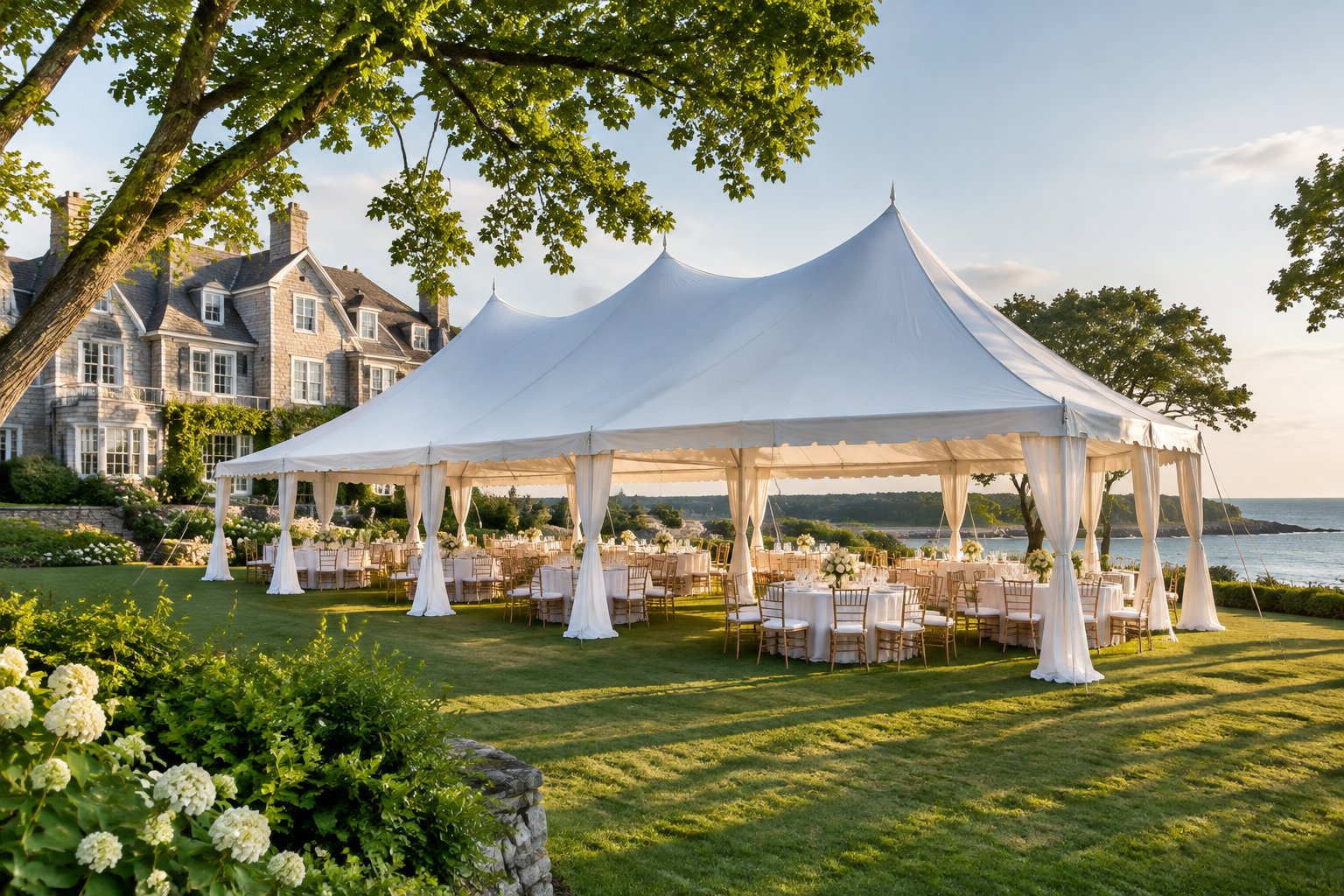
A tent gives you an open-air reception space with shelter from sun and rain. Before you book, confirm what the venue provides and what you will need to rent, from flooring to power and sidewalls. Start a shortlist, then ask each venue about its tent rules and backup spaces.
What Makes a Venue Work Well With a Canopy Tent?
A venue works well with a canopy tent when its grounds can safely fit the structure, guest layout, and vendor access, with a clear plan for changing weather. For outdoor weddings, the lawn’s condition and the venue’s rules shape what you can set up and how comfortable guests will feel.
How Much Flat, Usable Space Is Needed?
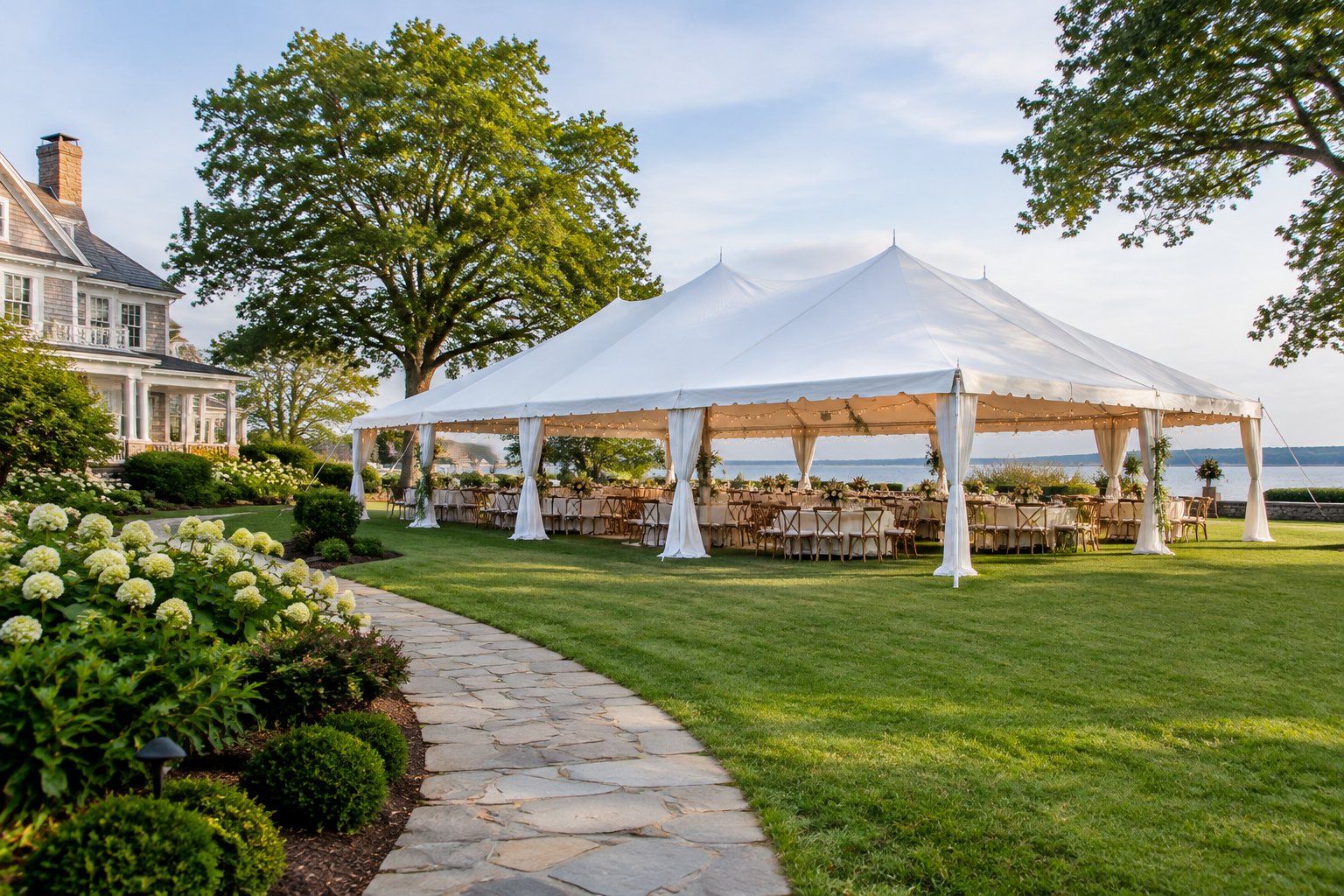
Plan for about 15 to 20 square feet per guest for a seated dinner with a dance floor, then check your layout with a tent rental company. The site needs room for the tent itself, entrances, and safe access for setup. A pole tent also has interior poles to plan around, while a frame tent keeps the center space open.
Ask where the tent can go and whether the ground supports stakes or requires weighted anchors. Check for slopes, tree roots, irrigation lines, and nearby power sources. A site visit with your planner or rental company helps you judge the space before you sign. Use tent wedding tips to prepare questions about layout, lighting, and guest comfort.
What Indoor Backup and Guest Amenities Matter?
Ask to see the indoor rain plan and confirm how it works for your guest count. A tent offers cover from sun and rain, while a nearby building gives guests a safer place to shelter during lightning or severe weather.
Check the route between the ceremony, tent, restrooms, and parking. Ask about accessible paths, restroom access, power for the caterer and band, and who makes the weather call. If the venue has an indoor room, make sure it can hold the full event or clarify which parts of the day would move inside.
New England Estate and Garden Venues
New England estates and gardens are strong candidates when you want historic character, landscaped grounds, and an outdoor setting for your reception. Ask each property whether it allows a canopy tent, which spaces are approved, and what indoor backup it provides. For more venue ideas, browse East Coast garden wedding venues.
Historic Estates With Lawn Settings
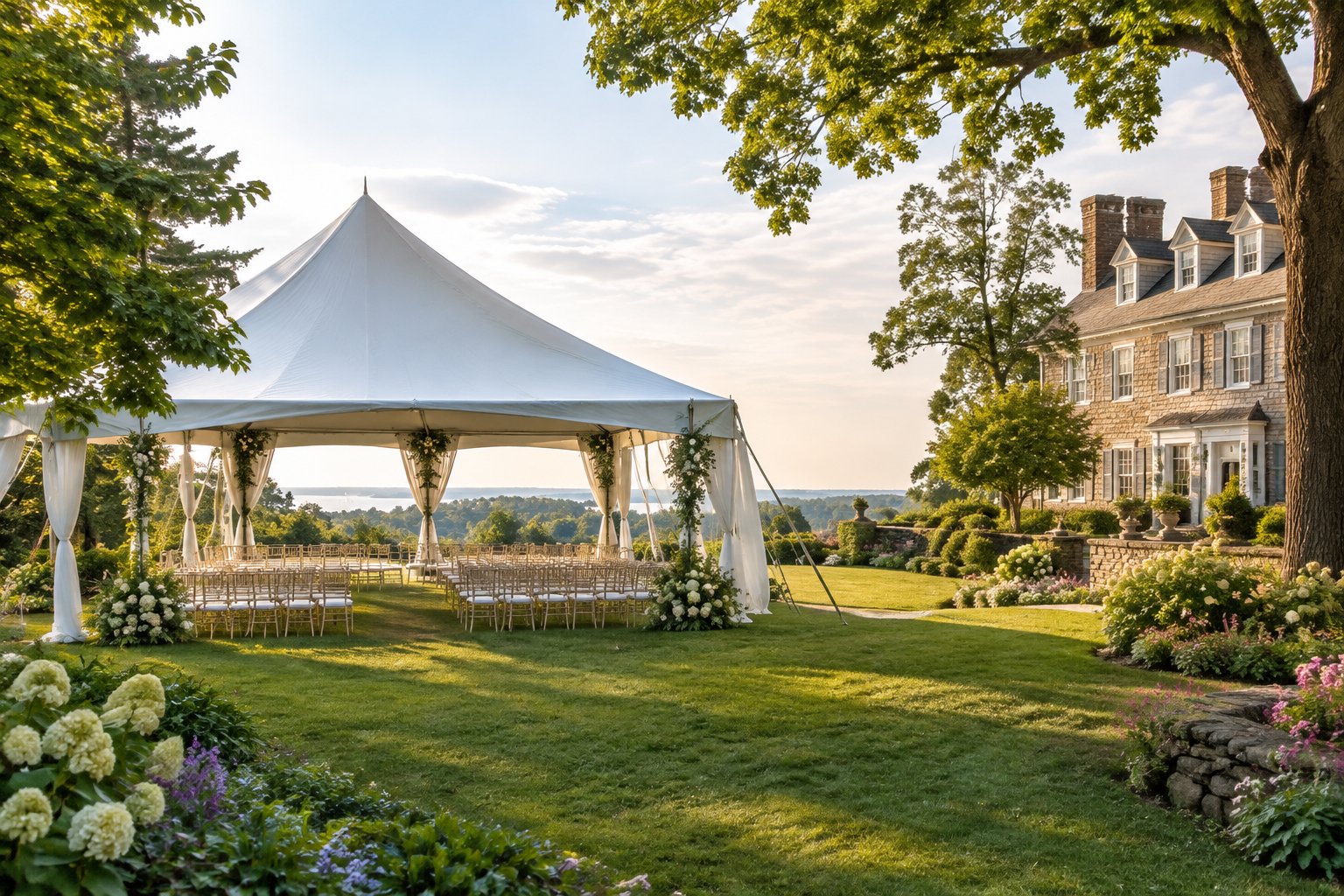
Willowdale Estate, The Villa, The Stevens Estate, The Stevens Estate at Osgood Hill, Saphire Estate, and Floriana give you names to explore as you compare estate-style celebrations. Their offerings and tent policies can differ, so ask about the exact lawn or grounds available for your date. Request a site plan that shows the tent footprint, guest seating, and service access.
A historic property may have rules to protect its grounds or buildings. Ask whether tent stakes are allowed, whether the rental company must be approved, and how long setup can take. Confirm how guests will move between the reception space and indoor facilities.
Gardens and Grounds Near Boston
For garden settings near Boston, ask about The Great Hall at Messina College and The Connors Center, also known as Connors Center. Confirm which outdoor areas are available for a ceremony or reception and whether a tent is permitted. A garden setting can shape your décor, so look at garden wedding venues in Boston as you compare nearby options.
The North Shore has a mix of estate grounds and garden-style settings. When you tour, check the tent site after rain and ask how the venue handles lawn care before the event. Find out whether your caterer and rental crew can reach the setup area without crossing guest spaces.
Coastal New England and Island Venues
Coastal New England venues pair tented celebrations with views of bays, rivers, and harbors, while requiring extra attention to wind and access. Ask about the venue’s approved tent area, shoreline rules, and options for moving guests indoors if conditions turn.
Waterfront Settings on Rivers and Bays
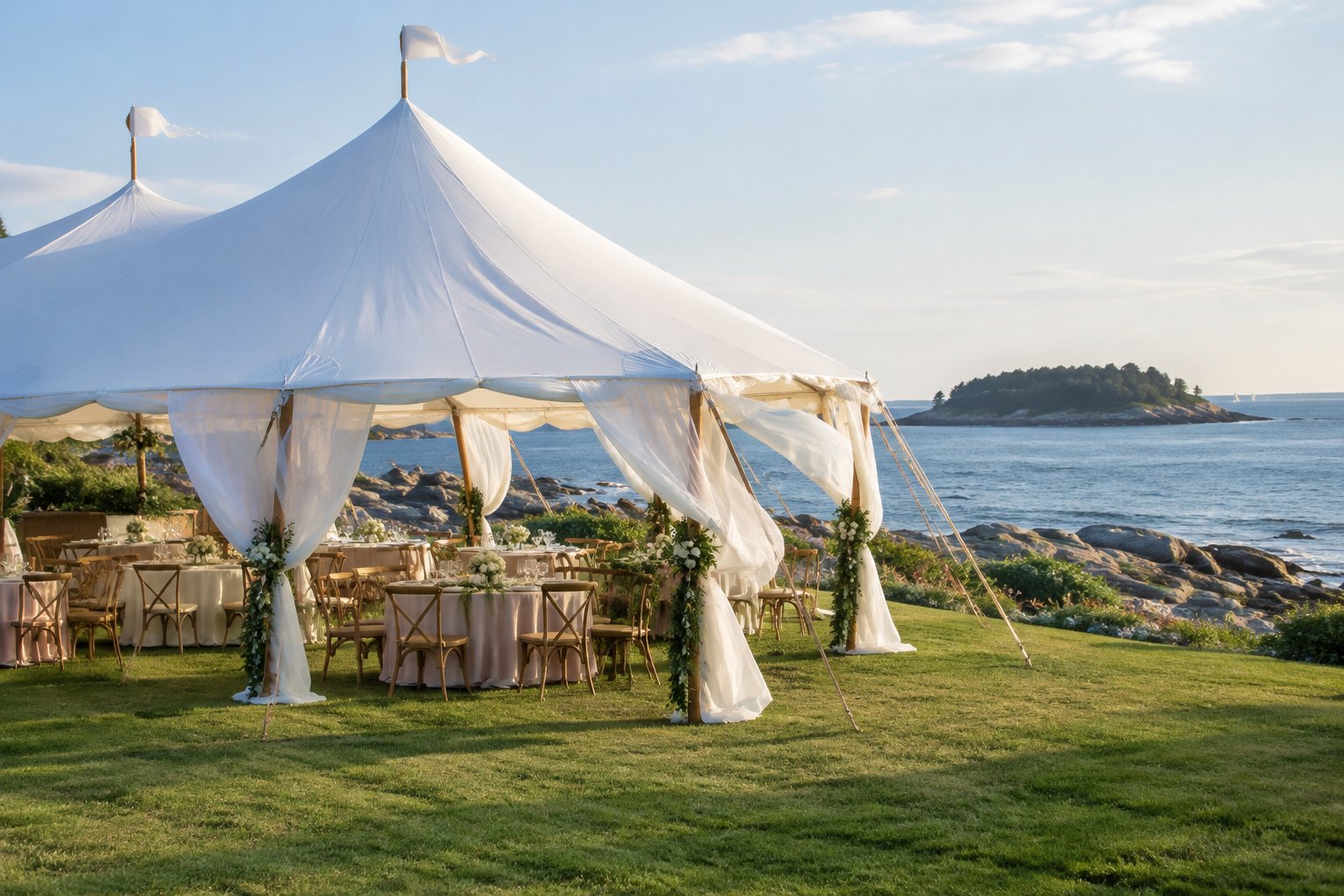
Along Long Island Sound, the Connecticut River, and Narragansett Bay, water views can give your reception a strong sense of place. Ask how close the tent can sit to the water and whether the grounds are exposed to steady wind. Make sure the site has a practical route for vendors carrying equipment and serving meals.
Saybrook Point Resort & Marina and Westbrook Inn Bed & Breakfast are names to explore for Connecticut shoreline celebrations. Ask each venue about tent permission, guest capacity, and its indoor backup. For more ideas in the region, compare East Coast beach wedding venues.
Beach, Harbor, and Resort Backdrops
Cliff House, Harbor View Hotel, Chequessett Club, and Uncommoner Hotel by Reverie Boutique offer coastal names to add to your search. Their event spaces and tent policies vary, so ask which parts of the property are available for your date. A resort or hotel setting may also help with guest lodging; confirm room options and travel between accommodations and the reception.
Check whether a tent site sits on a lawn, patio, or sandy ground. Each surface affects anchoring, flooring, and guest access. Ask who coordinates the tent company with the venue team, especially if the event includes both indoor and outdoor spaces.
Long Island and Cape Cod Coastal Picks
For a coastal reception on Long Island or Cape Cod, choose a venue that pairs the view you want with a practical tent site and weather plan. Navy Beach in Montauk is one option to ask about as you compare waterfront settings.
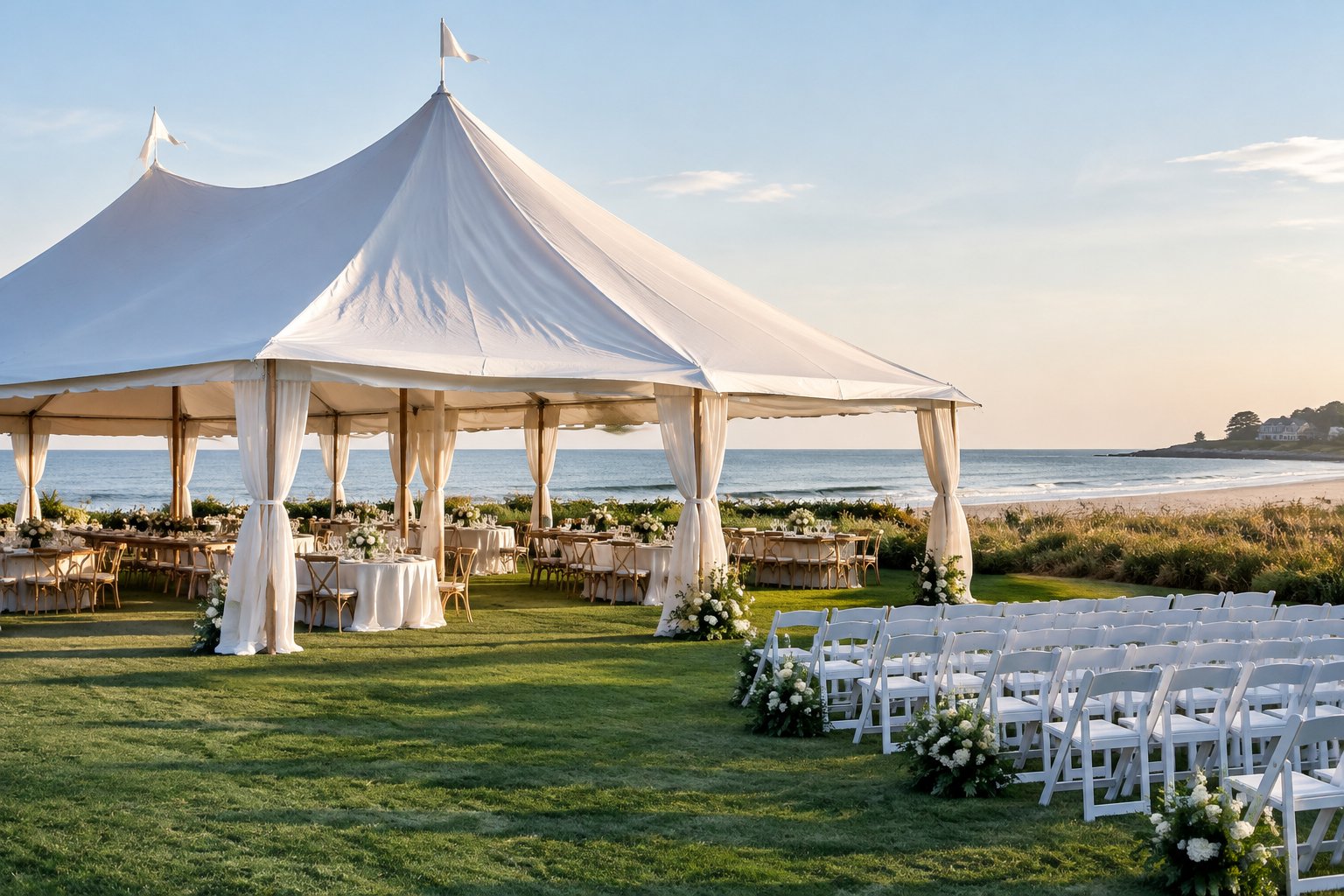
Beachfront Celebrations and Open-Air Receptions
Beachfront venues create a relaxed setting for an open-air celebration, with the shoreline close by for the ceremony or cocktail hour. Ask whether the reception tent would sit directly on sand or on a nearby lawn, and check what the venue allows for flooring, stakes, and guest access. You can compare more beach wedding venues on Long Island as you build your list.
Confirm whether the venue’s event space is private during your celebration and how far guests will walk from parking. If the ceremony and reception use separate areas, ask who manages the transition and what happens if rain interrupts it.
What to Check About Wind, Access, and Tent Setup
Coastal wind can affect tent placement, sidewalls, décor, and sound. Ask the venue and rental company what wind conditions require changes to the setup, and who has authority to make that call. Confirm that the tent plan includes appropriate anchoring for the surface.
Check truck access, setup hours, and any limits on noise or generators. Ask whether the site has a level route for guests with mobility needs, and whether a firm floor is available for dinner seating. These details help you compare beach wedding venues with similar coastal settings.
How to Plan for Weather, Costs, and Booking
A smooth tented wedding starts with written answers about rental costs, venue rules, and the backup plan. Ask for a complete estimate that covers both the tent and the support items needed to make the space comfortable.
Questions to Ask About Tent Rentals and Site Fees
Request an itemized quote for the tent, sidewalls, flooring, lighting, power, delivery, setup, and teardown. Ask whether the venue charges a separate site fee or requires a specific rental company. For a clear-top or sailcloth tent, confirm the price difference and whether you will need fans, heaters, or extra lighting.
Review the full layout with your planner, caterer, and rental company. Include space for the dance floor, band or DJ, bar, and service paths. Ask who is responsible for permits and for locating underground utilities before tent stakes go in.
When to Reserve a Date and Prepare a Backup Plan
Reserve your venue and tent company early, especially for popular summer and fall dates. Put the weather decision deadline in writing, along with the indoor location, added fees, and who makes the final call. Ask what happens if high winds make the planned tent setup unsafe.
Plan for heat, cold, rain, and lightning as well as clear weather. Choose a building where guests can shelter during a thunderstorm, since a tent is not a safe place during lightning. Share the plan with your vendors and tell guests how you will send any last-minute location update.