
Overwater Bungalow Designs: Features, Layouts, and Ideas
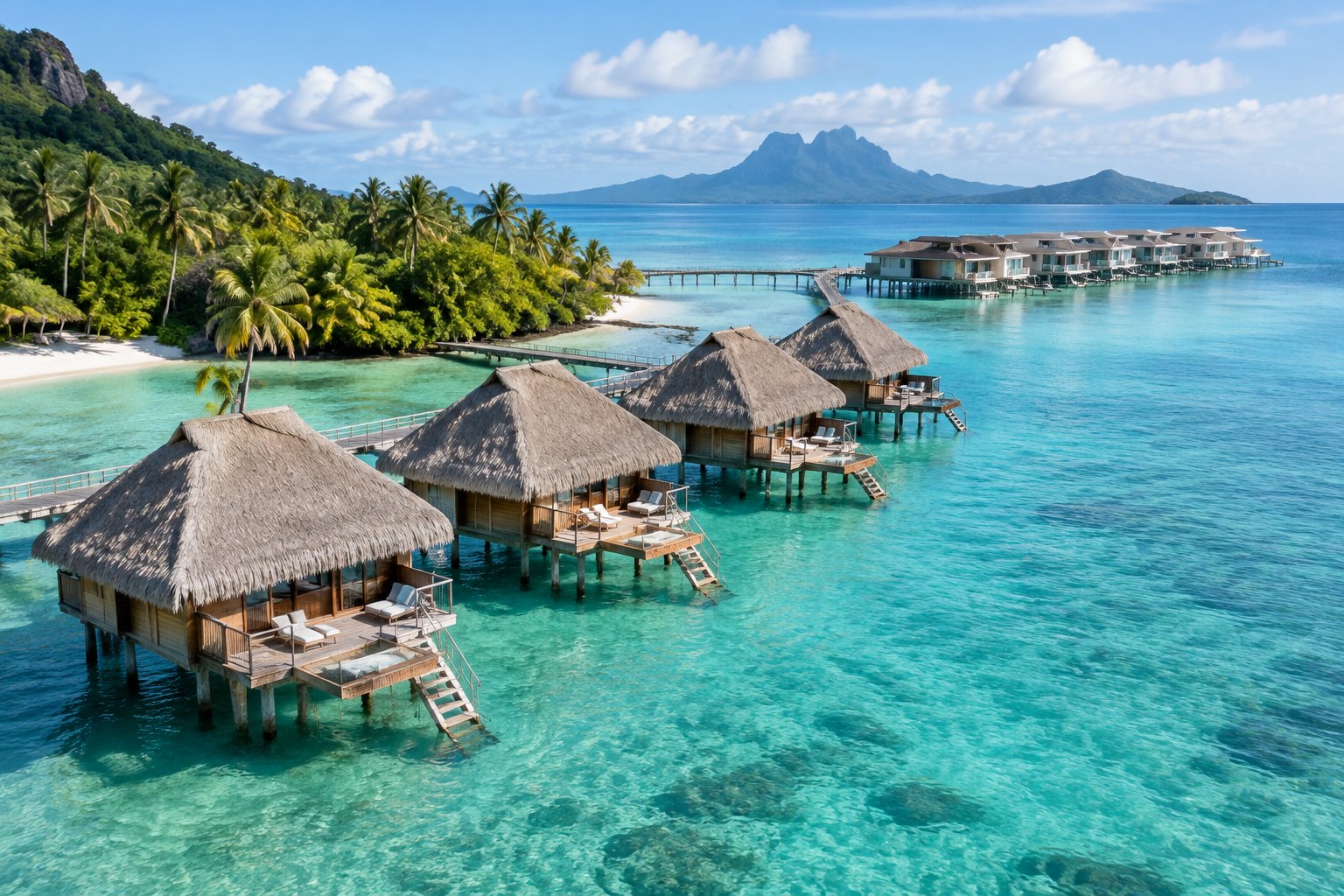
You get the strongest overwater bungalow designs when the layout, materials, and foundations suit the lagoon and the way you want to use the space. A well-planned bungalow connects you with the water through features such as a private deck or glass floor while giving you shelter, privacy, and reliable access.
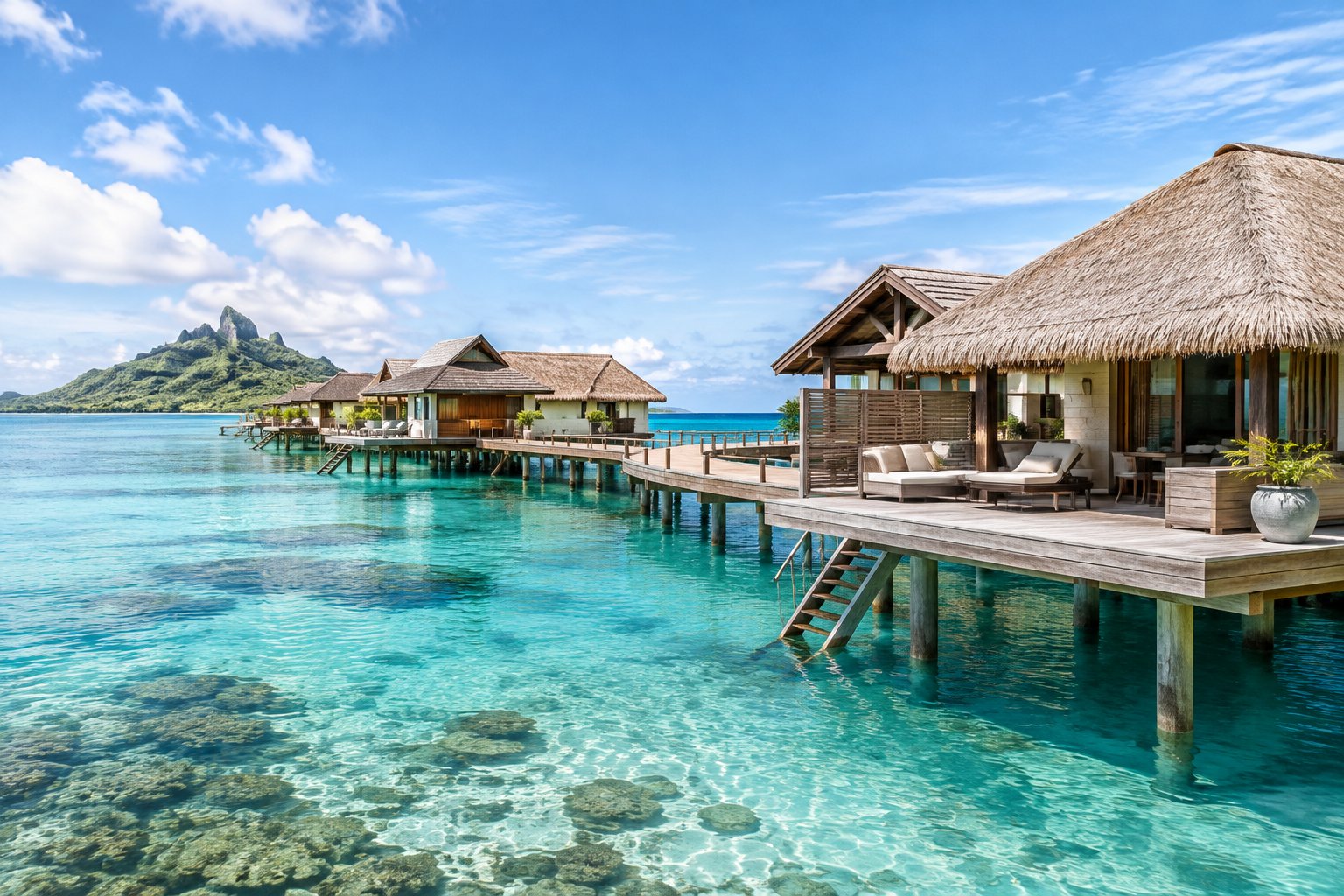
If you’re planning an overwater bungalow getaway, begin by deciding whether you value easy swimming, marine-life views, or a quieter retreat most. Those choices can guide everything from the villa’s position to the shape of its deck.
What Makes an Overwater Bungalow Work?
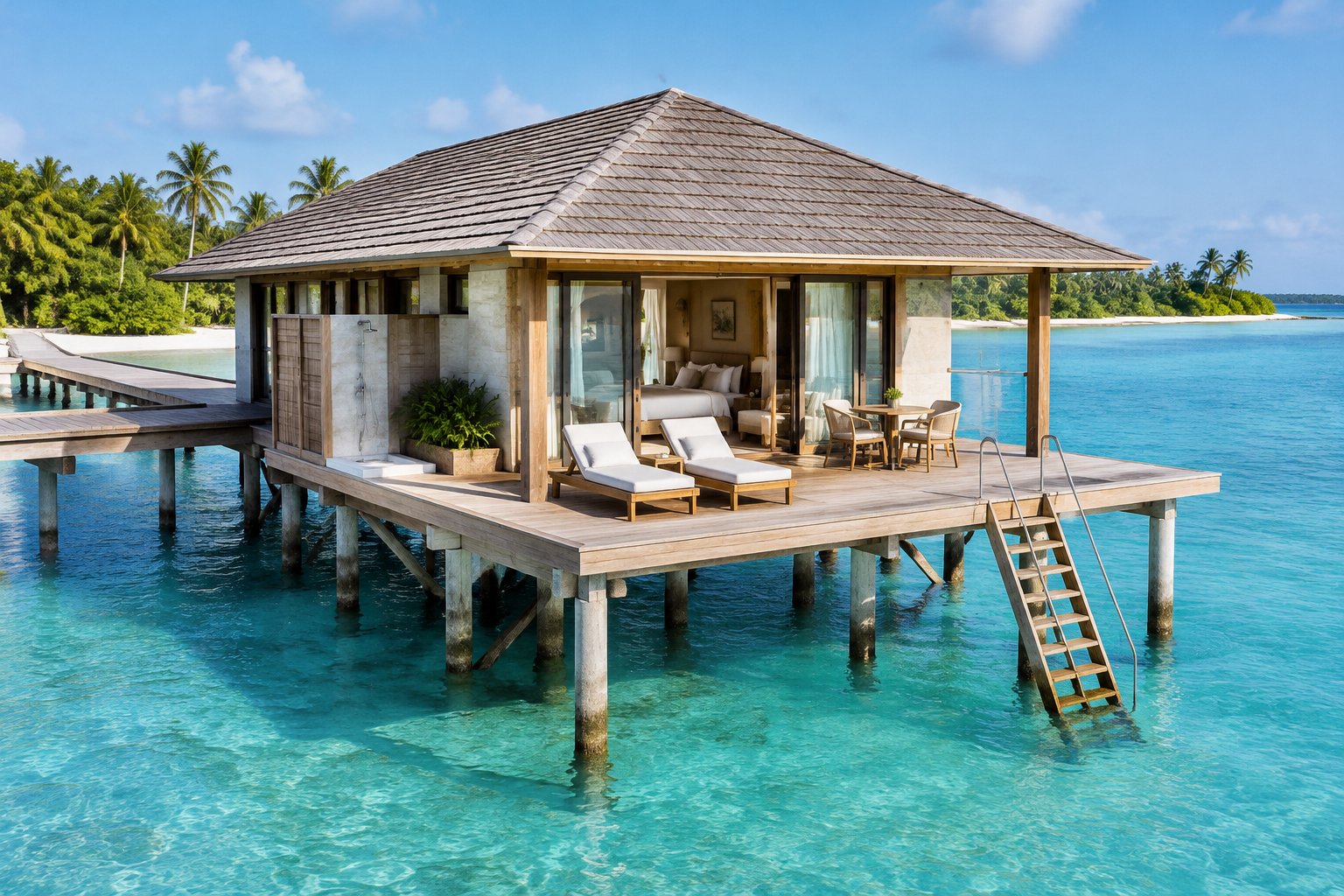
A successful overwater bungalow pairs a stable stilt foundation with a calm, suitable site. The lagoon, seabed, and exposure to wind and waves shape how the structure is built and how comfortable it feels.
Why Do Calm Lagoons Matter?
A calm lagoon gives you gentler water around the bungalow and makes direct water access more inviting. Sheltered sites also reduce the force of waves against the stilts, which helps designers plan for local conditions.
The water beneath your deck affects the experience, too. A sandy lagoon floor can offer clear swimming access, while a nearby reef can bring more marine life into view. Designers study tides, currents, water depth, and seabed features before placing bungalows so the layout suits both the setting and guest use.
How Do Stilt Foundations Support the Structure?
Stilts raise your bungalow above the water and transfer its weight to the seabed. Engineers choose their depth, spacing, and foundation type after studying the bottom: sand, rock, and other seabed conditions call for different support plans.
The number and placement of stilts also shape water movement below the structure. A carefully planned foundation supports the building while limiting unnecessary obstruction to the lagoon. Marine-grade concrete and corrosion-resistant hardware help the supports endure salt water and tropical weather.
Which Design Features Shape the Guest Experience?
The most memorable features bring the lagoon into your stay while giving you comfortable places to relax. Glass panels connect indoor spaces with marine life, while decks and pools create outdoor areas for swimming, lounging, or dining.
How Do Glass Floor Panels Bring Marine Life Into View?
A glass floor panel gives you a window into the water from inside your bungalow. Place it in a living area or beside a lounge, and you can watch fish and other marine life without entering the lagoon. In some designs, underwater lighting makes the view easier to see after dark.
If you’re choosing a Bora Bora bungalow with a glass floor, check where the panel sits and what lies beneath it. A clear view depends on the water, the seabed, and the marine life around the villa. A solid floor gives you more privacy and a consistent walking surface, while a glass panel adds a distinct connection to the lagoon.
What Can Private Decks, Suspended Hammocks, and Overwater Pools Add?
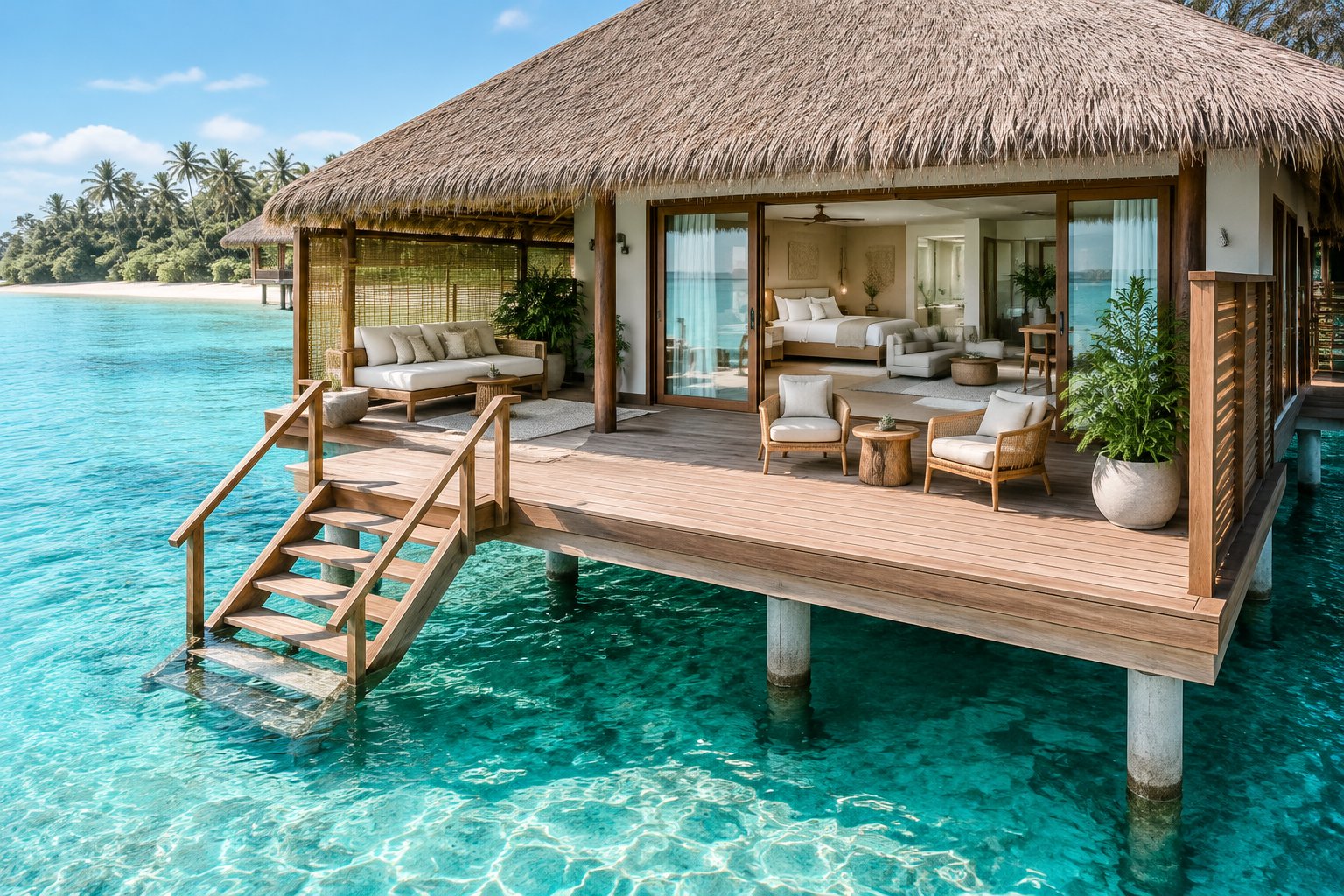
A private deck extends your living space outdoors. Steps or a ladder can give you direct lagoon access, while a shaded seating area makes the deck useful during the warmer parts of the day. Railings and privacy screens help define the space without blocking the view.
A suspended hammock adds a relaxed spot above the water. An overwater pool gives you a contained place to cool off, which can suit a villa where lagoon conditions make swimming less convenient. When you compare designs, consider how much deck space remains for seating and movement after these features are added.
How Do Layouts Balance Luxury and Practicality?
A practical overwater layout gives you a clear path between sleeping, relaxing, and reaching the water. The best arrangement leaves room for privacy and daily comfort without making movement through the bungalow awkward.
How Do Designers Create Privacy and Easy Water Access?
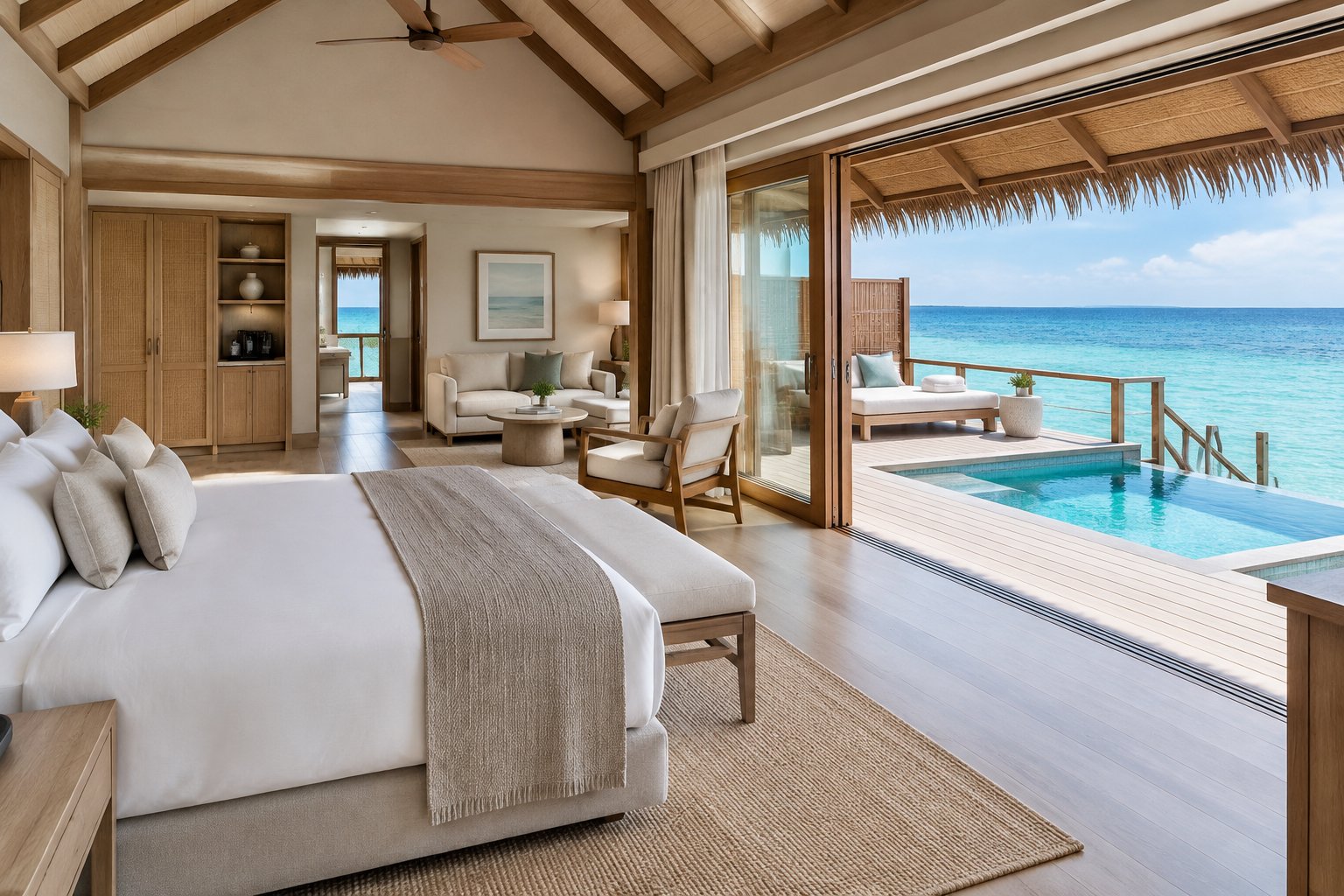
Designers can place the bedroom away from the main walkway and orient windows toward open water. Screens, thoughtful spacing between villas, and a private outdoor area help you feel secluded even when your bungalow connects to a shared jetty.
A direct route from the living area to the deck keeps water access convenient. Steps or a ladder should be easy to reach, with a clear landing area for getting in and out. If you want a more private swim, look at the villa’s position and the depth and conditions of the water below it.
What Features Suit Honeymoon Hideaways and Shared Stays?
For honeymoon hideaways, a one-bedroom plan with a private deck can keep the sleeping and lounging areas intimate. A glass panel or outdoor soaking tub adds a special feature without taking over the floor plan. Couples looking at affordable overwater bungalow vacations can compare which amenities are essential to their stay.
For a shared stay, separate bedrooms or a second level can give guests more personal space. A larger living area and a deck with distinct dining and lounging zones make it easier to spend time together. Before settling on a layout, check how the doors, walkways, and outdoor furniture affect movement through the space.
Where Did the Overwater Bungalow Begin, and Where Can You Find It?
The modern overwater bungalow began in French Polynesia in the 1960s and has since spread to tropical resort destinations around the world. You can find these stays in settings that range from sheltered South Pacific lagoons to island resorts in the Caribbean and Indian Ocean.
How Did the Bali Hai Boys Start the Trend?
The Bali Hai Boys, three American friends in Tahiti, created the first hotel bungalows over water in the 1960s. They had acquired the Bali Hai Hotel on Raiatea, where limited beachfront space led them to build rooms on stilts above the reef. Their idea drew on local fishing huts and offered guests a way to stay close to the water.
The concept gained attention and spread to Moorea, then across French Polynesia and beyond. You can explore the birthplace of the overwater bungalow to learn more about its start on Raiatea.
Which Destinations Are Known for These Stays?
French Polynesia remains closely linked with the style, with overwater stays in Tahiti, Moorea, Rangiroa, and Bora Bora. The Maldives and Fiji are also well-known destinations, while resorts in Indonesia and Belize offer more options. You can browse a list of overwater bungalow destinations when comparing regions.
In the Caribbean, Antigua has resorts such as Royalton Antigua, which opened with overwater bungalows after the island’s recovery from Hurricane Irma. If you’re considering the region, compare Caribbean overwater bungalow resorts by location, water access, and the amenities included in each stay.
How Can Builders Reduce Environmental Impact?
Builders reduce environmental impact by studying the site before construction and choosing methods that limit harm to the lagoon and marine life. Careful planning also helps the structure respond to storms, changing water levels, and the demands of a saltwater setting.
How Do Site Studies Protect Reefs and Water Flow?
A site study helps builders map water depth, tides, currents, seabed quality, and nearby marine habitats before they set foundations. These details help the design team avoid sensitive reef areas and plan stilt placement with water flow in mind.
Construction planning also matters. Prefabricating parts on land can reduce the amount of cutting and assembly over the water. Catch platforms and careful storage help keep loose materials and debris out of the lagoon during the build.
What Construction Choices Help With Storms and Rising Seas?
Builders plan for local wind, waves, storm risk, and projected water levels when setting a bungalow’s height and structural supports. Engineers select durable materials and connections suited to salt air, then design the frame to handle the site’s expected conditions.
For you, these choices affect how long the structure can serve guests and how much upkeep it needs. A compact plan, a raised floor, and materials rated for marine conditions give the design a practical foundation for a changing coastal environment.