
What Are the Standard Wedding Vows in the UK? A Guide to Traditional Expressions of Love
When planning your wedding, understanding the vows you will exchange can make the ceremony even more meaningful. The standard wedding vows in the UK, particularly in religious ceremonies like those of the Church of England and the Catholic Church, are filled with tradition and emotion. These vows are not just words; they represent your commitment to each other and set the tone for your marriage.
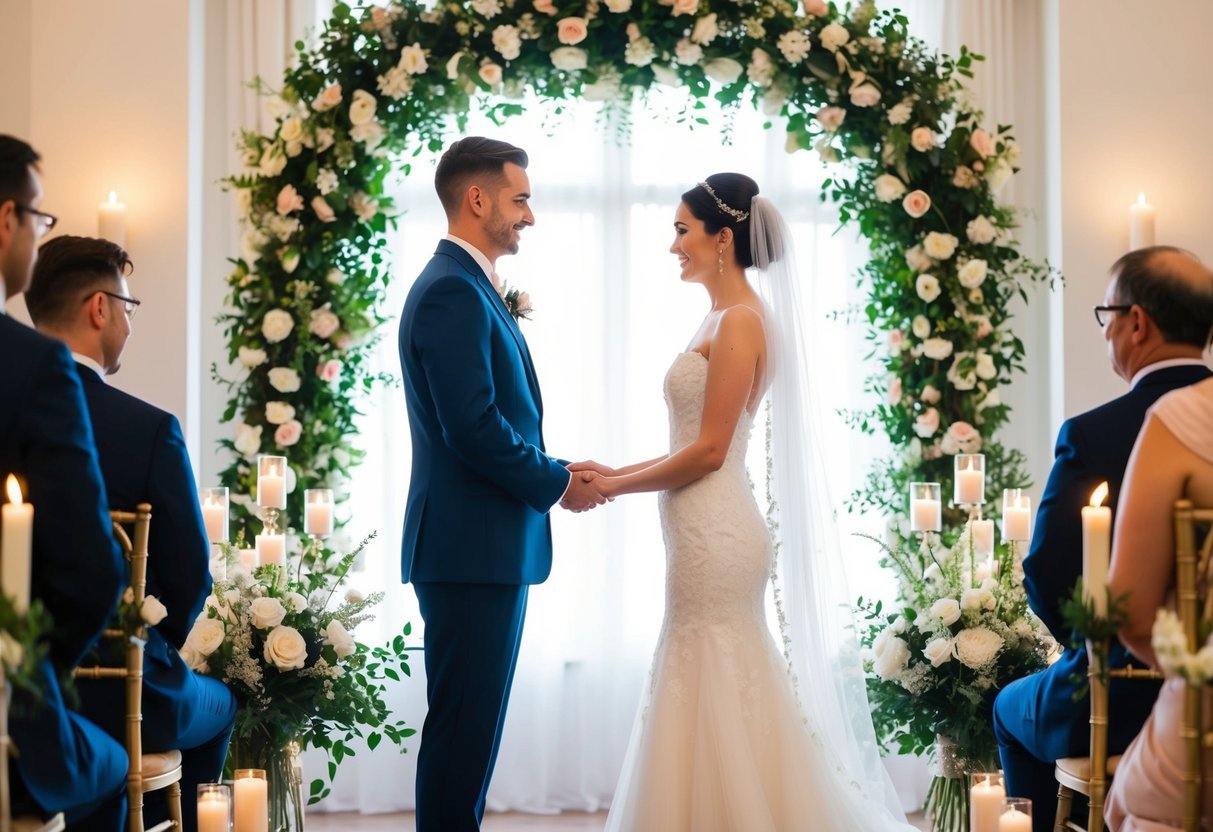
Many couples wonder how these vows differ and what they should expect on their big day. Knowing the standard vows can help you prepare for this important moment, allowing you to focus on the love and promises you are making. As you explore the various options, you’ll find that each vow has its unique touch while still conveying the same core message of love and devotion.
In this article, you’ll discover the specifics of standard wedding vows in the UK and gain insights into how they can personalize your wedding ceremony. From traditional phrases to modern adaptations, you’ll also learn how you can make this moment truly yours.
History of Wedding Vows in the UK
The history of wedding vows in the UK traces back to ancient traditions and has evolved into what you see today. Understanding this journey can help you appreciate the significance behind the words exchanged during your ceremony.
Early Traditions: Sarum Rite and Book of Common Prayer
The Sarum Rite was a significant part of early wedding ceremonies in England. This liturgy blended many local customs, creating a unique set of vows. It served the Church of England and influenced many religious practices.
In 1549, the first Book of Common Prayer was published. This book introduced formal wedding vows in a more accessible way. It aimed to provide a standardized service for those marrying within the Church. The vows included heartfelt commitments, such as “to love and to cherish,” reflecting the values of unity and fidelity.
Modern Evolutions: From Church to Civil Ceremonies
As society changed, so did the approach to marriage vows. The spread of civil ceremonies has made it possible for you to wed outside traditional religious settings. Nowadays, couples can personalize their vows during civil ceremonies, giving more freedom to express their love.
Additionally, contemporary vows often blend traditional elements with modern language. This shift allows couples to resonate with the vows on a personal level while still honoring the roots of wedding traditions. Today, you might find both traditional and personalized options, catering to diverse preferences in expressing commitment.
Structure of UK Wedding Ceremonies
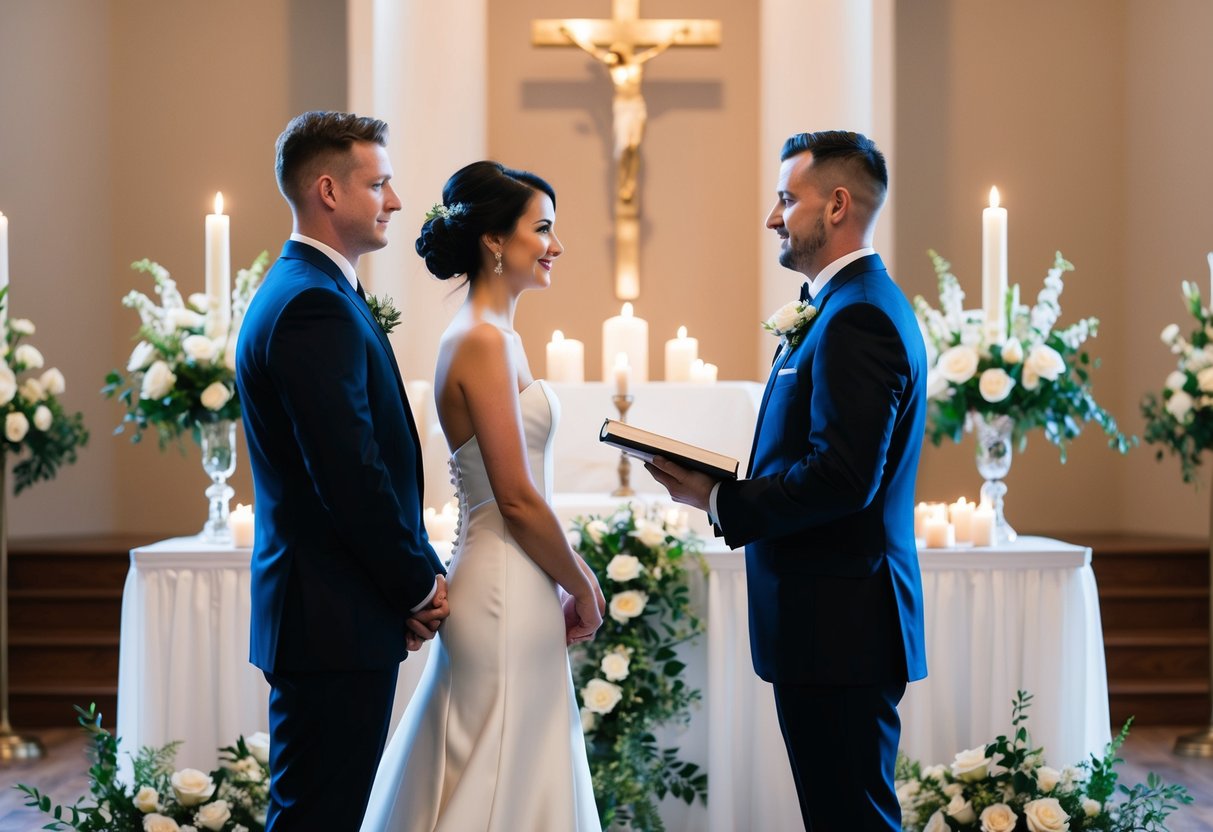
UK wedding ceremonies have a clear structure that combines legal requirements with personal touches. Understanding this structure can help you plan a meaningful event. Here are the key elements to consider.
Legal Declaration and Contracting Vows
During a UK wedding, a legal declaration is essential. This is where you and your partner must declare your intention to marry. You need to say specific words that confirm your legal commitment.
Next come the contracting vows. These vows are the official promises you make to each other. They can be simple phrases like “I do.” They form the foundation of your marriage or civil partnership. Make sure the officiant guides you through this part to ensure everything is done correctly.
Readings, Hymns, and Music Selection
Personal elements add warmth to your ceremony. This section often includes readings, which can be poems, passages, or even song lyrics. Choose readings that reflect your relationship and values.
Hymns are another beautiful option, especially for religious ceremonies. You can include your favorite hymns sung by guests or played during the ceremony. Don’t forget the music selection. It sets the mood for your wedding. Choose meaningful songs that resonate with both of you.
Exchanging of Rings and Marriage Promises
The exchanging of rings is a significant moment in your ceremony. As you place the rings on each other’s fingers, you symbolize your love and commitment. This act often follows your vows, reinforcing your promises to one another.
You may also want to include additional marriage promises. These can be personalized vows that express your love in your own words. Sharing them can make this moment even more special and memorable.
Different Types of Vows
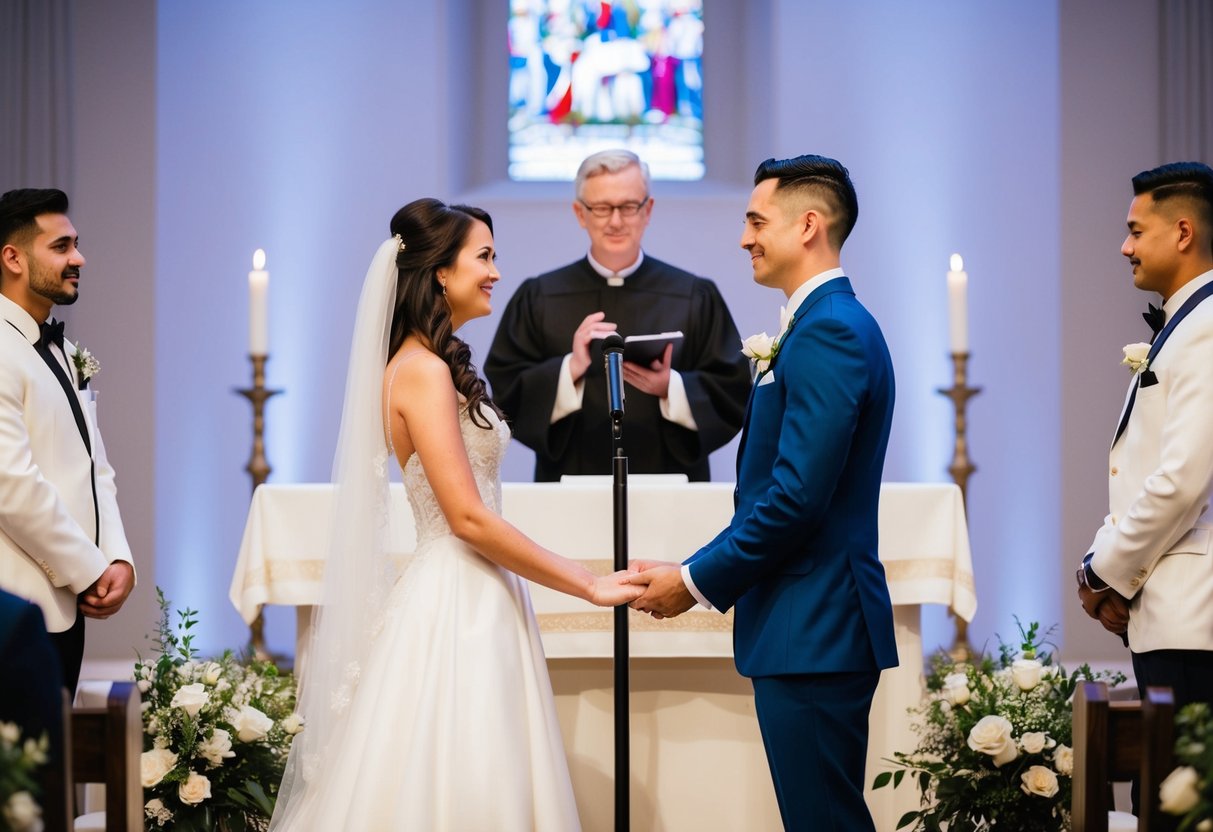
When planning your wedding, you’ll encounter various vow options. It helps to know the differences between religious and civil ceremony vows, as well as how to write your own. This section covers these important topics for your big day.
Religious vs. Civil Ceremony Vows
Religious vows are often rooted in tradition and vary by faith. For example, the Church of England offers a set of standard vows that include phrases like “I, [Name], take you, [Partner’s Name], to be my lawfully wedded wife/husband.” These vows may involve more formal language, reflecting the sacred nature of the ceremony.
In contrast, civil ceremony vows provide flexibility. They are usually less formal and can be customized to fit the couple’s beliefs and style. Couples can choose to keep it simple or add personal touches. Both options have their significance, so it’s about what resonates with you.
Civil Partnership Ceremonies
Civil partnership ceremonies are designed for couples who wish to formalize their relationship legally but might not want a traditional wedding. These ceremonies often use civil vows, which can be more straightforward and secular.
The vows typically include a promise of commitment and partnership. You can select wording that reflects your feelings and intentions. Many couples appreciate this option as it allows for genuine expressions of love without strict religious connotations.
Writing Your Own Vows
Writing your own vows can add a personal touch to your ceremony. It gives you the chance to express your feelings, share memories, and outline your hopes for the future. This custom approach makes your commitment unique to you as a couple.
When writing your vows, focus on what matters most to you. You might want to consider including promises, personal anecdotes, and even humor. Keep your vows clear and heartfelt, ensuring they fit the tone of your ceremony. This can create a memorable moment that you and your partner will cherish forever.
Planning Your Vows
When planning your wedding vows, think about what matters most to you and your partner. This is a chance to express your commitment to each other during the ceremony.
You can choose to use standard vows or write your own. If you decide to write your own vows, here are a few tips:
- Be personal: Share stories or memories that represent your relationship.
- Keep it simple: Make sure your vows are clear and easy to understand.
- Include promises: Think about the commitments you want to make, like “Till Death Do Us Part.”
You might also want to mention your wedding ring. This symbol of love can be included in your vows. Saying something like, “With this ring, I commit my heart to you,” adds a meaningful touch.
Remember that wedding vows are about your marriage contract, so reflect on the promises you want to uphold.
As you plan, keep the mood light and joyful. These words will be part of your special day, so enjoy this moment. Don’t worry about making them perfect; focus on what feels right for both of you.
Your vows are a beautiful way to declare your love and devotion. Make them heartfelt and true to your unique relationship as you begin this exciting journey together.