
What Family to Invite to a Wedding? A Guide to Choosing Your Guests
Deciding which family members to invite to your wedding can feel overwhelming. Make sure to include your immediate family, like parents and siblings, at the top of your list. You may also want to include extended family, such as grandparents and aunts or uncles, depending on your relationship with them.

Setting boundaries is crucial in this process. It’s okay to prioritize those you feel closest to while being mindful of family dynamics. Think about who brings joy to your life and who you truly want to celebrate with you on your special day. The more clarity you have about your wedding guest list, the easier it will be to make these decisions.
Remember, wedding planning should reflect your unique story. So, focus on the family members who matter most to you as you create a day that feels right for you and your partner.
Creating Your Wedding Guest List
Creating your wedding guest list can feel overwhelming. By focusing on your budget, understanding the venue capacity, and deciding which family members to invite, you can simplify the process and make choices that feel right for you.
Determining Your Wedding Budget
Start by setting a budget for your wedding. This budget should include all possible expenses, including the costs associated with food, drinks, and venue rental. A crucial part of the budget is knowing how much you can afford for each guest.
If your budget is tight, it may limit the number of people you can invite. Consider creating a list of “must-invite” family members first. Once you know your maximum guest count, you can extend invites to extended family members based on what remains.
Understanding Venue Capacity
Next, check your wedding venue’s capacity. This number will be critical when finalizing your guest list. You want to choose a venue that fits comfortably with your desired number of guests.
Each venue has a maximum capacity, which often includes your wedding party. To avoid overcrowding or discomfort, stick to this limit. You may want to ask the venue staff for guidance on seating arrangements and how they affect capacity.
Deciding on Invitees Within Family Circles
When it comes to inviting family members, think about your immediate and extended family. Include close relatives like parents, siblings, and grandparents first. If you invite one aunt or uncle, consider inviting the whole side of the family to maintain harmony.
Guest list etiquette is vital here. You may feel pressure to invite distant relatives or family friends. Balance these feelings with your budget and venue capacity. You might also discuss invites with family members to gauge their feelings on who should be included.
Prioritizing Immediate and Extended Family

When planning your wedding guest list, it’s important to decide who to invite from your immediate and extended family. Focusing on family helps to create a warm environment on your special day. Here’s how to approach inviting the most relevant family members.
Inviting Parents, Siblings, and Grandparents
Your parents, siblings, and grandparents are typically the first people you should consider inviting. They have played significant roles in your life and should share in your big day.
Parents often contribute emotionally and financially, and it’s respectful to include them in the celebration. Inviting both sets of parents is common.
Siblings are likely your lifelong friends. Including them can make your day more enjoyable.
Grandparents provide wisdom and love. Their presence can add special meaning to the ceremony. If they are able, inviting them is a wonderful gesture.
Considering Aunts, Uncles, Cousins, and Distant Relatives
Next, think about your aunts, uncles, and cousins. These relatives often bring joy and support to family gatherings.
Aunts and Uncles may have been influential in your upbringing. Consider inviting those with whom you have close relationships.
Cousins can also be important. If you grew up together, they might want to celebrate this milestone with you.
For distant relatives, consider your relationship with them. If you seldom see them or don’t interact regularly, it is okay to consider not inviting them. Focus on those who have been present in your life.
Inclusion of Nieces, Nephews, and Kids
When deciding on kids, include your nieces and nephews, especially if they are close to you and your fiancé.
Having young ones in attendance can add fun to the celebration. If your venue is family-friendly, it is likely best to invite them.
Make sure to consider their comfort and needs. You may want to set up a designated area for kids to play.
If you decide to invite children, ensure you have activities or entertainment planned. This can make your wedding enjoyable for all ages.
Balancing Friends and Plus-Ones

When planning your wedding guest list, it’s important to find a balance between inviting friends and offering plus-ones. This can help create a comfortable atmosphere for everyone. Consider your relationships carefully, as well as the overall dynamics of your celebration.
Inviting Best Friends and Close Friends
Your best friends and close friends are likely your top priority. These are the people who have been there for you through thick and thin. They should have a guaranteed spot on your guest list.
Make sure to talk to them about their plus-one needs. If they’re in a committed relationship, it’s polite to allow them to bring their partner. This ensures your friends feel supported and included during your special day.
Managing Acquaintances and Co-Workers
Inviting acquaintances and co-workers can be tricky. You want to maintain a friendly atmosphere, but you may not know them well enough to justify an invitation. A good approach is to focus on those you share a friendly rapport with.
If you have a limited budget, consider inviting only those you interact with often. For example, if a coworker helps you with projects regularly, they may warrant an invite. Discussing the guest list with your partner can also help determine who to invite.
Addressing Plus-Ones and Guest List Etiquette
Plus-ones are a common consideration when building your guest list. You don’t need to automatically extend an invite to every guest’s partner, especially if space and budget are limited.
A good guideline is to offer plus-ones to close friends and family. This shows that you value their relationships. However, for distant friends or acquaintances, it’s okay to limit invites. Clear communication on invitations will help manage expectations.
School Friends, Family Friends, and Wedding Party Considerations
School friends and family friends can also play a role in your guest list. These relationships may vary in closeness. Decide who you keep in touch with and who has significantly impacted your life.
For your wedding party, typically include your closest friends or siblings. They should be a source of support on your big day. If you’re debating on extending invites to friends from school or family friends, think about your current relationship and how much they matter to you now.
Finalizing Invitations and RSVPs
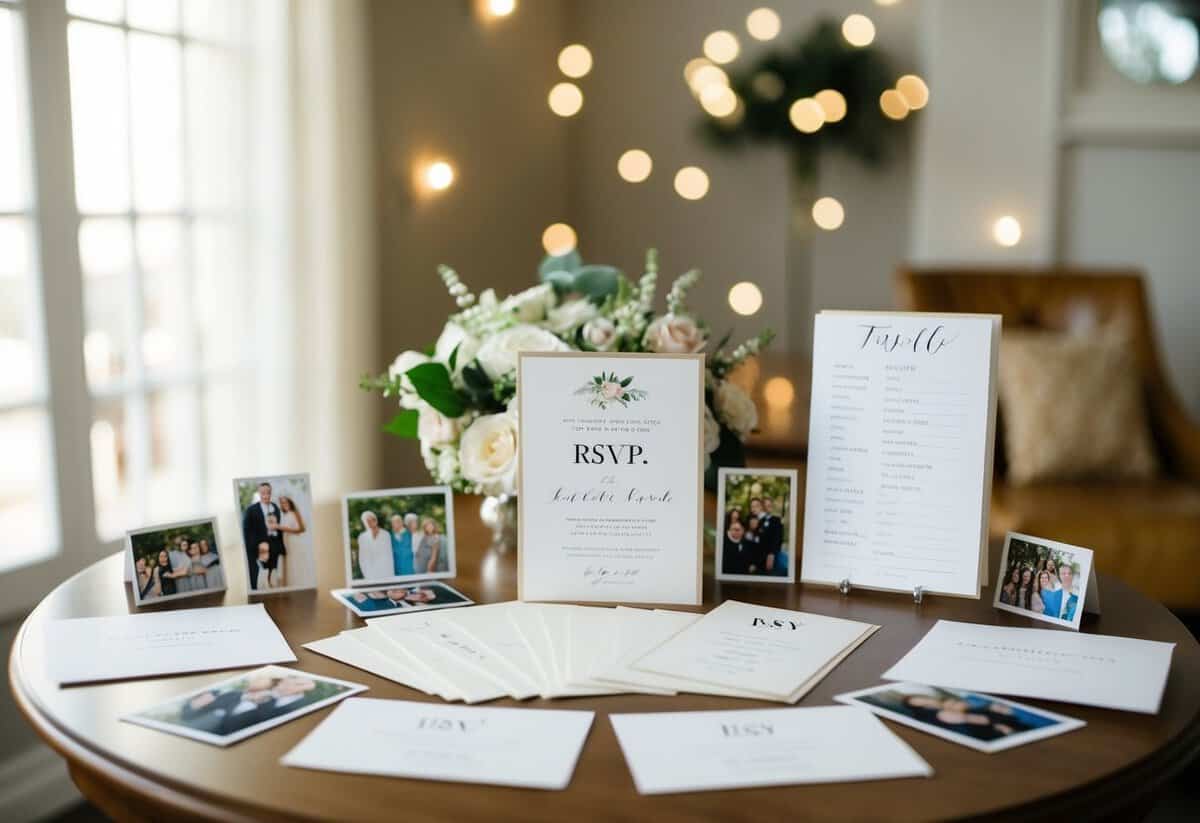
When you’re ready to invite your family to your wedding, it’s key to have your invitations and RSVPs in order. This helps ensure everyone knows the details for your special day.
Drafting Wedding Invitations
Creating your wedding invitations is an exciting step. Start with the essentials: your names, the wedding date, venue, and time. If you’re hosting a destination wedding, include travel information to help guests plan.
Choose a design that fits your wedding theme while keeping your budget in mind. Adding elements like your wedding colors can make the invites special.
Don’t forget to mention the attire, whether it’s casual, semi-formal, or black tie. This will guide your guests in choosing their outfits. If you have a wedding website, include the link for more details!
Setting an RSVP Deadline
Setting an RSVP deadline is crucial for planning your wedding day. Aim to have your guests respond at least 3-4 weeks before the celebration. This gives you time to finalize seating arrangements and catering needs.
In your invitations, clearly state the deadline. You may want to include a small note about how important their presence is. Remember, communication is key.
For easier replies, consider offering an online RSVP option along with traditional paper ones. This can help keep track of responses, especially for larger gatherings.
Balancing your guest list with your budget constraints will help streamline your planning process.