
What Is a Captain’s Right Hand Man Called? Exploring the Role of the First Mate
On a ship, every role plays an important part in keeping things running smoothly. Among these roles, the one often referred to as the captain’s right-hand man is known as the first mate. This position is crucial in the chain of command, as the first mate assists the captain in decision-making and takes charge when the captain cannot carry out their duties.
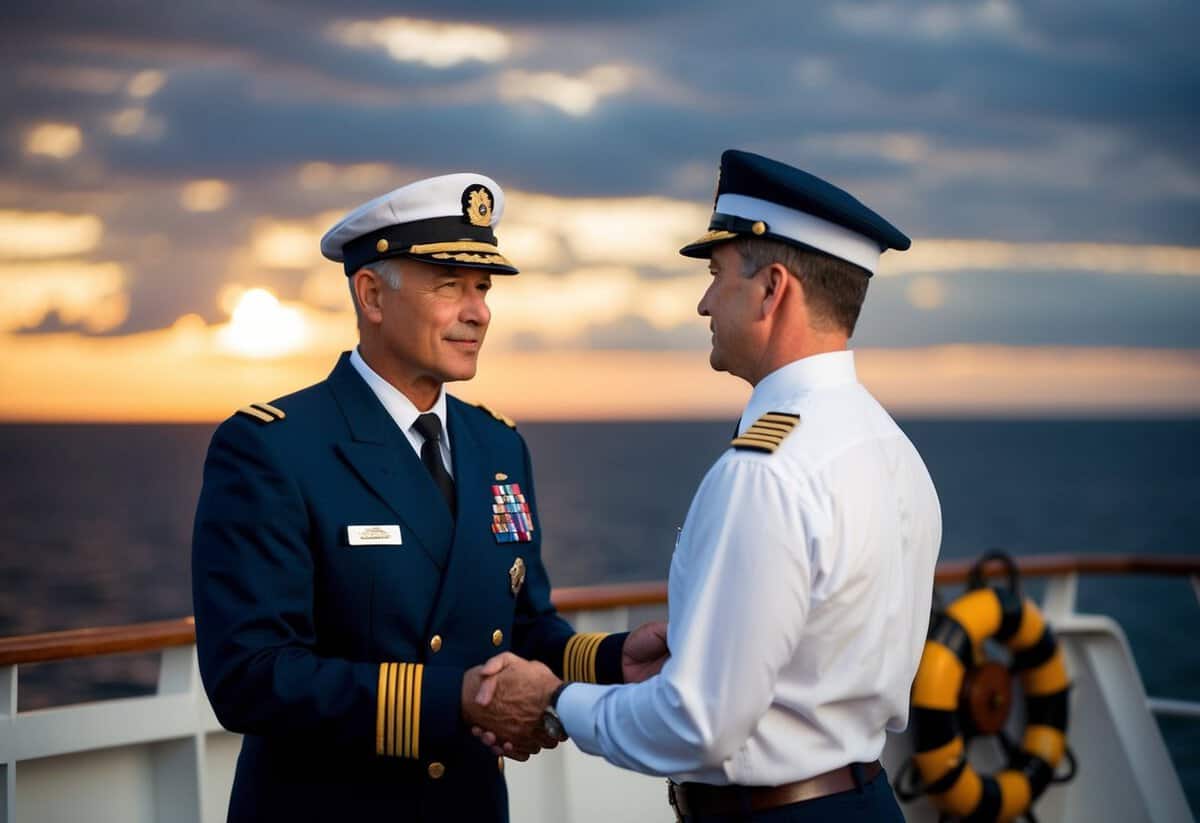
The authority of the first mate is significant, often acting as a bridge between the captain and the rest of the crew. They have to be skilled leaders themselves, ready to implement orders and ensure safety during all operations. Without your first mate, it would be hard to maintain order and effectiveness on the ship.
Understanding the dynamics of ship roles gives you a better picture of how teamwork is essential on the seas. It’s not just about who gives orders but also about who supports those making the tough calls. Think of the first mate as the captain’s trusted ally, always ready to take the helm when needed.
The Role of the First Mate
The first mate plays a crucial part aboard a ship, acting as the captain’s right-hand man. This role involves a range of responsibilities, a specific place in the ship’s hierarchy, and a rich historical background.
Responsibilities and Duties
As the first mate, you are responsible for many key tasks. You assist the captain in navigation and help manage the crew.
Your duties include ensuring the safety of everyone onboard and overseeing daily operations. You check that the ship is well stocked and that supplies are maintained.
You also handle communication between crew members and the captain. In emergencies, like a storm or battle, you must quickly respond and make decisions to protect the ship.
Hierarchy and Authority
In the ship’s hierarchy, the first mate ranks just below the captain and often acts as his deputy. If the captain is injured or unable to perform his duties, you step in to lead the crew.
On some pirate ships, however, the role of first mate may differ slightly. Instead of having both a first mate and a quartermaster, many pirates opted for a single quartermaster, who shared authority with the captain during important decisions, especially during battles.
Historical Significance
The role of the first mate has a long history in maritime culture. Historically, first mates have been vital in naval operations. They were often more experienced sailors who guided newer crew members.
In pirate crews, the first mate was essential in managing ship activities and enforcing the captain’s orders. This role became even more significant during dangerous missions, like treasure hunting or naval battles, showcasing the vital support and leadership needed on a ship.
Other Key Officers on a Ship
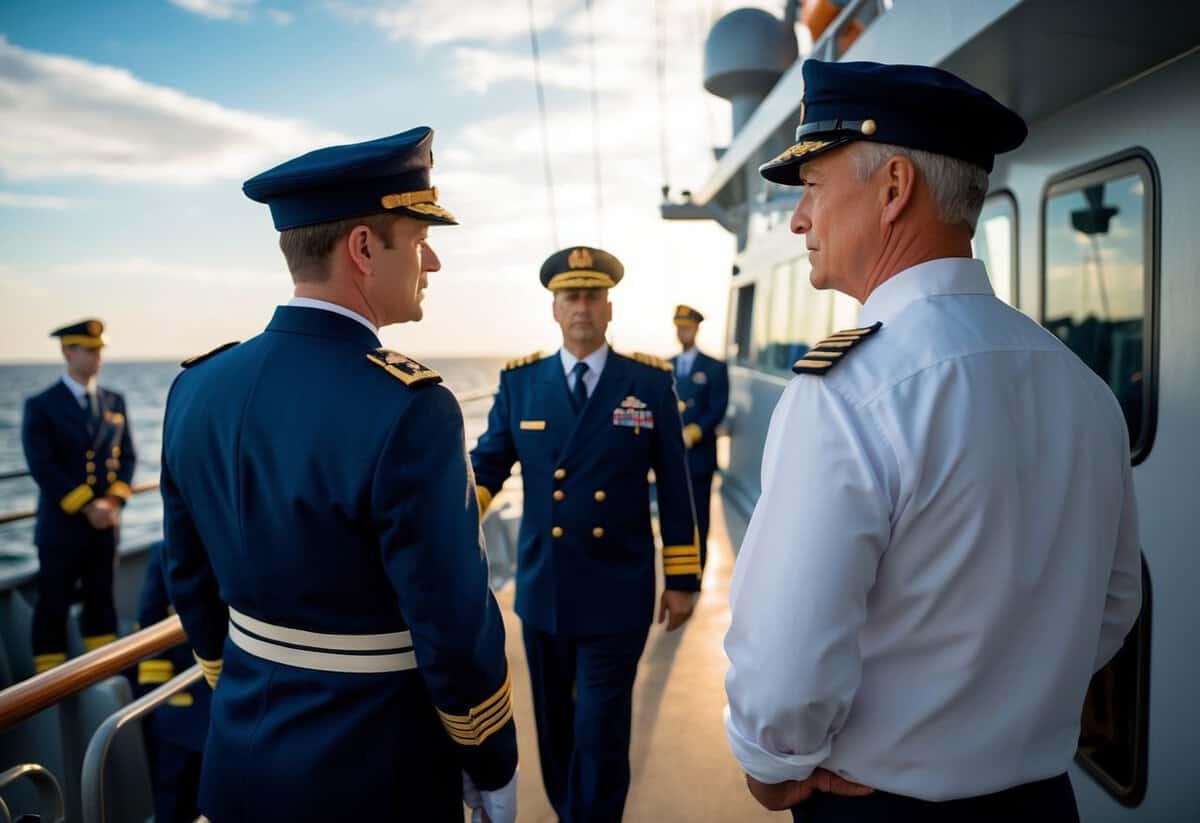
On a ship, several key officers support the captain in navigating and managing the crew. These roles are crucial for the smooth operation of the vessel. Let’s look at three important groups: the navigational team, operational crew, and support personnel.
Navigational Team
The navigational team includes the sailing master and the first mate. The sailing master is responsible for navigating the ship, ensuring it stays on course. This officer needs to be skilled in using navigational tools like compasses and charts.
The first mate acts as the captain’s right-hand person. They help manage the crew and carry out the captain’s orders. This role is vital for communication between the captain and the rest of the crew. Together, they ensure that the ship moves safely and efficiently through different waters.
Operational Crew
The operational crew comprises several essential roles, such as the boatswain and master gunner. The boatswain oversees deck operations and manages the deckhands. They make sure the ship is well-maintained and all tasks are completed efficiently.
The master gunner, on the other hand, is responsible for all weapons aboard, especially on pirate ships. They ensure the ship is ready for battle and that all crew members know how to handle the cannons. These roles are crucial for both day-to-day tasks and emergency situations.
Support Personnel
Support personnel include the ship’s surgeons, cooks, and other essential staff. Surgeons are vital for treating injuries or illnesses aboard the ship, ensuring the crew stays healthy.
Cooks provide meals for both the crew and passengers. They must be resourceful, using limited supplies to create nutritious food. These support roles often keep morale high, which is especially important during long voyages. Each member plays an important part in making the ship run smoothly.
Life at Sea and on Pirate Ships
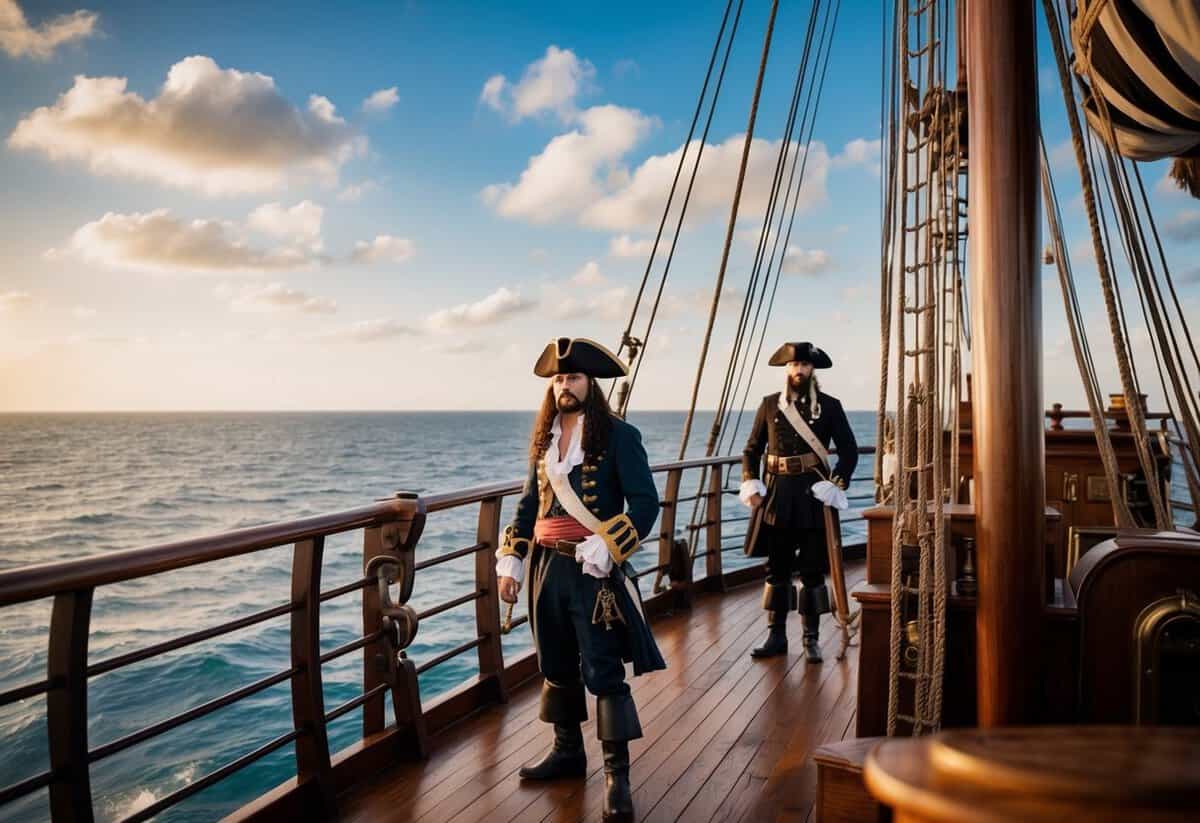
Life on a pirate ship was full of excitement, challenges, and a unique social structure. Understanding how daily operations were managed, the governance among the crew, and the risks involved gives you a better picture of life at sea.
Daily Operations
On a pirate ship, daily operations were crucial for survival and success. Crew members had specific roles to perform, from swabbing the decks to managing sails. Each man contributed to the functioning of the ship.
Common duties included:
- Navigating: The captain and his right-hand man, often called the first mate, worked together to plot courses using ocean currents.
- Watchkeeping: Lookouts were stationed high in the crow’s nest to spot potential dangers or other ships.
- Gambling and downtime: Between tasks, pirates often relaxed by playing cards or telling stories. This camaraderie was important for morale.
Efficient teamwork was essential for pirates to thrive during the golden age of piracy.
Social Structure and Governance
Pirate ships had a unique social structure that often differed from naval ships. Decisions were frequently made by a pirate council, which included all crew members. This democratic approach was a way to maintain fairness and prevent mutiny.
Key aspects of governance:
- Elections: The captain and quartermaster were elected by the crew. This ensured that they led with the crew’s interests in mind.
- Code of Conduct: Pirates adhered to a code that outlined rewards for successful raids and punishments for rule violations.
- Responsibilities: The captain had authority in battle, but during calm times, the crew’s consensus often ruled.
This system helped create a sense of unity among the pirate crew.
Challenges and Risks
Life at sea was not without dangers. Pirates faced various challenges that tested their skills and endurance. Storms, enemy ships, and even disease were constant threats.
Common risks included:
- Mutiny: Discontent among crew members could lead to mutiny, risking the captain’s authority.
- Pirate battles: Encounters with rival pirates or naval ships often resulted in violent confrontations.
- Health issues: Living conditions were rough, and diseases like scurvy were common due to poor nutrition.
For pirates, navigating these challenges was just as important as their raids at sea.
Distinctive Ranks and Their Functions
Understanding the ranks on a ship can help you appreciate the roles and responsibilities each crew member holds. Each rank plays a vital role in keeping operations running smoothly. Here, we explore the important titles and their functions, focusing specifically on pirate ranks and those found on naval and merchant ships.
Pirate Ranks and Titles
In the world of pirates, ranks are essential for organizing the crew. The Captain holds the highest authority, making crucial decisions for the ship. Next to the Captain, you have the Quartermaster, often seen as the Captain’s right hand. This person supervises the crew when the Captain is absent.
Other notable ranks include the Bosun (or Boatswain), who manages deck crew and maintenance, and the Gunner, responsible for the ship’s artillery. A unique position is the Powder Monkey, a young crew member tasked with carrying gunpowder during battles. Each rank plays a specific role, making it crucial for successful piracy.
Naval and Merchant Ship Ranks
Naval and merchant ships follow a more structured system for their ranks. The Master is the highest rank, similar to the Captain in piracy, overseeing all operations.
Below the Master are the Chief Officer and First Officer, who coordinate crew activities and keep everything in order. Further down the line, the Second Mate and Third Mate manage specific duties, such as navigation and watchkeeping.
The Chief Engineer oversees the ship’s mechanical operations, ensuring everything runs smoothly. Each rank is important and contributes to the safety and efficiency of the ship’s operations.