
What is a Size 12 Wedding Dress Equivalent to UK? Understanding Bridal Sizing Differences
If you’re wondering about the size conversion for wedding dresses, you’re not alone. Many brides find themselves confused when trying to figure out their size in different regions. A size 12 wedding dress in the US is equivalent to a UK size 16.
Knowing this can make your dress shopping experience much smoother and help you find the perfect fit.
Understanding wedding dress sizes is essential as they can vary widely between designers and countries. In the UK, sizes often follow traditional numeric sizing, which is different from US sizes.
This might make it tricky when looking for your dream wedding gown, especially since some brands might label sizes differently.
As you embark on your search for that stunning wedding dress, keep this size conversion in mind. It will not only save you time but also ensure you can try on the right dresses that match your measurements.
Understanding Wedding Dress Sizing
Finding the right wedding dress size can be tricky. Different regions use various sizing standards, and bridal sizes can differ from regular clothing sizes.
Knowing these differences will help you make an informed choice when shopping for your dream gown.
US vs UK Size Charts
In the US, wedding dress sizes often run larger than street sizes. For instance, a size 12 wedding dress in the US typically corresponds to a size 14 in the UK.
Understanding this difference is crucial to ensure a proper fit.
To simplify this, here’s a quick reference table for US and UK sizes:
| US Size | UK Size |
|---|---|
| 6 | 10 |
| 8 | 12 |
| 10 | 14 |
| 12 | 16 |
Knowing the correct size in both systems aids in selecting the right dress when using size charts from various retailers.
Bridal Sizes and Street Sizes
Bridal sizes often differ from regular street sizes. When it comes to bridal sizes, they can run one to two sizes larger than typical clothing.
For instance, a bridal size 12 may fit like a street size 8 or 10.
Retailers usually have their own wedding dress size charts. Always check the specific size guide from the designer. They will include measurements for bust, waist, and hips to help you choose the best fit.
International Dress Size Conversion
When shopping in different countries, it’s important to consider international dress size conversion. Sizes can vary widely between regions, like Europe, Asia, and the US.
For example, a size 12 UK dress may be a size 40 in French sizing.
Familiarizing yourself with these conversions can prevent sizing mistakes. Here’s a brief conversion table:
| UK Size | EU Size |
|---|---|
| 12 | 40 |
| 14 | 42 |
| 16 | 44 |
Using these charts ensures you choose the right dress size, making your bridal shopping experience more enjoyable.
Finding Your Wedding Dress Size
Choosing the right wedding dress size is essential for a perfect fit. Knowing how to measure yourself accurately helps you find the size that suits you best.
How to Measure Yourself
To get accurate body measurements, you will need a soft measuring tape. Here’s how to measure key areas:
- Bust Size: Measure around the fullest part of your bust. Keep the tape firm but not tight.
- Waist: Find your natural waist, which is usually above your belly button. Measure around this area.
- Hip Size: Measure around the widest part of your hips. Ensure the tape is straight and parallel to the ground.
- Height: Stand straight against a wall and mark where your head reaches. This helps in finding the right dress length.
It’s best to have a friend assist you for the most accurate results.
Importance of Accurate Measurements
Accurate body measurements are crucial when selecting your wedding dress size to avoid fitting issues later.
A size 12 wedding dress equivalent can vary from a size 6 or size 8 dress based on brand sizing charts.
Using the correct measurements helps you understand how dresses are sized. For example, knowing your bust size and hip size allows you to pick a dress that flatters your shape.
Always compare your measurements against the designer’s size chart to find the best match. This keeps surprises at bay and makes your dress shopping experience smoother.
Shopping for Your Wedding Dress
Finding the perfect wedding dress is an exciting journey. It’s important to focus on choosing the right silhouette that flatters your body shape and to prepare for your visit to a bridal shop.
Choosing the Right Silhouette for Your Body Shape
When shopping for your wedding dress, knowing your body shape can guide you to styles that enhance your best features. Common silhouettes include:
- A-Line: Flattering for most shapes, this dress is fitted at the waist and flows out to the ground, creating an elegant look.
- Mermaid: This style hugs the body until the knees, then flares out. It’s great if you want to highlight your curves.
- Ball Gown: This is perfect for a dramatic effect, with a fitted bodice and a full skirt.
- Sheath: This form-fitting style is best for slender figures, offering a sleek, modern look.
Consider trying on sample wedding dresses to see what feels right. A good bridal stylist can help you identify the best styles for you.
Tips for Visiting a Bridal Shop
Before your bridal appointment, prepare a few things to make the most of your time. Dress comfortably and wear undergarments that suit different styles. Bring along inspiration photos to communicate your vision.
At the bridal salon, allow yourself time to explore different dress styles. Don’t hesitate to ask the bridal stylist for advice. They can offer insights on what works best for your shape.
Lastly, be open-minded. Sometimes, a dress you may not have considered can become your favorite. Keep trying on various styles until you find that perfect fit!
Alterations and Final Fittings
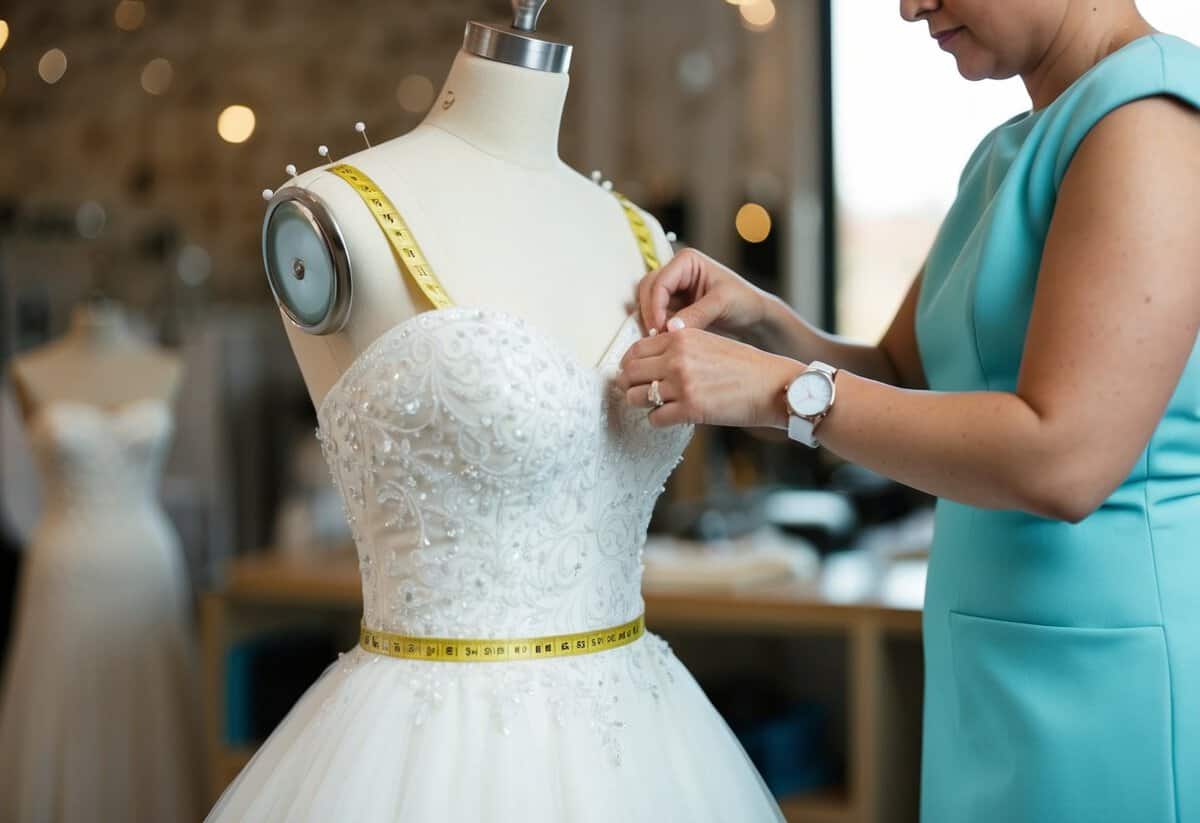
When finding your perfect wedding dress, you might need alterations. A bridal size may not fit perfectly off the rack. A skilled dressmaker can help with this.
Common alterations include:
- Bust Adjustments: Ensuring the bodice fits comfortably.
- Waist Tightening: Making the dress fit securely around your waist.
- Length Adjustments: Shortening or lengthening the hem for the right look.
Your final fitting is crucial. It’s best to schedule it no earlier than two weeks before the wedding. This way, you can account for any last-minute changes in your body or preferences.
To help with size conversions, you can use a dress size calculator. For instance, a size 12 wedding dress from David’s Bridal is typically equivalent to a size 14 in regular clothing. Remember, sizes can vary by brand, so always check specific size charts.
Talk to your dressmaker about your vision. Communicate about how you want your dress to fit and look. A good relationship with your dressmaker can lead to a stunning final result. Your comfort and confidence are what matter most on your big day.