
What Is the 2 Month Rule for Engagement Rings? Understanding the Tradition Behind Ring Budgets
When you buy an engagement ring, many people will tell you about the two-month rule. This guideline suggests that you should spend the equivalent of two months’ salary on the ring you choose. With the average engagement ring cost hovering around $5,500, this means you would be looking at a budget of around $8,000 if you earn $50,000 a year.
While this rule is popular, it’s important to consider what truly matters in choosing the right ring for your partner. Factors such as personal taste, the meaning behind the ring, and your financial situation should influence your decision.
You may love the idea of the two-month rule, but setting a budget that feels comfortable for you is what really counts.
As you think about the cost and value of an engagement ring, remember that it’s about the love and commitment it represents. Your focus should be on finding a piece that makes your partner happy, not just on following traditional guidelines.
Understanding the Two-Month Rule for Engagement Rings
The two-month rule is a popular guideline for spending on engagement rings. It’s rooted in tradition and often sparks discussion on what is truly meaningful in choosing a ring.
This section explores the history behind this rule and how it fits into modern budgeting perspectives for engagement rings.
Historical Context of the Two-Month Rule
The two-month rule suggests that you should spend two months’ worth of your salary on an engagement ring. This idea gained popularity in the 1980s when the diamond industry marketed it to boost sales. The famous slogan “A Diamond is Forever” helped solidify the ring as a must-have symbol of love and commitment.
Before the two-month rule, some adhered to the three months’ gross salary rule. While both rules seem to provide a standard, they may not fit everyone’s situation. People often find themselves questioning whether these amounts are still relevant today.
Modern Perspectives on Engagement Ring Budgeting
Today, many couples view the two-month rule as outdated. Financial responsibilities like student loans and housing costs often take precedence.
Instead, setting an engagement ring budget that aligns with your personal circumstances is becoming more common.
Many now prioritize spending what feels right rather than adhering to traditional rules. Consider what your partner values in an engagement ring too. It could be a unique design or an alternative stone instead of a diamond.
This approach allows you to give a meaningful ring without the weight of financial stress.
Factors Influencing Engagement Ring Budget
Your budget for an engagement ring comes from several important factors. These include your financial situation, personal preferences, and choices in diamond type and design. Understanding these can help you make the best decision.
Financial Situation and Personal Preferences
Your financial situation plays a big role in how much you can spend on an engagement ring. Think about your monthly expenses, savings, and any debts.
If you are just starting out in your career, you might have a different budget than someone who has been working for years.
Your personal preferences also matter. Some people might want to prioritize a larger carat size, while others may value the quality of the diamond more.
Consider what feels right for you and your partner. It’s important to aim for a budget that reflects both your financial reality and personal taste.
Carat Size and Diamond Shape
Carat size refers to the weight of the diamond and is a major factor in price. Generally, the larger the carat, the higher the cost.
Understand that bigger is not always better. Sometimes, a smaller carat can look just as stunning depending on the design and setting.
The shape of the diamond also affects the price. Popular shapes like round or princess cuts often come with higher price tags. On the other hand, shapes like oval or marquise can provide a larger appearance at a lower cost.
Research different shapes to find what you and your partner prefer.
Types of Engagement Rings and Materials
When it comes to types of engagement rings, you have many options. Traditional diamond rings are the most sought after, but alternatives exist.
Moissanite and lab-grown diamonds can provide stunning looks at lower prices.
The metal used for the band also influences the cost. Platinum tends to be more expensive than gold or silver.
Consider how these choices fit within your budget. Evaluate the pros and cons of each option to ensure you make a choice that feels right for both you and your partner.
How to Choose the Perfect Engagement Ring
Choosing the right engagement ring involves understanding diamond quality and knowing where to shop. This process can be enjoyable when you know what to look for.
Understanding Diamond Quality and Certification
When selecting a diamond, familiarize yourself with the 4 Cs: Cut, Color, Clarity, and Carat Weight. Each of these factors influences the diamond’s appearance and value.
- Cut refers to how well the diamond is shaped and reflects light. A well-cut diamond sparkles beautifully.
- Color grades diamonds from colorless to light yellow. Aim for a color grade between D and H for a beautiful appearance.
- Clarity measures clarity and imperfections. Look for diamonds with a clarity rating of VS1 or better.
- Carat Weight shows the diamond’s size. Balance size and quality based on your budget.
Certification is also key. Always choose diamonds certified by reputable organizations like the GIA or AGS.
Shopping for Engagement Rings: Brick-and-Mortar vs Online Retailers
When it comes to shopping, both brick-and-mortar stores and online retailers have advantages.
In jewelry stores, you can see and touch the rings. This lets you experience their sparkle and weight. Knowledgeable staff can help answer your questions and guide your choices. Shopping in person can create a special experience too.
Online retailers, on the other hand, often have a wider selection and better prices. Many websites offer detailed images and 3D views of the rings. You can read customer reviews to help you decide.
Just make sure to check the return policy and certification before buying.
Consider your preferences and comfort level with each option.
Alternatives to the Traditional Diamond Engagement Ring
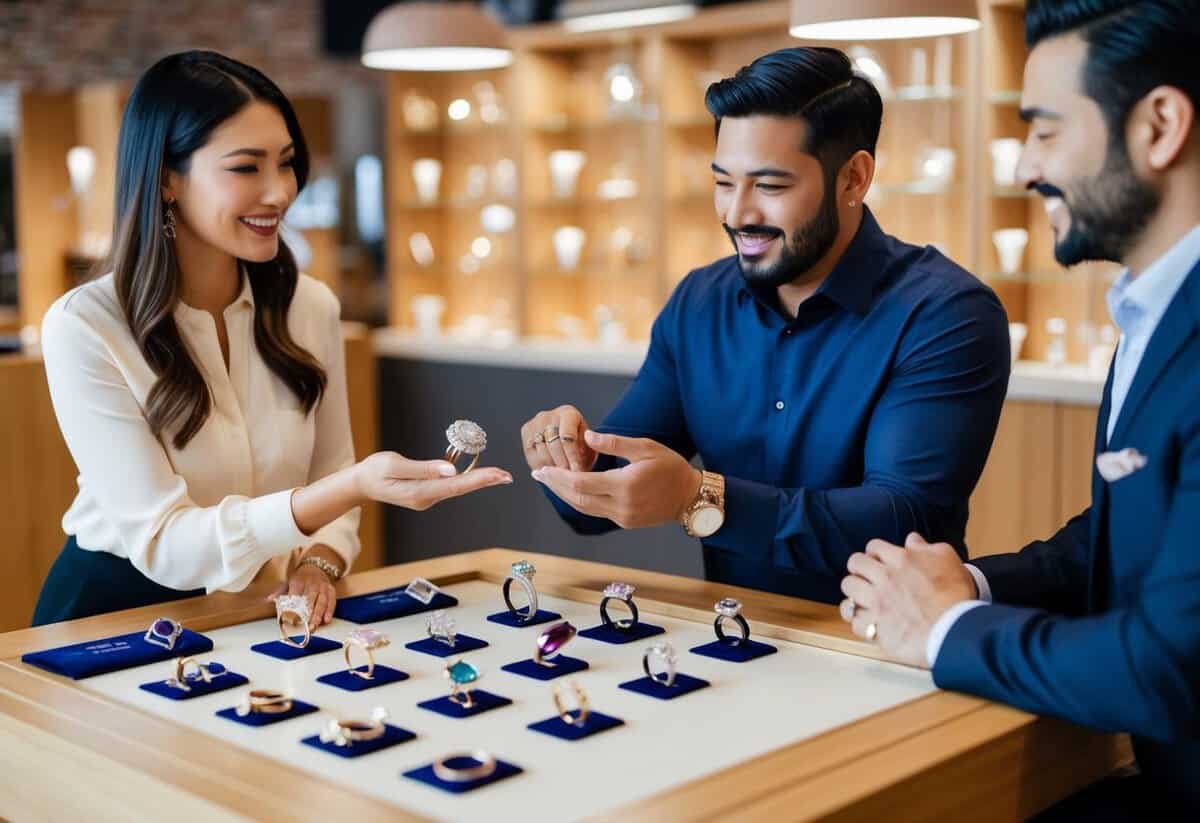
If you’re looking for something unique, you have plenty of options beyond a classic diamond engagement ring.
Moissanite is a popular choice. This gemstone sparkles like a diamond but often costs less, making it a budget-friendly alternative.
Lab-grown diamonds are another option. They create these real diamonds in a lab. Lab-grown diamonds have the same chemical structure as natural diamonds but usually come at a lower cost.
To help you decide, here’s a quick look at some alternatives:
| Stone Type | Appearance | Cost Comparison |
|---|---|---|
| Moissanite | Brilliant sparkle | Typically 70% less than diamonds |
| Lab-grown diamond | Identical to natural diamonds | Usually 20-40% cheaper |
| Colored gemstones | Variety of colors | Can be more affordable depending on the stone |
You may also consider unique center stones like sapphires or emeralds. These add a personal touch and can reflect your style.
When choosing your engagement ring, think about your values and how much you want to spend. An alternative can still hold deep meaning and be a beautiful symbol of your love.