
What Is the Groom’s Family Supposed to Pay For? Understanding Wedding Costs and Responsibilities
Many people wonder about the financial responsibilities of the groom’s family. Traditionally, the groom’s parents are expected to cover specific costs. This includes the rehearsal dinner, honeymoon, and sometimes even the alcohol at the reception. Knowing what the groom’s family should pay for can help in creating a clear wedding budget and make the planning process smoother for everyone involved.

Understanding these roles can ease some of the pressure you may feel as you coordinate expenses. In many cases, costs can be split among both families, so it’s important to communicate about who covers what. Keeping wedding etiquette in mind while addressing financial responsibilities will ensure that everyone is on the same page and contributes fairly.
As you dive into the details of your wedding, remember that these traditions can vary. Many couples find flexibility in how they divide costs, so don’t hesitate to adjust the expectations based on your unique situation. Planning a wedding should be a joyful experience, and knowing the roles of both families can help you enjoy the journey even more.
Groom’s Family Financial Obligations
When planning a wedding, the groom’s family often has specific financial duties. These responsibilities can include paying for various aspects, which may help ease the overall costs for the couple. Here are the main obligations you should know about.
Rehearsal Dinner
The rehearsal dinner is typically hosted by the groom’s family. This event takes place the night before the wedding and is a chance for close family and friends to gather, relax, and celebrate together.
Costs for the rehearsal dinner can vary based on the location and menu. You might choose a casual setting or something more upscale.
Not only does this event allow everyone to connect, but it also serves as a rehearsal for the wedding day. Keep in mind that your budget will affect the number of guests you invite.
Marriage License Fee
The marriage license fee is a legal requirement for your wedding. It’s typically the responsibility of the groom’s family to cover this cost.
This fee can vary by state or county, so it’s wise to check local regulations. It is necessary to obtain the license before the wedding ceremony.
Make sure to factor in the application process. Some states have a waiting period, so it’s best to plan ahead and ensure you have all required documents ready.
Wedding Rings
Traditionally, the groom’s family contributes to the cost of the wedding rings. This often includes the engagement ring and the matching wedding band.
While the groom usually purchases the engagement ring, the groom’s parents might help with payment or gift them to the couple.
The cost of rings can differ greatly based on the materials and designs. You can set a budget to ensure you find something that suits your style without overspending.
Groom’s Attire
The groom’s family usually takes financial responsibility for the groom’s attire. This can include the suit or tuxedo, shoes, and accessories.
Traditionally, the groom’s family covers the expenses for the groom and groomsmen. Consider renting or purchasing outfits based on your budget.
Make sure to explore different options. Choosing classic styles can be cost-effective while still ensuring everyone looks great on the big day.
Ceremony and Reception Contributions
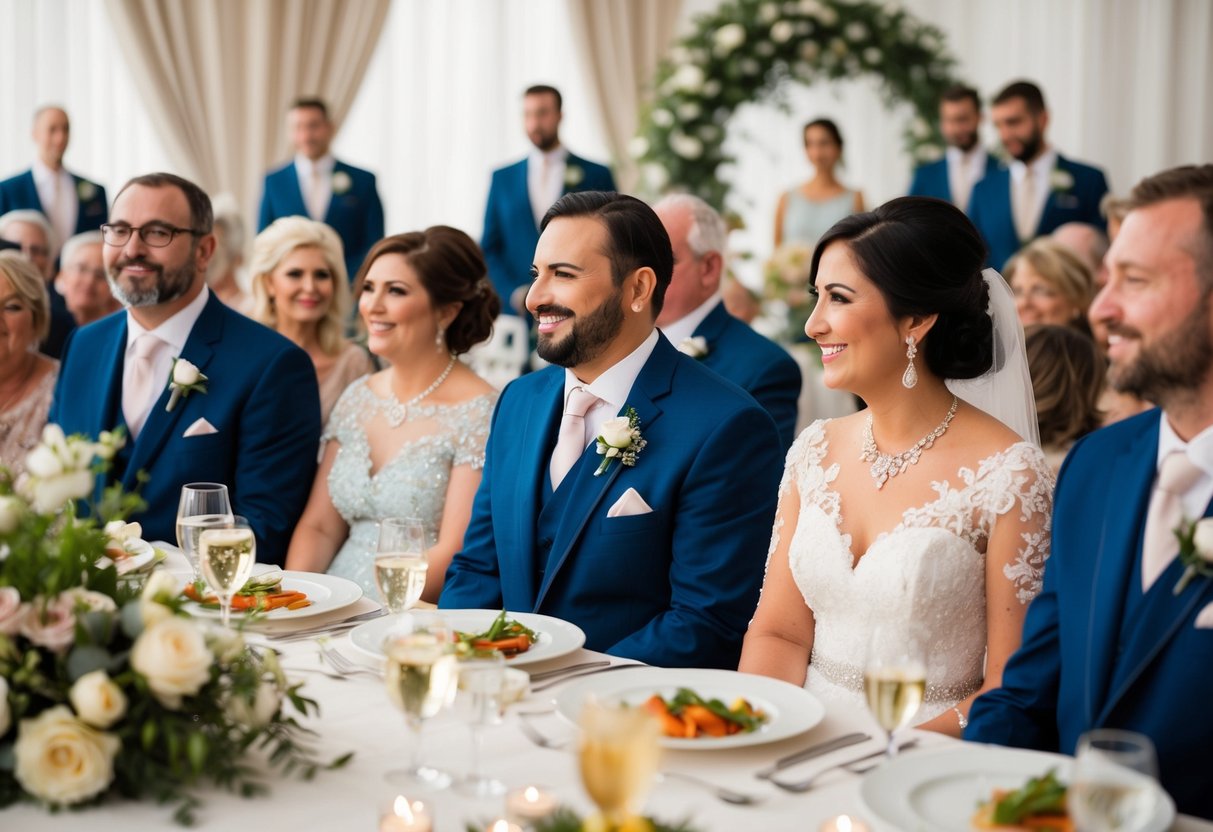
The groom’s family often plays an important role in covering specific costs related to the wedding ceremony and reception. These contributions can help ensure the event runs smoothly and can alleviate some financial pressure from the couple.
Officiant Fee
One key responsibility for the groom’s family is covering the officiant’s fee. This cost can vary based on the officiant’s experience and the location of the ceremony.
Typically, you might expect to pay between $200 to $500 for this service. Some families also choose to offer extra for travel expenses, especially if the officiant is coming from afar.
Make sure to discuss this with your partner early on, as it can help both families understand their roles. The groom’s family might also want to consider whether to provide a cash gift or token of appreciation to the officiant.
Wedding Flowers
Flowers are an essential part of any wedding ceremony. The groom’s family is often responsible for some of the floral arrangements, including corsages for mothers and boutonnieres for important male family members.
Depending on your tastes and budget, this can range from simple arrangements to more elaborate displays. Corsages are typically worn by the mothers and grandmothers, while boutonnieres are worn by the groom and groomsmen.
You can expect to spend around $200 to $600 on flowers, but talk to a florist to find the best options within your budget. Choosing flowers that match the wedding theme can create a beautiful atmosphere.
Reception Alcohol
Another significant cost the groom’s family may help with is alcohol for the wedding reception. This is not a requirement, but offering to contribute can be a generous gesture.
On average, couples spend around $2,400 on wedding reception alcohol. This can include wine, beer, and cocktails. If your family is planning to contribute, consider discussing options like an open bar or a cash bar.
Some families provide a specific amount, while others cover certain drinks or the entire bar setup. Make sure to coordinate closely with the venue to ensure you stay within budget while providing a great experience for guests.
Additional Considerations in Financial Planning

When planning your wedding, there are a few important financial responsibilities that often fall to the groom’s family. This includes gifts for groomsmen, hosting a welcome party, and contributing to the honeymoon. Understanding these details can help you manage expenses effectively.
Groomsmen Gifts
It’s common for you as the groom to show appreciation to your groomsmen with thoughtful gifts. This might include items like personalized cufflinks, wallets, or fun experience gifts such as tickets to an event.
Choosing gifts that reflect their personalities can make your gesture even more meaningful. Aim to budget around $50 to $150 per groomsman, depending on your overall wedding budget.
Don’t forget to consider the number of groomsmen when calculating total costs. This will help you avoid any surprises in your spending plan. A well-planned gift can strengthen bonds and express gratitude for their support.
Welcome Party
Hosting a welcome party can be a great way to kick off the wedding festivities. This informal gathering allows friends and family to mingle before the big day. As the groom’s family, you might take on the financial responsibility for this event.
Consider a budget that includes venue costs, food, and drinks. A casual setting like a backyard barbecue or a local restaurant can help keep costs down. Aim for around $1,000 to $3,000 depending on your guest list size and location.
This gathering isn’t just a party; it helps set a joyful tone for the weekend. It’s an opportunity for both families to come together and meet, easing any potential nerves.
Honeymoon Contribution
Depending on family traditions, your family may contribute to your honeymoon costs. This can range from covering flights to booking accommodations.
Many couples appreciate any financial support toward this exciting trip.
To make the most of this contribution, discuss your ideal honeymoon plans with your family. Sharing details about costs and what you envision can help them understand how they can assist.
You can budget for a honeymoon in range from $3,000 to $10,000 based on your destination. Knowing this can guide your family in providing the right level of help.
Their contribution can ease your financial burden and allow for a more enjoyable getaway.