
What Order Do People Sit on Top of the Table? Tips for a Balanced Seating Arrangement
Planning your wedding day can be exciting yet challenging, especially when it comes to deciding the seating arrangement. The top table usually features the bride and groom seated in the center, flanked by their parents and the best man and maid of honor. This arrangement helps to highlight the couple while making it easy for everyone to connect and celebrate together.

Your seating plan can also include other important family members or friends based on your unique situation. If you have children, step-parents, or close relatives, they can be included to make everyone feel special on your big day. Finding the right balance ensures that your top table reflects your relationships and creates a welcoming atmosphere.
As you finalize your seating arrangement, remember that the top table sets the tone for the reception. It’s your chance to show who matters most to you while allowing your guests to enjoy the celebration. Understanding the typical layout will help you create a memorable experience for everyone involved.
Understanding the Top Table
The top table is a central part of your wedding reception. It can greatly influence the feel of the event, as it determines where key people sit and how they interact with guests.
Traditions and Variations
Traditionally, the top table features the bride and groom at the center, often flanked by the best man and maid of honour. In a classic long top table layout, you face the rest of your guests, which can create a sense of connection.
Some couples prefer a sweetheart table, where just the two of you sit together. This setup allows for a more intimate dining experience, free from potential seating conflicts. Alternatively, a round top table promotes a cozy atmosphere, encouraging conversation among all seated.
There’s also the option of having no designated top table. Instead, you can mingle with your guests, sitting at various tables throughout the meal. This variation can make the reception feel more relaxed and informal.
Key Roles and Positions
Understanding who sits where on the top table is important for organizing your wedding day.
Here’s a typical layout for a traditional top table:
- Bride and Groom (center)
- Best Man (to the left)
- Maid of Honour/Chief Bridesmaid (to the right)
If your families are sitting together, it’s common for the parents of the bride and groom to take their places along the same table.
Should you have children or stepfamilies, consider including them too, which might increase the number of chairs needed. The roles of each position can enhance your guests’ experience, fostering connection and joy during your celebration.
Planning Your Seating
Seating arrangements can play a big role in how your wedding reception feels. It’s essential to manage RSVPs and consider family dynamics to create a harmonious atmosphere. Here’s how to approach these important aspects.
Managing RSVPs and Guest List
Start by sending out invitations early to manage your RSVPs effectively. A clear deadline can help you gather responses quickly.
Create a spreadsheet to track who has confirmed. This allows you to see how many people will attend and where you might have gaps in your seating plan.
Consider your guest list carefully. Prioritize who will sit at the top table and who can be placed at other tables to maintain comfort and avoid tension.
You may find it helpful to categorize your guests, such as close family, friends, and distant relatives. This way, you can create a friendly and inclusive environment at the reception.
Navigating Family Dynamics
Family dynamics can be tricky, especially if you have divorced parents or other complex relationships. It’s important to think about how each person might feel sitting next to certain individuals.
A common approach is to arrange a family table that includes your immediate family members. This could involve placing your parents on opposite sides to avoid discomfort, if necessary.
Also, consider seating arrangements for friends and extended family. Keeping the atmosphere upbeat can help everyone feel included and relaxed.
Lastly, feel free to ask trusted family members or friends for advice on delicate situations. Their insight might help you navigate tricky family dynamics gracefully.
Arranging the Wedding Party
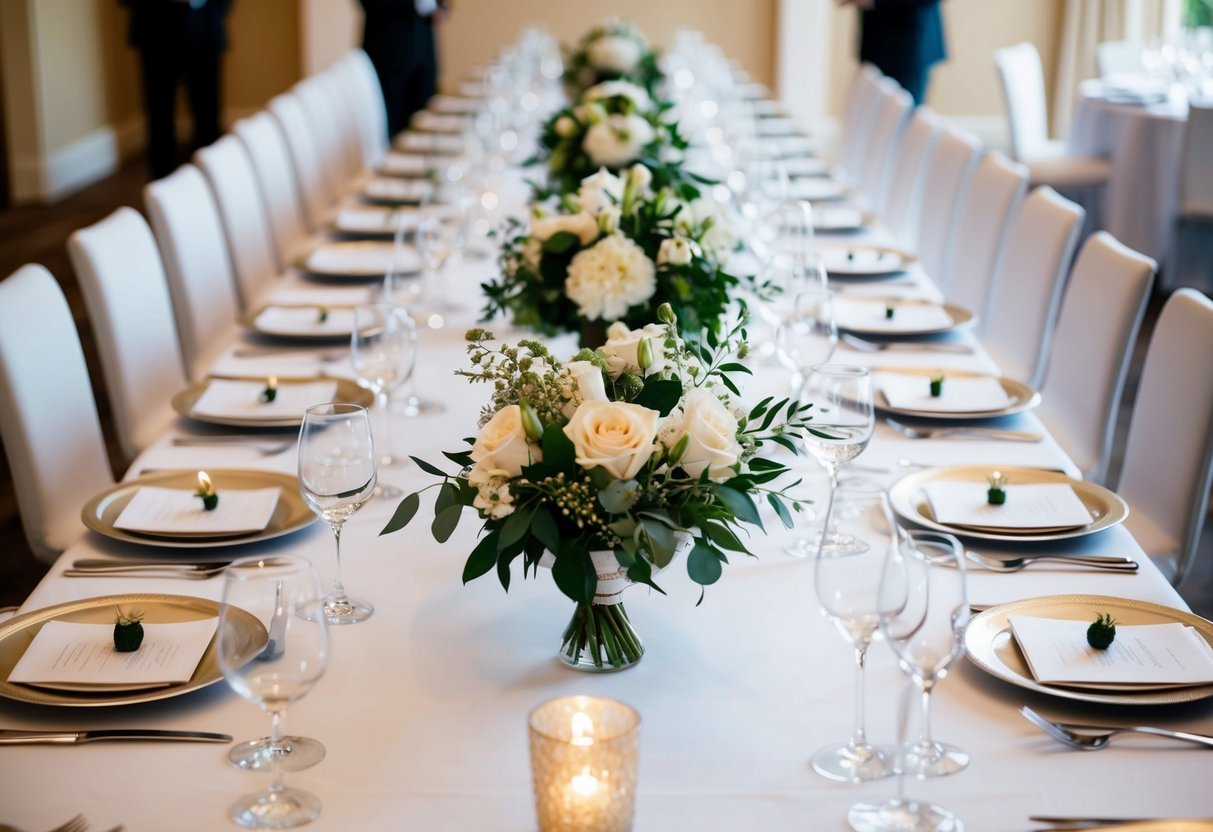
When planning your wedding, arranging the top table for your wedding party is a key step. It’s essential to think about who will sit where to create a warm and celebratory atmosphere.
Incorporating Special Roles
Begin by identifying the key players in your wedding party. This typically includes the bride, groom, bridesmaids, groomsmen, best man, and maid of honor.
- The bride and groom usually sit in the center.
- Next to them, the maid of honor and best man can take the spots on either side.
- It’s also common to seat the parents of the couple next to them, allowing for a family connection.
Don’t forget to consider any special roles, like flower girls and ring bearers. They might sit at a nearby table to keep them close but not overwhelmed.
Designating Tables for Guests
After arranging the wedding party, focus on your closest family and friends. Make a wedding seating plan that reflects important relationships and dynamics.
- Create tables for family members, friends, and other key guests.
- Keep close friends together to spark fun and lively conversation.
It’s wise to provide a separate table for kids, if there are any. This keeps things enjoyable for little ones while allowing adults to relax.
Using place cards can make it easier for guests to find their seats and fosters an organized feel. Remember, your wedding should be a joyous event where everyone feels included.
Top Table Alternatives
When planning your wedding seating, consider various alternatives to the traditional top table. These options allow you to create a memorable and personalized experience that suits your style. Here are two popular alternatives you may want to explore.
Considering a Sweetheart Table
A sweetheart table is an intimate option for just you and your partner. It allows for a special focus on the newlyweds while still being part of the larger celebration.
This table can be decorated in a way that reflects your personalities and love story. Place it in a prominent spot so guests can easily see you during the festivities.
Additionally, you may want to have parents or close family nearby at separate tables. This arrangement encourages interaction and keeps the atmosphere lively and friendly.
Opting for a Non-Traditional Layout
Think about skipping the top table entirely. Instead, you could opt for a long table or a round top table setup.
With this arrangement, you can mingle with different guests throughout the meal, making it more interactive and fun.
Leave a few extra chairs at various tables to create a relaxed vibe and allow for easy conversations.
This gives you the freedom to connect with everyone at your wedding and makes for a memorable experience.