
What Words Must Legally Be Said at a Wedding? Essential Phrases for a Valid Ceremony
When planning your wedding ceremony, you might wonder about the legal words that must be said. While no specific phrases are required, you do need to make a Declaration of Intent to confirm that you are both willingly entering into the marriage. This important moment is when you express your intention to marry, often accompanied by your vows to each other.
Your wedding is not just a celebration of love; it’s also a legal contract. The officiant plays a key role here, ensuring the ceremony is binding by pronouncing you as married after the Declaration of Intent. Knowing these essential components can make your ceremony feel more genuine and structured.
Understanding the legal requirements can help you create a meaningful ceremony. By focusing on the Declaration of Intent and your personal vows, you can blend love and legality seamlessly on your big day.
Legal Foundations of Marriage
Understanding the legal aspects of marriage is essential for a successful wedding ceremony. You need to know about the marriage license and the role of the officiant to ensure everything goes smoothly.
Marriage License and Law
To get married, you must obtain a state-issued marriage license. This document is a legal requirement in most places and acts as permission from the state for you to wed. The process often involves a fee, providing personal information, and sometimes a waiting period before the ceremony can take place.
Once you have the license, it must be signed by the officiant during the ceremony. This step makes your marriage legally binding. Be sure to check your state’s specific family laws, as they may vary regarding age requirements, documentation, and fees involved in acquiring the license.
The Role of the Officiant
The officiant plays a crucial role in your wedding ceremony. This person is responsible for solemnizing your marriage, which means they have the legal authority to declare you married. An authorized officiant can be an ordained minister, judge, or someone appointed by the state.
During the ceremony, the officiant will guide you through essential phrases, including the Declaration of Intent. This declaration is your public statement of commitment. After exchanging vows, the officiant will pronounce you married and sign the marriage license. Choosing the right officiant can make your ceremony feel personal and special while fulfilling all legal requirements.
Components of the Wedding Ceremony
In a wedding ceremony, a few key elements play a crucial role in making the event meaningful. Understanding these components can help you create a personal and memorable experience. Each part holds significance in your journey as a couple.
Declaration of Intent
The Declaration of Intent is a vital part of your ceremony. During this moment, you and your partner publicly state your intention to marry. This typically involves saying something like, “I do” or “I will.” It signifies that you are both entering into a legal contract.
Your officiant may ask questions that reinforce your commitment, such as, “Do you take this person to be your lawfully wedded spouse?” This declaration must be clearly stated to fulfill legal requirements. While there are no specific phrases required, making this declaration personal adds depth to your vows.
Exchange of Vows
The Exchange of Vows is where you express your love and commitment to each other. You can choose traditional wedding vows or create personalized vows that highlight your unique relationship.
Many couples incorporate promises related to love, support, and partnership. Whether you opt for heartfelt words or a lighthearted tone, the key is sincerity. This part of the ceremony strengthens your bond and sets the tone for your marriage.
Make sure your vows reflect your feelings accurately. Take your time and speak from the heart. This moment is not just about the words; it embodies your commitment to each other.
Rituals and Readings
Incorporating rituals and readings into your ceremony can add a special touch. These can range from unity candles to sand ceremonies or even readings that resonate with your love story.
Selecting a reading that speaks to your relationship can enhance the emotional depth of your vows. This might be a poem, a passage from literature, or a meaningful quote. You can ask family or friends to read these portions, making them feel included in your big day.
These rituals symbolize your promises and commitments to each other. They create lasting memories and foster an atmosphere of love and joy.
Cultural and Personal Touches
Incorporating cultural and personal elements can make your wedding ceremony special. These touches reflect your love story and honor your backgrounds. Let’s explore how to blend traditions and personal details into your ceremony.
Cultural Traditions
Many couples choose to include cultural traditions that reflect their heritage. This can be a meaningful way to honor family and cultural background. You might want to consider unique rituals, such as a candle lighting ceremony, handfasting, or breaking of the bread.
If you and your partner come from different cultures, you can blend elements from both. For instance, you could include music that represents each culture or have readings in different languages.
Including family members in these traditions, such as having them participate in specific rituals, can enhance the intimate feel of your ceremony. Whether it’s a traditional vow exchange or a cultural dance, these moments create lasting memories.
Personalizing Your Ceremony
Personalizing your ceremony allows you to showcase your love and connection. You can write your own vows that highlight your unique relationship. Speaking from the heart adds a personal touch that resonates with everyone present.
Think about including special music that is meaningful to you both. This could be a favorite song or one that reminds you of a significant moment in your relationship.
Additionally, consider involving friends or family members during the ceremony. This could be through readings or a toast to celebrate your union. These elements not only make the ceremony more heartfelt but also create a warm atmosphere that reflects your love story.
Post-Ceremony Procedures
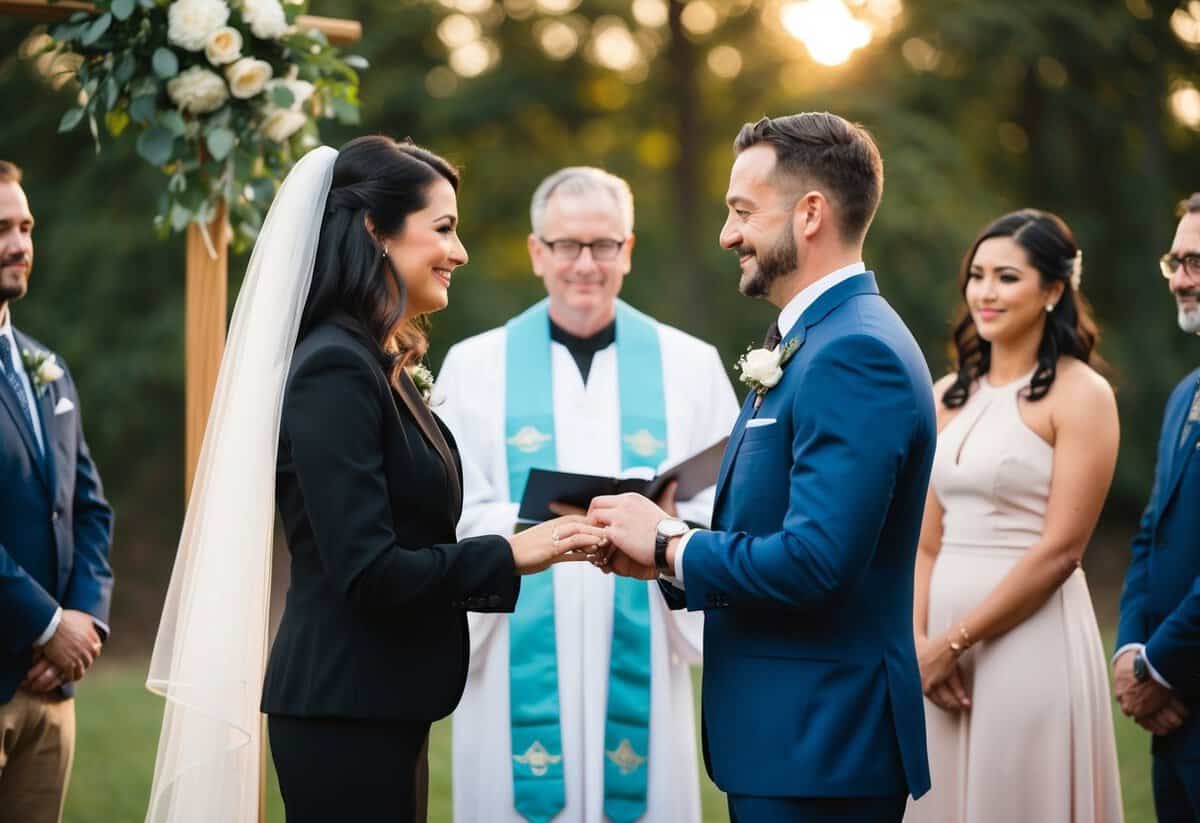
After the wedding ceremony, you need to complete some important steps to ensure your marriage is legally binding.
First, make sure the marriage license is signed. You received this vital document before the ceremony. The officiant and witnesses must sign it.
Who needs to sign?
- Officiant: This is your recognized officiant, like an AMM minister or a Universal Life Church officiant.
- Witnesses: Most states require at least one or two witnesses to sign. Confirm your state’s requirements.
Once signed, the officiant should file the license with the local government office. This should be done shortly after the ceremony, so you are officially married.
Keep a copy of the completed and signed marriage license. This will be useful for name changes, tax purposes, and other legal matters.
Finally, check with your officiant about any additional steps. Some may provide a wedding pronouncement or certificate. This document can be a lovely keepsake of your special day.
Completing these post-ceremony procedures ensures your marriage is recognized by law. Enjoy this new chapter of your life with your spouse!