
Who Announces the Toast at a Wedding? Understanding Roles and Traditions
At a wedding, the toast is a special moment that brings everyone together to celebrate love and joy. The wedding host, often a close family member or friend, typically announces the toast. This person usually speaks first and sets the tone for the wonderful messages that will follow from key figures like the father of the bride, the best man, and the maid of honor.

Each of these speeches is steeped in wedding tradition and offers heartfelt wishes to the couple. Whether it’s a funny story or a touching memory, these moments add a personal touch to the celebration. Understanding who announces the toast can help you appreciate the significance behind each message shared throughout the evening.
As you plan your wedding or think about attending one, knowing who speaks during this important time enhances the experience. You might even find yourself inspired to prepare your own toast someday!
The Toastmaster and Primary Speakers
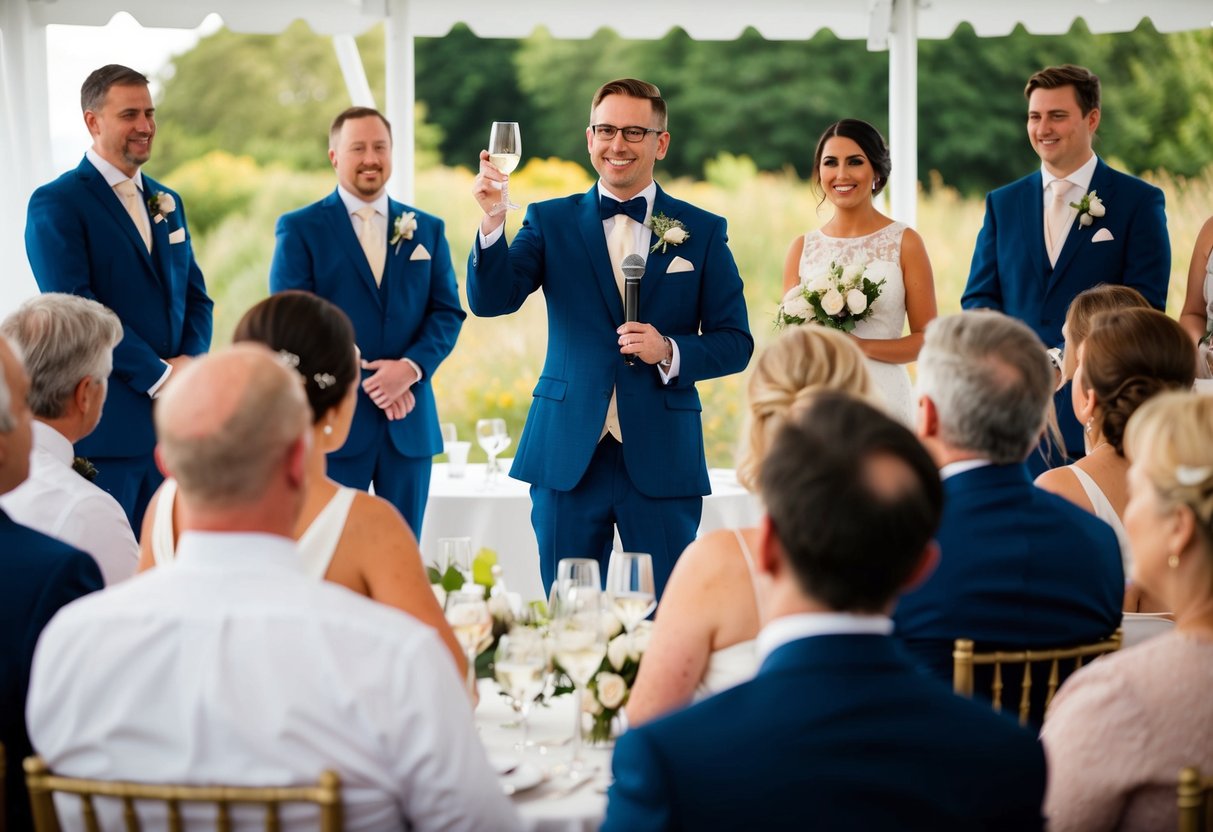
At a wedding, managing the flow of toasts is important. The toastmaster, along with the best man, father of the bride, and maid of honor, play key roles in this special tradition. Each has their own responsibilities and significance in the order of speeches.
Role of the Best Man
The best man is often the first speaker after the meal. His job is to deliver a toast that honors the couple. Typically, he shares a few personal stories about the groom, celebrating his qualities and their friendship.
In his speech, the best man might include light-hearted humor to engage guests. Remember, it’s important for him to keep it respectful and appropriate. He also serves as the toastmaster, announcing the other speeches and ensuring they run smoothly.
Duties of the Father of the Bride
The father of the bride often speaks after the best man. He traditionally welcomes guests and offers heartfelt insights. His speech usually touches on his daughter’s life, the joy of the wedding, and his thoughts on the couple’s future together.
Many fathers also take this time to express gratitude to those who made the event possible. He sets a warm tone that emphasizes family and love, making this moment memorable for everyone present.
Importance of the Maid of Honor
The maid of honor plays a significant role, usually speaking after the father of the bride. Her speech often highlights the bride’s personality, their friendship, and the journey they shared. It adds a personal touch that resonates with guests.
This speech can be a mix of humor and heartfelt moments. The maid of honor supports the couple, offering wishes for their future. Her presence and words enhance the emotional atmosphere of the event.
Crafting the Perfect Speech
Creating a memorable wedding toast requires careful thought. You’ll want to balance humor with heartfelt expressions, include emotional tributes, structure your speech effectively, and know how to adapt it if you’re speaking for both partners. Each of these elements helps ensure your speech leaves a lasting impression.
Balancing Humor and Sentiment
Finding the right mix of humor and sentiment is key. Start with a light-hearted joke or anecdote related to your relationship with the couple. This sets a friendly tone and engages the audience.
Next, weave in heartfelt emotions. Share a personal story that illustrates your connection to the couple. This not only resonates with listeners but also adds depth to your speech.
Aim for a balance where the humor complements the sentiment. A joke should not overshadow your emotional tribute. Remember, your goal is to celebrate the couple while keeping the audience entertained.
Incorporating Emotional Tributes
Emotional tributes are at the heart of a great wedding toast. Begin by acknowledging the significance of the day. Express your happiness for the couple and their journey together. This is where you can use heartfelt expressions to make your message impactful.
Include specific qualities that you admire in the couple. Perhaps mention their love, support for each other, or unique experiences that highlight their bond. This adds a personal touch and shows the audience why they should celebrate these two people.
Use clear, honest language. Avoid clichés that may weaken your message. Genuine words resonate more, creating a deeper emotional connection with everyone present.
Structuring Speeches for Impact
An effective structure helps maintain flow and keeps your audience engaged. Start with a brief introduction of yourself. Explain your relationship to the couple, which adds context for your speech.
Next, move into your main content. Here, alternate between humor and emotional reflections to keep the audience invested. Organize your thoughts into sections: a funny story, an emotional tribute, and well wishes for the future—this helps create a balanced narrative.
Close your speech strongly with a toast. Invite everyone to raise their glasses and acknowledge the couple, reinforcing the celebratory atmosphere. A clear, structured approach ensures your message lands well.
Adapting to Joint Couple Speeches
If you’re toasting as part of a joint couple speech, teamwork is essential. Communicate with your co-speaker well before the big day. Decide on how to split speaking time and what themes you’ll each cover.
Each speaker should highlight different aspects of the couple. For example, one might focus on humorous stories while the other emphasizes heartfelt moments. This creates variety and keeps the audience engaged.
Rehearse together to ensure seamless transitions. A joint speech can offer unique perspectives while highlighting the couple’s love. Be supportive of each other and maintain a consistent tone throughout to enhance the overall experience.
Special Toasts and Speech Etiquette

Toasts and speeches at weddings are special moments. Different people have roles in delivering these heartfelt messages. It’s important to know who traditionally speaks and what they typically say.
Mother of the Bride and Groom Speeches
The mothers often play a key role in wedding speeches. The mother of the bride usually expresses love for her daughter and reflects on her journey. She might share a touching story that highlights the bride’s character.
The mother of the groom also has an important voice. Her speech can thank the bride’s family and share her son’s qualities, adding a personal touch. Each speech should be heartfelt but brief, typically lasting about 2-3 minutes.
Delivery matters too. A little humor can lighten the mood and make people feel at ease. Most importantly, both mothers should practice their speeches to boost confidence.
Speeches at the Rehearsal Dinner
Rehearsal dinners offer a relaxed atmosphere for speeches. This is where you can give a more personal touch since the crowd is usually smaller. It’s common for parents and the wedding party to speak.
The father of the groom can share anecdotes about his son, showcasing their bond. You might also want to include a toast to thank everyone for coming and to recognize the couple. Keeping speeches to around 2-5 minutes keeps the mood light and enjoyable.
Remember, rehearsal dinners set the tone for the wedding. This is a chance to express emotions and share laughter among those closest to the couple.
Gender-Equal Speech Perspectives
In modern weddings, it’s essential to support gender-equal speeches. This means inviting brides and grooms to speak equally. Both partners can share thoughts about their relationship and express gratitude.
Encouraging both toasts helps highlight important contributions from everyone involved. This approach creates a more inclusive environment and promotes unity. It also shows respect for both sides of the family.
When preparing, encourage open dialogue about what each partner wants to share. This is a fantastic opportunity to build rapport and connection.
Navigating Thank You Speeches
Thank you speeches are an important part of the celebration. These speeches should come from both partners after the wedding. It’s a way to express gratitude to guests, family, and vendors.
Consider mentioning specific individuals who have made a difference, such as parents or close friends. Keep these speeches genuine and heartfelt, but also short—around 1-2 minutes is ideal.
Showing appreciation helps everyone feel valued and creates a warm atmosphere. It’s a small gesture that can leave a lasting impression on your guests.
Managing Wedding Speech Traditions

Managing wedding speech traditions can enhance the celebration and create a memorable atmosphere. Understanding the traditional order, knowing when to schedule the champagne toast, and avoiding speech fatigue will help keep your event joyful and engaging.
Understanding Traditional Order
The traditional order of wedding speeches is important for a smooth flow during the reception. Typically, the speeches start with the father of the bride, followed by the groom, and then the best man. After that, the maid of honour can share her insights. Each speaker usually acknowledges the couple and offers heartfelt wishes. This structure not only honors family traditions but also allows guests to connect with the couple’s journey. For specific examples of speeches, think about simple, touching anecdotes that highlight the couple’s relationship.
When to Schedule the Champagne Toast
The champagne toast is a special moment in the wedding that deserves careful timing. Most people schedule it after the main course but before the speeches begin. This timing allows guests to enjoy their meal while anticipating the heartfelt words of the speakers.
You could also have a welcome toast at the very start. This engages guests right away and sets a warm tone for the event.
Make sure to coordinate with the officiant or the emcee to signal when it’s time to raise glasses together. This shared moment of celebration is a perfect way to kick off the speaking segment.
Avoiding Speech Fatigue
Speech fatigue can happen when there are too many speeches or they are too long. To keep guests engaged, aim for each speech to be around 3-5 minutes. This length is enough time for speakers to share meaningful stories without losing the audience’s attention.
Consider limiting the number of speeches to create a more focused experience. If you have many speakers, you can combine shorter toasts into one. Following these tips, you can keep the atmosphere lively and enjoyable for everyone in attendance.