
Who Brings the Mother of the Groom Down the Aisle? A Guide to Wedding Traditions
During a wedding ceremony, many traditions focus on the roles of family members, especially when it comes to the mother of the groom. Typically, the groom escorts his mother down the aisle, showing a special bond between them. This act not only honors her but also allows the groom to express his appreciation for her support throughout his life.
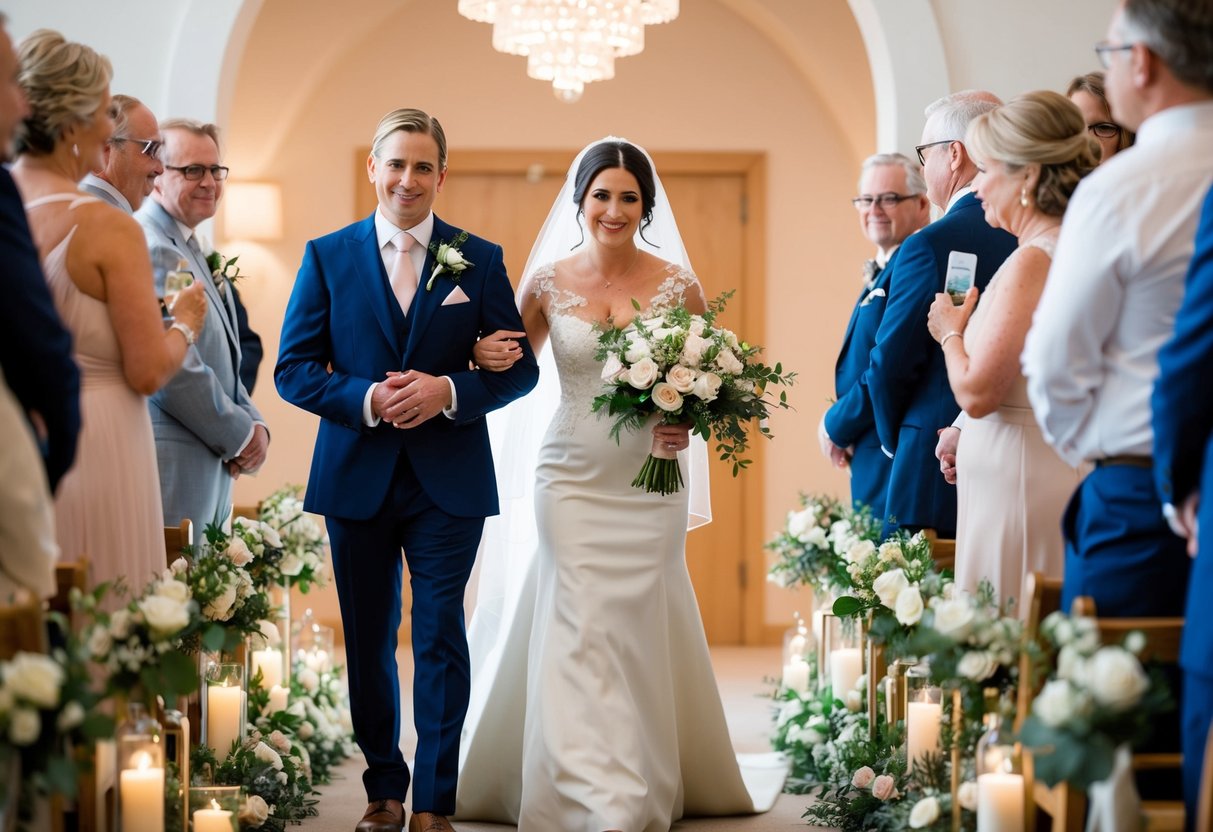
If the groom prefers, other family members can also step in to escort his mother. She might walk alone, or perhaps be accompanied by another son or a close relative. No matter the choice, the goal is to make this moment meaningful and memorable for both the mother of the groom and the couple as they begin their new journey together.
Understanding who brings the mother of the groom down the aisle helps clear up any confusion and allows you to plan this personal moment in a way that feels right for your family.
Traditions of the Wedding Processional
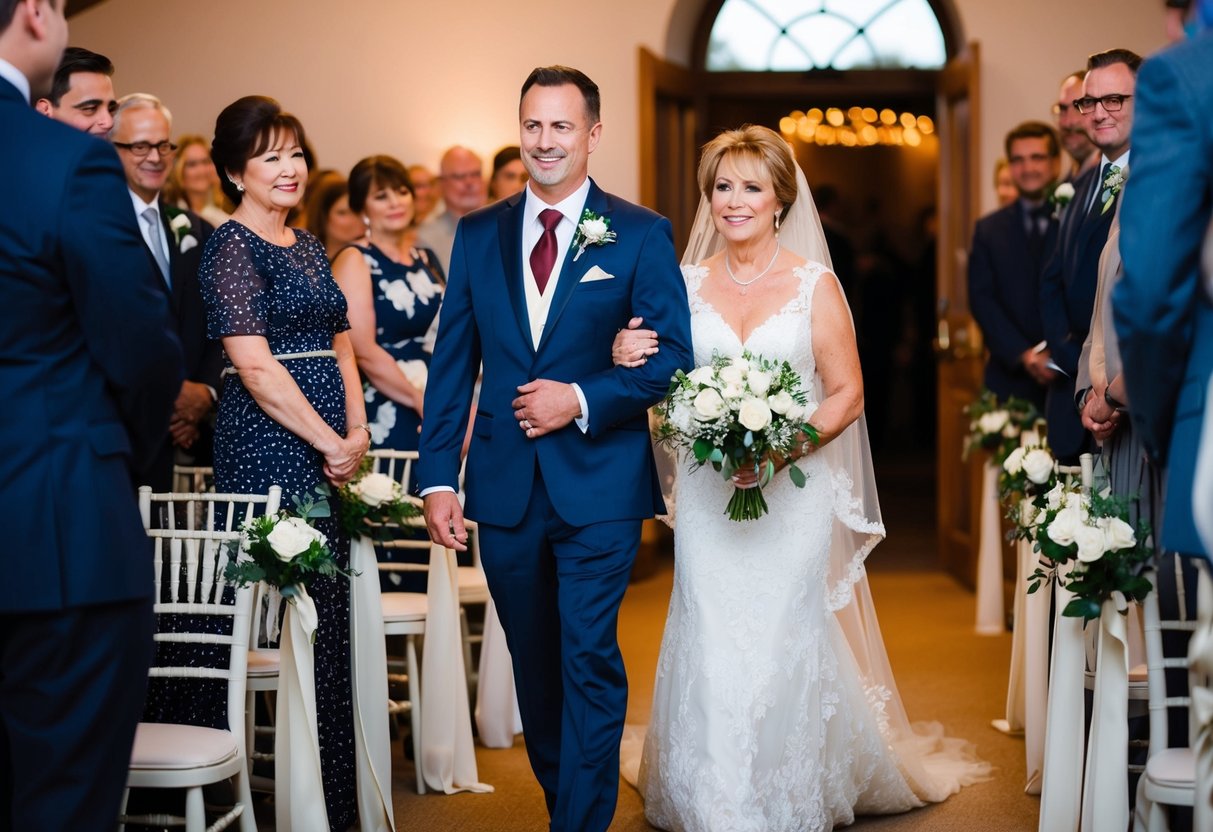
The wedding processional includes various traditions that shape who walks down the aisle and in what order. Understanding these customs can help you decide what fits best for your ceremony.
Roles and Responsibilities
In the traditional wedding processional, different individuals have specific roles. Typically, the ushers start by seating guests. After that, the grandparents walk down the aisle, followed by the groom’s parents.
The mother of the groom may walk next, often with an escort. Sometimes, she walks with the groom, especially in certain traditions.
The bridal party follows, with bridesmaids walking in pairs. The bride is usually the last to enter, often accompanied by her father or another family member. This order creates a sense of anticipation as all eyes turn to the bride.
Cultural Variations
The order of procession can differ based on cultural traditions. In a Jewish wedding, the groom’s parents might accompany him as part of the processional. They might also take part in the ceremony under the chuppah.
In Hindu weddings, the groom arrives in a festive style, called the baraat. He is accompanied by family and friends, which sets a celebratory tone. Once at the mandap, he meets his parents before the ceremony starts.
Each culture adds unique elements to the processional, making it a special part of the wedding day. Understanding these variations can help you plan a meaningful ceremony.
Who Escorts the Mother of the Groom?
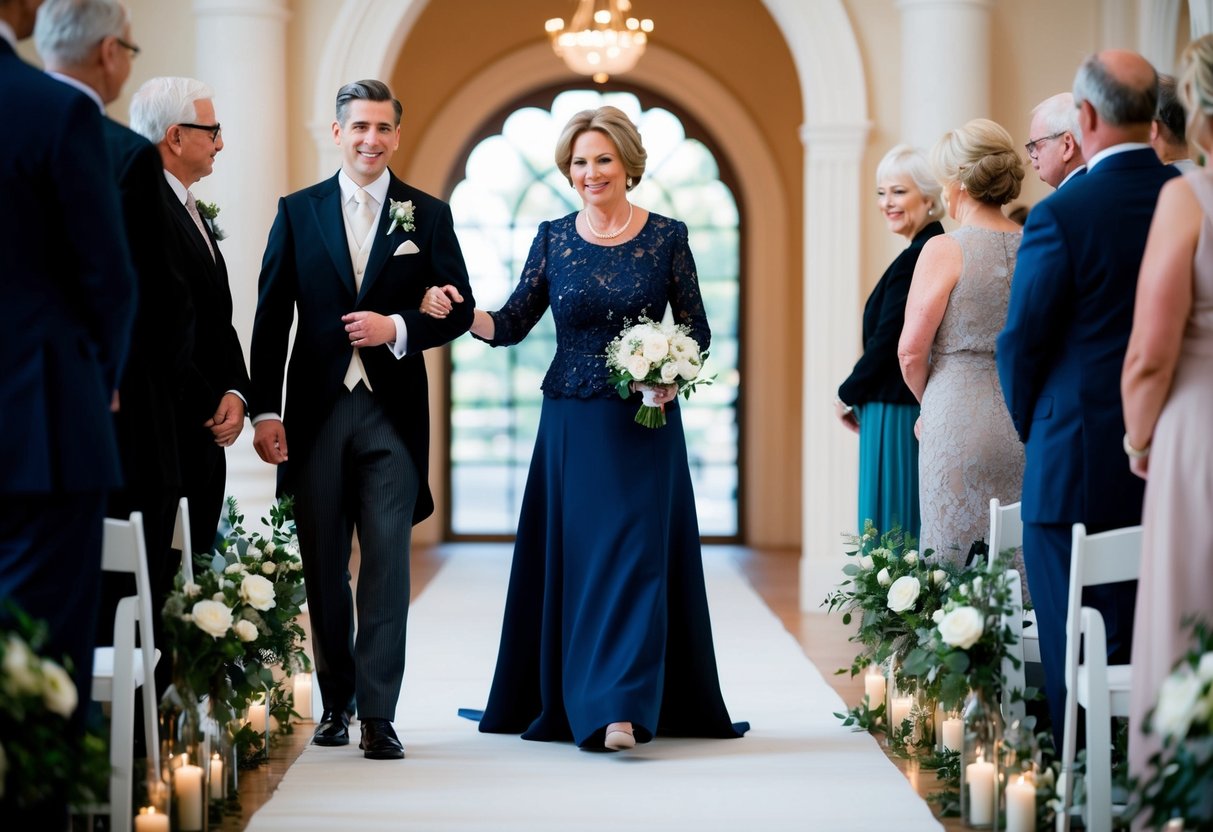
When planning the wedding, you want to consider who will escort the mother of the groom down the aisle. This choice is important as it reflects family dynamics and personal relationships. Various options are available, allowing for flexibility in modern weddings.
Escorting the Groom’s Mother
Traditionally, the groom’s mother is escorted by a close family member, which can include her spouse, son, or even an usher. If the groom has siblings, they might take on this role. In some cases, she might walk alone, especially in more casual or non-denominational ceremonies.
If the groom’s parents are divorced, the situation might change. It is common for the groom’s mother to be escorted by a family member who is comfortable with the dynamics. This can include her new partner, if applicable. An escort helps honor her presence and gives her a special moment in the processional.
Modern Wedding Practices
Modern weddings have become more flexible regarding who walks down the aisle. You can choose an escort based on personal preferences rather than tradition. Many couples opt for a more inclusive approach, reflecting their unique family relationships.
For a nondenominational wedding, the groom’s mother can escort the groom or be part of the procession differently. This decision allows you to create a meaningful moment that fits your celebration. It might even involve other family members or friends who play significant roles in your life, enriching the wedding experience.
Honoring Parents and Close Family
When planning your wedding, consider how to honor your parents and close family. The mother of the groom often enjoys special recognition. She might walk down the aisle before the ceremony or during the procession, showcasing family ties.
Many couples choose to have family members participate. For example, bridesmaids and groomsmen stand by your side, while the flower girl and ring bearer add charm to the celebration. Including grandparents can highlight family history and bring sentimental value to the day.
Expressing appreciation for your family helps strengthen bonds. Simple gestures, like a thank you speech or a special dance, create lasting memories. These moments of family unity turn your wedding into an unforgettable occasion filled with love and joy.