
Who Can Marry You Legally? Understanding the Requirements and Process
When you decide to tie the knot, knowing who can marry you legally is key to planning your big day. A variety of individuals can act as wedding officiants, including ordained ministers, judges, and justices of the peace, depending on your location.
Each state has its own marriage laws, so it’s important to check the legal requirements in your area before making plans.

Understanding the different types of officiants available can help you choose the perfect person for your ceremony. Whether you want a religious leader, a friend who gets ordained online, or a professional officiant, knowing your options makes it easier to personalize your wedding experience.
As you explore your choices, consider what matters most to you and your partner. Finding the right officiant not only ensures your ceremony is legal but also adds a special touch to your celebration.
Legal Qualifications for Wedding Officiants
When planning your wedding, knowing who can legally officiate is crucial. Different states have distinct laws regarding officiants, and understanding these legal qualifications can help you choose the right person for your ceremony.
Understanding Marriage Laws
Marriage laws vary by state, so it’s important to know the specific rules where you live. Most states require the officiant to be recognized by the state to perform legal marriages. This can include judges, notary publics, and licensed ministers.
In some states, a court clerk can even officiate. A few regions allow online ordination for those who wish to officiate. Always check local laws to understand who is eligible and any necessary documentation they may need to bring to your wedding.
Types of Officiants
When selecting an officiant, you have several options to consider:
- Judge: Often conducts civil ceremonies in courts.
- Notary Public: Can perform marriages in some states.
- Court Clerk: May offer officiating services in specific areas.
- Licensed Minister: Authorized by religious organizations.
- Religious Officiant: Typically belongs to a faith community.
- Civil Officiant: Focuses on non-religious ceremonies.
- Marriage Commissioner: Works mainly for civil weddings.
- Licensed Celebrant: Specializes in personalized ceremonies.
Each type has different qualifications and approaches to ceremonies, so pick one that aligns with your vision.
Registration Process
The registration process for officiants can differ depending on your state. In many cases, officiants need to register with the local government or specific marriage authority. This may involve filling out forms and providing proof of qualifications.
Some officiants may be required to apply for a license before performing a wedding. Always confirm the registration requirements well in advance of your ceremony. This ensures that all legalities are in place, allowing you to enjoy your special day without worry.
The Process of Officiating a Wedding
When officiating a wedding, several important steps ensure everything goes smoothly. This includes understanding the role of the officiant, obtaining the necessary marriage license, and conducting the marriage ceremony itself. Let’s look at each step in detail.
Role of a Wedding Officiant
As the wedding officiant, your main responsibility is to lead the ceremony and ensure it meets legal requirements. You can be a religious leader, a judge, or someone who is legally permitted in your state.
Before the big day, you will work closely with the couple to discuss their vision and preferences for the ceremony. Public speaking skills are a must, as you’ll need to engage the guests and create a warm atmosphere.
Your duties include introducing the couple, guiding them through their vows, and ensuring they meet the requirements for a legal wedding. In some areas, you may need to register as an officiant or show documentation proving your authorization to perform the marriage.
Obtaining a Marriage License
Before officiating the wedding, the couple must obtain a marriage license. This is a document issued by the state that gives them permission to marry.
Each state has different requirements, so it’s essential to check local regulations. Generally, both parties need to apply together at their local clerk’s office. They may need to provide identification and possibly pay a fee.
Some states have waiting periods, while others allow immediate marriages once the license is obtained.
Once the ceremony is complete, you will sign the marriage certificate along with the couple. This document is important for legal purposes, and the couple will need to return it to the appropriate government office to finalize their marriage.
Conducting the Marriage Ceremony
Leading the marriage ceremony is a special moment. As the officiant, you will set the tone and guide the couple through their vows.
Begin by welcoming the guests and sharing a brief introduction about the couple. You might include personal stories or quotes that reflect their relationship. Then, lead them through the exchange of vows and rings.
Next, declare them married! After this, you will sign the marriage certificate with the couple. This legal formality ensures that their union is recognized. Make sure to talk with the couple about any special rituals or traditions they want to include, making their ceremony unique and memorable.
Special Cases and Considerations
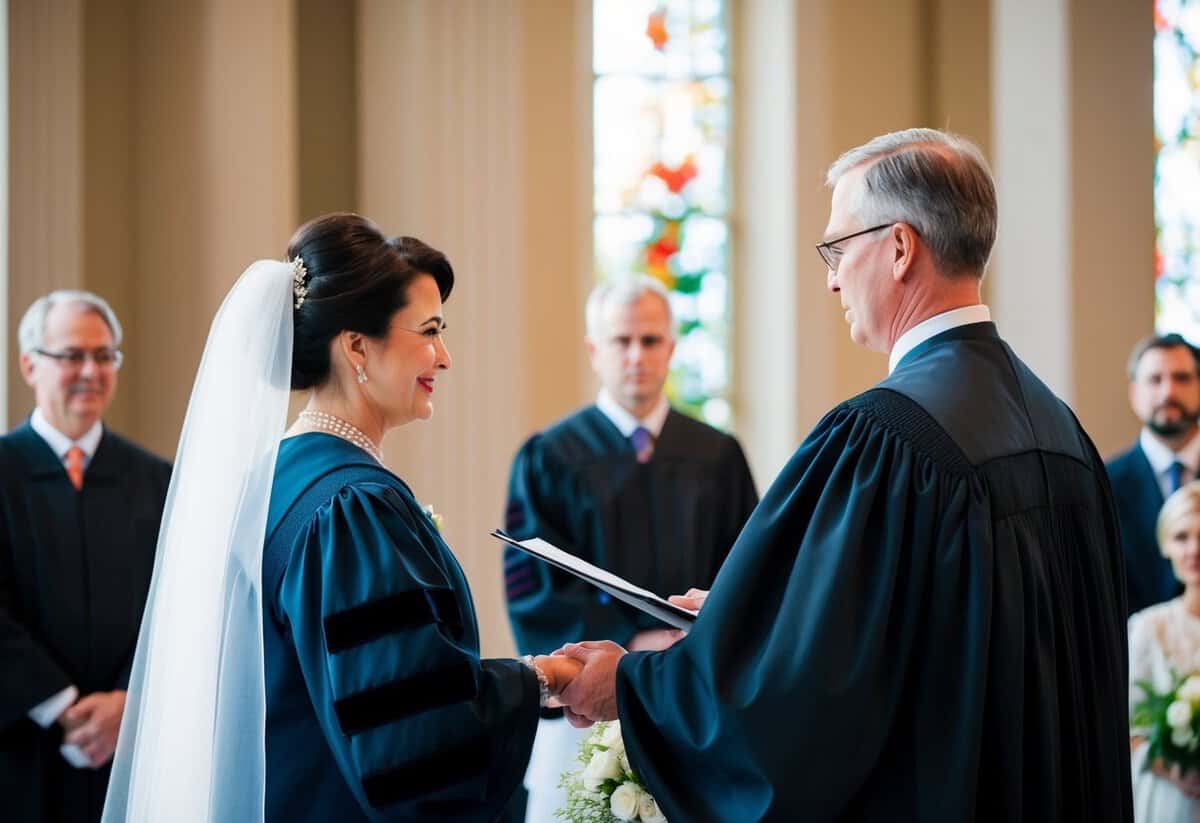
When planning your wedding, there are unique situations and options for who can officiate your ceremony. Understanding these special cases can help you choose the right person for your big day.
Online Ordination and Friends or Family as Officiants
Many couples are turning to online ordination for their wedding ceremonies. Organizations like American Marriage Ministries allow anyone to become an ordained officiant online. This process is usually simple and can be done in just a few minutes.
You can also ask a friend or family member to officiate your wedding. In some states, this is completely legal as long as they follow the necessary steps to officiate. Just make sure your chosen person understands the legal requirements and can handle any necessary paperwork.
Special Marriage Situations
Certain situations may have unique rules. For example, a ship captain can often perform marriages at sea. This may be ideal if you’re having a destination wedding on a cruise.
If you are in a same-sex marriage or a civil union, it’s important to check local laws, as they can differ widely.
In cases of bigamy or if you seek an annulment, be aware that these can complicate your marital status. If you are divorced, ensure that you have completed any waiting periods required by state laws before remarrying.
Finally, if you’re underage, remember that parental consent may be required to get married. Always double-check your local regulations to ensure a smooth process.