
Who Dances First at a Wedding? The Sweet Tradition Explained
When planning your wedding, you might wonder about the order of dances during the reception. Traditionally, the couple shares the first dance as a special moment to celebrate their new union. This dance is more than just a fun activity; it symbolizes the beginning of your journey together as a married couple.
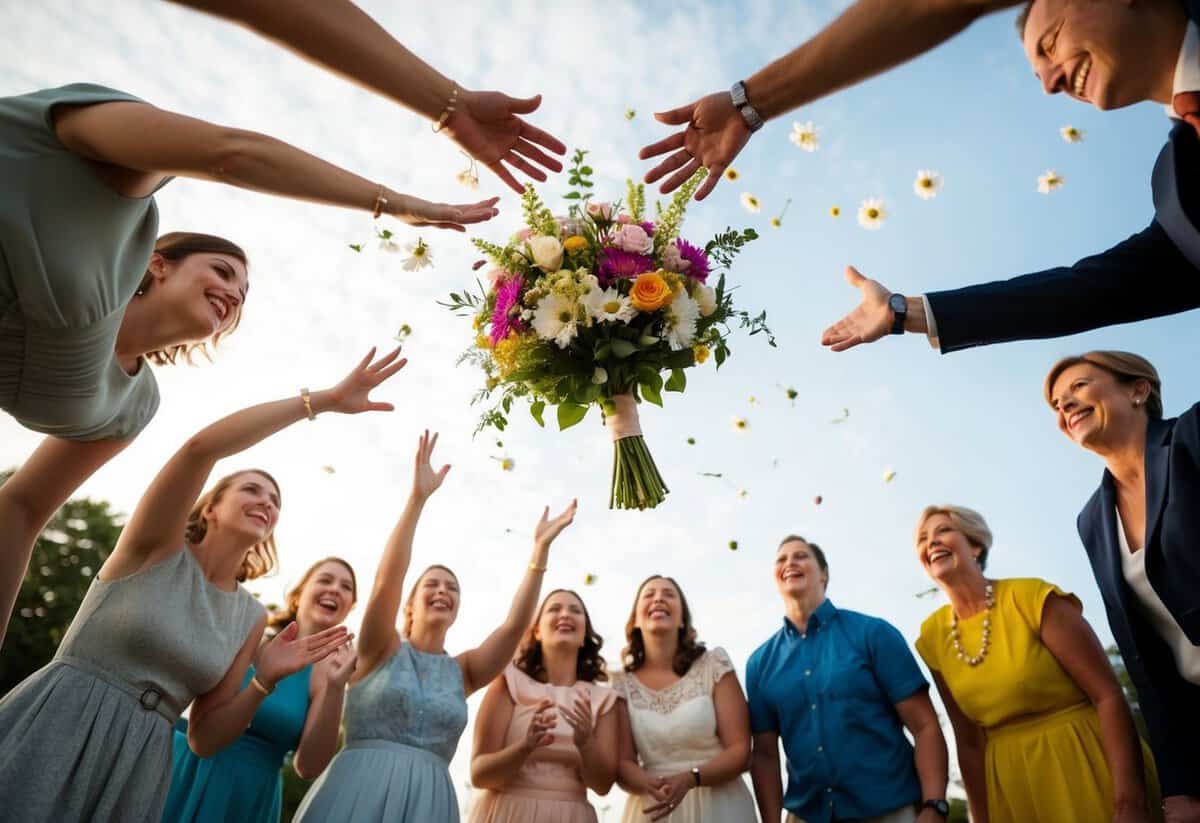
After your first dance, you can expect parent dances to follow. These moments honor your relationships with your parents, such as the father-daughter and mother-son dances.
Understanding who dances first at your wedding helps set the tone for a memorable celebration.
The Tradition of the First Dance
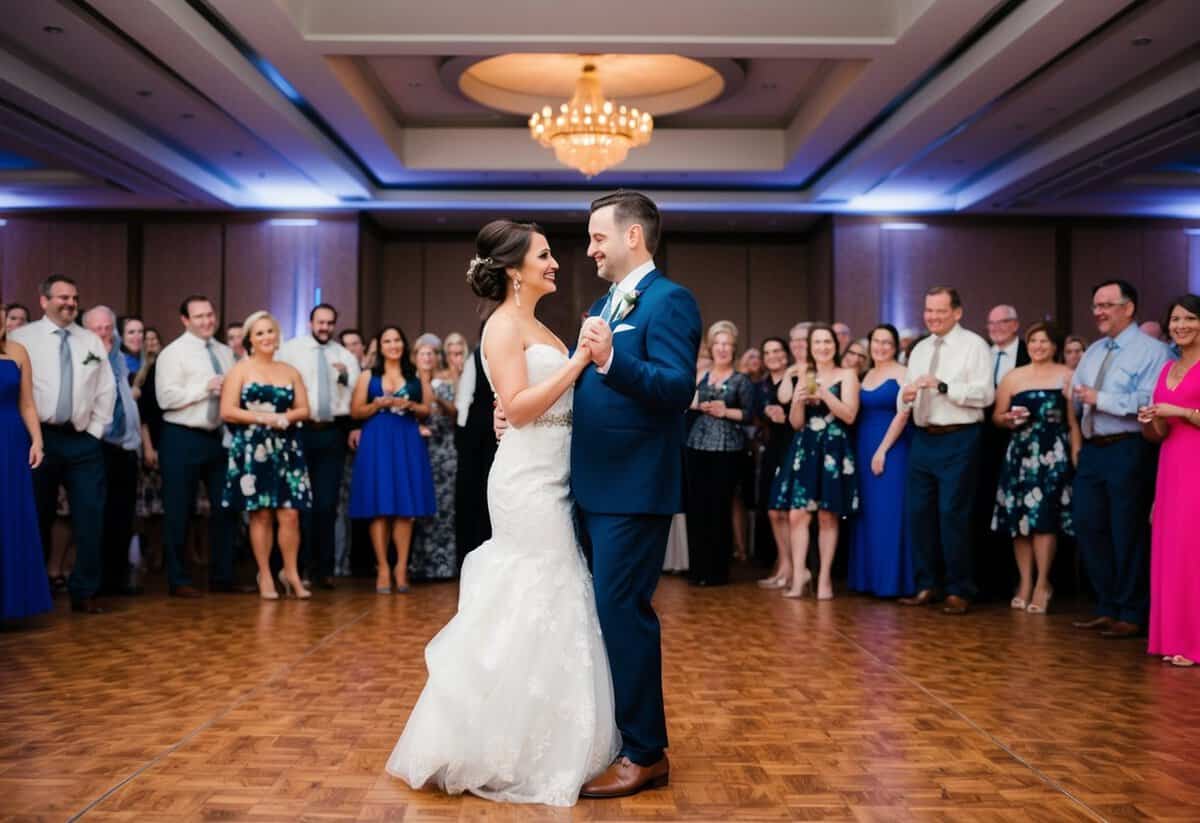
The first dance at a wedding is a cherished moment that holds deep meaning. It connects history and cultural significance with the personal joy of the couple. Here, you’ll discover both the historical roots and the symbolism that make this dance special.
Historical Significance
The tradition of the first dance dates back to 17th-century Europe. During that time, formal balls were held to celebrate special events. It was customary for the guest of honor, often the highest-ranking person present, to lead the first dance.
In France, the minuet was a favorite choice for couples. In Victorian Britain, a quadrille was popular, while in 19th-century Russia, the Polonaise often opened the dance floor. These dances set a precedent for what would become a significant moment in wedding celebrations.
Symbolism of the Couple’s First Dance
Your first dance symbolizes the beginning of your journey together. This moment allows you to express your love and connection in front of family and friends.
This dance can also reflect your personalities. Some couples choose a romantic song for an elegant sway, while others may go for a fun, energetic number.
As you dance, you are showing your unity and commitment. It’s a heartfelt display that sets the tone for the celebration ahead. In many cultures, the first dance is often followed by cultural dances, allowing everyone to share in the festivities.
Preparing for the First Dance
Planning for your first dance involves some important choices to make it memorable. You’ll want to select the perfect song and consider taking dance lessons to feel confident.
Choosing the Right Song
Selecting the right song for your first dance is crucial. Think about a tune that holds special meaning for you as a couple. It could be a song from a memorable moment or a favorite artist.
Consider the tempo and mood. A slow, romantic ballad may be ideal for a heartfelt moment. If you prefer something more upbeat, choose a lively track that reflects your personalities.
Make a shortlist of songs. Listen to each one together and discuss what emotions they stir. This will help you find “the one” that feels just right.
Dance Lessons and Choreography
Taking dance lessons is a great way to prepare for your first dance. Even if you’re nervous about dancing, lessons can help you feel comfortable.
Start by finding a local dance studio. Many offer packages specifically for weddings.
Discuss your vision with your instructor. They can help you create a simple but elegant choreography that suits your style.
Practicing together will not only improve your dance skills but also strengthen your bond. Schedule regular practice sessions to build confidence and enjoy the process. Remember, the goal is to have fun and celebrate your love!
Order of Dances at the Reception
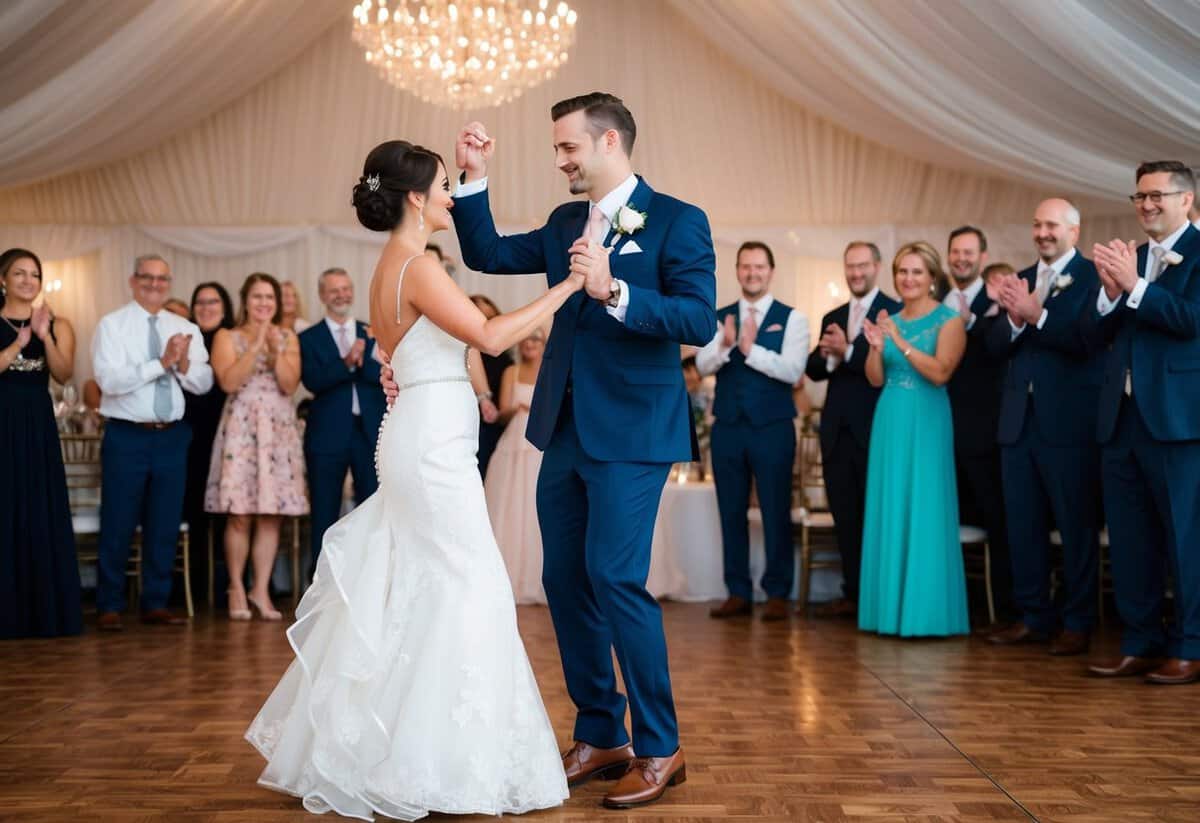
The order of dances at your wedding reception can set the mood and create lasting memories. Each dance holds significance, allowing you to celebrate with loved ones and honor traditions.
Typical Dance Sequence
The typical dance sequence often begins with the grand entrance, introducing you and your wedding party.
Following this, you will share your first dance as a married couple, marking a special moment together.
Next, the father-daughter dance occurs, where you honor your bond with your dad. After that, the mother-son dance takes place, celebrating the relationship between you and your mom.
Once the parent dances are done, the wedding party dance invites bridesmaids and groomsmen to join in, creating a lively atmosphere. These dances are essential, as they get everyone excited to hit the dance floor.
Family and Wedding Party Involvement
Involving family in the dance portion of your reception is key to making it memorable. The parent dances are usually the most emotional, reminding everyone of the love and support surrounding you.
After the typical dances, friends and family can join in for the wedding party dance. This dance creates a fun environment and encourages guests to participate.
You might also consider a money dance, where guests pay for a dance with you or your partner. This tradition often helps cover wedding costs, making it a practical choice.
Special Dances and Cultural Traditions
Special dances and cultural traditions can add a unique touch to your wedding.
For example, the hora is a lively circle dance common in Jewish weddings. It’s a joyous moment for everyone as guests lift you and your partner into the air.
The anniversary dance can also be a heartwarming addition. During this dance, all married couples join you on the floor, celebrating love and commitment.
Incorporating these dances honors your heritage, making your reception even more unforgettable. Embracing cultural dances and traditions connects you to your roots while celebrating your love with family and friends.
Planning the Dance Floor Dynamics
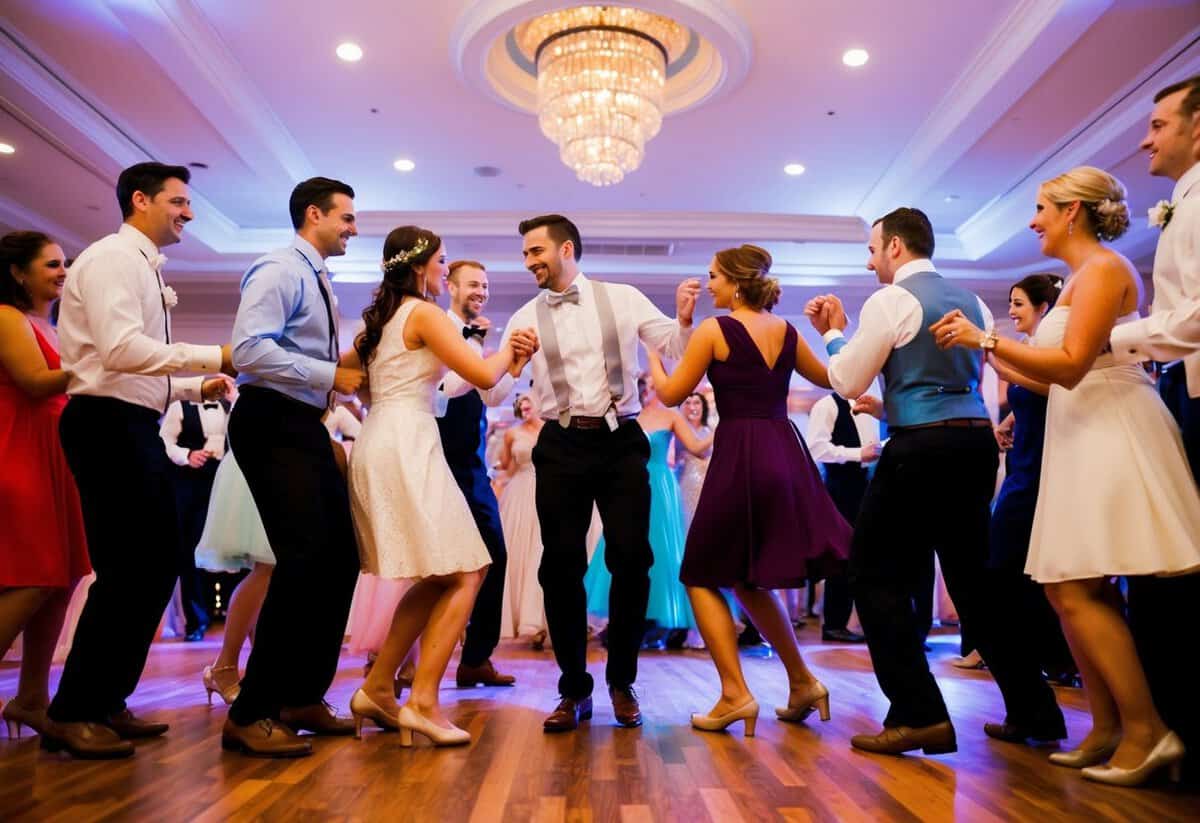
Creating a lively dance floor atmosphere is essential for a memorable wedding. You’ll want to ensure smooth transitions between activities and maintain high energy throughout the night. Let’s dive into how to make your dance floor the highlight of your celebration.
Dance Floor Etiquette
Knowing dance floor etiquette is key for everyone involved.
Start with the first dance. As the newlyweds, you should take the floor first, often followed by parent dances. This sets the tone and invites guests to join in.
After these dances, consider having an open floor moment. It allows guests to feel welcome to join in.
Encourage guests to participate in the bouquet toss and garter toss; these moments create excitement and laughter. Make sure to respect personal space and keep the floor clear during special dances.
Role of the DJ and Emcee
Your DJ and emcee play crucial roles in creating the right atmosphere.
They help with smooth transitions between songs and activities, keeping the energy flowing.
Discuss your playlist and any must-play songs with the DJ before the wedding.
The emcee can announce the grand entrance, ensuring everyone is ready to cheer as you enter. They should also communicate when it’s time to participate in group dances like the Electric Slide or the Chicken Dance.
This can help get everyone involved, moving, and having fun.
Incorporating Group Dances
Group dances can be a great way to engage your guests.
Incorporating well-known dances can break the ice and encourage even the shyest guests to join. Choose a few popular options that every age group can enjoy.
Consider setting up a post-cake cutting dance to keep the energy high.
Schedule these dances at strategic moments, so everyone is aware and ready to join in. This not only makes it fun but also aids in creating lasting memories with friends and family on the dance floor.
Ending the Night on a High Note
Ending your wedding on a high note can leave a lasting impression. Plan for a last dance that invites everyone to the floor.
Choose a song that reflects your love and journey together.
A well-timed last dance not only brings everyone together but also signals the end of a joyous night. You can express gratitude, and this creates a heartfelt moment that everyone will remember.
Make sure your DJ is aware of this, so they can set the mood as the night concludes.