
Who Does the Groom Walk Down First? A Guide to Wedding Procession Traditions
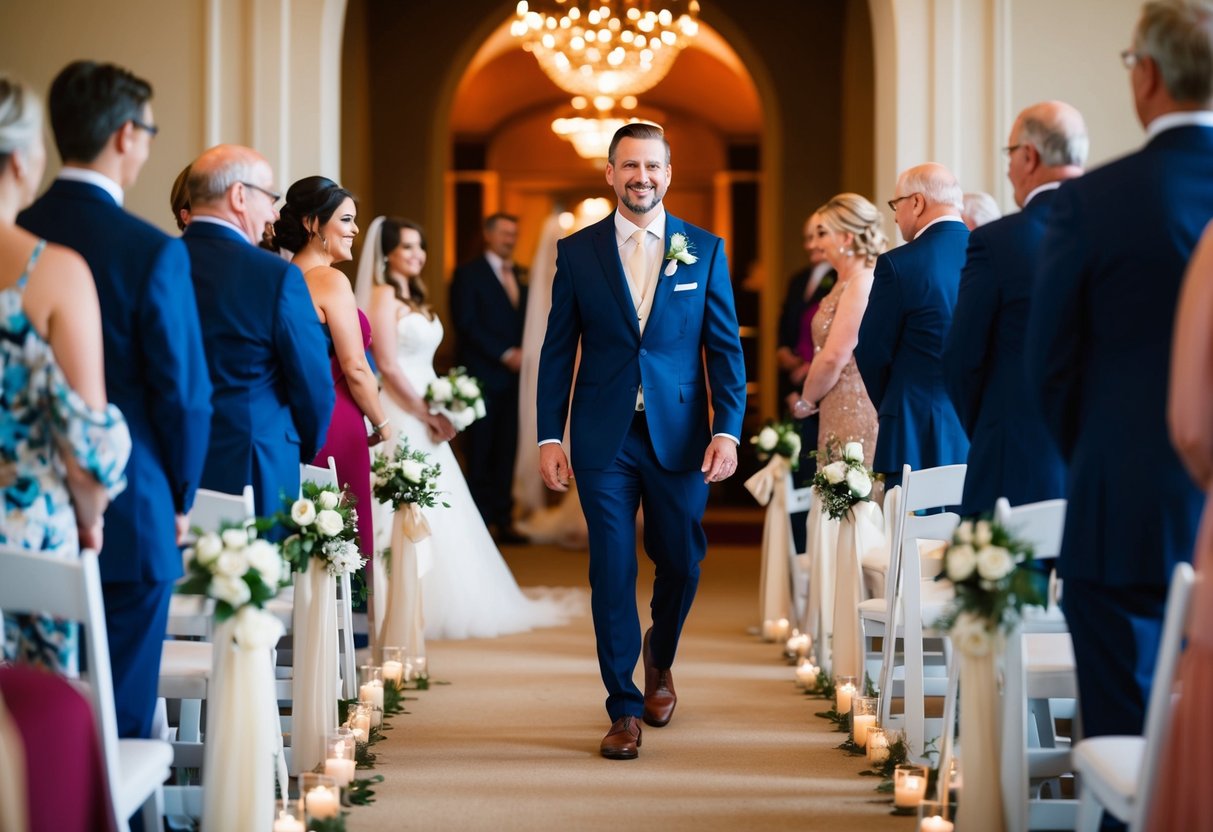
It’s a big moment in any wedding ceremony when the groom walks down the aisle. Traditionally, the groom walks down first with his parents. His mother often accompanies him on one side, and his father on the other. This part of the wedding day holds significance, reflecting family unity and support as the groom prepares for his vows.
As you plan your wedding, it’s essential to consider these traditions. They help set the tone for the ceremony and create lasting memories. Understanding who walks down the aisle not only honors your loved ones but also helps to personalize your celebration in a way that feels right for you.
Each wedding day is unique, and while traditions exist, feel free to make your own choices. Whether you want to stick to tradition or create your own style, it’s all about what makes you happy on that special day.
The Wedding Processional Order
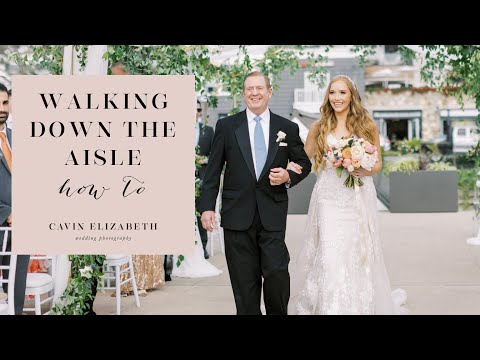
The wedding processional order is a vital part of the ceremony, creating a memorable moment as everyone walks down the aisle. Understanding who walks in what order can help set the tone for your big day.
Traditional Processional Structures
In a traditional wedding, the processional typically starts with the officiant entering first, followed by the groom and the best man. They can walk down the aisle together or enter from the side.
Next, the grandparents take their seats, often followed by the parents of the groom and then the parents of the bride.
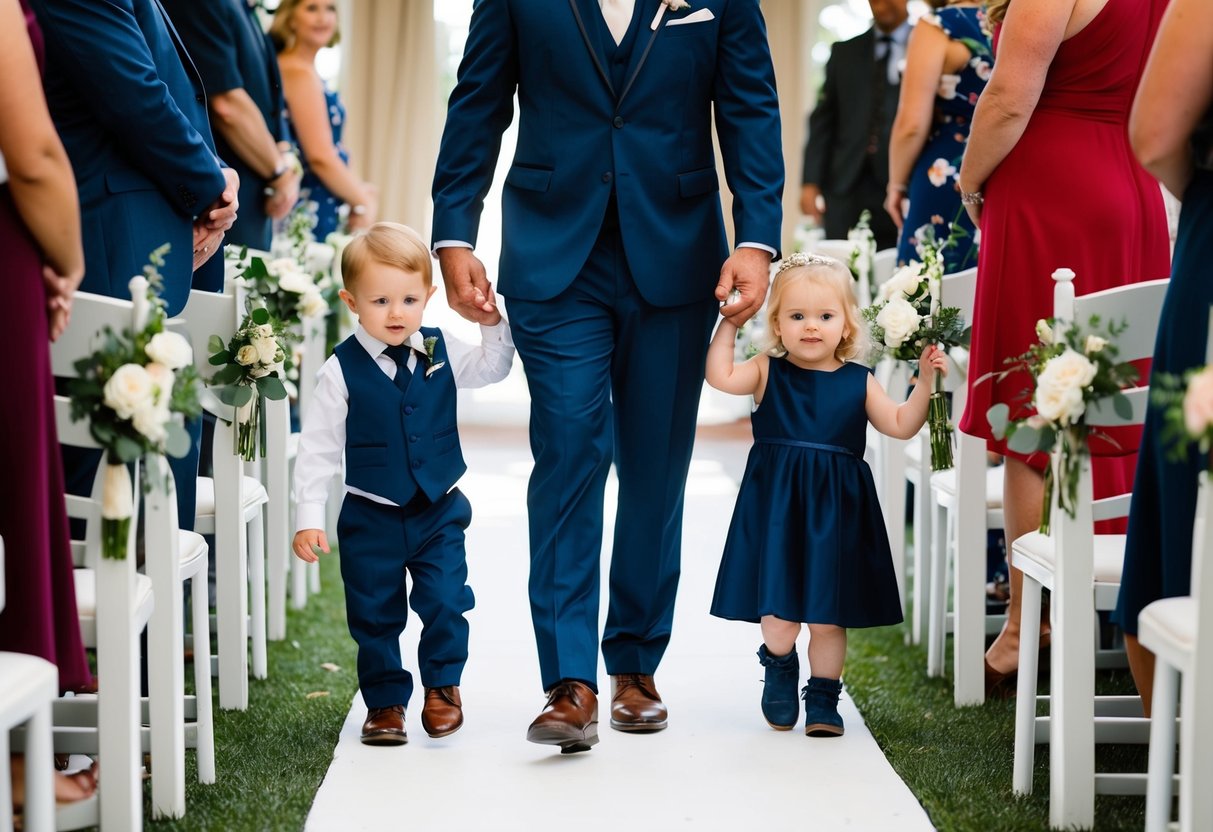
In many ceremonies, the flower girls and ring bearers walk down next. They add a charming touch to the event.
After them come the bridesmaids and groomsmen, who typically enter in pairs. Finally, the moment everyone awaits: the bride walks down the aisle, usually with her father or another significant person.
Modern Variations and Considerations
Modern weddings often allow for more flexibility in the processional order. Couples may choose to have a family member or close friend escort them down the aisle instead of following the traditional route.
Another variation includes having both parents walk the bride down the aisle, which symbolizes unity.
Additionally, some couples opt for a more intimate gathering, using a chuppah or mandap for their ceremony, which can also influence the order.
Cultural and Religious Ceremonial Practices
Different cultures and religions have unique traditions regarding wedding processions. Knowing these practices can help you plan your own ceremony or understand what to expect when attending a wedding. Here’s an overview of key customs in Christian, Jewish, and Hindu weddings.
Christian Wedding Traditions
In a traditional Christian ceremony, the processional order typically begins with the usher walking down the aisle.
Next, the grandparents of the couple enter, followed by the groomsmen and finally the groom himself, who may walk alone or with his parents.
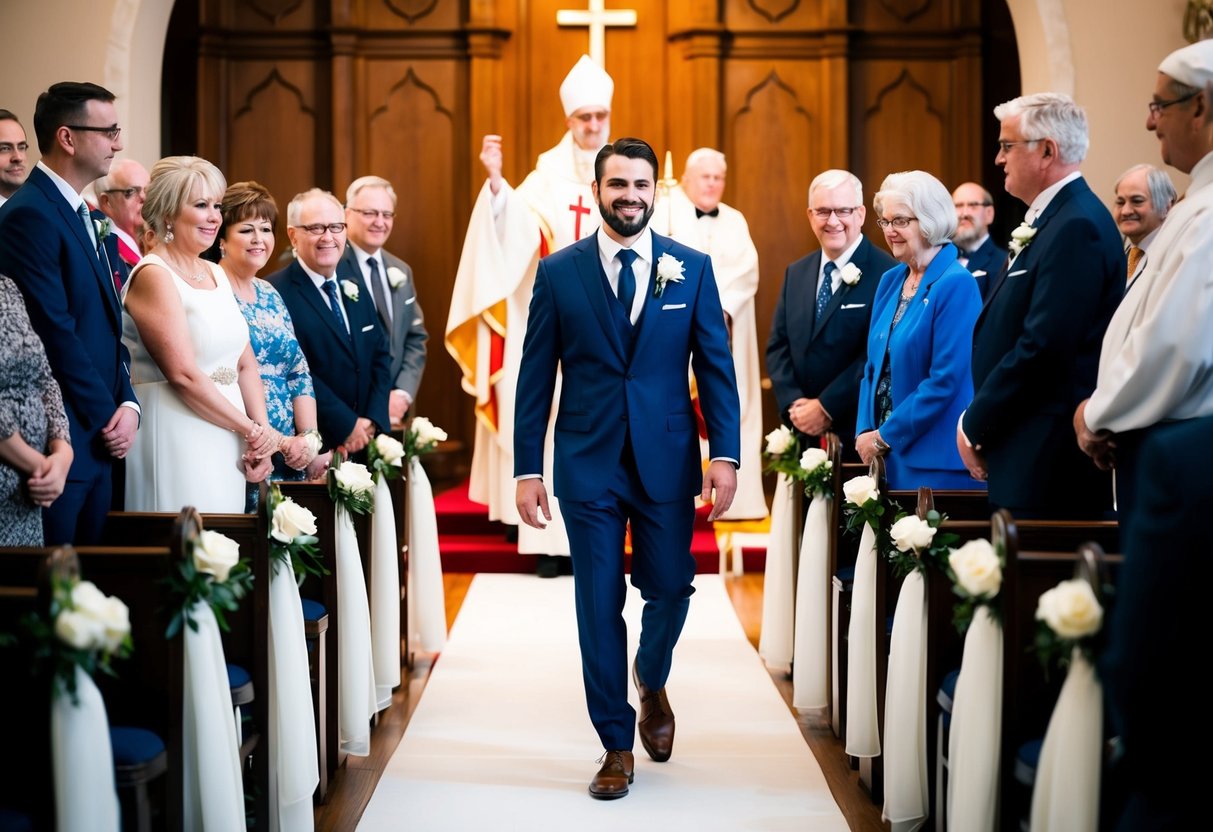
During a Catholic wedding, the procession often includes the groom walking down the aisle with his mother before taking his place at the altar. This adds depth to the ceremony, emphasizing the importance of family connections.
For nondenominational ceremonies, you can customize the processional to fit your style and values.
Jewish Wedding Customs
Jewish weddings also have a specific order for the procession. In many cases, the groom walks down the aisle just before the bride. The parents of both the bride and groom typically escort them, symbolizing their support for the couple.
The ceremony may feature traditional music and rituals, which add to the significance of this moment. For instance, the bride often walks down the aisle with both her parents, showcasing the shared journey led by her family.
Hindu Wedding Rites
Hindu weddings feature a procession called the Baraat, where the groom travels to the venue with family and friends.
Often, he rides a decorated horse or other vehicle, symbolizing his transition from bachelorhood to married life.
Once he arrives, the groom usually does not walk down the aisle with his mother. Instead, the ceremony moves forward with specific rituals taking place at the mandap, or wedding canopy. This highlights the couple’s new beginning within their family and community.
Special Roles in the Processional
In the processional, various individuals hold special roles that contribute to the ceremony’s flow and meaning. Understanding each role can help you plan your wedding day more effectively.
Key Participants Explained
Your wedding processional often starts with the bride’s mother. She typically walks down the aisle first, setting a warm tone.
Following her is the groom’s parents. They can walk together or individually, emphasizing family unity.
Next are the ushers and groomsmen, who guide guests to their seats and support the groom.
Bridesmaids follow, usually paired up. They walk in pairs with their partners, creating a lovely visual.
The best man usually walks in right before the bride, standing beside the groom.
Each person plays a vital role in this meaningful moment, helping you celebrate love in front of family and friends.
Role of Children
Children add a delightful touch to the processional. The flower girl is often one of the youngest participants. She walks ahead of the bride, spreading flower petals to symbolize beauty and new beginnings.
The ring bearer, another child, carries the wedding rings on a cushion or in a special box. This task highlights their importance in the ceremony.
Sometimes, you may also have a page boy who helps with small tasks, like carrying the bride’s train or keeping things organized.
Including children in your processional can create adorable moments and lighten the atmosphere, making your day even more memorable.