
Who Paid for Prince Harry’s Wedding? A Look at the Funding Behind the Royal Nuptials
When it comes to royal weddings, many people wonder who really foots the bill. For Prince Harry and Meghan Markle’s wedding, the royal family primarily covered the costs, with some expenses shared by the UK government and Meghan herself. The extravagant ceremony at St. George’s Chapel in Windsor captured the world’s attention, raising questions not just about love but about the financial support behind such a grand event.
You might be curious about how much the royal wedding actually cost. Estimates suggest that it ran into the millions, with security and other expenses contributing significantly to the total. Despite the hefty price tag, the royal family took on the majority of the expenses, making it a private affair rather than a burden on taxpayers.
As you read on, you’ll discover more details about the funding sources and breakdown of expenses. This wedding was not just a beautiful ceremony; it also highlighted the balance between tradition and modern expectations in the royal family.
Financing the Royal Nuptials
When it comes to financing Prince Harry’s wedding, several key players contributed to the total costs. Understanding how these funds were raised and spent can clear up any confusion about the financial aspects of royal weddings.
Contribution of the Royal Family
The Royal Family plays a significant role in covering wedding costs. For Prince Harry and Meghan Markle’s wedding, the Royal Family paid for essential elements. This included the church service, decorations, and music. Similar to previous royal weddings, like that of Prince William and Kate Middleton, the family’s contribution ensured that the wedding reflected royal traditions.
The total contribution is often not publicized in detail. However, it is clear that the family prioritizes maintaining royal standards during these events. It helps to keep the royal image appealing to the public and reflects well on the monarchy.
Public Funding and the Sovereign Grant
Public funding does come into play but is mostly minimal. The Sovereign Grant, which is made up of taxpayer money, supports the workings of the Royal Family. Although the wedding itself is largely a private affair, some security costs tied to the event are covered by the British taxpayers.
In detail, the Sovereign Grant is based on a percentage of profits from the Crown Estate, which helps keep the royal finances transparent. While royal events draw significant public interest, it’s important to note that most wedding costs are not directly funded by taxpayers.
Private Contributions and Expenditures
There are also private contributions to consider. Prince Harry and Meghan Markle had various sponsors and private donations that helped with certain aspects of the wedding. This included elements like floral arrangements and designer attire, which can be hefty expenses.
The couple selected vendors and items that suited their vision while remaining mindful of the budget. It is also common for royals to cover personal expenditures, such as outfits or private guest accommodations, leading to a more intimate and personal touch to their special day.
Wedding Venue and Ceremonial Details
The wedding of Prince Harry and Meghan Markle took place in a historic and beautiful location. The choice of venue added significant cultural value to their special day, making it a memorable event for those involved and the public.
Historical Windsor Castle
Windsor Castle, where the ceremony was held, is one of the oldest and most famous castles in the world. It has been a royal residence for nearly 1,000 years.
Windsor is not just a place of history; it is also a connection to the monarchy’s past. The castle’s stunning architecture and beautiful grounds provided a majestic backdrop for the couple’s wedding day. Many guests enjoyed the castle’s rich history during the celebrations, making memories that will last a lifetime.
St. George’s Chapel Architecture and Significance
St. George’s Chapel is renowned for its beautiful Gothic architecture. This chapel is part of Windsor Castle and is known for its stunning stained glass windows and intricate stonework.
The chapel is also significant because it has hosted many royal events. It was the site of Harry’s christening and holds the remains of several British monarchs. The choice of St. George’s Chapel for the ceremony added a deep sense of tradition to Harry and Meghan’s wedding.
The wedding service itself included beautiful music and heartfelt vows, showcasing the couple’s love and commitment to each other. When considering church fees, the couple opted for a simple yet elegant ceremony that emphasized their personal touch, making the day even more special.
Fashion and Elegance
Weddings for royals are not just about vows; they are also a showcase of stunning fashion. The wedding gown often takes center stage, and the designs reflect elegance and royal traditions. This section looks at how royal wedding dresses are crafted and highlights some of the most iconic dresses in history.
Designing a Royal Wedding Gown
When it comes to a royal wedding gown, designers face both excitement and great responsibility. For Meghan Markle’s wedding to Prince Harry, she chose a dress by Givenchy, crafted by Clare Waight Keller. This gown featured a simple yet refined design, showcasing clean lines and a stunning neckline. Meghan’s choice emphasized modern elegance rather than opulence.
In contrast, Princess Diana’s wedding gown, designed by David and Elizabeth Emanuel, was a royal fairytale. It had a dramatic train and intricate lace details. Both gowns reflect different eras in royal fashion but share a common theme of grace and sophistication.
Iconic Dresses in Royal History
Throughout royal history, certain wedding dresses have become legendary. For instance, Kate Middleton wore an exquisite gown by Alexander McQueen, designed by Sarah Burton. The lace sleeves and flowing design made it iconic, symbolizing modern royal fashion.
Princess Diana’s dress remains unforgettable, known for its dramatic silhouette and extensive lacework. Other dresses, like Grace Kelly’s, also add to the timeless beauty in royal weddings. Each gown tells a unique story and showcases how royal fashion evolves while maintaining elegance through generations.
Fashion and elegance intertwine beautifully in royal weddings, making each gown a significant part of the ceremony and the couple’s legacy.
Public Interest and Economic Impact
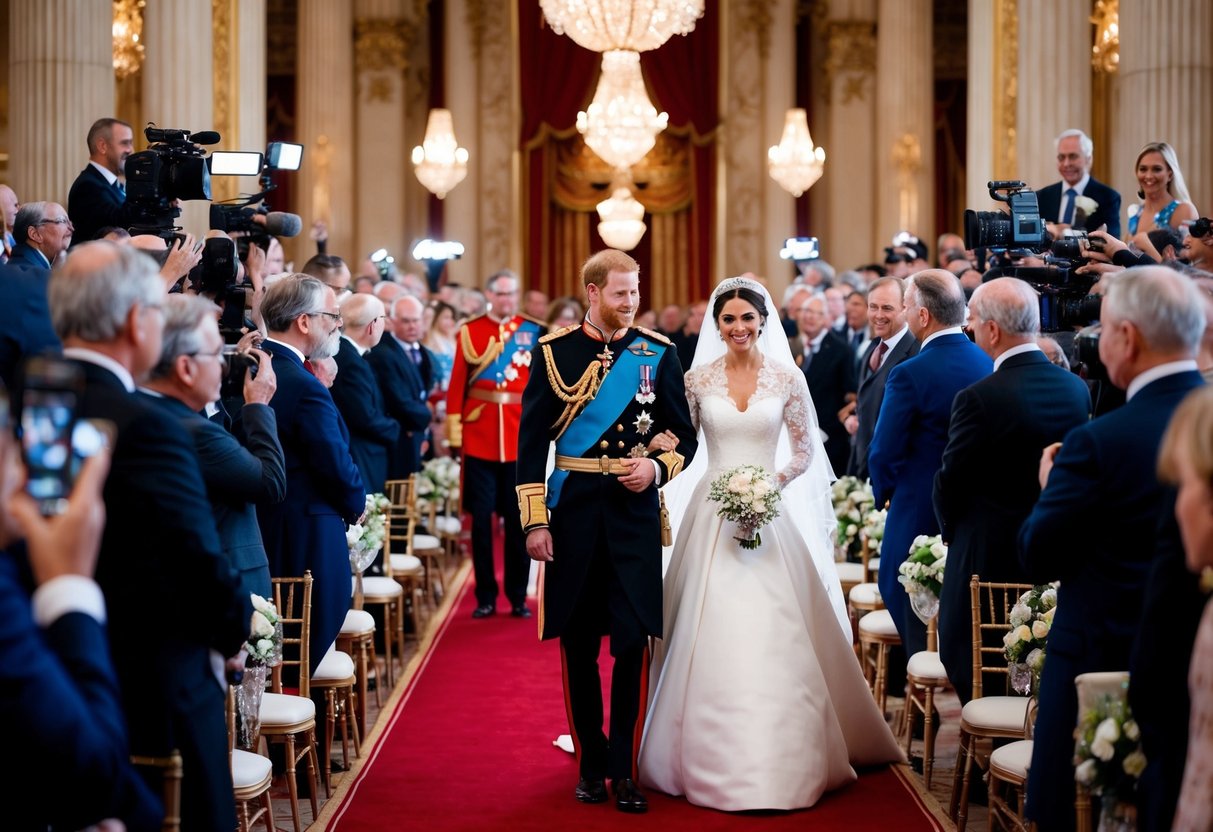
The royal wedding between Prince Harry and Meghan Markle drew massive public interest. It didn’t just capture hearts; it also significantly impacted the economy. You’ll see how this event boosted both local businesses and national sectors, creating a ripple effect in various industries.
Boost to Local and National Economy
The wedding provided a sizable boost to the economy. Estimates indicated that the event contributed around $1.4 billion to the UK economy. Your local shops, restaurants, and hotels saw a surge in customers.
Many businesses prepared special offers and packages to attract visitors. This influx helped not only local economies but also strengthened the national economy.
Tourism and Merchandising Opportunities
The wedding gave tourism a boost. Fans from around the world flocked to Windsor, eager to catch a glimpse of the festivities. This interest led to increased hotel bookings and attractions in the area.
Merchandising opportunities also flourished. Shops designed special items, tapping into the public’s eagerness to commemorate the occasion.
Both tourism and merchandise sales highlight how significant royal events can be for the economy. Businesses were quick to embrace this chance, allowing you to find unique and themed products celebrating the couple.