
Who Pays for the Mother of the Groom’s Dress? Understanding the Cost and Traditions
As the mother of the groom, you might wonder about your role in the wedding planning process, especially when it comes to your attire. Typically, the mother of the groom pays for her own dress. This is similar to the tradition where the mother of the bride covers her outfit. While the couple might offer to help with costs, it’s best to be prepared to handle this expense yourself.

Navigating wedding etiquette can sometimes feel overwhelming, but knowing who pays for what helps clarify your responsibilities. The groom’s family often has various costs to consider, such as the rehearsal dinner and the groom’s attire. By understanding your financial role, you can focus on finding a dress that makes you feel confident and excited for the big day.
Feeling a bit lost about what to wear? You’re not alone! Many mothers want to look stunning while also aligning with the wedding’s theme. Embrace this special moment, and remember that your support means the world to your child on their wedding day.
Understanding Wedding Financial Responsibilities
When planning a wedding, it’s essential to know who typically pays for what. Understanding these responsibilities can help you navigate financial discussions smoothly.
Cultural and Modern Norms
Traditionally, different families have specific roles in wedding expenses. Often, the bride’s family covers most of the costs, including the venue, catering, and flowers. Meanwhile, the groom’s family usually handles the rehearsal dinner and some other expenses.
In modern weddings, many couples choose to share costs more equally. You might find that families are more flexible about who pays for which aspects. This shift means that expenses like the mother of the groom’s dress could be covered by the groom’s family, the couple, or even the mother herself.
Understanding these norms can help you set expectations early. Discussing these roles with both families may also ease any financial tension.
The Role of the Groom’s Family
The groom’s family has a key role in wedding expenses. Traditionally, they are responsible for costs like the rehearsal dinner and the wedding day transportation. You might also find them involved in paying for the officiant and sometimes the wedding rings.
For the mother of the groom’s dress, financial contributions can vary. Some families may choose to cover this cost as a gesture of support. Others might expect the mother of the groom to pay for her outfit, allowing her to choose something she loves.
Being open about these responsibilities can lead to better planning. It helps everyone understand their financial roles and share the excitement of the big day without pressure.
Breaking Down Wedding Attire Costs

When planning a wedding, it’s important to understand the costs associated with each person’s attire. This can include the mother of the groom’s dress as well as the groom’s outfit and accessories.
Mother of the Groom’s Dress
The mother of the groom often wears a special dress to honor this significant occasion. Traditionally, it is the groom’s family who shares the cost of this attire. You want to ensure that her outfit complements the wedding theme and matches the bride’s dress without overshadowing it.
Prices for the mother of the groom’s dress can vary widely. On average, you might expect to pay between $200 and $1,000. You might explore options such as renting a dress to save money. Additionally, keep in mind accessories like shoes and jewelry, which can add another $100 to $300 to the total cost.
Groom’s Attire and Accessories
The groom’s attire is also an important aspect of wedding costs. He typically wears a suit or tuxedo chosen to align with the wedding’s overall style. The cost of a groom’s suit can range from $200 to over $1,500, depending on fabric and brand.
Accessories like ties, cufflinks, and shoes can add another $100 to $300. It’s wise to consider outfit rentals if you’re trying to keep costs down. Remember, coordinating with the bride and her dress is key, ensuring that both the groom and his attire enhance the wedding’s look.
Specifics of Wedding Planning Expenses
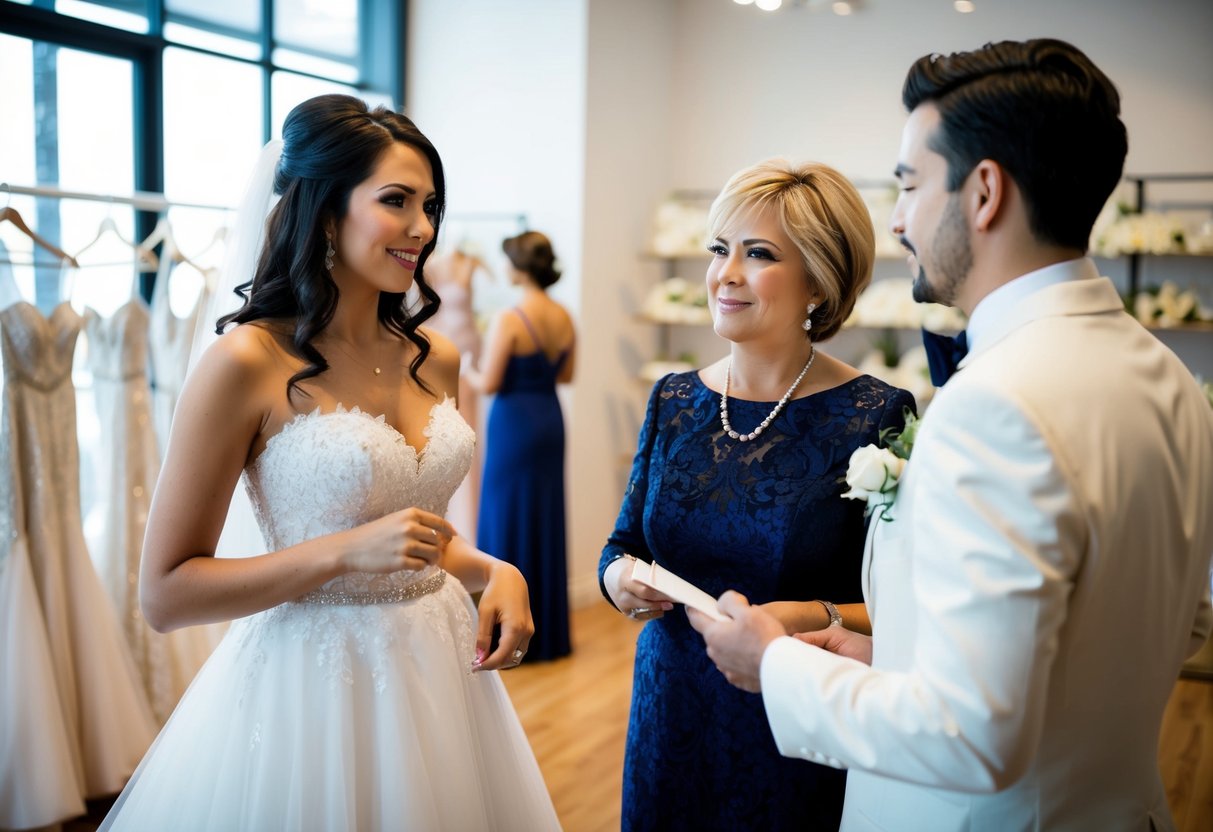
When planning a wedding, understanding who pays for various expenses is crucial. There are two main areas where costs arise: the ceremony and reception elements, and pre-wedding celebrations and attire.
Ceremony and Reception Elements
The ceremony and reception costs can add up quickly. Typically, the bride’s family shoulders many of these expenses. This may include the venue rental, decor, and the wedding cake.
Here’s a brief overview of common costs:
- Venue rental: Important for both the ceremony and reception.
- Catering and drinks: Often one of the largest expenses.
- Reception music: Hiring a band or DJ enhances the celebration.
- Flowers and decor: Adds beauty and sets the mood.
Groom’s family might be expected to cover specific items, such as the groom’s attire and possibly the mothers’ dresses. Discussing these roles early helps avoid confusion later.
Pre-Wedding Celebrations and Attire
Pre-wedding events like engagement parties and bridal showers also come with their own set of financial responsibilities. The bride’s side usually takes charge of these celebrations, with expenses for the venue, food, and decorations covered by family or close friends.
For attire, the mother’s of the bride and groom often buy their dresses. It’s common for their families to support these costs.
Expenses to consider include:
- Dress costs: Stylish options that suit the event.
- Accessories and alterations: Ensure the outfit fits perfectly.
- Gifts for pre-wedding events: Thoughtful tokens for the hosts.
Navigating these expenses with clear communication can lead to a smoother planning process.
Navigating Additional Wedding Contributions

Weddings come with various costs that can extend beyond the main expenses. Understanding who contributes to these costs is key for making plans smooth and clear.
Host Responsibilities and Extra Touches
When planning the rehearsal dinner, the groom’s parents often take the lead. This is a special time for family and friends to gather before the big day. They may also cover officiant fees, which can vary based on location and services required.
Gift-giving plays a role too. You might consider a wedding gift for the couple or some thoughtful additions to their wedding registry. Other contributions can include assisting with transportation arrangements for the wedding day. This ensures everyone gets to the venue comfortably.
Extra touches like flowers or décor can also be a point of contribution. It’s great to discuss any additional items you want to include, ensuring everyone agrees on style and budget.
Accommodations and After-Party
Accommodating guests is another important part of your financial responsibilities. You might want to help arrange lodging if many are traveling for the event. This can be especially important for out-of-town friends and family. Research nearby hotels that offer group rates.
After the main festivities, consider contributing to an after-party. This can be a fun way to continue the celebration. Keep in mind that you may also help with transportation for these guests to and from their accommodations.
Planning for a honeymoon is also essential. Often the couple’s parents will chip in for honeymoon costs or offer a gift to aid with travel. Talk openly about expectations and contributions to make the journey enjoyable for everyone involved.