
Who Puts the Ring on First in a Wedding? Exploring Wedding Traditions
When it comes to wedding ceremonies, one important question often arises: who puts the ring on first? Traditionally, the groom places the wedding band on the bride’s finger as a sign of his love and commitment. This ritual not only highlights the bond between the couple but also reflects various wedding traditions that have been followed for generations.
You might wonder how this practice ties into broader themes of gender roles and commitment. In many cultures, the act of exchanging rings symbolizes the promises made in marriage. It’s a moment that showcases the couple’s dedication to each other within the context of their unique love story.
As you plan your special day, understanding the significance behind who puts the ring on first can add depth to your ceremony. It’s not just a simple act; it’s a cherished tradition that marks the beginning of your lifelong journey together.
The Significance of the Ring Exchange
The exchange of wedding rings is a meaningful moment during your wedding ceremony. This act carries deep cultural and historical roots, representing love and commitment between you and your partner.
Understanding its significance can add depth to this special occasion.
Cultural and Historical Background
The tradition of ring exchange dates back thousands of years. Ancient Egyptians believed that the circle symbolized eternity, making the wedding ring a powerful emblem of an eternal bond. The Romans adopted this tradition, which later spread throughout Europe.
Many cultures have unique customs surrounding the ring exchange. For example, in some religious traditions, the exchange is a sacred act in their ceremonies. It’s amazing how these historical practices shape your special day.
Symbolism of Wedding Bands and Engagement Rings
Wedding bands and engagement rings have rich symbolism that goes beyond their beautiful appearance. The ring itself is circular, representing an unbroken bond of love and commitment.
Before wedding bands, engagement rings signified the promise of marriage. This symbolic gesture highlights your deep affection and dedication to each other.
During the ring exchange, you not only share a physical object but also a heartfelt promise. Each time you look at your ring, it serves as a reminder of your vows and the love you both cherish.
Wedding Ceremony Order of Events
The order of events in a wedding ceremony is important for creating a smooth and meaningful experience. You’ll want to consider the roles of key participants and the timing of significant moments like the exchanging of vows and rings.
Role of the Officiant and Ring Bearer
The officiant plays a crucial role in your wedding day. This person guides the ceremony, leading you and your guests through each part. They set the tone and pace, making sure everything flows smoothly.
The ring bearer is often a young child who carries the wedding rings to the altar. This adds a charming touch to the ceremony. Their role is to bring the rings at the right moment, usually just before the ring exchange.
It’s important to ensure that both the officiant and ring bearer know their roles well. Clear communication helps prevent any mix-ups or delays during this significant moment.
Sequence of Vows and Ring Exchange
The vows are typically the heart of the ceremony. You express your love and commitment to each other in front of your family and friends. This moment often happens after the officiant’s opening words.
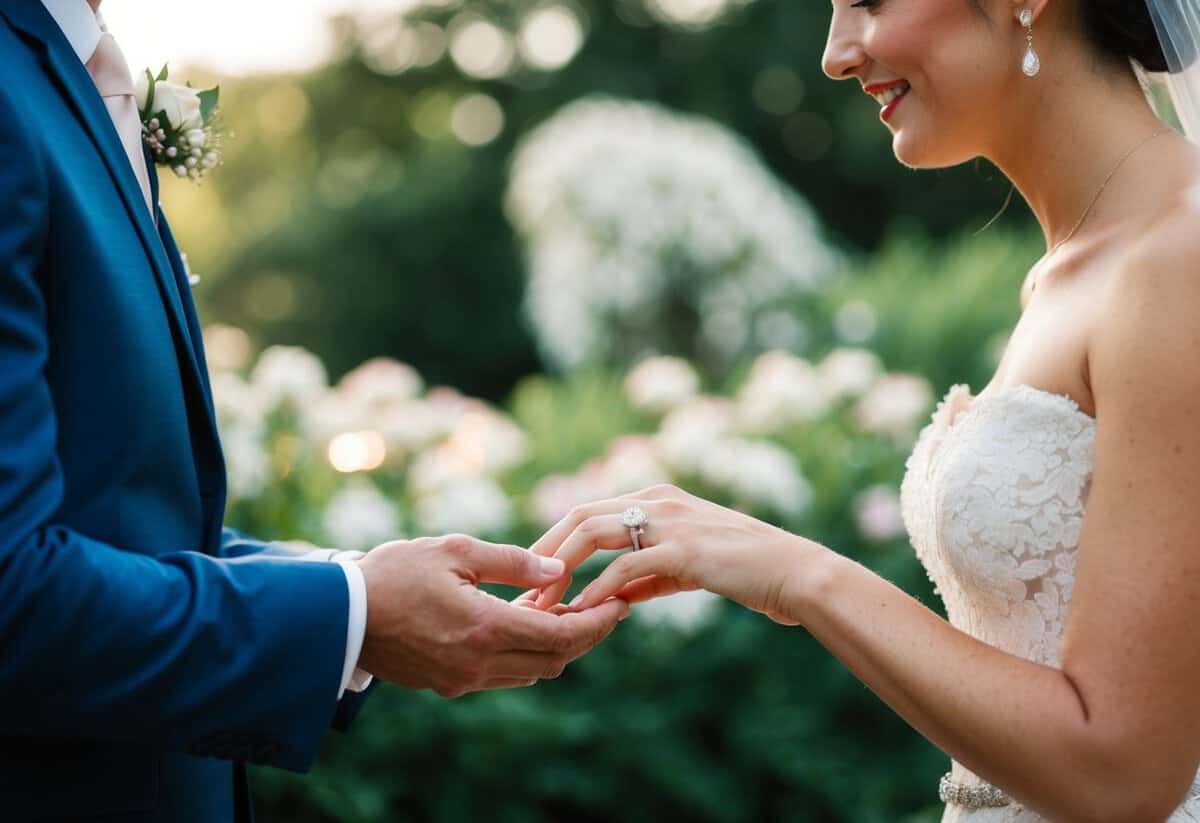
Following the vows, the wedding ring exchange takes place. Traditionally, the groom puts the ring on the bride first. This symbolizes his promise to love and protect her. Afterward, the bride places a ring on the groom’s finger, completing the exchange.
This sequence highlights the importance of your commitment to each other, making it a significant event in your wedding ceremony. By preparing for these moments, you ensure they are meaningful and memorable.
Practicalities of the Ring Exchange
When planning your wedding, you will want to consider how the ring exchange will happen. This includes knowing which hand and finger the rings go on and the order in which each partner exchanges their rings.
Which Hand and Finger
In many Western traditions, wedding rings are placed on the left ring finger. This finger is often chosen because it is believed to have a direct vein leading to the heart.
Before the ceremony, the bride typically wears her engagement ring on her right hand. During the exchange, the groom will place the wedding band on her left hand first. After this, the bride can move her engagement ring to sit above the wedding band, keeping both close to her heart.
Order of the Rings Placed Between Bride and Groom
Traditionally, the groom puts the ring on first. This act symbolizes his commitment to the bride. He places the wedding band on her finger after reciting his vows. Following this, the bride places the wedding band on the groom’s finger. This sequence highlights the mutual vows and promises being made. While these traditions are common, some couples choose to customize their wedding ring exchanges to fit their personal style, making the moment even more meaningful.
Personalizing Your Ceremony
Your wedding ceremony is a chance to highlight your unique love story. Personalizing it can help break traditional norms, making it feel true to who you are as a couple. There are many ways to reflect your personal preferences and values during this special moment.
Modern Interpretations and Gender Roles
Many couples today are embracing modern interpretations of wedding traditions. This means that the traditional roles of the bride and groom are evolving.
For instance, you might choose who puts the ring on first based on your personal style rather than strictly following tradition. Some brides may want to put the ring on the groom first as a statement of equality.
You could also involve family members, like having a parent place a child’s ring as a symbol of merging families. Thinking about these options allows you to reflect your values and break the mold of old customs.
Incorporating Family, Friends, and Personal Style
Including family and friends in your ceremony can make it even more special. You might ask a loved one, such as your maid of honor or a close family member, to read a poem or share a personal story during the ceremony.
Consider having a flower girl carry a promise ring, which adds a personal touch. This can represent the love and commitment from all parties involved.
Also, think about your style. You could choose custom jewelry from a designer that reflects both your tastes. These ideas add layers to your ceremony, making it heartfelt and unique.