
Who Reads the Vows at a Wedding? Understanding the Roles in Your Ceremony
Your wedding day is a moment filled with love and commitment. A key part of this beautiful event is the reading of wedding vows, which serve as a public promise to one another. Typically, the officiant reads the vows, guiding you through this heartfelt declaration of your love.
Understanding who reads the vows can help you plan your ceremony more smoothly. Whether you choose to have your vows read aloud together or one at a time, it’s essential to know that this moment is often one of the most anticipated by your guests.
Embracing this part of the ceremony ensures that your commitment is shared with everyone present.
If you are wondering about the traditions and options available for your wedding vows, you’re not alone. Many couples seek to make this moment personal and memorable, and knowing who reads the vows is just the start of what makes your wedding day truly special.
Roles and Responsibilities in Ceremony
Understanding the roles in a wedding ceremony is essential for a smooth and meaningful event. The officiant plays a critical part, from the ceremony script to guiding the couple through their vows.
The Role of the Officiant
The wedding officiant is a key figure in your ceremony. This person ensures everything flows smoothly and aligns with your wishes. They often start the event with a declaration of intent, inviting you to affirm your love and commitment.
Your officiant is responsible for reading the vows if you choose traditional routes. They may also help you personalize your ceremony script, incorporating unique elements that reflect your relationship. In religious weddings, the officiant often considers specific religious beliefs tied to marriage vows, giving it a more profound significance.
Reading Vows: Who and When?
When it comes to who reads the vows, several options exist. Typically, the officiant will lead this part of the ceremony. You can decide if you want to recite traditional wedding vows or create personalized ones.
If you opt for a unique touch, many couples prefer to read their vows to each other. When doing this, it’s essential to decide who says their vows first.
This choice can depend on the order of wedding vows you prefer. In many cases, the groom goes first before the bride, but feel free to mix things up to match your style. The moment is all about showcasing your love in a memorable way.
Customizing the Vow Exchange
Making your vow exchange special is about adding personal touches that reflect your love and values. Personalizing vows allows you to create a meaningful moment that truly represents your relationship.
Incorporating Personal Preferences
You can customize the vow exchange in many ways to fit your themes or traditions. Consider including rituals that hold significance for you and your partner.
For instance, you might want to light a unity candle, perform a handfasting ceremony, or even include readings from favorite books or poems.
Moreover, you can choose the setting for the exchange. It could be a beautiful garden, a beach, or even your favorite café. The location can add a personal touch and create a comfortable atmosphere for reciting vows.
Writing Personal Vows
Writing personal vows gives you the opportunity to express your true feelings. You can reflect on your journey together and share specific promises.
Aim for a balance between emotion and clarity. Start by jotting down thoughts about your partner and your relationship. Use specific memories or qualities you love about them.
If you are nervous, practice reciting your vows aloud. This can help you become comfortable with your words and ensure that you communicate what you truly feel.
Equality and Inclusivity in Vow Exchange
Everyone deserves to feel included in the ceremony, especially in the vow exchange. It’s essential to affirm equality, particularly for same-sex couples.
When writing vows, focus on the language that reflects your commitment. Use “I” and “you” rather than traditional roles. This creates a more equal atmosphere during the ceremony.
You can also involve friends or family members in the ceremony. This can strengthen the sense of community and support. Whether it’s through readings or group blessings, inclusivity enriches the experience.
Ceremony Structure and Flow
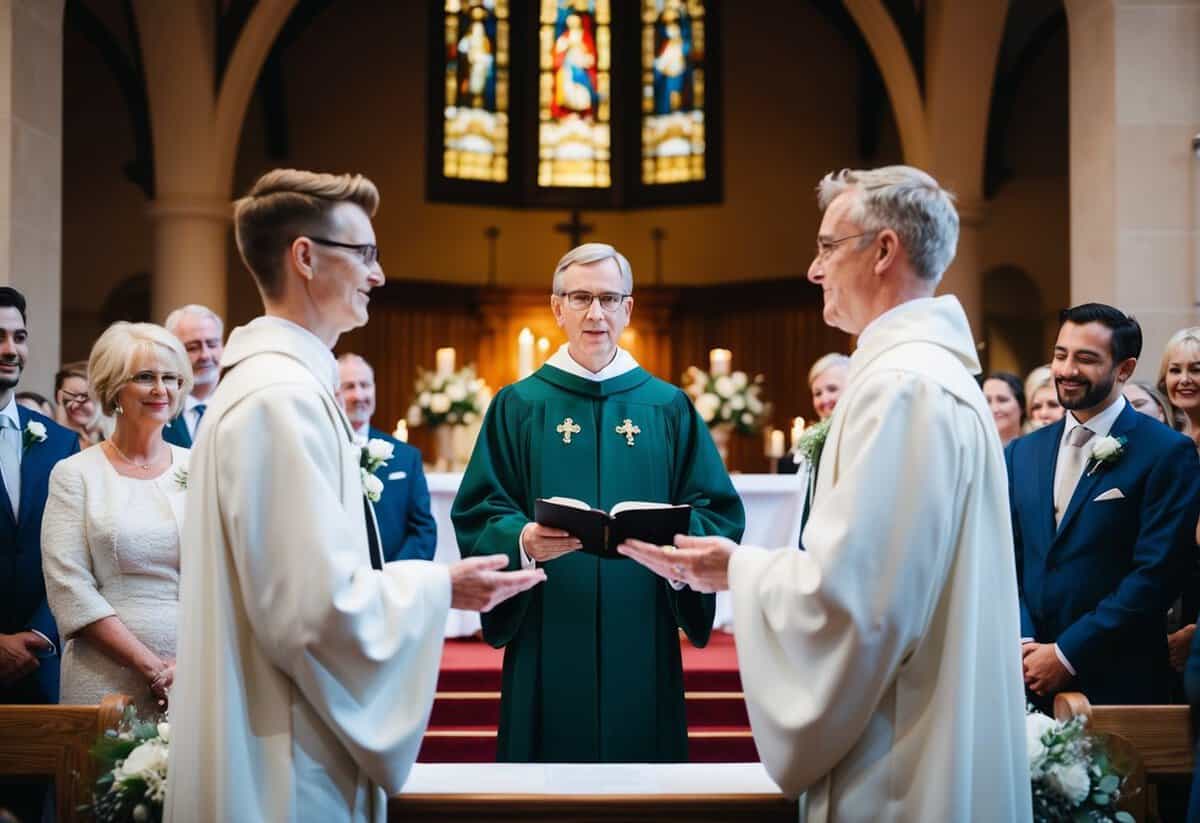
Understanding the structure and flow of a wedding ceremony is key to creating a memorable event. You’ll find that the order might vary based on tradition or personal choice.
Traditional and Non-Traditional Orders
In a traditional wedding ceremony, the order usually follows a specific pattern. First, there’s the processional, where the wedding party enters. Next comes the officiant’s welcoming remarks, readings, and then the exchange of vows.
If you’re considering an unconventional approach, you can switch the order. For example, some couples opt to have their vows exchanged earlier in the ceremony or even during a unique ritual that reflects their relationship.
Who says wedding vows first often depends on personal preference. Typically, the officiant will guide you through the vows, making sure each person speaks their promises clearly.
Significance of the Processional
The processional sets the tone for your wedding. It’s an important moment when the wedding party, including parents and the couple, walks down the aisle.
This part of the ceremony usually begins with music that you choose to reflect the mood you want. As you walk, everyone’s attention is on you, creating an exciting atmosphere.
Consider how you want your entrance of the wedding party to unfold. Whether it’s a traditional march or a fun, upbeat song, this choice cues guests into the style of your celebration.
Finalizing the Ceremony
As your ceremony nears its end, it’s crucial to finalize the details in a meaningful way. This often includes the pronouncement of marriage and a first kiss, which are highlight moments for everyone involved.
You can customize this part with traditional ceremony scripts or make it your own with unconventional ceremony scripts. Ensure that the officiant clearly guides this process, reinforcing the significance of your vows and promises made.
Finally, exploring how you want to finish off the ceremony can also include personal touches like a unity ritual or special readings. Whatever you choose, these moments will make your wedding unique.
Special Elements and Rituals
Weddings often include special elements and rituals that add meaning to the ceremony. Understanding these can enhance your experience.
Unity Rituals
Many couples choose a unity ritual to symbolize their bond. Common options include:
- Candle Lighting: Both partners light a single candle from two separate ones.
- Sand Ceremony: Couples pour different colored sands into a single container.
These rituals emphasize your commitment to each other.
Ring Exchange
The ring exchange is a powerful moment. As you place the rings on each other’s fingers, it represents your love and commitment. This act is often accompanied by promises spoken aloud.
Who Goes First?
Traditionally, the groom says his vows first in many cultures. This might feel unusual today as many couples prefer to share vows together.
The Big “I Do”
The person who says “I do” first may vary based on your traditions. In some settings, the officiant will prompt you both. It’s essential to communicate your preferences beforehand.
Capturing the Moment
Recording the ceremony through a wedding video helps preserve memories. You can look back on your promises and rituals for years to come.
Religious Traditions
If you’re having a religious ceremony, be aware of specific traditions. These can shape how vows are exchanged and which rituals are included.
Wedding Etiquette
Making choices about vows and rituals is personal, but sticking to etiquette ensures a smooth ceremony. It’s helpful to discuss these elements with your officiant ahead of time.