
Who Sits with the Bride and Groom? A Guide to Wedding Seating Arrangements
When planning your wedding, choosing who sits with the bride and groom is an important decision that affects the atmosphere of the wedding ceremony. Typically, the groom sits to the bride’s right, while the best man is seated next to the bride, and the maid of honor is on the groom’s side. This seating arrangement not only honors your closest friends and family but also helps create a supportive environment during your special day.
As you work through your wedding planning, consider how the layout of your seating arrangement can influence the dynamics among your guests. Many couples now opt for a more relaxed approach, allowing spouses and significant others to sit together. This change can make your ceremony feel warmer and more inclusive for everyone involved.
Understanding who should sit where will help ease the stress of planning and ensure your wedding day runs smoothly. From the bridal party to immediate family members, knowing these seating guidelines makes it easier for you to create a memorable experience for you and your loved ones.
Understanding Seating Arrangements
When planning a wedding, the seating arrangements play a crucial role in ensuring that guests feel comfortable and happy. Knowing the basics of seating chart etiquette, the types of seating plans available, and how seating works for wedding receptions will help you create the ideal atmosphere for your special day.
The Basics of Seating Chart Etiquette
Creating a seating chart is essential for a smooth wedding day. Start by organizing your guest list. It helps to know who is attending and their relationships.
Here are some key points to consider:
- Family Relationships: Place close family members near the bride and groom. Traditionally, the bride’s parents sit on one side and the groom’s on the other.
- Mix Friend Groups: Help guests mingle by mixing friends from both sides at different tables.
- Couples and Families: Seat couples together and group families where kids can be near parents.
- Special Needs: Consider any guests with special needs or mobility issues when arranging seating.
Different Types of Seating Plans
There are various types of seating plans you can choose from for your wedding. Each option has its benefits:
- Assigned Seating: Guests have specific seats assigned, which removes confusion. This plan works well for larger weddings.
- Open Seating: Guests choose their seats. This option is more relaxed and can create a casual atmosphere but may lead to awkwardness if guests don’t know each other.
- Social Seating: Mixes assigned and open seating. You can assign tables but allow guests to choose their seats at those tables. This option can help encourage conversation.
Seating for Wedding Receptions
Your seating arrangement during the reception is just as important as during the ceremony. Here are some tips for organizing your wedding reception seating:
- Head Table: The bride and groom usually sit at the head table with their bridal party. You can get creative with the layout, from a long table to a round one.
- Guest Tables: Arrange tables that fit your guest list size. A good mix of tables encourages mingling.
- Kids’ Table: If you have many children attending, think about creating a kids’ table with fun decorations or activities to keep them entertained.
Roles and Positions at the Head Table
The head table is a special spot at your wedding reception, usually featuring the bride and groom along with their closest friends and family. Properly arranging the seating can help create a warm atmosphere for celebrating your big day.
Order of the Wedding Party
When organizing the head table, find the best order for the wedding party. Start with the bride and groom sitting in the center. Right next to them should be the maid of honor and the best man. They’ve played important roles in your wedding, so it’s fitting for them to be at your side.
Next, you can seat the bridesmaids and groomsmen. A common arrangement is to have bridesmaids on one side and groomsmen on the other. This setup fosters a sense of unity and camaraderie among your close friends. Be mindful of pairing friends who know each other well, as it makes for a more enjoyable experience.
Seating the Maid of Honor and Best Man
The maid of honor and best man hold crucial roles in your wedding. They provide emotional support and help keep everything running smoothly. Traditionally, they sit directly beside you at the head table.
This not only honors their efforts but also allows them to share in special moments during the reception. The maid of honor can assist with your dress, while the best man is usually ready for any last-minute details. They contribute to the joy of the day, so having them close by is a great idea.
Arranging Bridesmaids and Groomsmen
Arranging the bridesmaids and groomsmen at the head table adds to the festive mood. After the maid of honor and best man, consider seating a bridesmaid next to the best man. Then alternate with a groomsman next to the bride. This creates a balanced look and encourages conversation among everyone.
If you have ring bearers and flower girls, you can include them at a smaller table nearby. They might enjoy sitting with family or close friends. This setup keeps them engaged and gives them a sense of importance while keeping the head table focused on adult companionship.
Special Tables and Guest Accommodations
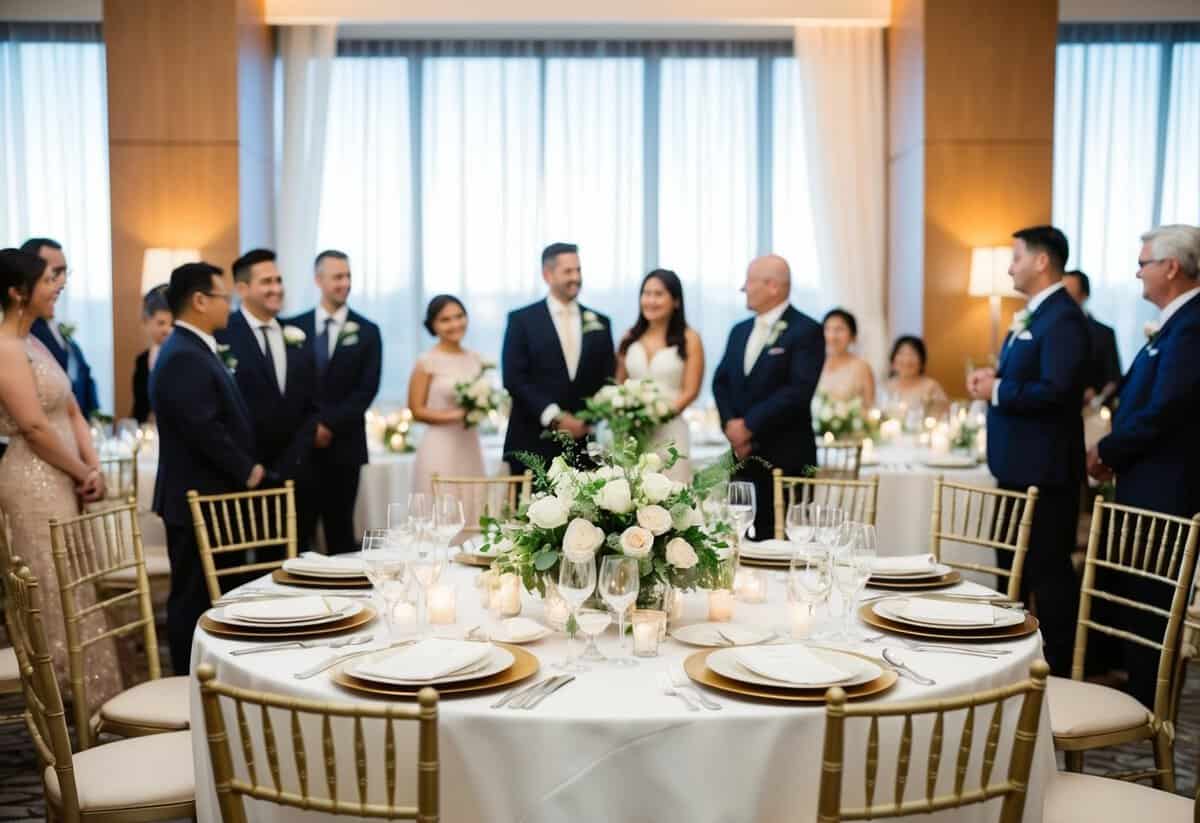
When planning your wedding seating, consider how to arrange special tables for family and friends. It’s important to create a plan that includes everyone, ensuring that close family, extended relatives, and single guests feel included and comfortable.
Designating Family Tables
Family tables play a key role in your wedding seating arrangement. You may want to set up distinct tables for your closest family members.
Typical family table arrangements might include:
- Bride’s immediate family: Parents, siblings, and their partners.
- Groom’s immediate family: Similar setup with the groom’s parents, siblings, and their partners.
- Table for grandparents: If possible, provide a special table for grandparents to honor their place in your lives.
This keeps connections close and creates a cozy atmosphere for family.
Considering Extended Family and Friends
Extended family and friends deserve a place in the seating arrangement too. It’s crucial to think about who should sit together to encourage conversation.
Consider grouping:
- Cousins and aunts/uncles: This helps keep family connections strong.
- Old friends: Create a table for childhood friends or college pals. They will appreciate being grouped together, sharing stories and memories.
Make sure to check your RSVPs. For those who respond late, have a flexible seating plan so you can easily accommodate them.
Options for Singles and Guest Accommodations
Not all guests come with a plus one. It’s thoughtful to arrange a dedicated table for single guests.
A singles table can offer:
- A friendly atmosphere: This can help people mingle who might not know anyone.
- Fun games or activities: Consider setting up a little game at the singles table to break the ice.
For any special needs, talk with your venue about accommodations. Make sure your seating chart is accessible and that guests know where to find their tables easily. This helps everyone feel welcome and included.
Important Details and Considerations
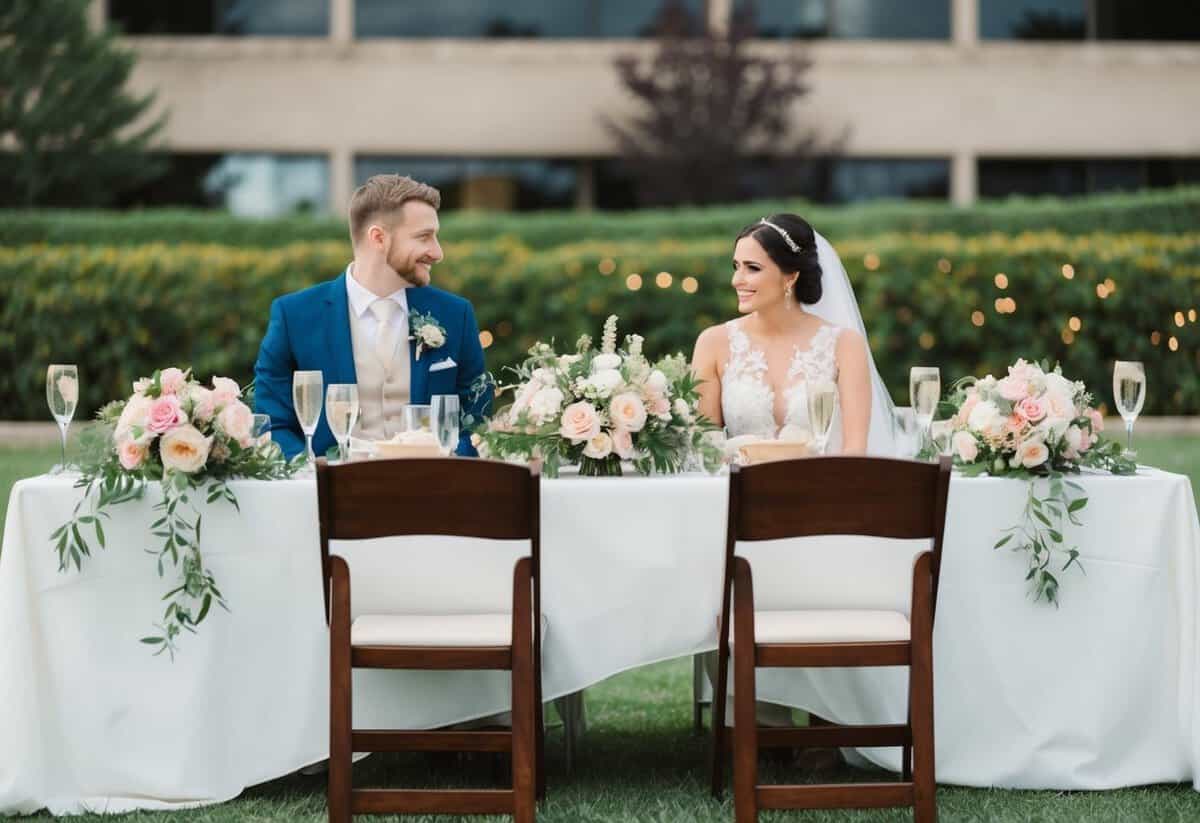
When planning who sits with the bride and groom, it’s important to consider the layout of the venue and how to handle guest arrangements. This includes understanding how to create a comfortable atmosphere and make sure everyone feels included.
Floor Plan and Space Constraints
Your wedding venue’s floor plan will greatly influence seating choices. Start by understanding the layout. Note any space constraints, like tight corners or columns that might obstruct views.
Consider a table arrangement that allows for smooth movement for guests and waitstaff. A popular option is the head table, where the bride and groom sit centrally, surrounded by their bridal party. Sweetheart tables are also a choice for just the couple, providing intimacy.
Make sure there’s enough space for guests to walk around comfortably. You want everyone to enjoy themselves without feeling cramped.
Creating Escort Cards and Place Cards
Escort cards can help guests find their tables quickly. These cards usually contain the guest’s name and table number. They can be creatively designed to match your wedding theme.
Place cards take it a step further by assigning specific seats. This helps avoid confusion at the table. Think about a seating chart that’s easy to read and stands out. You could use elegant frames or even a chalkboard for a rustic feel.
Make sure to communicate with your florist or wedding planner to ensure that both the escort and place cards fit well within your overall decor. Clear signage can make a big difference in helping guests find their seats.
Navigating Family Dynamics in Seating
Seating arrangements can get complicated due to family dynamics. Be mindful of any relatives who might not get along. Planning ahead can prevent awkward moments.
Consider creating a seating chart that balances family divisions while keeping harmony. You might want to separate certain family members while sitting others close to the couple.
Involving ushers can help manage guest arrival smoothly, guiding them to their designated tables. Make sure to communicate your wishes clearly and firmly to avoid mixed signals. It’s your special day, so ensuring comfort for everyone is key to a joyful celebration.