
Who Usually Walks the Grandparents Down the Aisle? Exploring This Special Wedding Tradition
When planning your wedding, you might wonder who usually walks the grandparents down the aisle. Traditionally, the groom’s grandparents enter first, followed by the bride’s grandparents. This practice honors both sides of the family and sets a lovely tone for the ceremony.
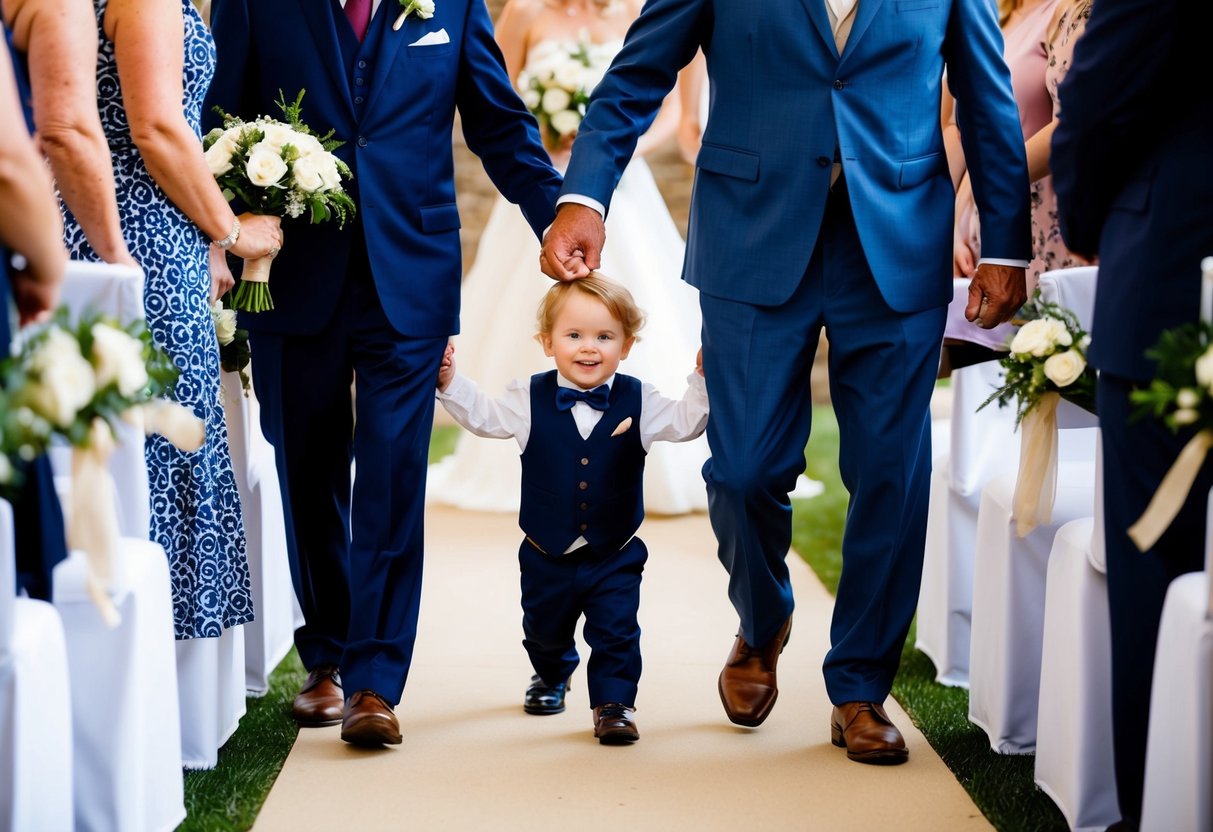
If either set of grandparents needs assistance, they can be escorted by ushers or family members. Many couples choose to personalize this moment, so feel free to adjust the order based on your family’s preferences and comfort.
Including grandparents in the processional can add a special touch to your wedding ceremony, making it a memorable occasion for everyone involved. Each step they take can symbolize the support and love they have given throughout your lives.
The Role of Grandparents in Weddings
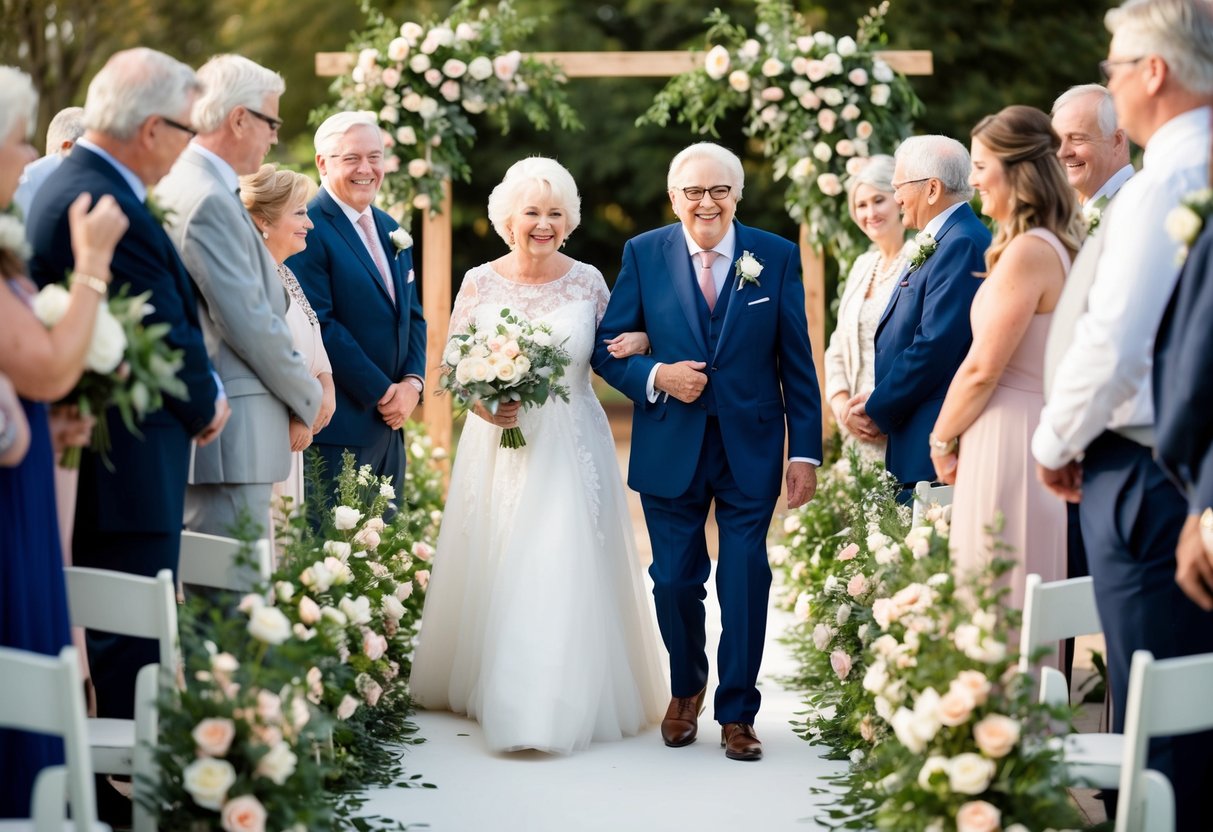
Grandparents can play a significant role in weddings, adding meaning and warmth to the celebration. They are often honored in various ways during the ceremony, especially during the wedding procession. Different cultural traditions also shape how grandparents participate in this special moment.
Honoring Grandparents in the Processional Order
When planning the wedding procession, consider how to honor your grandparents. They can be included by walking down the aisle before the main participants. This gesture shows respect for their importance in your life.
In traditional ceremonies, grandparents might walk in pairs or individually. If the groom has a close bond with his grandparents, he may choose to escort them personally. This creates a touching moment that symbolizes family support during the wedding.
Some couples also opt for a special seating arrangement for grandparents after they walk down the aisle. This can be front-row seats to highlight their role in your lives.
Varying Cultural Traditions
Cultural traditions significantly influence how grandparents participate in weddings. In Jewish weddings, it is common for both sets of grandparents to walk down the aisle, highlighting their importance in the family.
In Hindu weddings, the wedding procession often includes numerous family members. In some cases, the bride’s parents may take a central role, but grandparents are usually seated prominently.
In Catholic and Christian weddings, it tends to vary, but recognizing grandparents during the ceremony is often seen as respectful. This highlights the role of family values in these traditions, making them feel cherished on this special day.
Planning the Wedding Processional
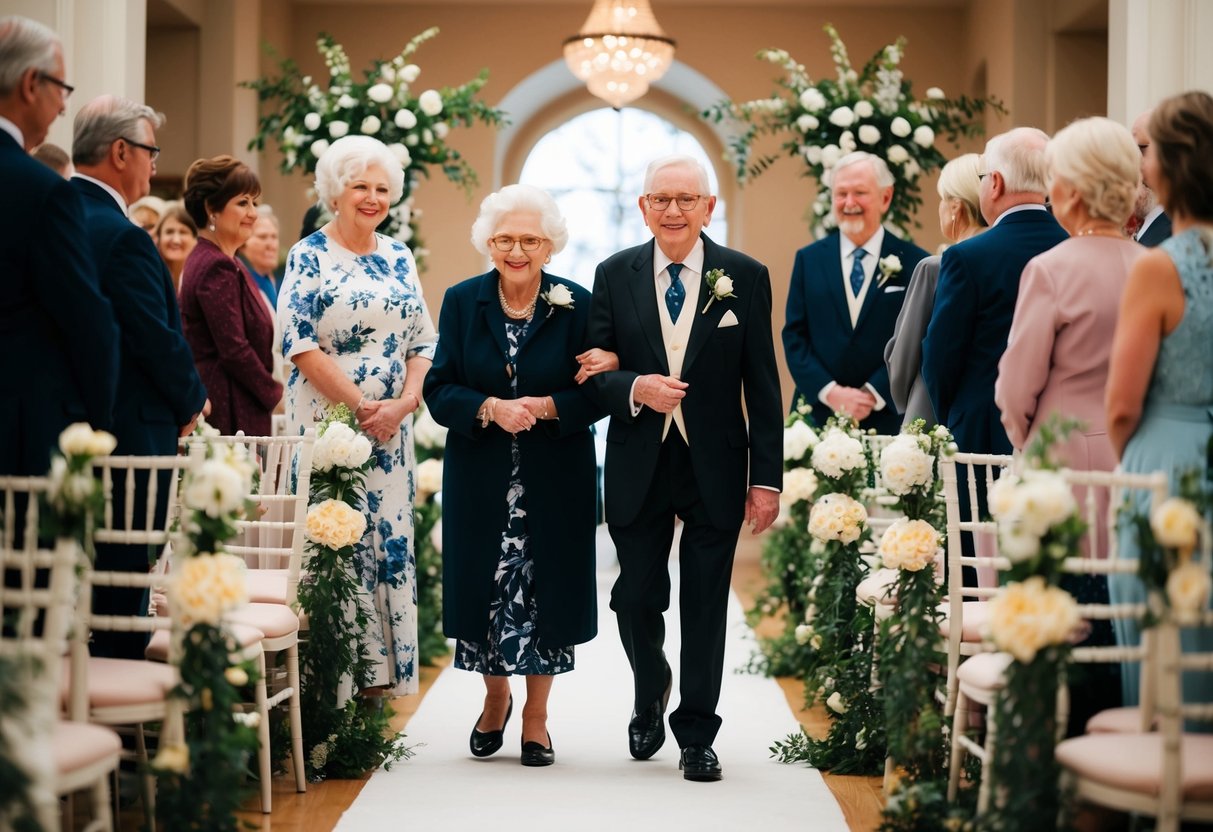
Planning the processional is a big part of your wedding preparations. It involves deciding who walks down the aisle and in what order. Getting this right helps create a beautiful scene for your ceremony.
Determining the Processional Order
Start by deciding the roles of each person in the processional. This usually includes the grandparents, parents, wedding party, and you, the bride or groom.
For instance, many couples choose to have the grandparents walk down first, followed by the parents, then the wedding party, and finally, you.
Creating a clear list can be helpful. Here’s a simple outline:
- Grandparents
- Parents of the Bride
- Parents of the Groom
- Wedding Party
- Bride and Groom
You can customize this order based on your preferences and family traditions.
Involving the Wedding Planner and Officiant
Including your wedding planner and officiant in the planning process is key. They can provide valuable advice and help coordinate the processional.
Your planner can manage timing and logistics, ensuring everyone knows their role.
Share your processional order with your officiant. They often play an important part during the ceremony and can assist with ensuring everyone is where they need to be. Regular communication is vital for a smooth event.
Tips for a Smooth Wedding Rehearsal
A wedding rehearsal is crucial for practicing the processional. Make sure everyone involved attends. Use this time to walk through the order and timing.
To keep it organized, do the following:
- Assign ushers to help with seating guests.
- Practice walking at a comfortable pace.
- Communicate with your wedding party about their cues.
Rehearsing builds confidence and helps everyone feel comfortable on the big day. Small details can make a big difference, so take the time to prepare well.
Who Walks with Whom?
When planning your wedding processional, it’s important to consider who walks with whom, especially when it comes to family members. Each pairing holds significance and can set the tone for your ceremony. Here are a few helpful details to consider.
Pairing Family Members and the Wedding Party
Traditionally, grandparents may walk down the aisle before the parents of the bride and groom. This adds a special touch to include them in the ceremony.
If your grandparents prefer not to walk alone, family members can accompany them. For example, a grandchild might walk a grandmother down the aisle.
As the wedding party prepares, you’ll want to ensure a clear order that reflects your family dynamics.
The bridesmaids typically walk in pairs, starting from the back, with the maid of honor walking last. This ritual helps create a beautiful flow and anticipation for your entrance.
Special Considerations for the Mother of the Bride
Your mother plays a significant role in your ceremony, and it’s essential to honor her.
Often, the mother of the bride walks down the aisle alone or is escorted by a family member.
In some cases, she may choose to walk with the groom’s parents, showcasing unity between both families. This is especially meaningful if she has a close bond with them.
Decide what feels right for your family. Discuss your options with her to ensure she feels special and included.
Unique Visions for the Groom’s Entrance
The groom’s entrance is just as important as the bride’s. He traditionally walks down the aisle with both parents by his side. This symbolizes support and love from his family as he prepares to marry.
Some grooms prefer a different approach, like walking down alone or entering with a groomsman. This can reflect your shared values or personal style, creating a unique touch.
Consider what feels authentic to you and your journey. Whether it’s traditional or a unique vision, make sure it matches the overall vibe you want for your big day.