
Who Walks Down the Aisle 1st? Unveiling the Wedding Procession Order
When planning your wedding ceremony, one key question often arises: who walks down the aisle first? Traditionally, the officiant leads the way, followed by grandparents, parents, and then the bridal party. This order sets the tone for the event and honors important family members as they take their seats.
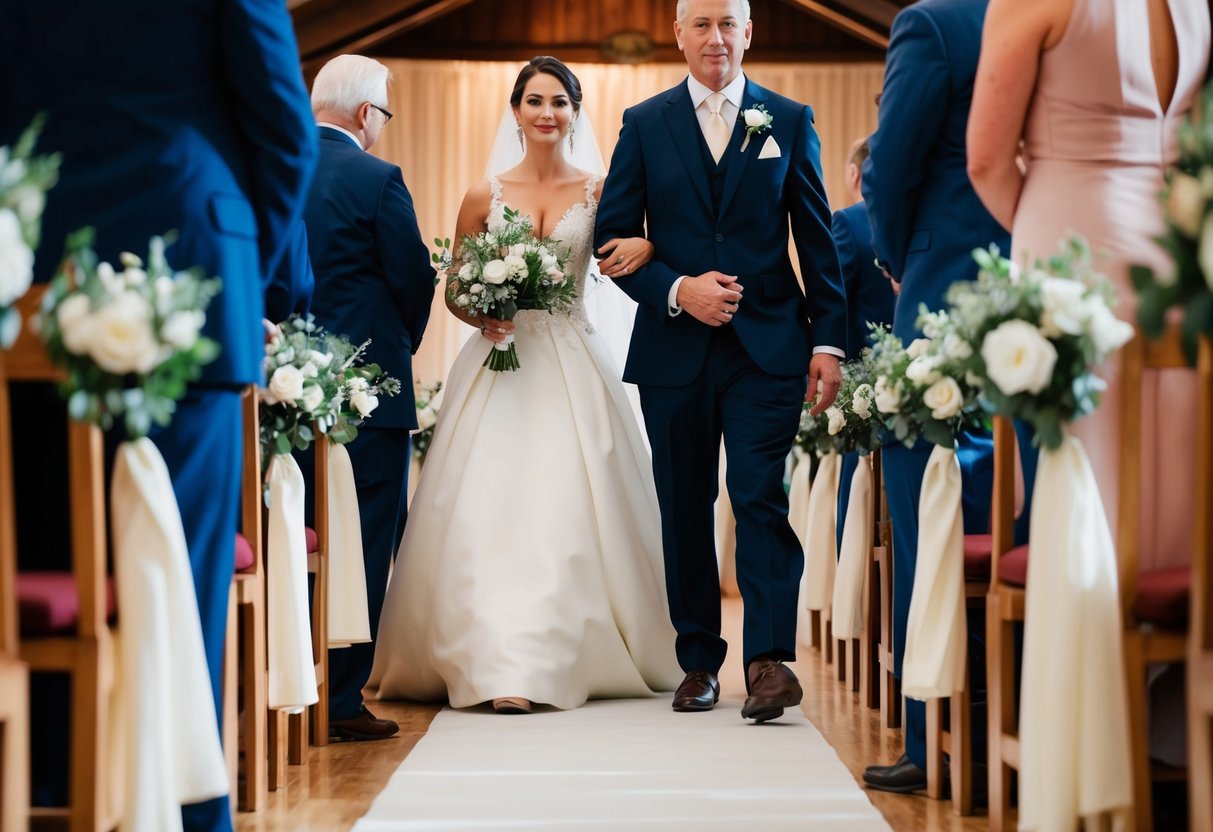
Understanding this processional order allows you to personalize your ceremony. Many choose to follow these time-honored wedding traditions, but you can adapt the order to fit your unique relationship. The joy of walking down the aisle is a special moment, so think about who you want to share it with.
As you consider your options, keep in mind the role each person plays in your life. The wedding processional is not just about who goes first but about celebrating the love and support that surrounds you on your big day.
Understanding Processional Order
The order of who walks down the aisle can set the tone for your wedding ceremony. Different cultures and personal preferences influence how this can unfold. Let’s explore the traditional structures and modern variations in processional order.
Traditional Wedding Processional Structures
In many traditional weddings, the processional starts with the officiant entering first to take their position at the altar. This is followed by the groom and best man.
After this, the important family members are seated. Typically, the bride’s grandparents walk down first, followed by the groom’s.
The processional culminates with the bride walking down last, accompanied by her parents or guardians. This is often seen in Christian wedding processional orders, but variations exist in Jewish and Hindu ceremonies too. For example, in a Jewish wedding, both sets of parents may walk down the aisle before the bride, while in a Hindu wedding, the groom may enter before the bride, often in a grand style.
Modern Variations in Processional Order
In contemporary weddings, couples often personalize the processional order based on their preferences and family dynamics. For instance, in a nondenominational wedding processional order, you might choose to have family members enter in a way that feels special for you.
Some modern couples include friends and siblings in the processional before the parents, giving a personal touch. You might also decide to have both the bride and groom walk down the aisle together, symbolizing equality.
Other unique ideas include having flower children, ring bearers, or even pets involved in the processional. These choices create a fun and memorable display, reflecting your personalities and making the ceremony uniquely yours.
Key Participants and Their Roles
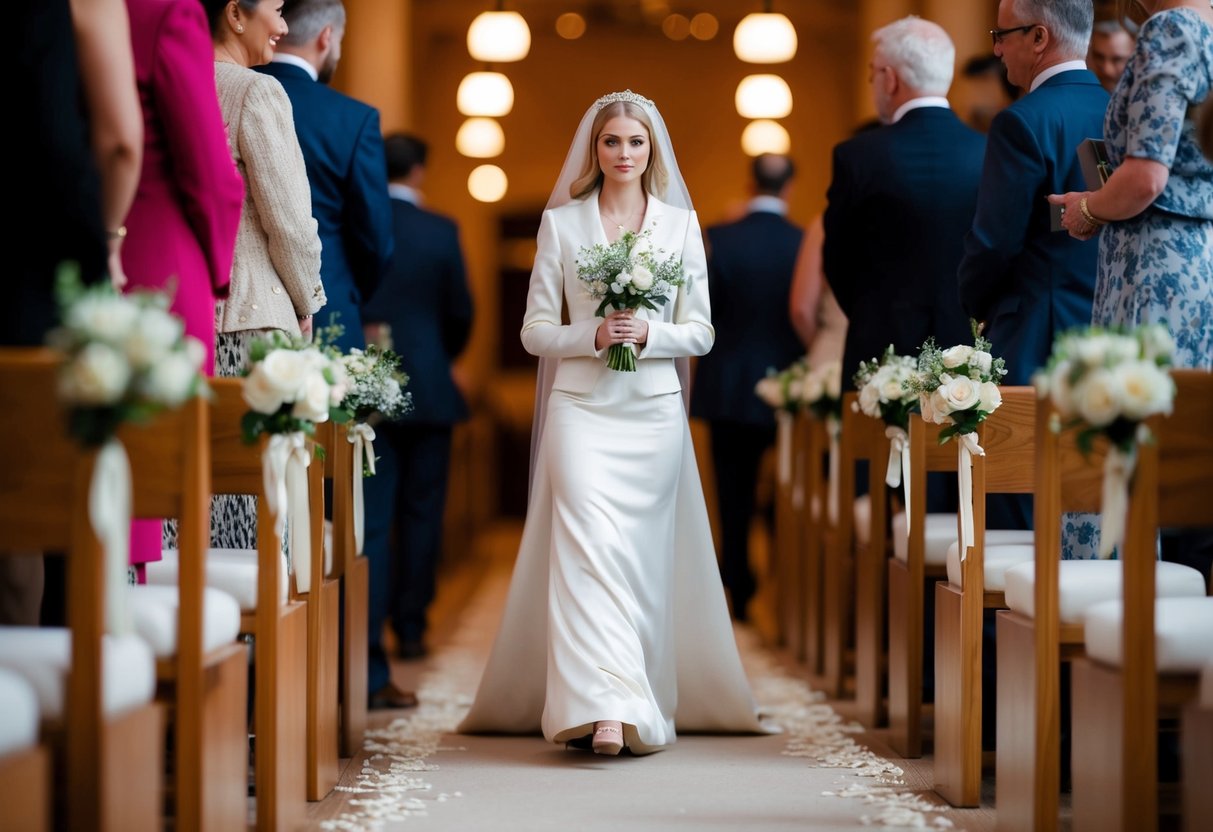
Understanding who walks down the aisle first and the roles they play can help you organize the ceremony smoothly. Each participant has specific duties that contribute to the beauty of the occasion.
Roles of Family Members
Family members hold significant roles during the wedding processional. Typically, the ceremony begins with the grandparents, honoring their special place within the family. After them, the parents of the bride and groom follow.
The mother of the bride often walks down the aisle with grace, representing her family’s support. The father of the bride usually escorts his daughter, a moment filled with emotion. If there is a stepmother, she might also have a role, perhaps sitting in a place of honor. These moments highlight familial bonds and respect for tradition.
The Bridal Party Formation
Next comes the bridal party, which includes the bridesmaids and groomsmen. The groomsmen, led by the best man, typically march down the aisle first. These friends stand for support and camaraderie.
Following the groomsmen, the bridesmaids enter, often walking in pairs. Each bridesmaid might carry a bouquet that complements the wedding’s colors. The maid of honor, who has special significance, usually walks down last in the bridal party lineup. She stands next to the bride, ready to lend her support when needed.
Special Positions: Flower Girl and Ring Bearer
Finally, you have the flower girl and ring bearer. The flower girl usually walks just before the bride, scattering petals along the aisle. This adds a lovely touch to the ceremony.
The ring bearer carries the wedding rings and often walks right before the bride, signaling the final moments of the processional. Both roles are cherished, as they often involve younger family members or close friends. Their participation brings joy and innocence to the event, making the ceremony even more memorable.
Ceremony Specifics
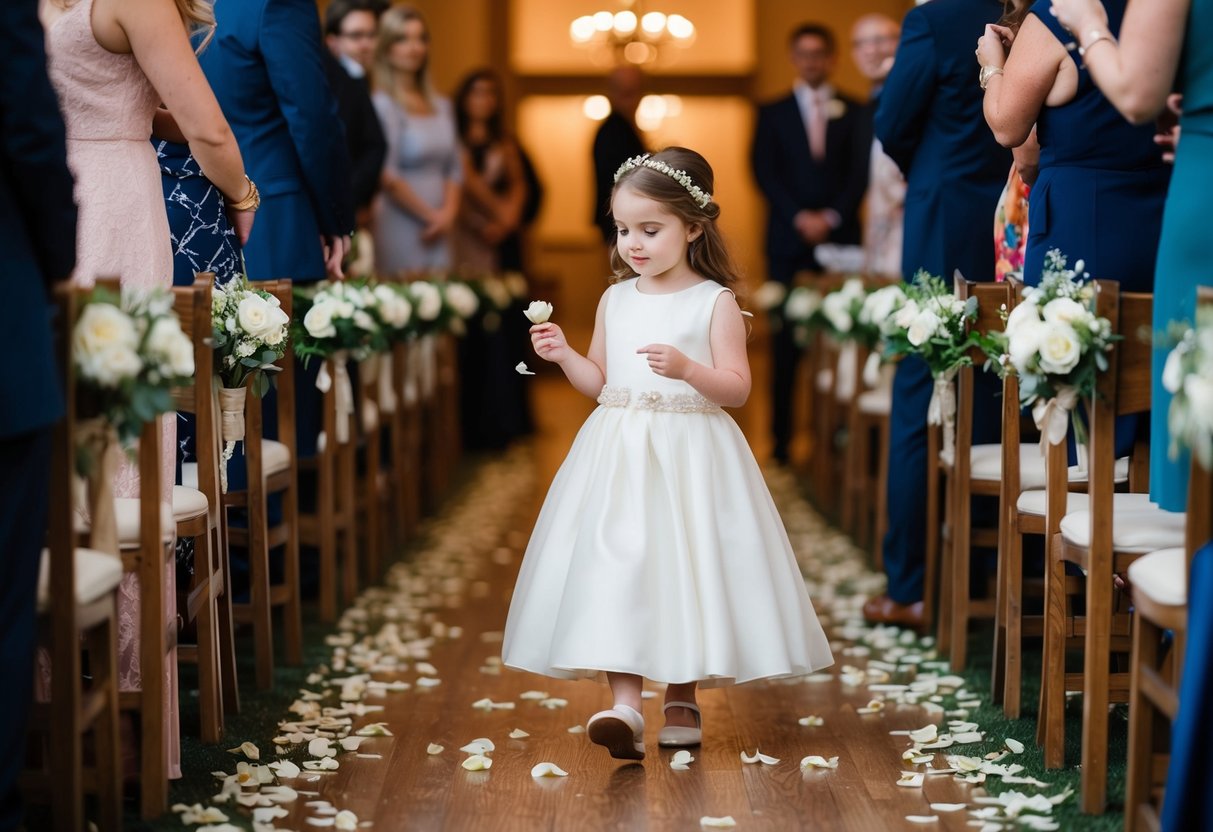
When planning your wedding, understanding the specific traditions for who walks down the aisle can enhance your ceremony. Each cultural and religious background has its own customs, making the processional a special part of your day.
Catholic and Christian Ceremonial Traditions
In a traditional Catholic wedding ceremony, the processional typically starts with the officiant entering first, followed by the groom and his best man. After them, bridesmaids walk down the aisle in pairs, often with groomsmen.
The bride usually enters last, accompanied by her father. This moment is significant as it symbolizes her transition from her family to her new life with her partner. The order is designed to build anticipation for the bride’s arrival.
Jewish Wedding Processional Customs
Jewish weddings introduce unique elements during the processional. Initially, the officiant walks in. Then, the groom enters, often accompanied by his parents. Following him, the bridal party walks down, starting with the bridesmaids and flower girls.
A notable part of Jewish weddings is the Bedecken, where the groom veils the bride just before the ceremony. The bride, escorted by both parents, arrives last, symbolizing unity and family support in her new journey.
Hindu Wedding Processional Traditions
In Hindu weddings, the processional is vibrant and colorful. The groom usually arrives first in a procession called the Baraat, accompanied by family and friends with music and dancing.
After the groom takes his place at the Mandap (the wedding altar), the bride walks down the aisle, often with both parents. This signifies the support of her family as she joins her partner. The act of walking together emphasizes the importance of family in their union.