
Who Walks the Groom’s Parents Down the Aisle? A Guide to Wedding Traditions
When planning a wedding, many details require your attention, and the processional order is one of them. You might wonder about the role of the groom’s parents during the ceremony. Traditionally, the groom’s parents walk down the aisle together before the ceremony starts. They take their seats on the right side of the venue. This moment is crucial as it helps set the tone for the event and involves both families in the celebration.
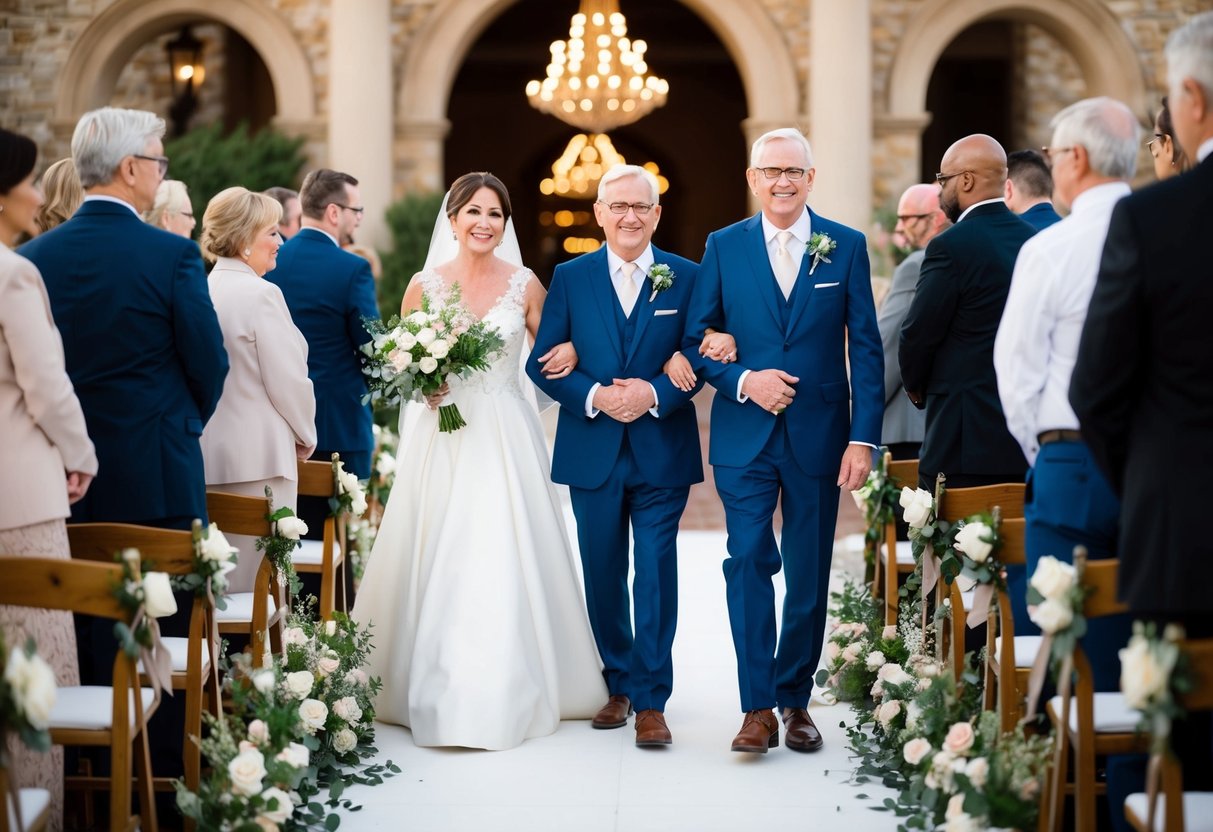
Understanding who walks down the aisle can help ease any confusion during your big day. The wedding party typically follows a specific order, and the parents play an important part in this emotional event. From the grandparents to the bride’s mother, each individual has a place that contributes to the ceremony’s flow.
As you plan your wedding ceremony, consider how you can include your parents and ensure everyone feels involved. Each person walking down the aisle adds to the joy and unity of your special day, so recognizing the traditional roles can help make the ceremony even more meaningful.
Roles and Responsibilities in the Wedding Processional
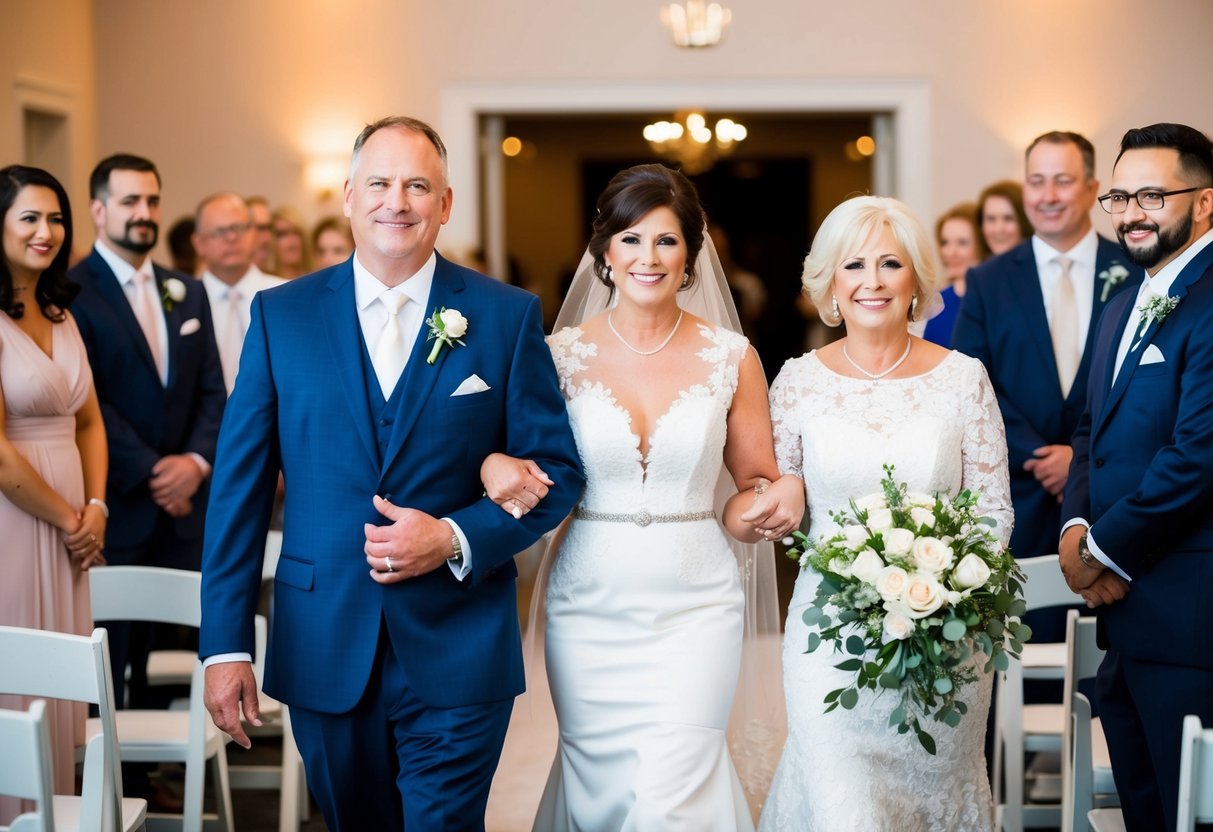
Understanding the roles in the wedding processional helps make the ceremony flow smoothly. Each participant has specific responsibilities to create a memorable experience. Here, you’ll learn about the key roles such as the groom, best man, bridesmaids, groomsmen, and the adorable ring bearer and flower girl.
Groom and Best Man
The groom is central to the processional. Traditionally, he walks down the aisle alone or with his parents. His role is to await the bride at the altar, symbolizing support and love.
The best man stands right beside the groom. His responsibilities include holding the rings, offering moral support, and delivering a toast at the reception. He plays a crucial role in helping to keep everything organized and calm for the groom.
Bridesmaids and Groomsmen
Bridesmaids and groomsmen are vital in the wedding processional. They walk down the aisle in pairs or individually, typically with groomsmen following the groom and bridesmaids following the bride. Each has a unique role in supporting the couple and making the day special.
Bridesmaids often assist the bride with planning and preparations. They offer companionship and support during the wedding day. Groomsmen help to ensure that everything runs smoothly, including managing details like the guest list.
Ring Bearer and Flower Girl
The ring bearer and flower girl add charm to the processional. The ring bearer usually walks down the aisle carrying the wedding rings, often on a small pillow. This role is often filled by a younger child, making it a sweet and memorable moment.
The flower girl scatters petals or carries a small bouquet. She walks right before the bride, symbolizing happiness and beauty. Together, the ring bearer and flower girl help to create a joyful atmosphere, setting the stage for the bride’s grand entrance.
The Arrival of the Groom’s Parents
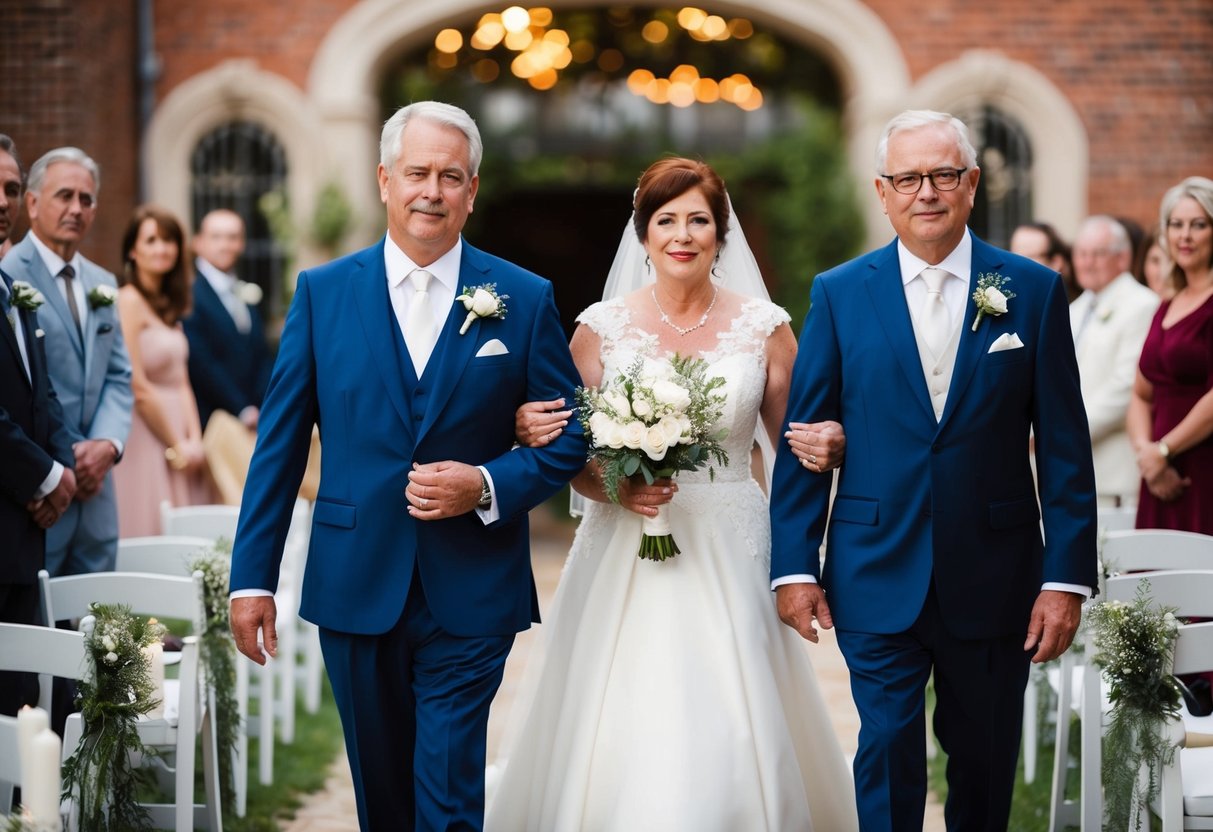
The arrival of the groom’s parents is an important moment during the wedding processional. It sets the tone for the ceremony and honors their role in the groom’s life. Understanding the traditional and modern options for this part of the processional can help you plan a meaningful experience.
Traditional Wedding Processional
In traditional weddings, the groom’s parents walk down the aisle after the grandparents and before the bride’s mother. This order shows respect and follows common customs. The groom’s mother often walks solo or is escorted by a family member. They usually take their seats on the right side of the venue, symbolizing their support for the groom.
This moment can be emotional, as it marks the start of a new chapter for their child. It’s a chance for the guests to recognize and appreciate the groom’s family. The focus is on their proud expressions and the significance of togetherness during this moment.
Modern Wedding Alternatives
Many couples choose to personalize their processional to reflect their unique style and family dynamics. In modern weddings, the groom’s parents might walk together, followed by the groom. Some even opt for both parents to accompany the groom down the aisle.
These choices can highlight the groom’s close relationship with his parents. Adding special music or a unique entrance can enhance the emotional nature of this moment. You might also include gestures, like a special hug or kiss, to showcase affection. This approach can create a warm, inviting atmosphere for your ceremony.
Cultural Variations in Wedding Processionals
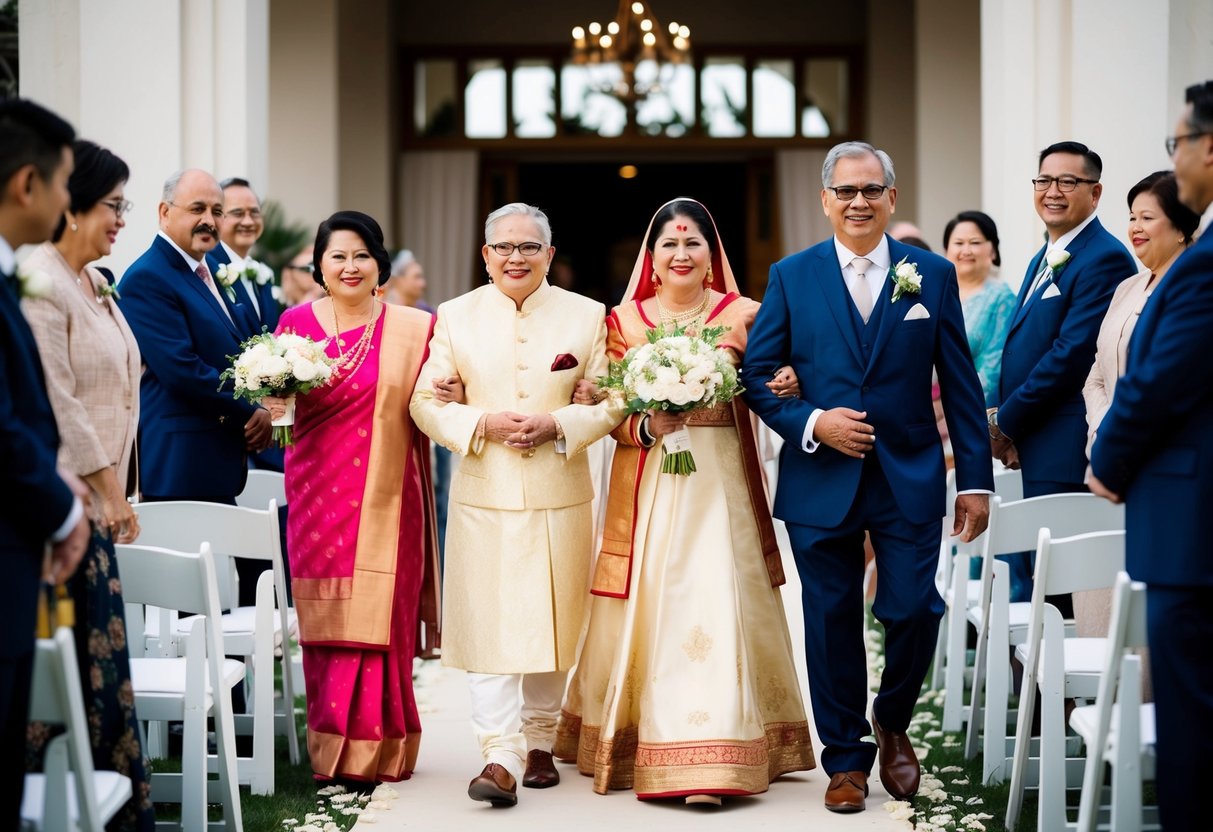
Weddings are rich in tradition and customs. Different cultures have unique ways of organizing their processional, influencing who walks down the aisle and the order of events. Understanding these traditions can enhance your appreciation of various ceremonies.
Christian Wedding Traditions
In a typical Christian wedding, the processional often starts with the groom’s parents taking their seats. Then the bride’s mother follows, symbolizing the bride’s family’s importance. The bride usually enters last, escorted by her father or a significant family member. This highlights the significance of family in Christian ceremonies.
Both the groom and the best man wait at the altar as the ceremony begins. The Christian wedding processional is often accompanied by music, enhancing the emotional aspect of the event.
Jewish Wedding Customs
Jewish weddings embrace a meaningful procession. During the ceremony, both sets of parents often walk down the aisle together as a sign of unity. The bride typically walks to the chuppah, which is the canopy symbolizing the home they will build together.
The groom may also have a special procession, sometimes accompanied by his mother. The Jewish wedding processional emphasizes family and community, creating a warm atmosphere for everyone involved.
Hindu Wedding Practices
Hindu weddings include vibrant processions, particularly the baraat. In this joyful event, the groom arrives at the venue, often riding a horse or in a decorated vehicle, surrounded by family and friends who dance and celebrate.
Once at the mandap, the sacred wedding altar, both sets of parents join the groom. The bride then walks down the aisle to meet her groom. The Hindu wedding processional is lively and colorful, showcasing the joy and cultural significance of the celebration.
Seating Arrangements and Ceremonial Order
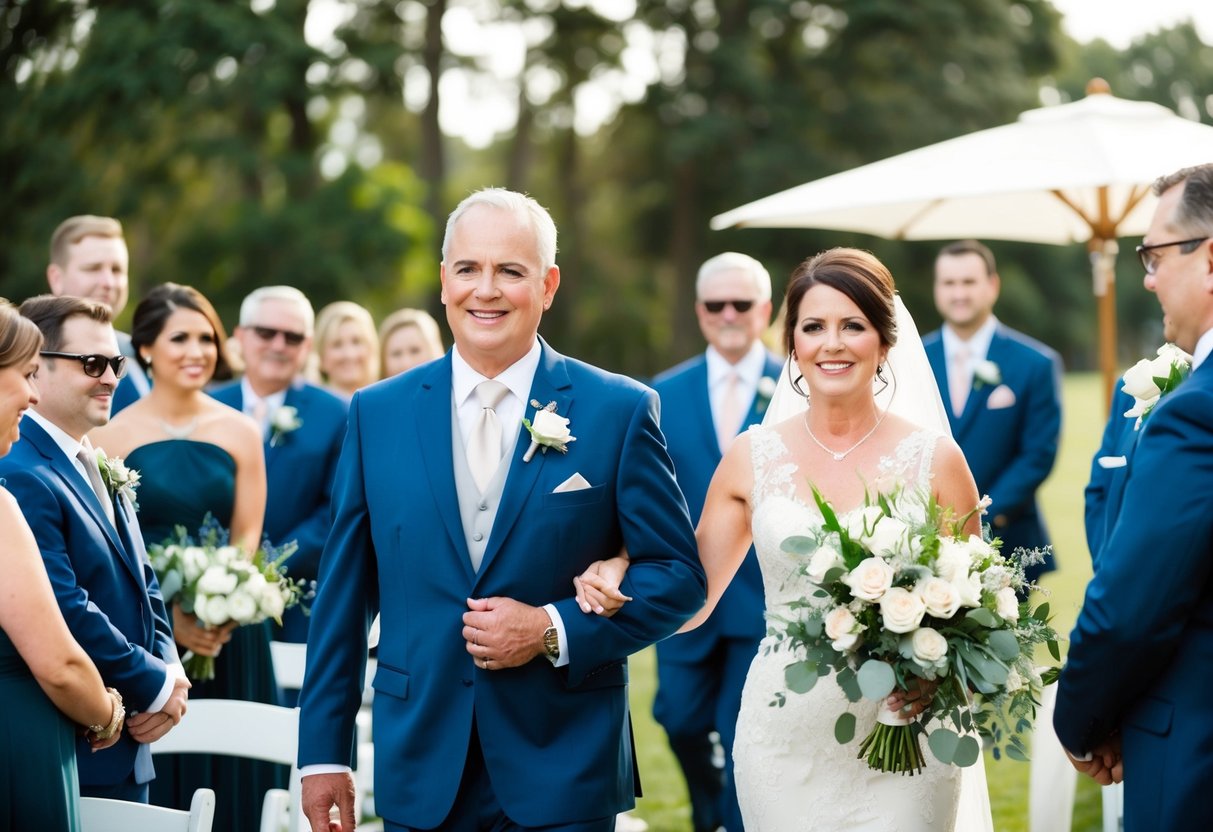
In any wedding ceremony, the seating arrangements are important for family members, especially for the parents. Traditionally, the bride’s parents sit in the front row on the left side.
The mother of the groom typically sits on the right side. She may walk down the aisle with the father of the groom or by herself. It’s a nice touch to have them walk down together.
Ushers usually guide guests to their seats. They can help direct everyone, including family, to where they belong. This avoids confusion during the ceremony.
During the order of procession, the mother of the bride often walks down the aisle alone or escorted by a family member. After her, the wedding party follows, which includes bridesmaids and groomsmen. The groom’s parents can also take part in the procession.
The bride typically walks last, creating a memorable moment. If the groom chooses, he can walk down with his parents, showcasing family unity.
Making seating arrangements clear helps everyone know where to go. This ensures that the wedding ceremony order flows smoothly from start to finish. With clear communication and planning, all family members can feel included in this special day.