
Why Is It Bad Luck to Marry in May? Exploring the Superstitions Behind the Month
Many people dream of their perfect wedding day. But if you’re considering saying “I do” in May, you might want to pause for a moment. The old saying “Marry in May, rue the day” suggests that getting married in this month can bring bad luck and unhappy marriages. This superstition has roots in ancient customs that viewed May as a time of cleansing and mourning, thanks to its connections to festivals honoring the dead.

As you plan your wedding, it’s essential to understand the cultural beliefs surrounding your chosen date. For centuries, various societies have linked specific times of the year with different fortunes. In this case, marrying in May is often seen as a risky choice, leaving some couples to wonder if they will face misfortune in their marriage.
Exploring the various wedding superstitions can provide insight and fun as you make decisions about your big day. Whether you’re simply curious or seriously considering alternative months, knowing why such beliefs exist can help you navigate the traditions that shape the celebration of your love.
Origins of the Superstition
This superstition about marrying in May has roots that stretch back to ancient times. It draws on beliefs from different cultures, such as ancient Romans and English folklore. Understanding these origins helps clarify why some people still consider May an unlucky month for weddings.
Ancient Roman Beliefs
In ancient Rome, May was dedicated to the goddess Juno, who was the protector of marriage and childbirth. However, this month also marked the end of Lent, a time when many Romans observed fasting. Weddings rarely happened during Lent due to religious customs.
Once Lent ended, people often believed that marrying in May could lead to misfortune. This belief was linked to the idea that you should not rush into important decisions. Romans thought that hasty marriages might not bring good fortune. They preferred to wait for more favorable months.
English Folklore
In English folklore, the saying “Marry in May, rue the day” captures a common belief. The origins trace back to the idea that marrying during spring could bring sadness. May was associated with fertility and growth, but it was also viewed as a time for mischief and misfortune.
People feared that the unpredictability of May weather could also reflect the uncertainties of marriage. The notion of “rue the day” means that couples might regret their decision if they wed in this month. Thus, the myth continued to spread through stories and songs, shaping modern views on May weddings.
Wedding Superstitions and Traditions
Wedding superstitions and traditions vary widely but often reflect cultural beliefs about luck and the future. Many customs aim to bring good luck to the couple, while others warn against certain practices thought to lead to misfortune. Here are some popular superstitions and traditions connected to weddings.
Good Luck Charms and Rituals
Throughout history, couples have embraced various charms to ensure good fortune. One well-known tradition involves wearing “something old, something new, something borrowed, and something blue.” Each item represents a different blessing. For instance, something old connects the bride to her family, while something new represents hope for the future.
A common charm involves placing a sixpence in your shoe as a symbol of wealth and happiness. This little coin is said to bring prosperity and good fortune to the marriage.
Additionally, some couples believe carrying the bride over the threshold protects her from evil spirits. This charming act symbolizes the groom’s commitment to safeguarding his bride.
Proverbial Sayings and Omens
Proverbial sayings and omens play a significant role in wedding traditions. For example, there’s a saying, “Marry in May, rue the day,” cautioning against late spring weddings. Many believe that a marriage in May brings bad luck and is linked to betrayal.
Another popular omen is rain on your wedding day. While rain is often viewed negatively, some cultures see it as a sign of cleansing and renewal, symbolizing a fruitful marriage.
Some couples also consider dropping the rings during the ceremony to be a sign of bad luck. It’s advisable to prepare for this possibility calmly to maintain the day’s positivity.
Modern Interpretations
Today, many modern couples choose to interpret wedding superstitions in a way that fits their personal beliefs. While traditional charms like something old or something blue may still hold importance, couples often focus on what brings them joy.
For instance, some may joke about the saying “rain on your wedding day” by embracing it as a unique part of their story. Others may opt for modern adjustments to the older customs, making them more meaningful in today’s context.
Planning a May Wedding
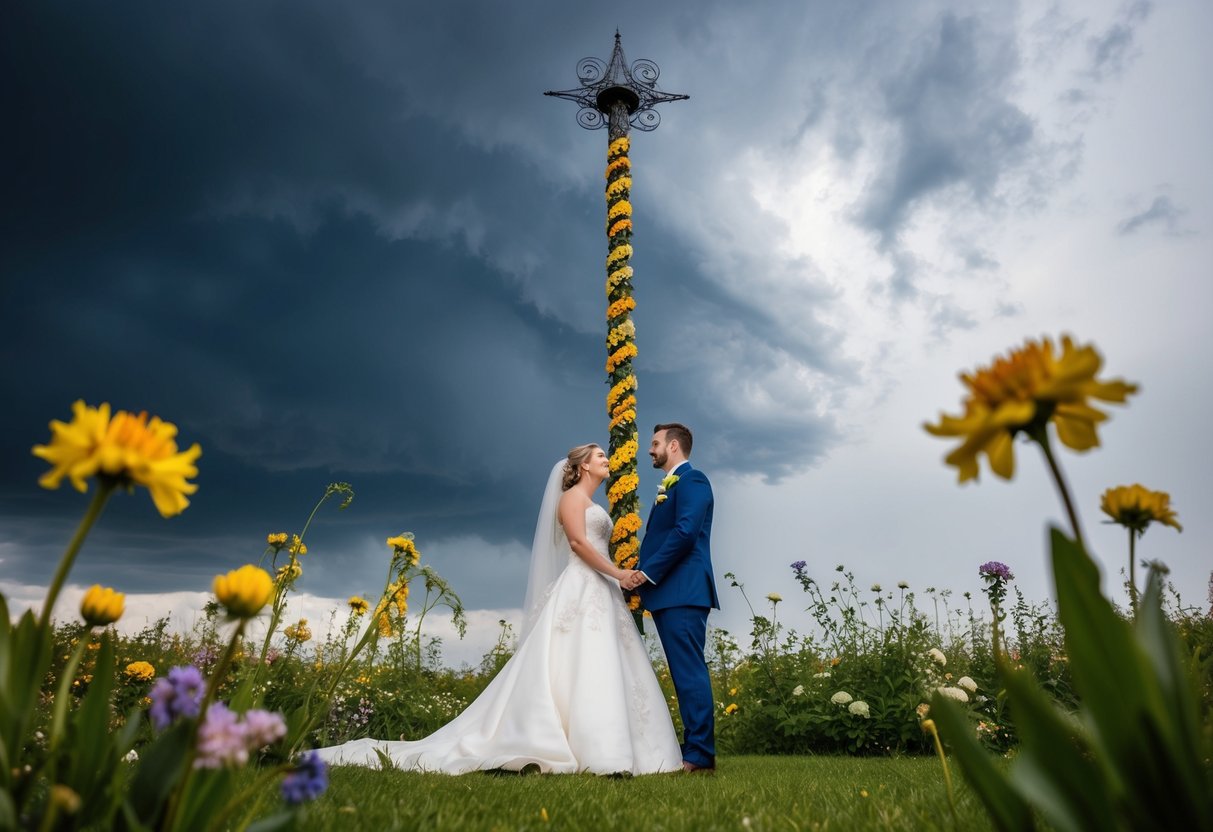
When planning a wedding in May, it is important to consider both the positives and negatives. Understanding the seasonal aspects will help you decide if this month is right for your big day.
Pros and Cons
Getting married in May has some appealing points. The weather is usually pleasant, with flowers blooming and longer daylight hours. This creates a beautiful backdrop for your ceremony and photos.
On the downside, you might face competition for venues since May is a popular month for weddings. Prices could be higher, and you may need to book vendors well in advance. Additionally, some wedding superstitions warn against May weddings, suggesting that it is an unlucky month.
Consider how these factors align with your vision for your wedding. It’s all about what is most important to you.
Seasonal Considerations
May offers a lovely setting for outdoor ceremonies. The warm temperatures allow for beautiful floral arrangements. You’ll also find many seasonal options for food and decorations.
Keep in mind that May can also bring unpredictable weather. Rain showers can occur, so make sure to have an indoor backup plan.
If you’re leaning toward a weekday wedding, May might have open dates. Weekend availability might be tight, but weekdays can provide cost savings and a more intimate setting.