
Average Florist Cost for a Wedding: What to Budget
For most U.S. couples, the average florist cost for a wedding falls between $2,500 and $5,000 in 2026. A smaller floral plan with personal flowers may cost about $1,500, while full-service designs with arches, installations, and extensive reception décor can reach $7,500 or more.
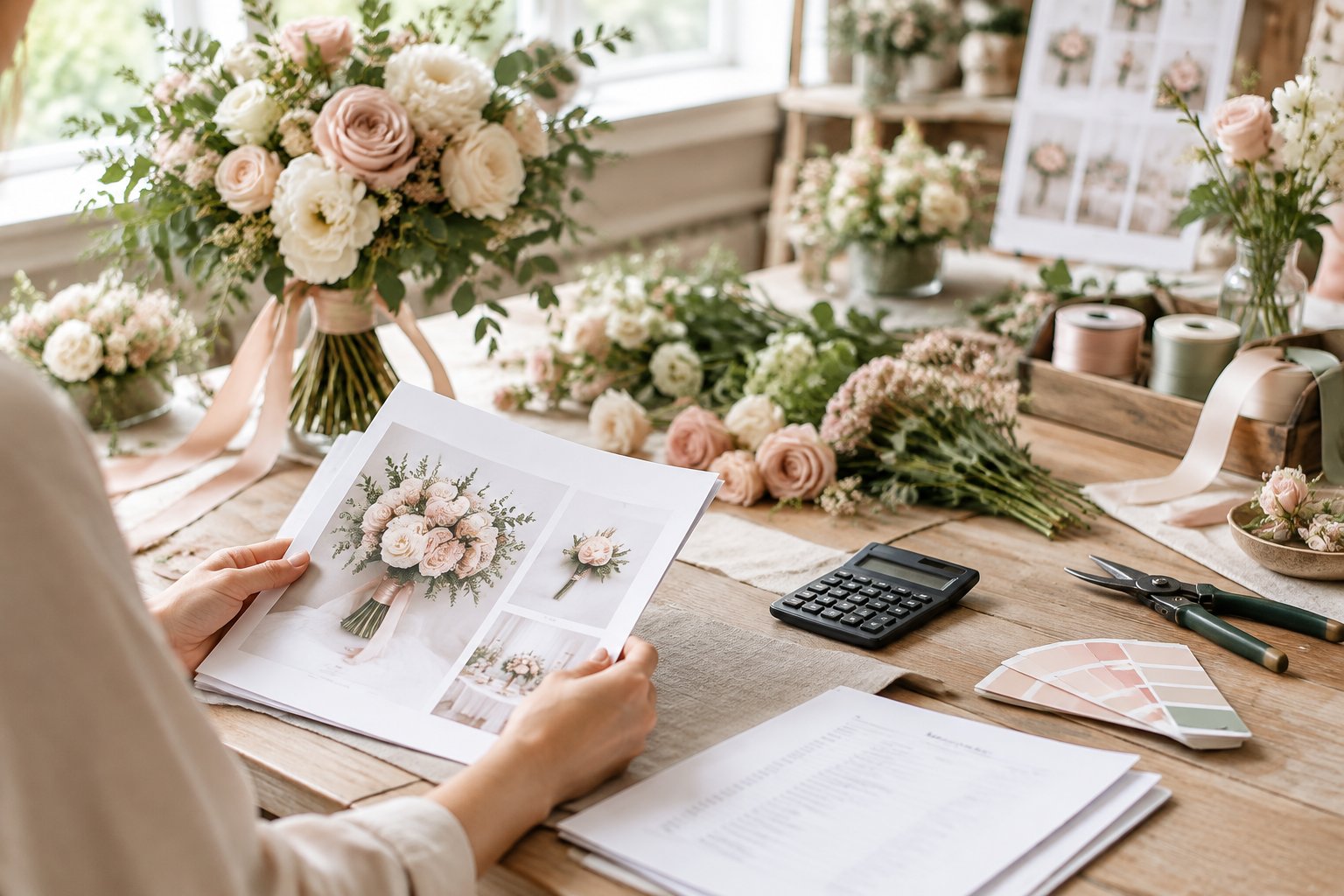
Your wedding flower budget pays for more than stems. It can include design labor, containers, delivery, setup, teardown, rentals, taxes, and service fees. Guest count, venue layout, wedding date, flower choices, and design style all shape the final wedding flower cost.
A useful starting point is 8% to 12% of your total wedding budget. On a $30,000 wedding budget, that equals about $2,400 to $3,600. Set your spending limit before requesting proposals, then tell your wedding florist which pieces deserve the most attention.
What Do Couples Pay for Wedding Florals?
Most U.S. couples spend about $2,500 to $5,000 on wedding flowers, with focused plans near $1,500 and large installation-based designs reaching $7,500 or more.
Published figures show different parts of the market. The Knot Real Weddings Study has placed average wedding flower cost near the high-$2,000 range, while Zola and WeddingWire pricing guides include more full-service events. Those figures measure different wedding flower costs, so use them as planning ranges instead of a guaranteed quote.
Why Published National Averages Differ
A national average combines intimate ceremonies, large ballroom receptions, backyard celebrations, and luxury floral productions. The floral scope creates the biggest gap.
A couple ordering a bridal bouquet, a few boutonnieres, and small table arrangements may spend under $2,500. A full-service design with altar arrangements, reception centerpieces, a floral arch, delivery, and installation moves closer to $5,000 to $7,500.
City pricing also changes the number. Studio overhead, local labor rates, venue access, delivery distance, and flower supply affect each proposal.
A Practical Budget Range by Floral Scope
Use these ranges to match your wedding flower budget to the look you want:
- Focused essentials: $1,500 to $2,500
Bridal bouquet, bridesmaid bouquets, boutonnieres, corsages, and a few reception arrangements. - Balanced floral plan: $2,500 to $5,000
Personal flowers, ceremony accents, reception centerpieces, delivery, and setup. - Design-forward wedding: $5,000 to $7,500
Fuller arrangements, premium flowers, larger ceremony pieces, and upgraded reception décor. - Installation-focused design: $7,500 and up
Floral arches, hanging pieces, flower walls, large-scale ceremony work, or lush room styling.
The guest count affects the total through the number of tables and wedding party flowers. A 50-person reception may need five to seven centerpieces, while a 150-person reception may need 15 or more.
How Much of the Wedding Budget Should Go to Flowers?
Reserve about 8% to 12% of your total wedding budget for flowers. A design-led celebration may assign 15% or more when floral décor serves as a central visual feature.
Write down your top priorities before meeting a florist. You might choose the bridal bouquet, ceremony focal point, and reception tables. If the venue already has gardens, trees, or architectural character, you can direct more money toward personal flowers and selected table pieces.
For help setting the broader numbers, review this guide on how to allocate a wedding budget.
Typical Prices for Each Floral Item
Individual wedding flower prices range from about $15 for a boutonnière to $4,000 or more for a large floral arch, with bouquets, ceremony flowers, and reception centerpieces making up much of the order.
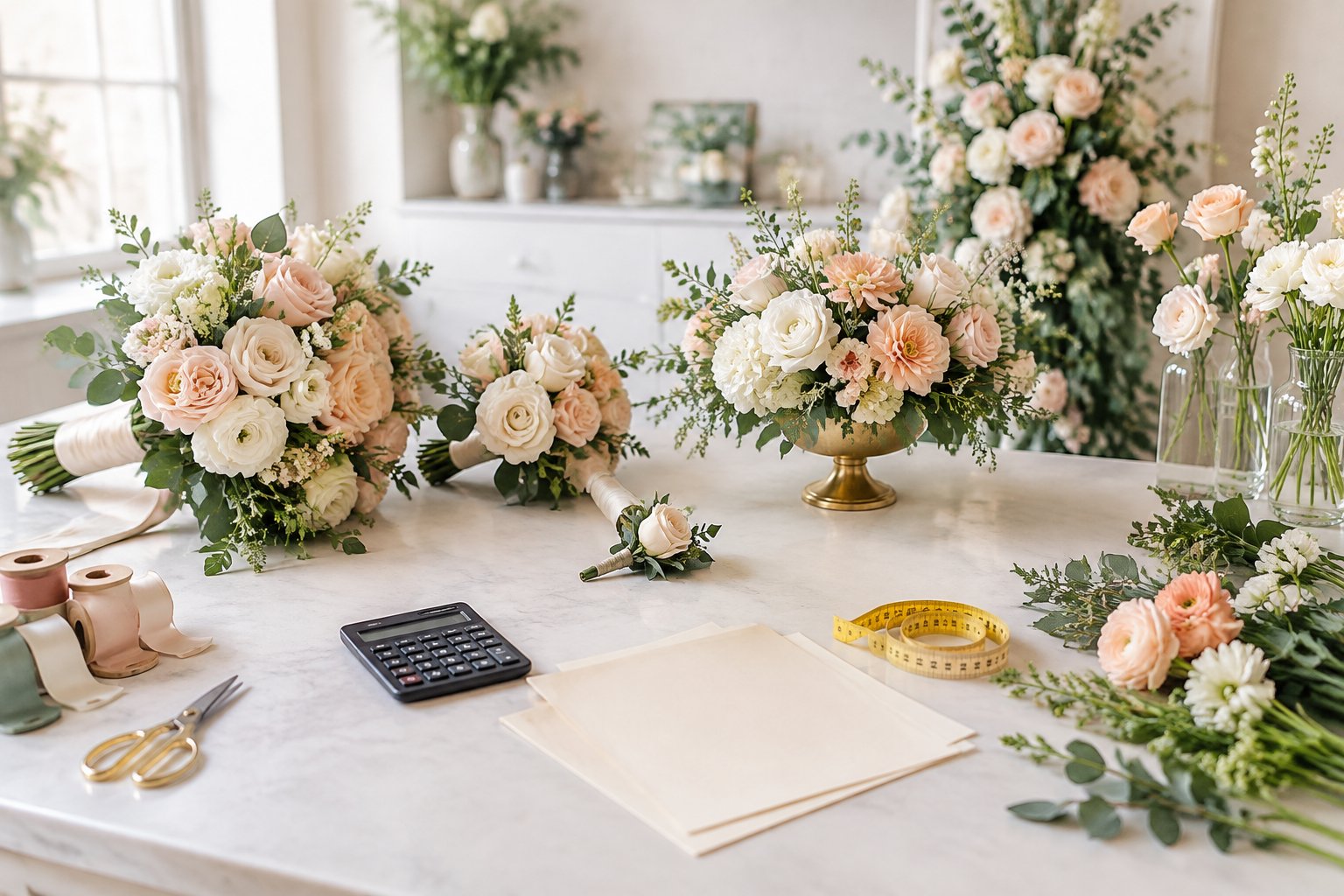
Your final wedding flower arrangements depend on stem count, flower type, season, mechanics, and labor. Ask whether delivery, setup, containers, rentals, and teardown appear in the item price or as separate fees.
How Much Does a Bridal Bouquet Cost?
A bridal bouquet costs about $150 to $350 for many designs. A compact hand-tied bouquet with standard roses, seasonal flowers, and greenery sits near the lower end.
A large garden-style bouquet with trailing foliage, premium flowers, or complex mechanics can reach $500 or more. Peonies, garden roses, orchids, and lily of the valley raise the bridal bouquet cost because they carry higher per-stem prices and need careful sourcing.
For more detail, compare current average bridal bouquet prices.
What Do Bridesmaid Bouquets and Personal Flowers Cost?
Plan for these approximate wedding party flowers prices:
- Bridesmaid bouquet: $75 to $175 each
- Boutonnière or boutonniere: $15 to $35 each
- Corsage: $35 to $75 each
- Flower crown: $75 to $200
- Hair flowers: $25 to $100
- Flower girl basket with petals: $25 to $75
- Toss bouquet: $50 to $125
- Cake flowers: $50 to $200
The number of attendants drives the total quickly. Six bridesmaid bouquets and six boutonnieres add several hundred dollars before you include parent corsages, flower crowns, or hair flowers.
What Do Ceremony Arrangements Cost?
Ceremony flowers cost about $500 to $4,000 or more, depending on the size and placement of the design.
- Aisle markers: $40 to $150 each
- Aisle arrangements: $100 to $350 each
- Altar arrangements: $250 to $1,000 each
- Floral arch: $1,500 to $4,000 or more
- Large floral installation: $2,500 to $10,000 or more
A few aisle markers and two altar arrangements create a lighter floral plan. A full floral arch requires more flowers, support materials, construction time, delivery coordination, and installation labor.
Ask your florist whether ceremony flowers can move to the reception. Portable arrangements in sturdy containers are easier to reuse after the ceremony.
What Do Reception Centerpieces Cost?
Reception centerpieces cost about $75 to $250 per table for many low designs. Lush or tall centerpieces can cost $300 to $500 or more.
A low centerpiece uses fewer mechanics and less setup time. Tall centerpiece designs need elevated vessels, support structures, added flowers, and careful transport. Alternating larger floral centerpieces with bud-vase groupings creates visual variety while controlling the cost per table.
Candles, greenery, and single-flower designs also help fill the room without placing a large floral arrangement on every table. For layout inspiration, explore these floral wedding table decoration ideas.
What Raises or Lowers a Florist Quote?
A florist quote reflects flower cost, design labor, mechanics, delivery, setup, rentals, and the complexity of creating fresh arrangements on a fixed wedding schedule.
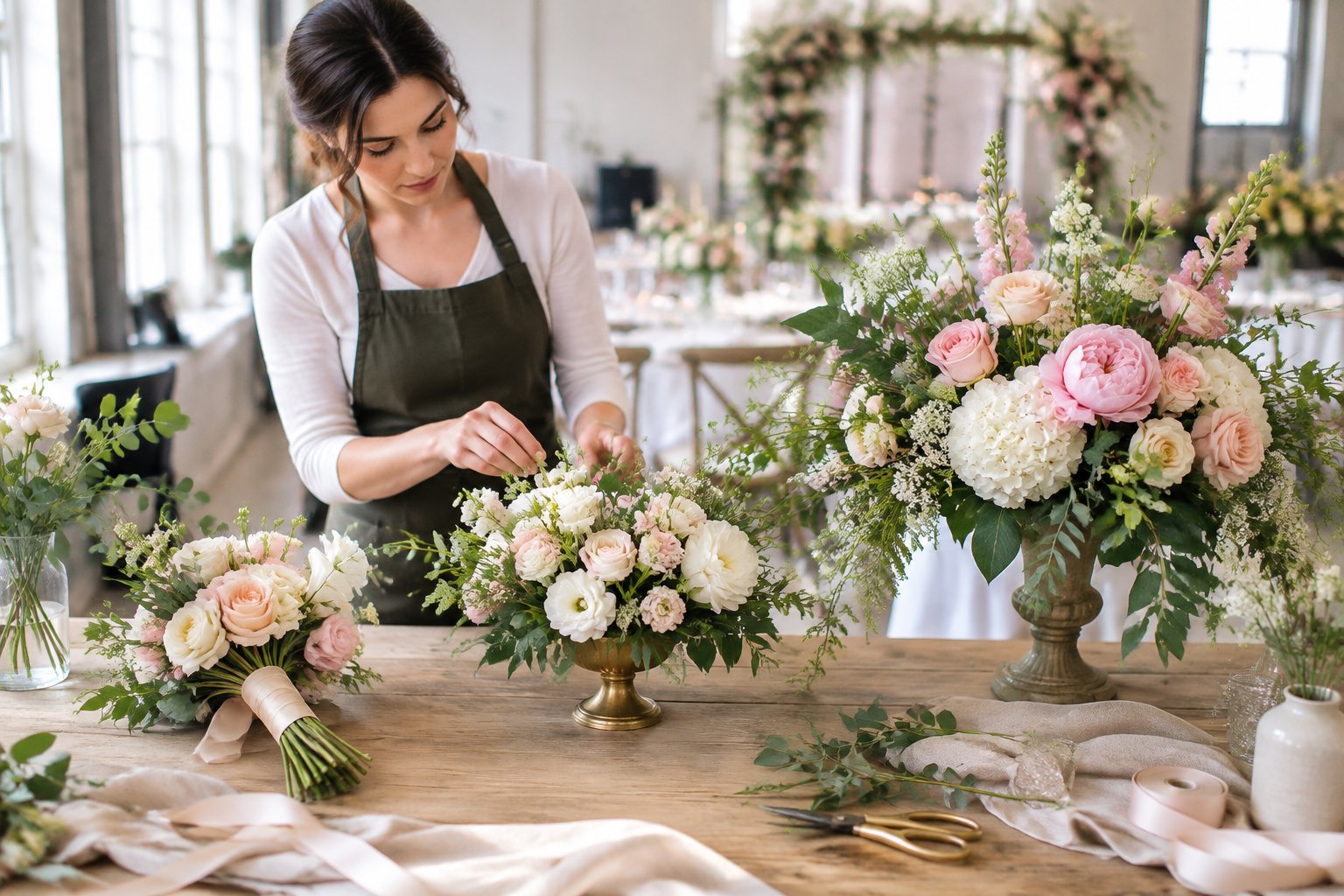
Two weddings with the same colors can receive very different quotes. Stem count, venue access, installation work, and flower availability all change the amount of time and materials required.
Flower Type, Availability, and Seasonality
Premium flowers raise the price per stem, especially when an arrangement needs a large quantity. Peonies, orchids, garden roses, gardenias, lily of the valley, and some calla lilies sit at the higher end of many floral budgets.
Hydrangeas, dahlias, ranunculus, roses, tulips, lilies, cherry blossoms, and other varieties fall across a broad range based on grade, size, and season. Standard roses cost less than many garden roses, while carnations, chrysanthemums, and other durable blooms provide volume at a lower price.
Seasonal flowers and locally grown flowers are easier to source during their natural growing period. Imported flowers and out-of-season flowers bring added shipping, greenhouse, and sourcing costs. Give your florist a color palette and style direction so suitable substitutions remain available.
Wedding Size and Venue Requirements
Wedding size affects the number of personal flowers, tables, ceremony arrangements, and reception details. A larger wedding party adds bouquets, boutonnieres, corsages, flower crowns, and hair flowers.
Your wedding venue also shapes the proposal. A garden venue may need little ceremony décor, while a blank ballroom may need floral installations, rentals, and extra arrangements to create the same visual effect. Stairs, elevators, long walks from the loading area, restricted access, and short setup windows add labor.
Design Complexity, Labor, and Logistics
Floral design includes ordering, processing, hydration, conditioning, recipe planning, arrangement, delivery, placement, and cleanup. Large installations require mechanics, structural planning, safety checks, and additional crew members.
A flower wall, suspended design, or large floral arch takes more labor than a vase arrangement. Separate ceremony and reception locations also increase transportation and setup needs.
Ask whether your proposal includes:
- Design and consultation time
- Flower processing and refrigeration
- Containers, vessels, foam alternatives, wire, and other mechanics
- Delivery and venue placement
- Installation and teardown
- Moving ceremony flowers to the reception
- Rentals and return handling
- Taxes and service fees
Why Local Markets Affect Pricing
Local wedding florist costs reflect studio overhead, wages, vehicle expenses, flower supply, and demand in your area. A major metropolitan market often has higher labor and operating costs than a smaller town.
Venue rules also influence the quote. Some locations require approved vendors, insurance documents, loading appointments, protection for floors, or dedicated cleanup. Share the venue address, access rules, guest count, and setup schedule when you request pricing.
Build a Floral Budget That Fits Your Priorities
A practical wedding florist cost plan starts with a fixed spending limit, then assigns money to the flowers guests will see most clearly.
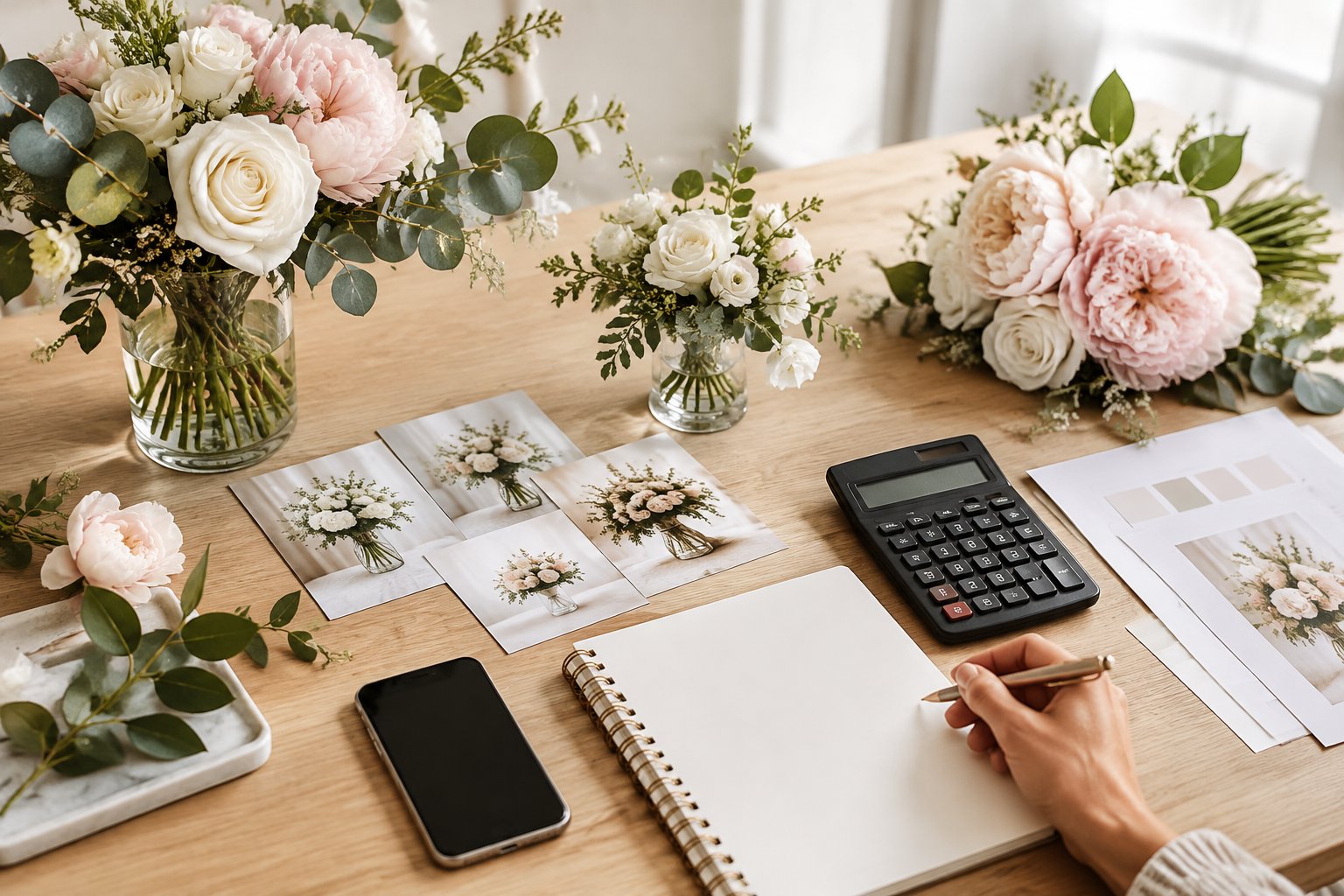
A professional florist can adjust flower varieties, arrangement sizes, and installation plans to protect your style. Share your budget early and rank each requested item as essential, preferred, or optional.
Sample Budgets for Small, Medium, and Large Weddings
These examples show how your wedding flower budget might work:
- Small wedding, $1,500 to $2,500:
Bridal bouquet, a small wedding party, boutonnieres, a few corsages, simple ceremony accents, and modest reception arrangements. - Medium wedding, $2,500 to $5,000:
Personal flowers, ceremony arrangements, reception centerpieces, cake flowers, delivery, and setup. - Large wedding, $5,000 to $7,500:
Larger wedding party, fuller centerpieces, upgraded ceremony flowers, premium blooms, and a focal installation. - Luxury floral design, $10,000 and up:
Multiple installations, hanging designs, custom structures, premium flowers, extensive rentals, and large-scale venue styling.
A $30,000 wedding with a 10% floral allowance gives you $3,000 for flowers. That amount supports a focused design with clear priorities, especially when you choose seasonal flowers and reuse ceremony pieces.
Where to Spend for the Biggest Visual Impact
Place more of your budget where flowers appear in photographs and where guests spend time. Strong candidates include the bridal bouquet, ceremony focal point, sweetheart table, and guest tables.
Use greenery such as eucalyptus, ferns, ruscus, and other foliage to add shape and coverage. Baby’s breath, carnations, daisies, chrysanthemums, alstroemeria, lisianthus, sunflowers, succulents, and potted plants can add color or volume at different price points.
A few premium blooms inside a fuller arrangement create a high-end look while keeping the entire design within reach. Ask your florist to build the proposal around the visual effect you want.
What a Professional Florist’s Fee Includes
A wedding florist’s fee can cover creative planning, flower sourcing, processing, design, labor, delivery, setup, rentals, and teardown. Each florist groups those charges differently.
Request an itemized proposal showing:
- Floral ingredients and substitutions
- Design or service fees
- Containers and rental items
- Delivery distance and vehicle charges
- Setup, installation, and teardown labor
- Taxes and other service charges
- Payment schedule and cancellation terms
A clear proposal lets you compare scope between florists. For practical questions to ask before booking, review these wedding florist tips.
Ways to Reduce Costs Without Losing the Look
You can lower wedding flower costs by choosing seasonal blooms, reusing ceremony flowers, expanding your greenery, and limiting labor-heavy installations.
Choose Seasonal Alternatives to Must-Have Blooms
Tell your florist which color, shape, or texture you love, then allow substitutions within that style. In-season flowers provide more reliable supply and often reduce sourcing costs.
For a spring look, seasonal tulips, ranunculus, or forsythia may replace a costly imported bloom. Roses, carnations, daisies, chrysanthemums, and baby’s breath provide color and volume across many wedding styles.
Choose one premium flower as an accent instead of making every arrangement depend on it. A flexible flower list also helps your florist respond to market availability.
Repurpose Ceremony Flowers at the Reception
Repurpose ceremony flowers at the reception whenever the venue and design allow it. Altar arrangements can move beside the sweetheart table, entry, bar, or stage.
Aisle arrangements can decorate the cake table or lounge areas. Ask your florist to use portable containers and confirm whether a moving crew is included.
A second setup trip or staff transfer fee can affect the savings.
Use Greenery and Nonfloral Décor Strategically
Greenery creates fullness and movement with fewer flower stems. Eucalyptus, ferns, ruscus, potted plants, and foliage garlands work well along tables, arches, and welcome displays.
Candles, fabric, lanterns, bud vases, fruit, and rented vessels add texture to reception tables. Use larger arrangements at key locations, then repeat a smaller design through the room.
When Silk Flowers or DIY Designs Make Sense
Silk flowers suit keepsake bouquets, hair flowers, décor in hot conditions, and designs you want to prepare well before the wedding. Compare rental or purchase costs with fresh flowers, shipping, storage, and setup needs.
DIY designs work best when your guest list is small, the flower plan is simple, and you have reliable help for conditioning and arranging. Fresh flowers require cool storage, water, tools, transport, and several hours of preparation close to the wedding date.
You can compare the numbers with this guide to how much it costs to make your own wedding bouquet.