
Barn Wedding Venues Grand Rapids: How to Choose Yours
Choosing among barn wedding venues near Grand Rapids starts with your guest count, budget, weather plan, and travel needs. Barn 1888 suits couples who want a rustic setting with modern comfort, including climate control, indoor and outdoor ceremony options, a seated capacity of up to 200 guests in the barn, and tent options for larger celebrations.
You can also find restored historic barns, working farms, and polished farm estates across West Michigan. The right venue gives you enough room for dinner and dancing, a clear plan for changing weather, and practical features that keep your guests comfortable.
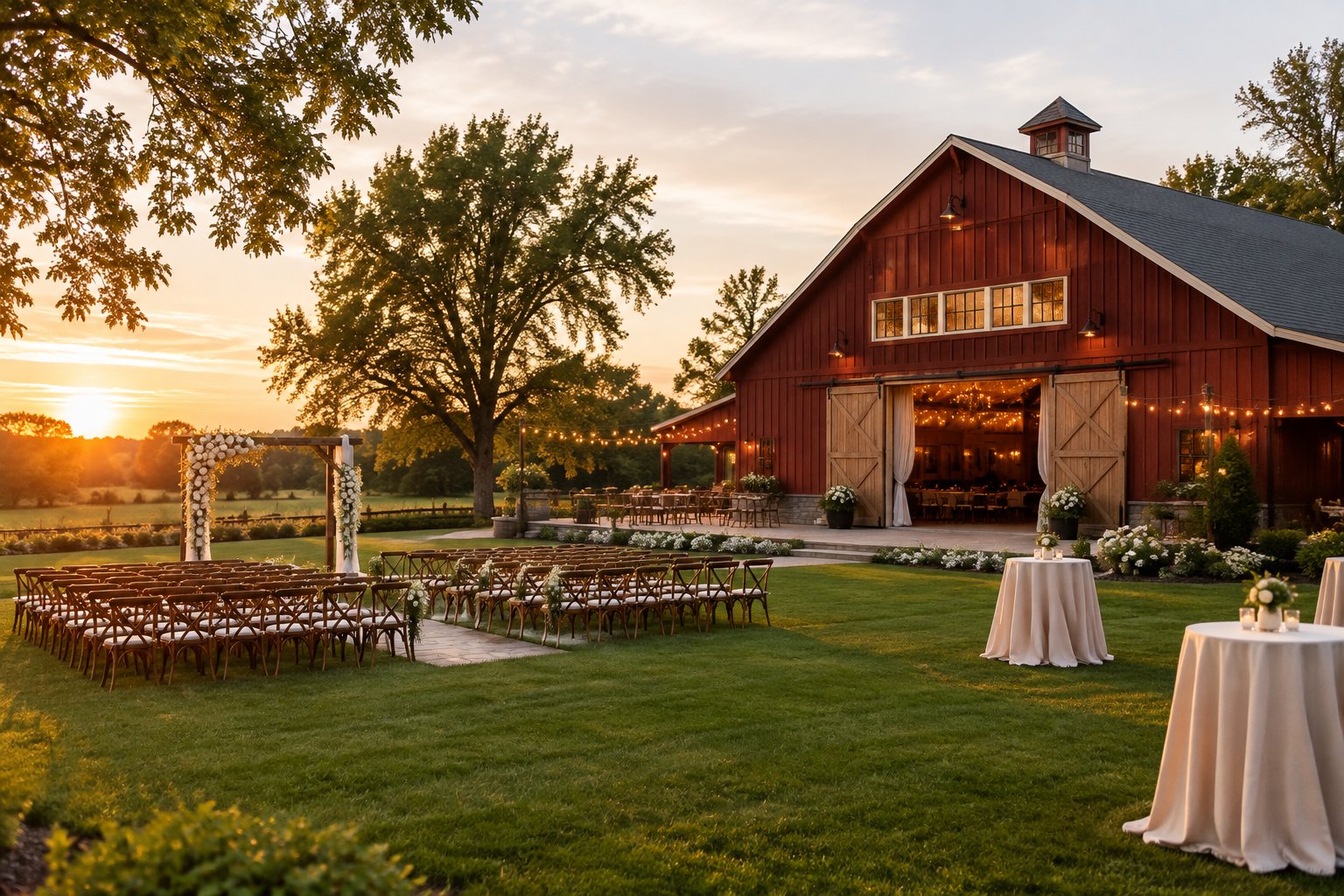
Start with two or three possible dates, your estimated guest count, and a firm spending range. If Barn 1888 fits your vision, contact the venue to ask about availability and schedule a tour.
What to Look For in a Grand Rapids Barn Venue
A strong Grand Rapids barn venue should fit your guest list comfortably, include the amenities your plans require, and offer a reasonable drive for your guests. Review the layout, rental terms, and nearby services before you fall in love with the décor.
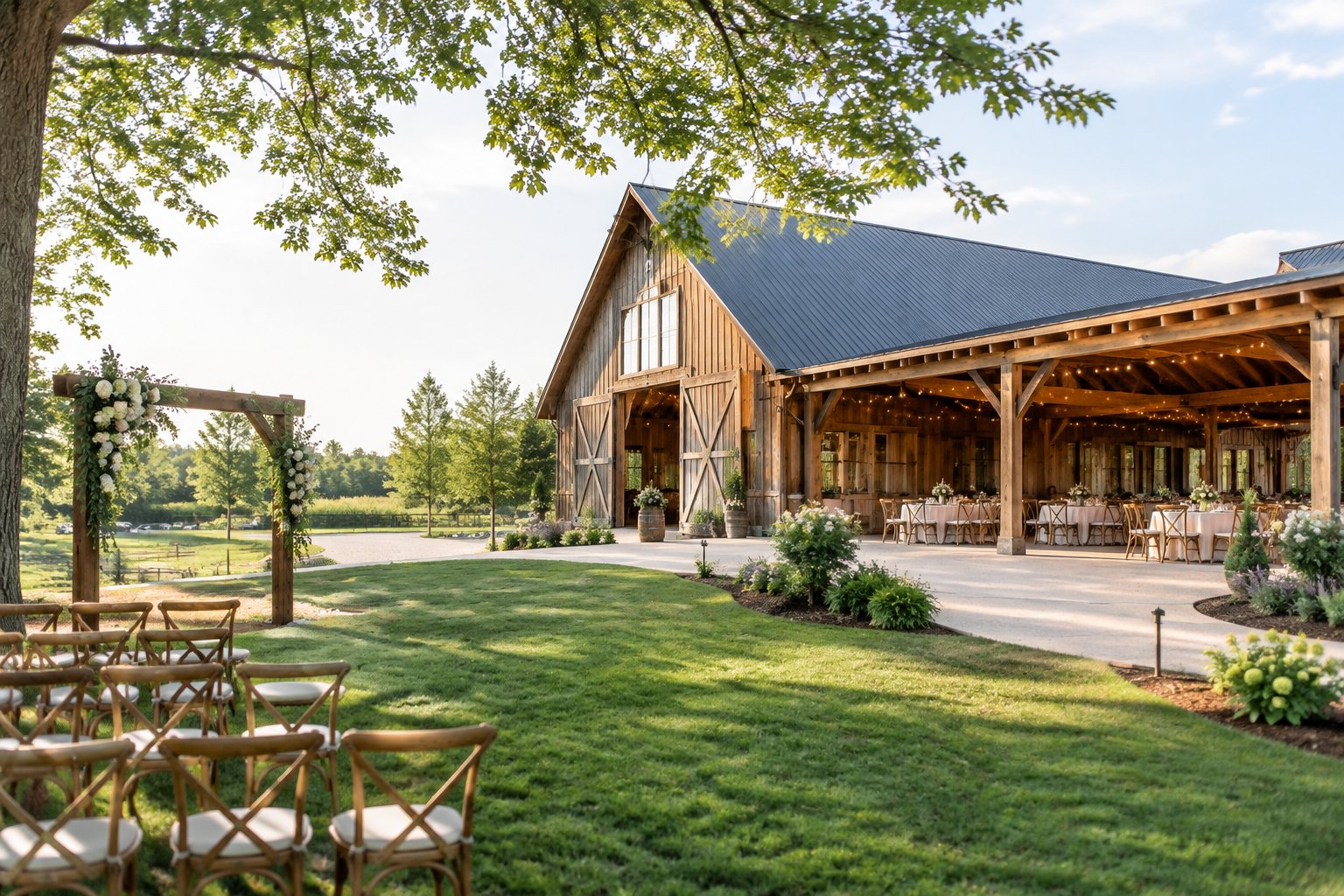
How Many Guests Can the Space Comfortably Hold?
Ask for the seated dinner capacity with tables, a dance floor, bar, buffet, DJ booth, and guest pathways in place. A posted maximum may describe a standing reception or a room without reception equipment.
Request a floor plan using your expected guest count. For example, Barn 1888 lists space for up to 200 seated guests inside the barn, with tent rental available for celebrations reaching up to 300 guests. Confirm whether those figures apply to your preferred ceremony and reception layout.
Also check the number of restrooms, the size of the getting-ready rooms, and the route between parking, ceremony areas, dining tables, and restrooms. Guests with mobility needs should be able to move through the event without steep steps, loose gravel, or long uneven paths.
Which Amenities Are Included With the Rental?
Make a written list of every included feature. Look for tables and chairs, heating and cooling, restrooms, ceremony areas, getting-ready suites, a catering prep space, parking, décor storage, and an on-site manager.
Barn 1888 lists a Bridal Suite, Grooms Room, five indoor guest bathrooms, a caterer prep space, a décor room, rehearsal access, and indoor and outdoor ceremony choices. Wildwood Family Farms describes a heated restored barn, bathroom facilities, a holding kitchen, and outdoor areas near a pond and wooded spaces.
Ask whether staff handle setup, room flips, cleanup, trash, and vendor coordination. These details shape your labor costs and your wedding-day timeline.
How Far Is the Venue From Grand Rapids?
A venue within about 20 to 30 minutes of Grand Rapids gives you countryside scenery while keeping hotels, restaurants, hospitals, and rental services close. Check the drive during the time your guests will travel, since a quiet rural route can take longer during peak traffic or poor weather.
Send guests clear directions and confirm cell service at the property. Ask whether rideshare vehicles can reach the entrance, whether buses can turn around safely, and whether overnight parking is allowed after alcohol service.
How Much Do Barn Weddings Near Grand Rapids Cost?
Barn wedding costs near Grand Rapids come from the site rental plus food, drinks, rentals, staffing, transportation, décor, and weather protection. Compare complete estimates for the same guest count before choosing the lowest rental price.
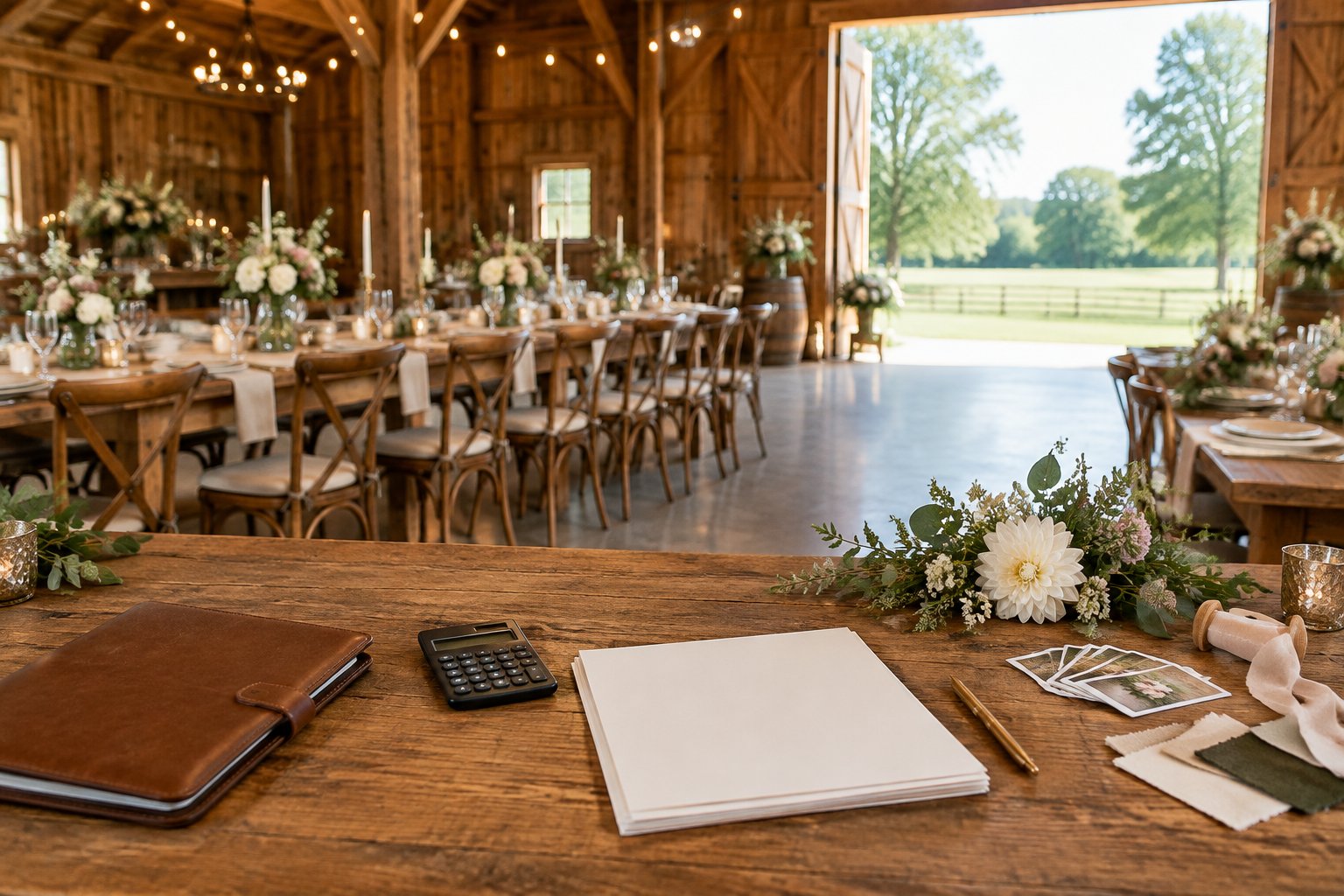
A venue with included tables, climate control, restrooms, and an event manager may cost more upfront while reducing separate vendor charges. A lower site fee can require you to arrange each service yourself.
Understanding Venue Fees, Minimums, and Service Charges
Ask for the full payment schedule, deposit amount, cancellation policy, overtime rate, and event insurance requirement. Barn 1888 lists a $1,500 deposit to reserve a date and venue access from 10 a.m. to midnight, so confirm how those terms apply to your chosen package.
Food and beverage minimums, service charges, gratuity, corkage, cake-cutting fees, and outside-vendor fees can change your final total. Request a sample invoice that shows taxes, staffing, cleaning, and every required add-on.
What Seasonal Dates Can Save Money?
Friday, Sunday, and off-season dates can provide more pricing flexibility than peak fall Saturdays. Ask about January through April, weekday celebrations, and dates that fall outside major holiday weekends.
Michigan weather affects both comfort and décor. A spring or late-fall date might reduce venue demand while requiring heaters, covered walkways, or a stronger indoor plan. Price each required comfort item before counting the date as a saving.
Which Expenses Are Often Not Included?
Common separate costs include catering, alcohol, bartenders, linens, specialty rentals, floral design, lighting, sound equipment, transportation, insurance, security, cleanup, and overtime. Tent rental, restroom trailers, generators, and heaters can add major charges for outdoor plans.
Ask who supplies power, trash removal, ice, restroom attendants, and parking staff. Put each answer into your budget spreadsheet, then add a reserve for last-minute weather or guest-count changes.
Comparing Rustic, Modern, and Farm Estate Settings
Your setting choice affects the mood, comfort, floor plan, and vendor needs of your wedding. Historic barns bring texture and character, farm estates add polished indoor-outdoor flow, and modern rural venues focus on climate control and flexible layouts.
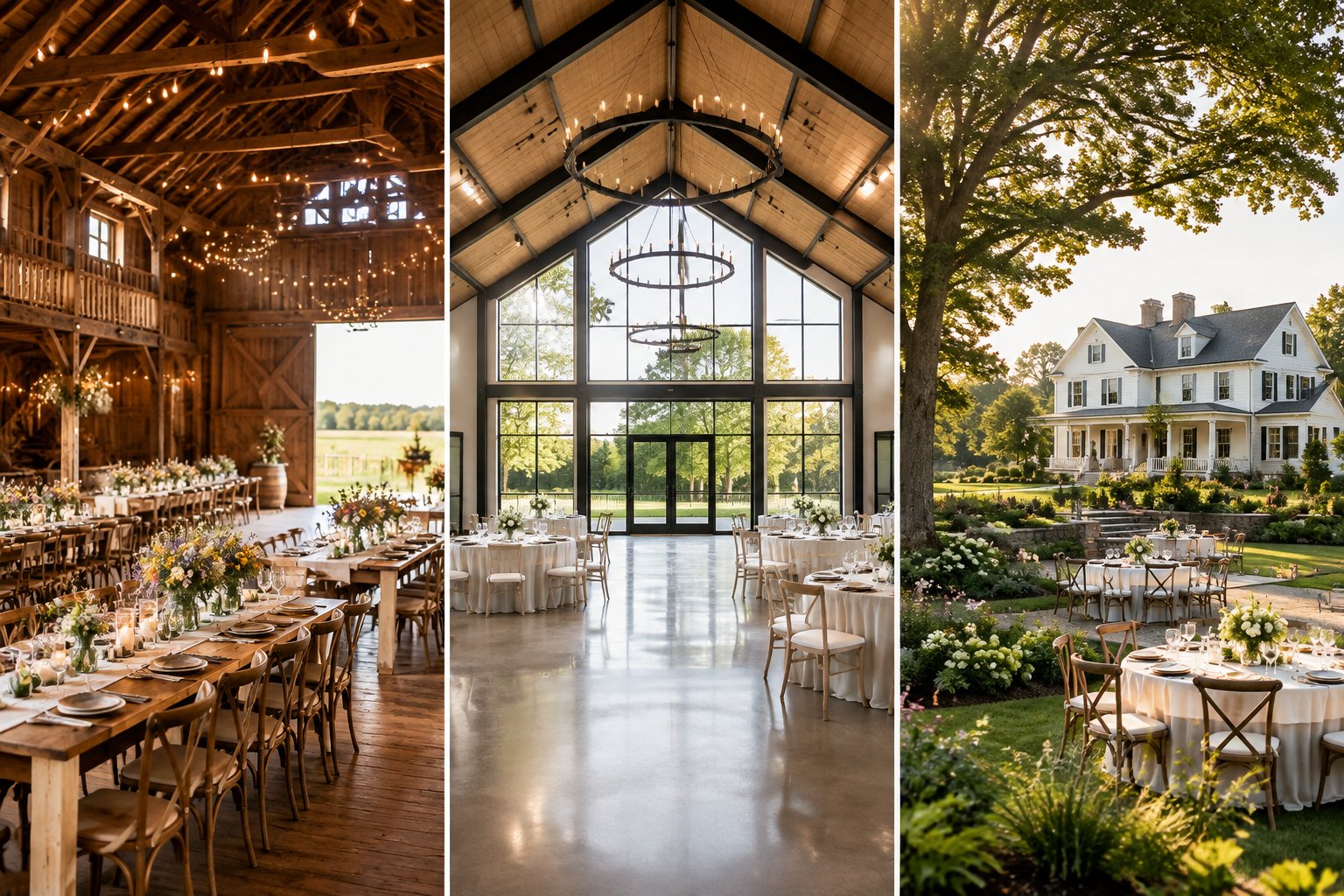
Use your ceremony style, guest list, and comfort priorities to narrow the field. Tour each space during the season of your celebration when possible.
Traditional Timber-Frame Barns
Timber-frame barns offer exposed beams, wide plank floors, historic details, and a warm backdrop for a rustic wedding. Their character reduces the need for heavy décor, especially when you use greenery, simple florals, string lights, and wood furniture.
Ask about insulation, heating, cooling, restrooms, electrical capacity, and floor surfaces. Historic buildings can have narrow stairs, uneven thresholds, or limited hanging points, so confirm accessibility and décor rules in writing.
Refined Farm Estates With Indoor-Outdoor Spaces
Farm estates connect formal reception rooms with lawns, gardens, patios, ponds, or wooded ceremony sites. This layout gives you more photo locations and lets guests move between spaces during cocktail hour.
Ask how far guests walk between locations and how the venue handles rain, mud, lighting, and restroom access. Confirm whether the ceremony lawn, cocktail area, and reception room are included in one rental fee.
Modern Rural Venues With Climate Control
Modern rural venues pair countryside views with heating and air conditioning, updated restrooms, reliable power, and purpose-built event spaces. They suit couples who want barn styling with more predictable comfort during Michigan summers and winters.
Check whether climate control covers every guest area, including the ceremony space, suites, lower levels, and restrooms. Review sound rules, wall-mounting policies, lighting controls, and available outlets before choosing vendors.
| Criteria | Timber-frame barn | Farm estate | Modern rural venue |
|---|---|---|---|
| Main appeal | Historic character | Indoor-outdoor flow | Climate control |
| Best ceremony setting | Barn or lawn | Garden or lawn | Indoor or outdoor |
| Décor needs | Light styling | Moderate styling | Flexible styling |
| Weather comfort | Confirm systems | Confirm backup areas | Built-in comfort |
| Accessibility | Inspect carefully | Review walking routes | Often easier to navigate |
Questions to Ask Before Booking a Venue
The contract should spell out the weather plan, vendor rules, event hours, cleanup duties, and sound limits. Clear answers help you price the wedding and assign responsibilities before you sign.
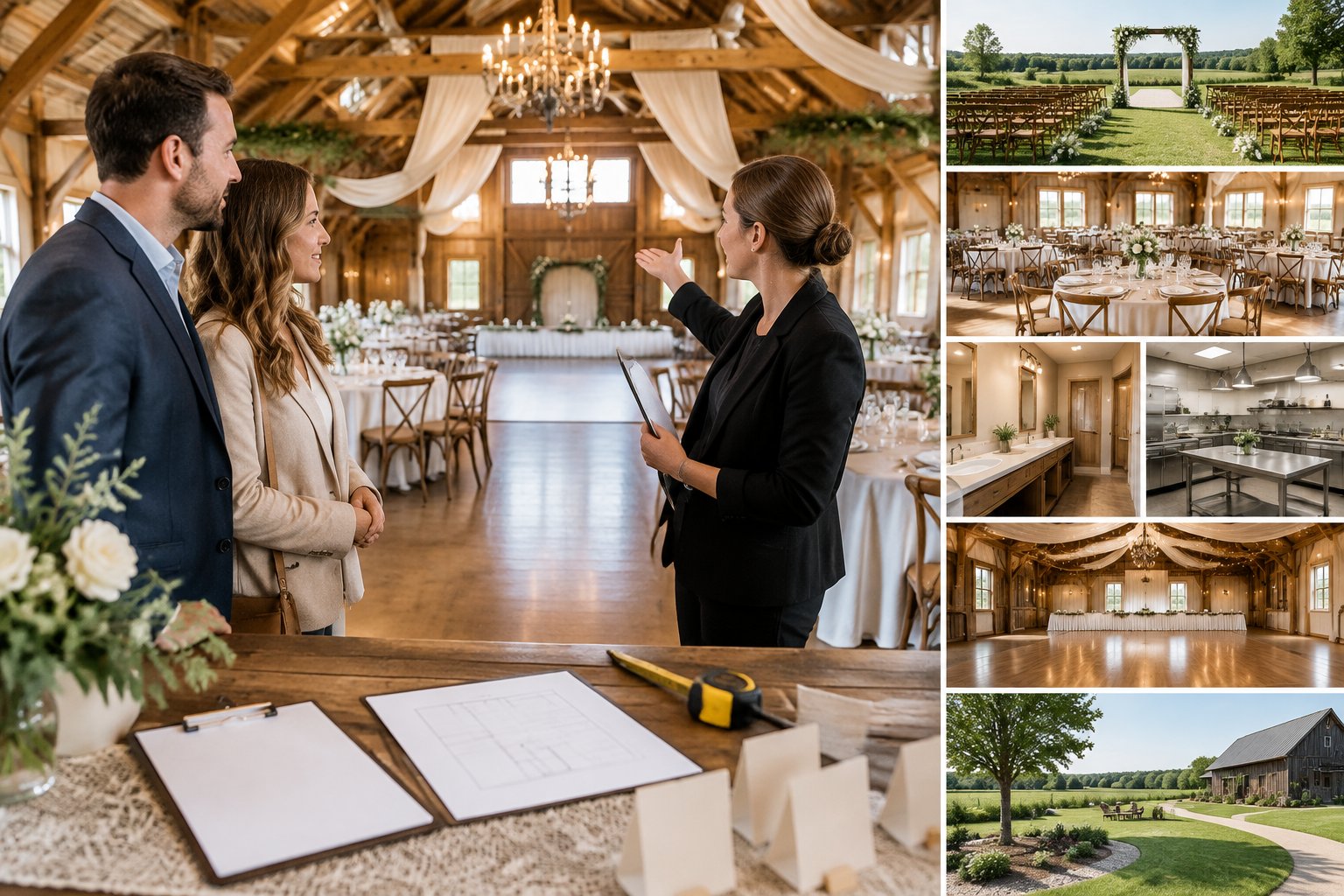
Bring your guest estimate, preferred dates, budget range, vendor list, and questions to every tour. Take notes and request written answers for anything that affects cost or access.
What Is the Rain and Cold-Weather Backup Plan?
Ask where the ceremony moves, who makes the decision, how much notice vendors receive, and whether the backup space holds your full guest count. Walk through the alternate route and check flooring, heating, lighting, restrooms, and seating.
A covered pavilion, indoor ceremony room, tent, or room flip each creates different costs and timing needs. Ask about mud control, parking after heavy rain, snow removal, and guest paths during cold weather.
Are Outside Caterers and Bar Services Allowed?
Venues may use an in-house caterer, a preferred list, or an open vendor policy. Ask about kitchen access, refrigeration, prep tables, power, water, loading areas, catering fees, and cleanup.
For bar service, confirm whether you can supply alcohol, which licenses and insurance are required, and whether liquor, beer, and wine are permitted. Ask who provides bartenders, ice, glassware, mixers, and end-of-night removal.
What Are the Setup, Cleanup, and Noise Rules?
Confirm your access time, rehearsal window, vendor arrival schedule, teardown deadline, and overtime rate. Ask whether staff handle furniture, trash, recycling, bathrooms, and sweeping.
Review rules for candles, sparklers, hanging décor, nails, staples, glitter, confetti, generators, pets, and amplified music. Rural properties may have a firm outdoor sound cutoff, so learn when the dance floor must move inside or music must end.
Planning Guest Experience and Wedding-Day Logistics
Guest comfort improves when transportation, lodging, accessibility, and timing are planned before invitations go out. Rural venues reward detailed planning because small gaps in parking, directions, or setup time affect the whole day.
Parking, Shuttle Service, and Accessibility
Ask how many cars the property holds, where accessible spaces sit, and what happens if the grass is wet. Confirm lighting, signs, drop-off space, shuttle access, and overnight parking for guests who drink.
Walk the full guest route from parking to ceremony, reception, and restrooms. Check steps, gravel, slopes, doorway widths, and seating options for older guests and anyone using a wheelchair or mobility aid.
Nearby Hotels and Getting-Ready Locations
Create a lodging list within a practical drive of the venue. Ask hotels about room blocks, shuttle staging, late check-in, and breakfast hours. Barn 1888 lists a nearby Best Western Plus in Wayland and an on-site farmhouse rental, giving couples options for close lodging.
Confirm when suites open, how many people they hold, whether they include private bathrooms, and whether hair and makeup teams have enough outlets and natural light. Keep personal items in labeled bags so the spaces stay clear during photos.
How to Build a Realistic Event Timeline
Build the timeline around travel, setup, portraits, meals, speeches, dancing, and cleanup. Allow extra time for outdoor ceremonies, room flips, shuttle loading, and guests walking between areas.
A practical sequence might include venue access in the morning, vendor setup before guests arrive, portraits before the ceremony, cocktail hour during room preparation, dinner after the reception entrance, and a planned last call before transportation departs. Give your coordinator one master schedule with vendor phone numbers and weather decisions.
Finding Inspiration and Vetting Venues Online
Online research helps you narrow your list, while a tour and contract confirm whether a venue fits your wedding. Use current galleries, reviews, social posts, and venue portals to check style, service, and availability.
Using Instagram to Evaluate Real Events
Instagram can show how a space looks with different guest counts, seasons, lighting plans, and décor styles. Search the venue name and location, then review tagged posts from photographers, florists, couples, and guests.
Look for full receptions and ceremony setups, not only styled details. Check table spacing, dance-floor size, weather conditions, restroom access, parking, and how the barn looks after sunset. Save questions for the tour when a post leaves out useful context.
How to Log In to Venue Portals and Schedule Tours
Use the venue’s official website to create an account or log in to its planning portal when available. Save your inquiry details, preferred dates, guest count, package questions, and tour appointments in one place.
Confirm the appointment by email and ask what to bring. Request a current pricing guide, sample contract, floor plan, vendor policy, and weather plan before the visit so you can compare venues using the same information.
What Recent Reviews and Photo Galleries Can Reveal
Recent reviews can show how staff communicate, handle changes, manage setup, and respond during the wedding day. Look for repeated comments about cleanliness, timing, parking, food service, noise rules, and contract clarity.
Photo galleries reveal the venue across seasons and lighting conditions. Compare professional images with guest photos to see how the property looks during a full event.
Before booking, verify every important detail in writing, including capacity, included rentals, event hours, weather backup, outside vendors, and final payment terms.