
Beach Destination Wedding Venues: How to Choose Yours
Your best beach destination wedding venues choice is a private beachfront resort with on-site lodging, a clear weather backup, and an experienced coordinator. This setup gives you ocean views, ceremony and reception support, and a smoother stay for guests traveling from different places.
A private beach also gives you more control over timing, privacy, sound, and décor than a busy public shoreline.
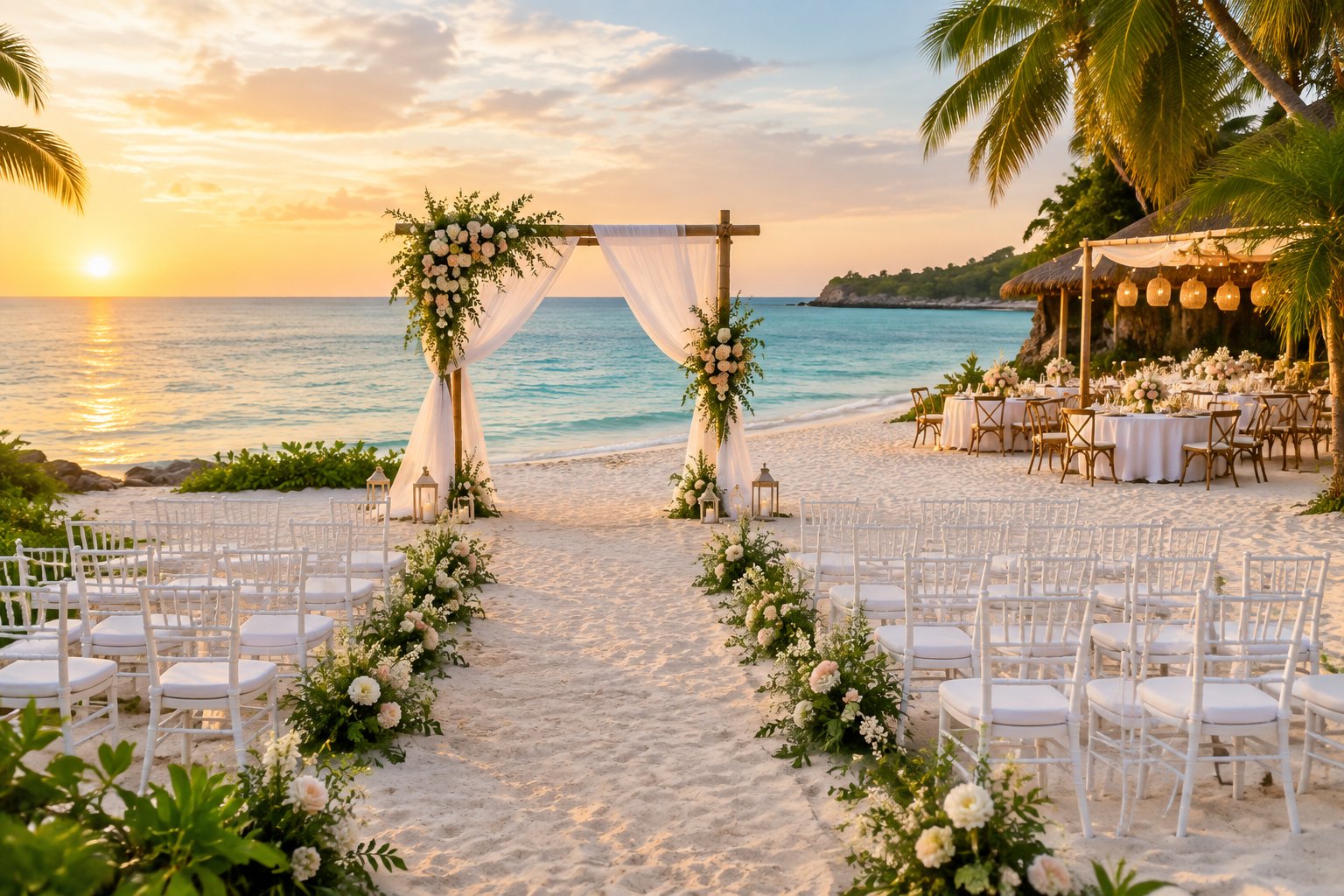
Your location still needs to match your guest list, budget, wedding style, and travel plans. A destination wedding at a full-service resort may suit a larger group that wants easy logistics, while a small beach wedding at an independent property may give you more design freedom.
Explore how to pick a wedding location before you request proposals, then compare venues by total cost instead of the ceremony fee alone.
Start with a short list of coastal settings and ask each venue for a complete proposal. If you want help narrowing your choices, browse all inclusive destination wedding venues for package-based options that combine lodging, meals, and event services.
How to Choose the Right Coastal Setting
Choose a coastal setting that balances privacy, guest access, weather protection, and the amount of planning you want to manage. A beautiful shoreline works best when guests can reach it comfortably and the venue has a practical plan for wind, rain, heat, and tides.
Private Beach vs. Public Shoreline
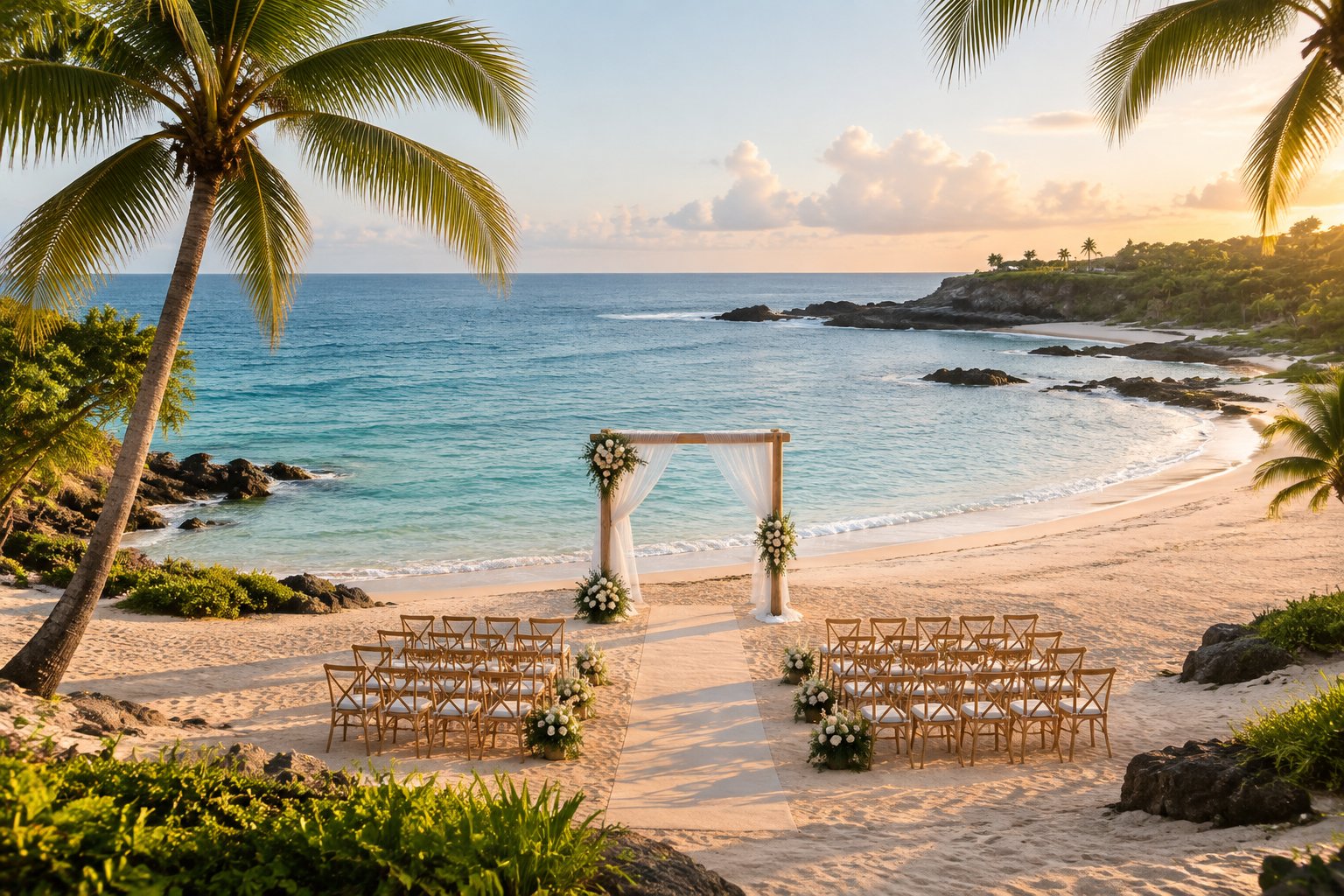
A private beach gives you control over the ceremony area, guest flow, décor, and schedule. Resorts, private clubs, and estates may include chairs, an arch, setup, cleanup, and a coordinator.
Ask whether “private beach” means exclusive use of the sand or access to a reserved section of a larger property.
A public shoreline can reduce venue costs and offer a natural, open setting. You will need to check permits, group-size limits, parking, restroom access, noise rules, setup windows, and restrictions on structures or amplified music.
Beachgoers may also share the space during your beach wedding.
Resort Convenience vs. Independent Venue Flexibility
A resort brings lodging, catering, reception space, and event staff into one location. It also makes transportation easier for guests and may offer room blocks, welcome events, and a rehearsal dinner.
Review the package carefully because upgraded flowers, extended bar service, photography hours, taxes, service fees, and outside-vendor charges can change the final price.
An independent venue gives you more control over vendors, menus, décor, and the event schedule. That freedom comes with more contracts and coordination.
A local planner helps manage rentals, permits, deliveries, and timing when you are planning from home.
What Makes a Venue Work for an Outdoor Wedding?
A strong outdoor wedding venue has a firm surface or accessible path, nearby restrooms, shade options, power for sound equipment, and a backup space that feels like part of the celebration. Ask how far guests must walk from parking or rooms to the ceremony site.
Check the position of the sun, prevailing wind, tide pattern, and distance between ceremony and reception areas. Panoramic ocean views are valuable, yet a sheltered area often creates a more comfortable experience.
Use beach wedding ideas to choose décor that handles salt air, sand, and movement.
Best U.S. Regions for a Seaside Celebration
The best beach wedding destinations in the United States fall into four broad styles: warm Gulf beaches, classic Atlantic shores, dramatic Pacific coastlines, and tropical island settings. Each region brings a different mix of travel time, weather, scenery, venue types, and guest activities.
Florida’s Gulf Coast and the Florida Keys
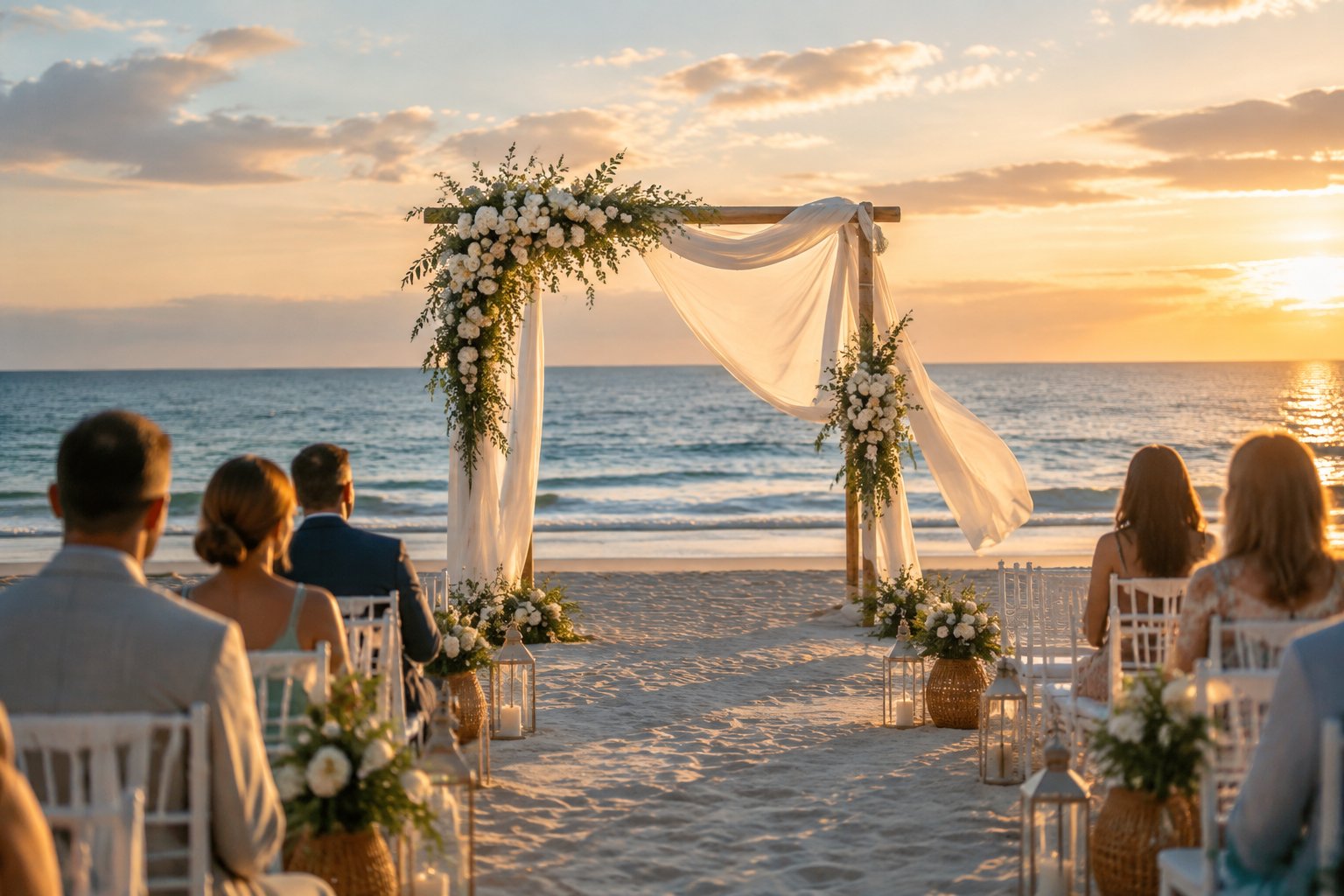
The Gulf of Mexico offers calm water, soft sand, and warm colors that suit relaxed ceremonies. Clearwater, Clearwater Beach, and St. Pete Beach have resort infrastructure, restaurants, and airport access.
Gulf Shores adds a quieter Alabama option with broad beaches and a casual feel.
The Florida Keys create a more tropical setting with sunset views, palms, and small properties suited to intimate celebrations. Weather planning deserves close attention, especially during hurricane season.
Ask every venue about cancellation terms, evacuation procedures, and an indoor or covered backup.
The Atlantic Coast From New England to the Outer Banks
Cape Cod brings dunes, shingled homes, seafood, and a refined New England mood. Properties near Long Island Sound offer calmer water and sheltered views, while Long Island and Bridgehampton, New York, suit polished events with upscale accommodations.
Farther south, the Outer Banks and Nags Head provide barrier-island scenery, private rental homes, and wide Atlantic beaches. Seasonal wind, beach access, and local permits shape the event plan.
These destinations work well when you want a coastal weekend with room for a welcome gathering and casual group activities.
California’s Pacific Coast
The Pacific Ocean gives you dramatic cliffs, cool light, and a more cinematic setting. Southern California offers venue variety in Malibu, Malibu Beach, Laguna Beach, and San Diego.
You can pair a beachfront ceremony with a hotel reception, restaurant dinner, or private estate.
Monterey brings rugged coastline and a quieter atmosphere. Pacific beaches may have cooler temperatures, stronger surf, marine layers, and limited sand access.
Confirm the ceremony surface, sunset conditions, guest seating plan, and reception location before you book.
Hawaii and the Virgin Islands
Oahu offers tropical scenery, strong visitor services, and varied settings near Honolulu, Haleiwa, and other coastal communities. Hawaii beach wedding venues require careful permit planning for public beaches, so ask who handles applications and site rules.
The Virgin Islands create an island-focused celebration with clear water, warm weather, and resort or villa options. Guests need clear flight, lodging, and transfer details.
Review legal requirements early if you want the destination ceremony to serve as your legal marriage, or arrange the legal paperwork at home and hold a symbolic ceremony by the water.
Notable Venues by Wedding Style
Match the venue type to the experience you want your guests to have. Resort properties simplify a wedding weekend, small inns support intimate gatherings, historic hotels add character, and Pacific venues create a scenery-led celebration.
Full-Service Resorts for a Wedding Weekend
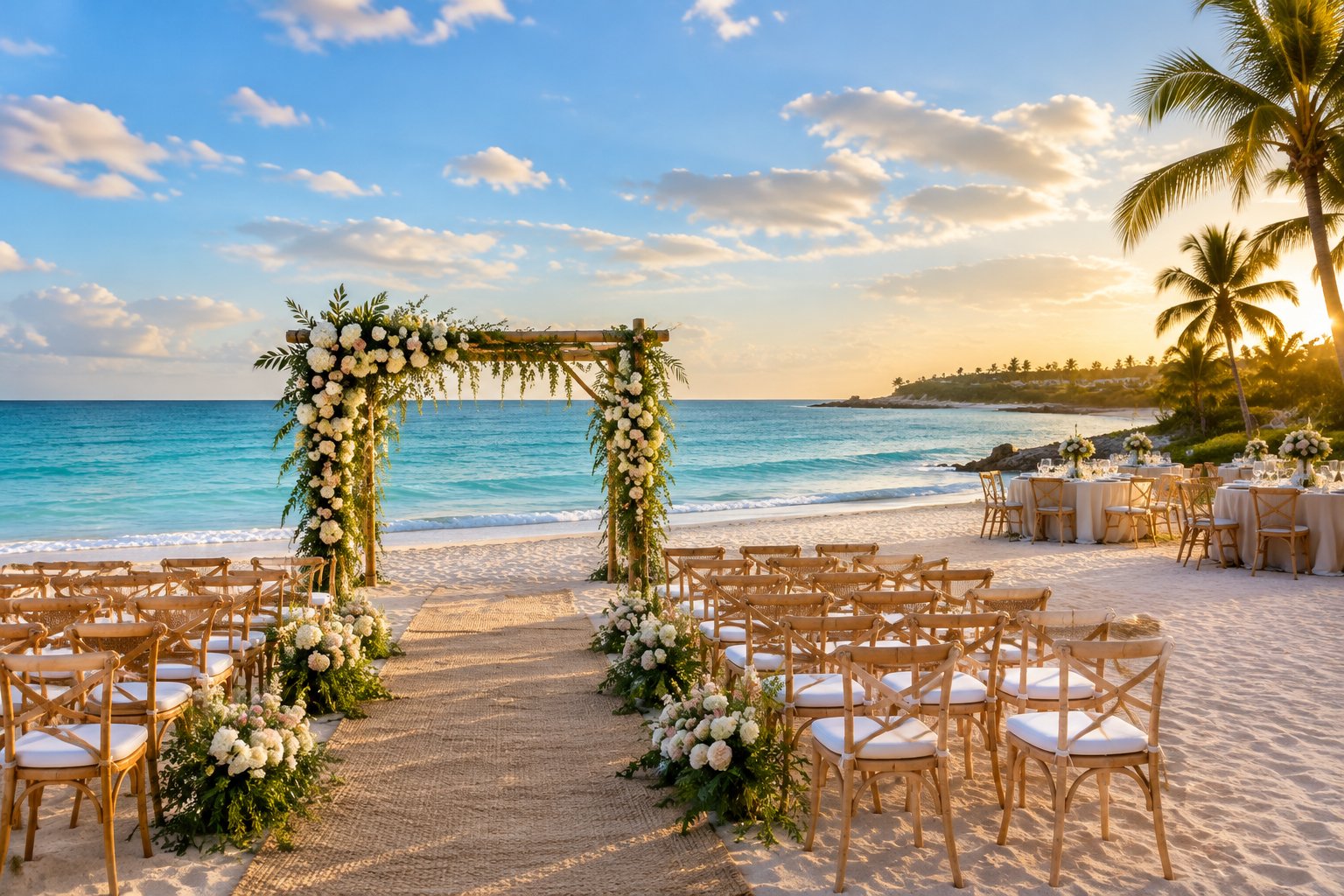
Full-service resorts work well when you want lodging, food, ceremony support, and reception planning in one place. The Wild Dunes Resort in Isle of Palms offers a coastal resort setting with space for wedding events and guest stays.
On Florida’s Gulf Coast, the Sandpearl Resort provides a polished Clearwater Beach backdrop, while The Don CeSar brings an iconic St. Pete Beach setting.
Ask how many events take place on your date, where guests will move between spaces, and whether the resort offers room blocks. Confirm what the base package includes before comparing prices with other properties.
All inclusive wedding venues near the beach can help you compare this format.
Intimate Properties for Smaller Gatherings
Smaller properties suit couples who want a quieter guest list and a more personal setting. The Pink Palace in Brookings, Oregon, near Crook Point, offers a scenic Pacific Northwest atmosphere.
The Surf Club in Westbrook, Connecticut, fits a New England coastal celebration with a more intimate scale.
Small venues may have limited rooms, parking, event hours, and vendor access. Ask whether the property requires an exclusive-use booking and whether nearby lodging can support your full guest list.
Historic and Glamorous Waterfront Icons
Historic hotels give your wedding a strong sense of place and a ready-made reception setting. The Don CeSar combines grand architecture with Gulf Coast access, while The Grand Hotel offers a classic waterfront atmosphere.
In Hawaii, The Pink Palace name is associated with the Royal Hawaiian, a landmark setting in Waikiki with tropical gardens and ocean views.
These properties may have strict rules for décor, loading, music, and photography. Request a floor plan and a full list of event spaces before choosing your ceremony location.
Scenic Venues for a Pacific Coast Celebration
Pacific Coast venues suit couples who want the landscape to lead the design. Monterey Beach Station offers a seaside setting near Monterey, while Crook Point near Brookings and Gold Beach provides rugged Oregon scenery.
Loulu Palm Weddings in Haleiwa, Hawaii, brings a tropical North Shore setting with palms and coastal views.
Ask whether the ceremony sits directly on sand, on a lawn, or on a deck above the beach. Wind, access, weather coverage, and lighting change from one site to another.
Bridgehampton, New York, also offers a scenic coastal option when you want a refined East Coast feel.
What to Ask Before You Book
Ask for written details about cost, weather protection, lodging, vendor rules, and coordination before you sign a contract. Venue photos show the setting, while the proposal and site plan reveal how the event will function.
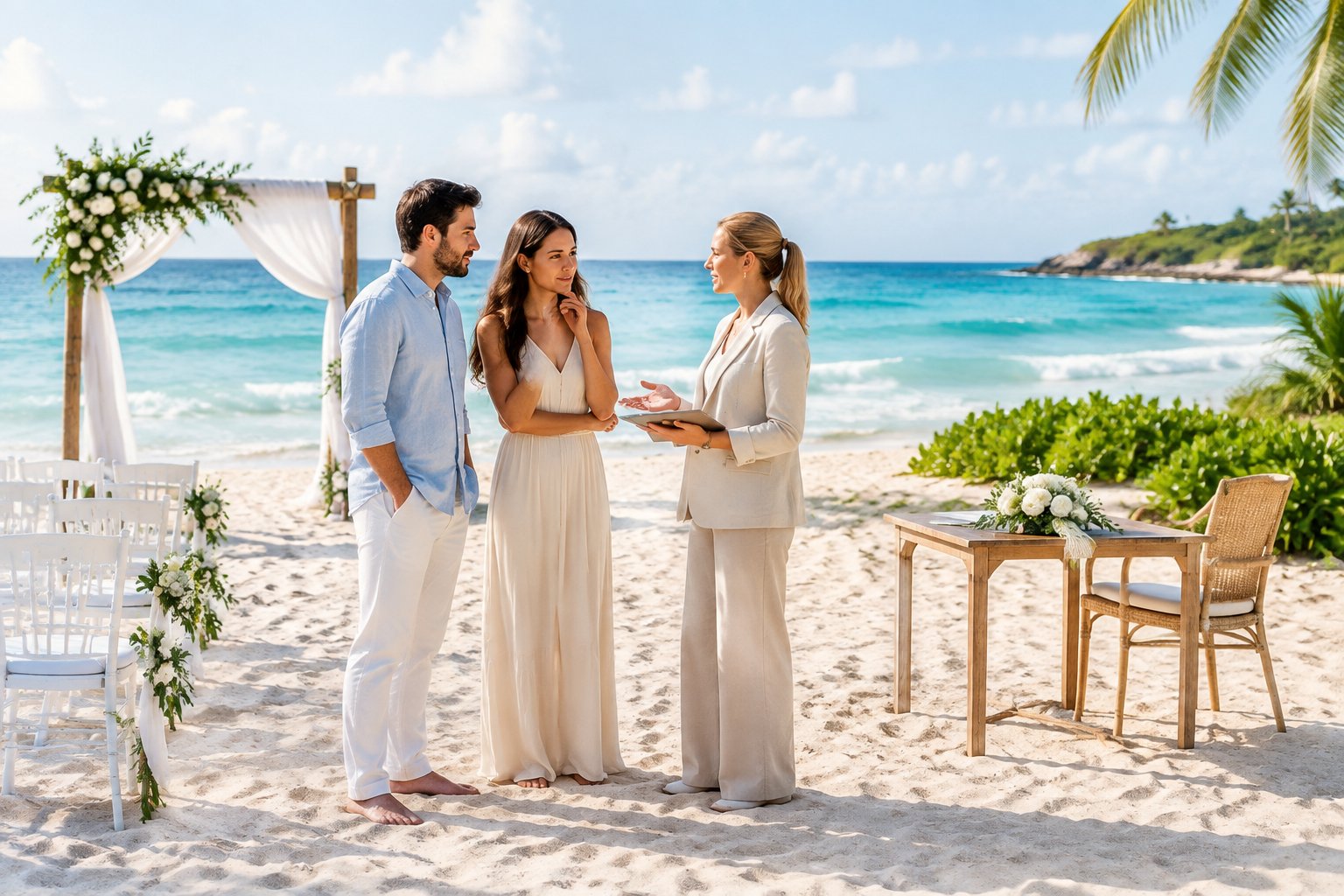
Which Packages, Fees, and Vendor Rules Apply?
Request an itemized proposal that lists the ceremony fee, reception minimum, food and beverage costs, service charges, taxes, rentals, staffing, cleanup, and overtime. Ask whether the venue handles permits and liability insurance.
Confirm the outside-vendor policy for your florist, photographer, DJ, caterer, hair stylist, and planner. Some venues charge fees for outside professionals, while others require approved vendor lists.
Get payment dates, cancellation terms, postponement rules, and refund conditions in writing.
How Will the Venue Handle Wind, Rain, and Heat?
Ask to see the exact backup space, not a general promise that one exists. Confirm its capacity, cost, setup time, décor options, sound plan, and decision deadline for moving indoors.
Wind affects microphones, ceremony arches, fabrics, candles, flowers, and seating. Heat calls for shade, water, fans, and a time of day that keeps guests comfortable.
Ask how the venue monitors weather and who has authority to change the ceremony location.
Can Guests Stay On-Site or Nearby?
On-site lodging makes a destination wedding easier for guests and gives you more control over transportation. Ask about room blocks, minimum booking requirements, accessible rooms, parking, resort fees, and the distance from rooms to the ceremony site.
If rooms are limited, request nearby hotels at several price levels. Include airport transfers, rental car guidance, check-in details, and local transportation on your wedding website.
Do You Need a Wedding Planner or Local Coordinator?
A local wedding planner helps with vendor selection, permits, design, transportation, timeline management, and weather decisions. A venue coordinator handles property logistics, such as banquet staff, room setup, and internal schedules.
Ask what each person will manage and when they become involved. If you are planning from a distance or using an independent venue, a wedding planner gives you a dedicated contact for details outside the property’s own services.
Plan a Comfortable Guest Experience
Plan the guest experience around easy travel, shade, clear timing, and enough free time to enjoy the destination. Your beach celebration should feel like a welcoming weekend, with practical details handled before guests arrive.
Build a Realistic Travel and Lodging Plan
Choose an airport with practical flight options and limit long transfers when possible. Send save-the-dates early, then provide flight suggestions, hotel choices, room-block details, transfer instructions, and a clear RSVP date.
Tell guests what to wear and bring for an outdoor wedding. Include footwear guidance, sunscreen, insect protection, wraps for cooler evenings, and accessibility information.
Ask the venue about beach wheelchairs, temporary flooring, ramps, and seating for guests who cannot walk on sand.
Time the Ceremony for Light, Tides, and Temperature
Schedule the ceremony after checking tide charts, sunset time, wind patterns, and the day’s expected heat. Late afternoon often provides softer light and cooler conditions, while a morning ceremony may suit younger children, older guests, or warmer locations.
Ask the venue how much usable beach remains at high tide. Leave enough time for guests to arrive, take their seats, and move to the reception before the light fades.
Create a Seamless Wedding Weekend
Give guests a simple schedule with arrival guidance, a welcome gathering, the rehearsal dinner, the ceremony, reception details, and optional activities. Keep some open time so guests can rest or explore on their own.
Use a welcome table or digital guide for contact numbers, transportation updates, dress guidance, and weather changes. Serve water when guests arrive, provide shaded seating, and choose a reception space with dependable restrooms and cooling options.
A well-planned rehearsal dinner gives your closest guests time to connect before the ceremony.