
Catering Rates for Weddings: What You’ll Really Pay
Wedding catering rates commonly land between $70 and $150 per guest for food and service, with about $80 per person serving as a practical planning point for many U.S. weddings. Your final wedding catering prices rise with plated service, premium ingredients, alcohol, rentals, taxes, and staffing.

Your wedding catering budget also follows your guest count. A 100-person reception at $80 per guest starts near $8,000 for food and service, while a 200-person event at the same rate starts near $16,000.
Food and beverage costs can take a large share of your reception budget, so compare complete quotes before choosing a menu. Use the figures below to set a working budget, then ask local caterers for itemized proposals that match your venue and guest list.
What Is the Average Cost Per Guest?
The average wedding catering cost is about $70 to $150 per person for food and service, with $80 per guest as a useful national planning figure. Your actual catering cost per person reflects the menu, service format, location, date, staffing, rentals, and guest count.
National Price Ranges and Why They Vary
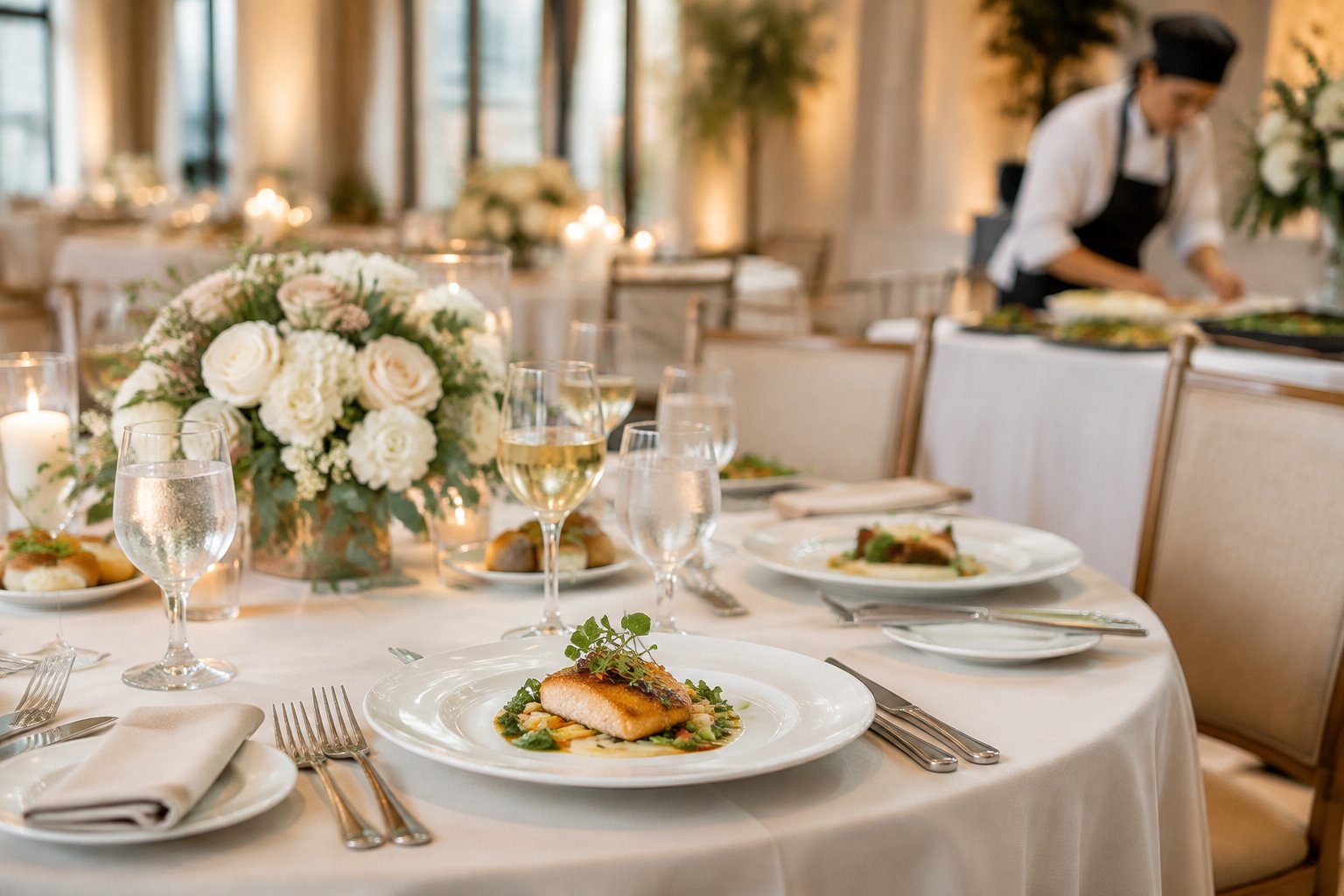
A basic buffet with familiar dishes may fall near $40 to $65 per guest for food and service. Full-service catering with a plated dinner often reaches $65 to $100 or more per guest.
Premium menus with seafood, steak, several courses, elevated rentals, and extensive staffing can pass $150 per guest.
These figures describe planning ranges, not fixed rates. A catering quote might include food preparation and service staff while listing rentals, bar service, sales tax, or a service charge separately.
Ask whether the rate includes appetizers, dessert, nonalcoholic drinks, and cleanup before you compare it with another proposal.
A catering calculator helps you estimate a starting total:
Guest count × catering cost per person = base catering estimate
Add separate charges for bar service, rentals, tax, service charges, gratuity, and vendor meals to create a closer wedding catering budget.
How Location, Date, and Guest Count Affect Rates
Location has a strong effect on the average wedding catering cost. Labor, commercial kitchen access, transportation, venue rules, and local demand push rates higher in major cities and popular destination markets.
Rural areas may offer lower menu rates, though travel and setup fees can narrow the gap.
Your wedding date also shapes pricing. Saturday evenings during peak wedding months attract high demand.
A Friday, Sunday, lunch, brunch, or off-season reception gives you more room to negotiate menu and staffing costs.
Guest count changes the bill in two ways. More guests require more food and labor, while larger events sometimes receive economies of scale on shared preparation and equipment.
Small weddings can face a minimum guest count or minimum event charge, so 40 guests may not cost 40 percent of a 100-person reception.
Estimated Totals for 100 and 200 Guests
Use these ranges for the meal portion of your planning:
| Guest count | $70 per guest | $80 per guest | $150 per guest |
|---|---|---|---|
| 100 guests | $7,000 | $8,000 | $15,000 |
| 200 guests | $14,000 | $16,000 | $30,000 |
A 100-person wedding catering cost for a standard full-service meal often starts around $7,000 to $10,000 before bar service, tax, rentals, and other fees. For wedding catering for 200 guests, a comparable starting range is about $14,000 to $20,000.
Use your final guest count, not your invitation count, when requesting quotes. Ask how children, vendors, and guests with reduced meal portions are priced.
How Service Style Changes the Price
Buffet service usually costs less than plated service because it requires fewer servers, while stations, family-style dining, and cocktail formats shift the budget toward food variety, equipment, or chef labor. Your choice also controls the pace and feel of the wedding reception food.

A buffet may suit a relaxed reception, while plated service fits a formal timeline. Food stations encourage mingling, and drop-off catering works best when your venue has staff or volunteers who can manage service.
Buffet vs. Plated Dinner Costs
A buffet commonly falls near $40 to $65 per guest for a standard menu. Guests serve themselves from chafing dishes, so staffing needs focus on replenishing food, clearing tables, and managing the buffet line.
A plated dinner often starts around $65 to $100 per guest and rises with extra courses or premium entrées. Plated service needs servers to deliver each course, clear dishes, manage special meals, and keep the meal synchronized with speeches and entertainment.
Buffet service gives guests more control over portions and accommodates varied preferences with less advance planning. Plated service creates a polished seated dinner and controlled portions, though your RSVP process needs accurate entrée selections and dietary details.
Family-Style Dining and Food Stations
Family-style dining often falls near $50 to $85 per guest. Large platters arrive at each table, giving guests a seated meal with shared choices.
The format needs table space, steady replenishment, and enough staff to deliver and clear platters.
Food stations commonly range from $55 to $100 per guest. A taco bar, carving station, pasta station, or interactive food station adds variety and movement to the room.
Chef-attended stations raise labor costs, while multiple stations require more floor space, power, equipment, and setup.
Ask how many stations your guest count needs. Too few stations create lines, while too many increase staffing and rental costs without improving the guest experience.
Cocktail Receptions, Food Trucks, and Drop-Off Catering
A cocktail-style reception with heavy appetizers may cost about $35 to $75 per guest, depending on portion size and the number of passed appetizers. Plan enough hors d’oeuvres to replace a meal if guests will not receive dinner.
Food trucks can offer a memorable format at about $25 to $75 per guest, with fees for travel, staffing, permits, minimums, and extra service time. Confirm whether the truck supplies tables, trash removal, condiments, and backup plans for bad weather.
Drop-off catering often costs about $20 to $50 per guest for food only. You remain responsible for setup, chafing dishes, serving utensils, replenishment, clearing, and cleanup unless you add those services.
A drop-off taco bar or prepared meal works well for a smaller, informal reception with an equipped venue.
What Is Included in a Catering Quote?
A complete catering quote identifies the menu, preparation, staffing, setup, breakdown, rentals, vendor meals, taxes, and fees that create your final bill. The per-person price alone cannot show the full value of a wedding catering package.
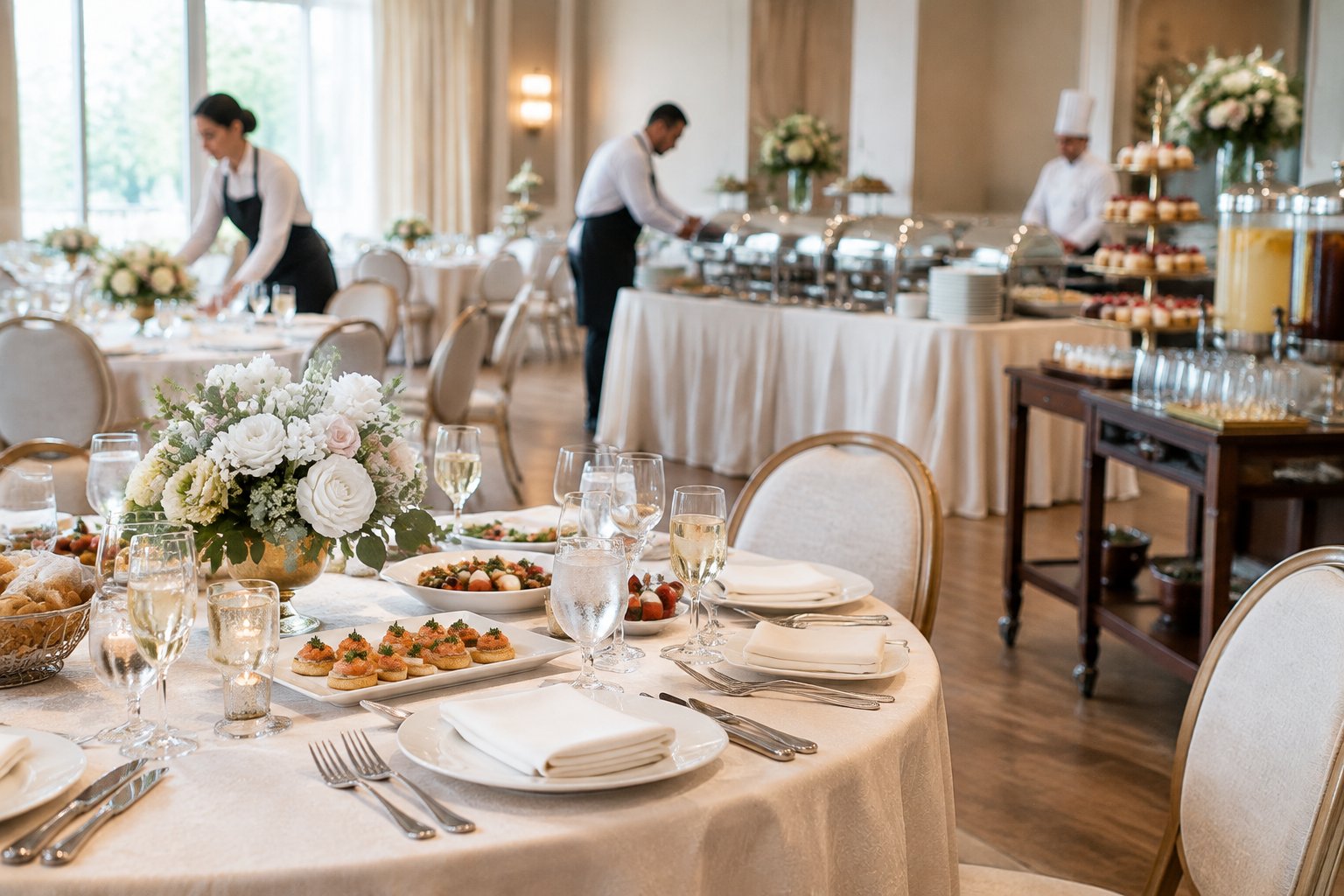
Ask each wedding caterer to price the same guest count, service hours, menu, beverage plan, and venue requirements. This makes catering quotes easier to compare and exposes costs that one company has bundled into its package.
Food, Preparation, and Menu Planning
Your quote should list each meal period and menu component, including cocktail hour appetizers, dinner courses, dessert, late-night food, and nonalcoholic beverages. It should also state the portion plan and the number of entrée choices.
Menu complexity affects food preparation and labor. Multiple proteins, custom recipes, live cooking, premium garnishes, and several dietary accommodations require more planning and kitchen work.
A menu tasting might be included, credited toward your booking, or billed separately.
Ask when menu selection becomes final and when your caterer needs the final headcount. Confirm how the team handles allergies, vegetarian meals, vegan meals, gluten-free requests, and children’s portions.
Staffing, Setup, and Breakdown
A full-service quote should state the number of servers, chefs, bartenders, captains, and support staff. It should also list arrival time, guest-facing service hours, cleanup duties, and departure time.
Setup and breakdown include unloading, kitchen preparation, buffet or station assembly, table service, clearing dishes, packing equipment, and catering-related cleanup. Difficult access, long distances from the loading area, stairs, or limited kitchen space can add labor.
Ask who removes food, trash, serving equipment, and rented items at the end of the night. Confirm the overtime rate if speeches, dancing, or venue delays extend the schedule.
Rentals, Tableware, and Vendor Meals
Basic rentals may include linens, tableware, dinnerware, flatware, glassware, china, serving pieces, tables, chairs, and chafing dishes. Some catering packages include these items, while others charge per piece or send you to a separate rental company.
Vendor meals cover photographers, planners, DJs, musicians, and other vendors working through dinner. Caterers often offer a reduced meal rate, though the contract should state who qualifies and what they receive.
Also check for delivery, kitchen equipment, refrigeration, ice, coffee service, liability insurance, cake cutting, and corkage. Ask the caterer to mark every item as included, optional, or excluded.
Which Menu Choices Raise or Lower Your Bill?
Premium proteins, complex menus, out-of-season ingredients, extra entrée choices, and large dessert displays raise wedding catering prices, while focused menus and seasonal dishes help control them. You can create a satisfying meal by putting your budget behind flavor, portions, and reliable service.
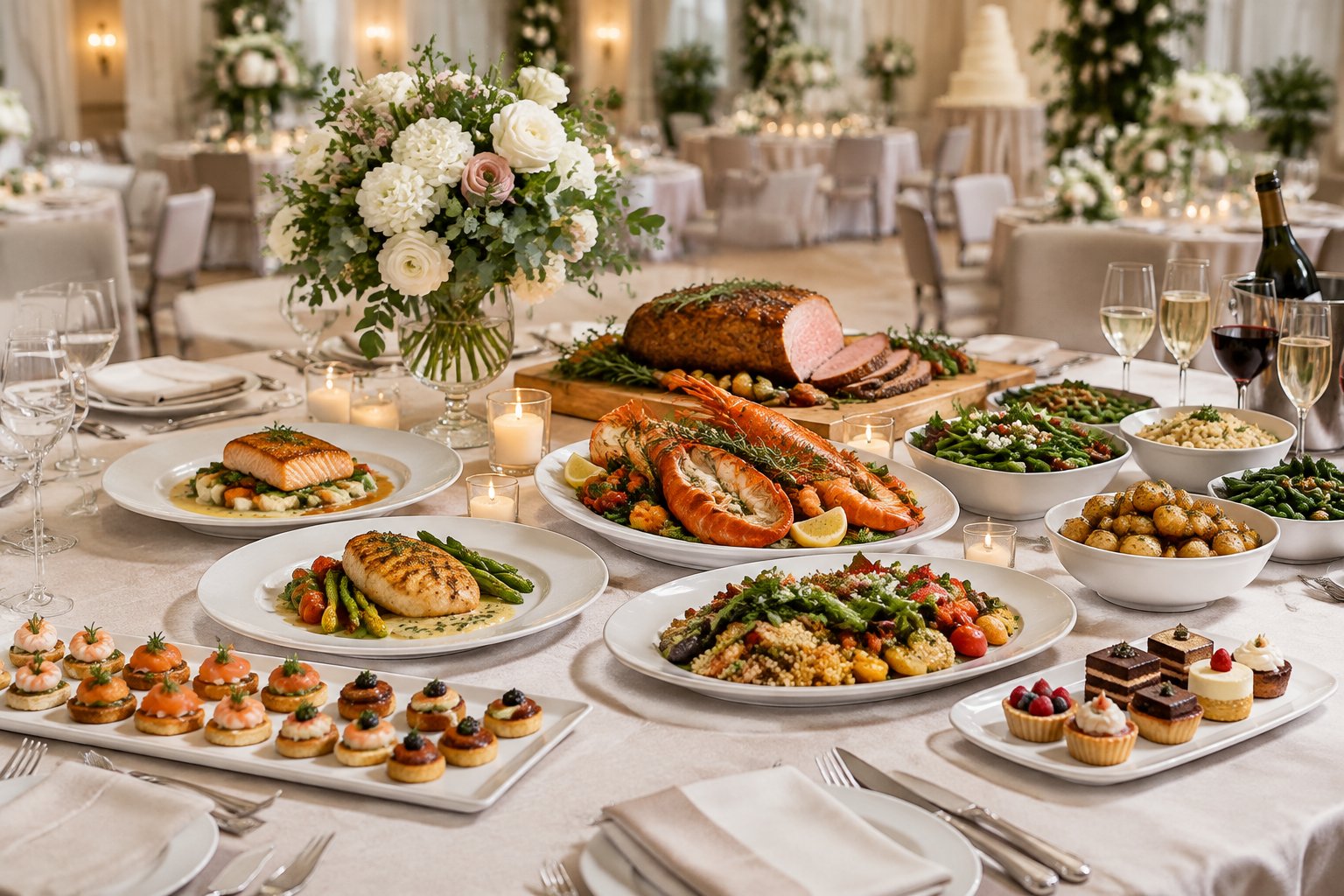
Share your budget with the caterer before building the menu. A professional team can suggest substitutions that preserve the style of your reception while reducing ingredient and labor costs.
Premium Proteins, Seasonal Ingredients, and Local Sourcing
Beef tenderloin, filet, lobster, jumbo shrimp, and specialty seafood carry higher food costs than chicken, pork, pasta, or vegetarian entrées. A carving station or made-to-order seafood station also adds chef labor and equipment.
Seasonal ingredients give your caterer better access to produce at the right time of year. Local ingredients can support a regional menu, though small-batch products or specialty suppliers sometimes carry a premium.
Ask which ingredients are driving the quote and request two lower-cost alternatives.
Limiting the menu to two entrée choices keeps preparation more efficient. A chicken entrée paired with a vegetarian pasta or grain dish offers variety without requiring a large inventory of premium proteins.
Dietary Accommodations and Multiple Entrée Choices
Dietary accommodations need clear planning when guests have allergies, religious restrictions, or vegetarian and vegan preferences. A separate meal for a small number of guests may carry a modest added cost, while several entrée choices increase preparation, labeling, staffing, and food waste.
Include dietary questions on your RSVP form and give the caterer the final details by the contract deadline. Ask whether special meals are plated, labeled, and delivered directly to guests or handled through a buffet.
Keep the main menu flexible with naturally inclusive sides, sauces served separately, and at least one substantial vegetarian option. This approach gives guests good choices without creating a separate menu for every table.
Desserts, Wedding Cake, and Late-Night Add-Ons
A dessert table with mini pastries, cookies, fruit, or cupcakes can cost less than a large tiered wedding cake. A smaller wedding cake paired with sheet cake or additional desserts also reduces the amount of decorative cake required.
Ask whether the caterer charges a cake cutting fee. This fee may cover cutting, plating, serving, and cleanup, even when you purchase the cake from another baker.
Late-night add-ons such as pizza, sliders, fries, tacos, or cookies may cost about $3 to $15 per guest, depending on the food and service format. Add them when your reception runs late or your bar service lasts several hours.
Remove them when your main meal and dessert already meet your guests’ needs.
How Much Should You Budget for Bar Service and Fees?
Plan about $20 to $70 per guest for bar service, with beer and wine at the lower end and a full open bar with premium spirits at the higher end. Your bar budget also needs room for bartenders, mixers, ice, glassware, service charges, sales tax, corkage, and overtime.
A hosted bar gives guests a smoother experience, while a limited package helps control spending. Confirm the alcohol rules at your venue before selecting a package or bringing your own beverages.
Open Bar, Limited Bar, and Cash Bar Options
A full open bar includes beer, wine, spirits, mixers, and nonalcoholic drinks. A planning range of $45 to $70 per guest fits many full-bar packages, with premium brands and longer service hours pushing the rate higher.
A limited bar with beer, wine, and one or two signature cocktails often falls near $20 to $35 per guest. This format gives guests hosted drinks while narrowing inventory and bartender complexity.
A cash bar transfers drink purchases to guests, though your contract may still include bartender labor, setup, and equipment fees. Review venue policies and guest expectations before choosing this arrangement.
Bar Packages and Consumption-Based Pricing
Bar packages charge a fixed rate per guest or per service hour. You pay for the agreed package even if guests drink less, which makes the final cost easier to predict.
A consumption-based bar charges for drinks served. This suits a lighter-drinking guest list, though a busy reception can make the final bill less predictable. Ask whether unopened bottles, unused mixers, and partial packages receive credit.
Signature cocktails add personality while limiting the spirit and mixer list. Price the ingredients, garnish, glassware, bartender labor, and service time together so the cocktail rate reflects the complete cost.
Service Charges, Sales Tax, Corkage, and Overtime
A service charge covers operating and event labor costs. It does not automatically equal gratuity for the catering staff, so ask where the money goes and whether a separate tip is expected.
Sales tax applies to taxable food, beverage, rental, or service items according to local rules. Request a quote that shows the tax rate and whether it is calculated before or after service charges.
A corkage fee applies when you bring outside wine or alcohol. It may be charged per bottle, per guest, or as a flat venue fee.
Overtime fees begin when staff, bar service, or equipment remains beyond the contracted end time. Ask for the hourly rates and the person authorized to approve extra time.
How to Compare Quotes and Save Without Shortchanging Guests
Compare the all-in wedding catering cost for identical services, then save through guest count control, focused menus, flexible dates, and beverage choices. A wedding planner can help you match the menu and service plan to your venue without cutting the food your guests will enjoy.
Compare All-In Totals Instead of Base Rates
Place each proposal in the same format and check:
- Guest count, children, and vendor meals
- Menu, portions, courses, and dietary meals
- Service style and staffing levels
- Setup, breakdown, delivery, and cleanup
- Rentals, linens, china, glassware, and serving equipment
- Bar service, ice, mixers, and nonalcoholic drinks
- Service charges, gratuity, sales tax, corkage, and overtime
- Deposit, payment schedule, cancellation terms, and final-count deadline
A $60 per-person quote can cost more than an $80 quote after rentals, staffing, and fees are added. Ask each caterer to provide a projected final total for 100 guests, including every known charge.
Smart Ways to Reduce Food and Beverage Costs
Set the guest list before refining the menu. Every added guest increases food, service, tableware, beverage, and sometimes rental costs.
Choose buffet, family-style, or a focused station menu when those formats suit your reception. Use seasonal produce, limit premium proteins, and offer two entrée choices with one substantial vegetarian option.
Consider brunch, lunch, Friday, Sunday, or off-season dates. For drinks, choose beer and wine with a signature cocktail, limit bar hours, or serve a curated beverage menu.
A smaller cake with a dessert display can reduce cake costs while giving guests more variety.
Questions to Ask Before Signing a Contract
Ask these questions in writing:
- What does the per-person rate include?
- Which costs are fixed, and which change with the final headcount?
- How many staff members will work, and what hours are covered?
- Are setup, breakdown, delivery, cleanup, rentals, and vendor meals included?
- Are tasting fees credited toward the final bill?
- How are allergies and special meals handled?
- What service charge, gratuity, sales tax, corkage, and overtime fees apply?
- What happens if the schedule, venue access, or guest count changes?
- When is the final menu and headcount due?
- What deposit and cancellation terms apply?
Have your planner, venue representative, and caterer confirm the same timeline and responsibilities. Sign after the proposal and contract show the menu, staffing, inclusions, and complete estimated total.