
Cheap Outdoor Wedding Venues That Save You Money
You can find cheap outdoor wedding venues in public parks, private backyards, family farms, community spaces, and small gardens. These locations lower the rental cost by using natural scenery, existing facilities, or a smaller event footprint.
Public parks and private properties are often the best starting points for couples who want an affordable outdoor wedding because they offer flexible layouts and modest site fees.
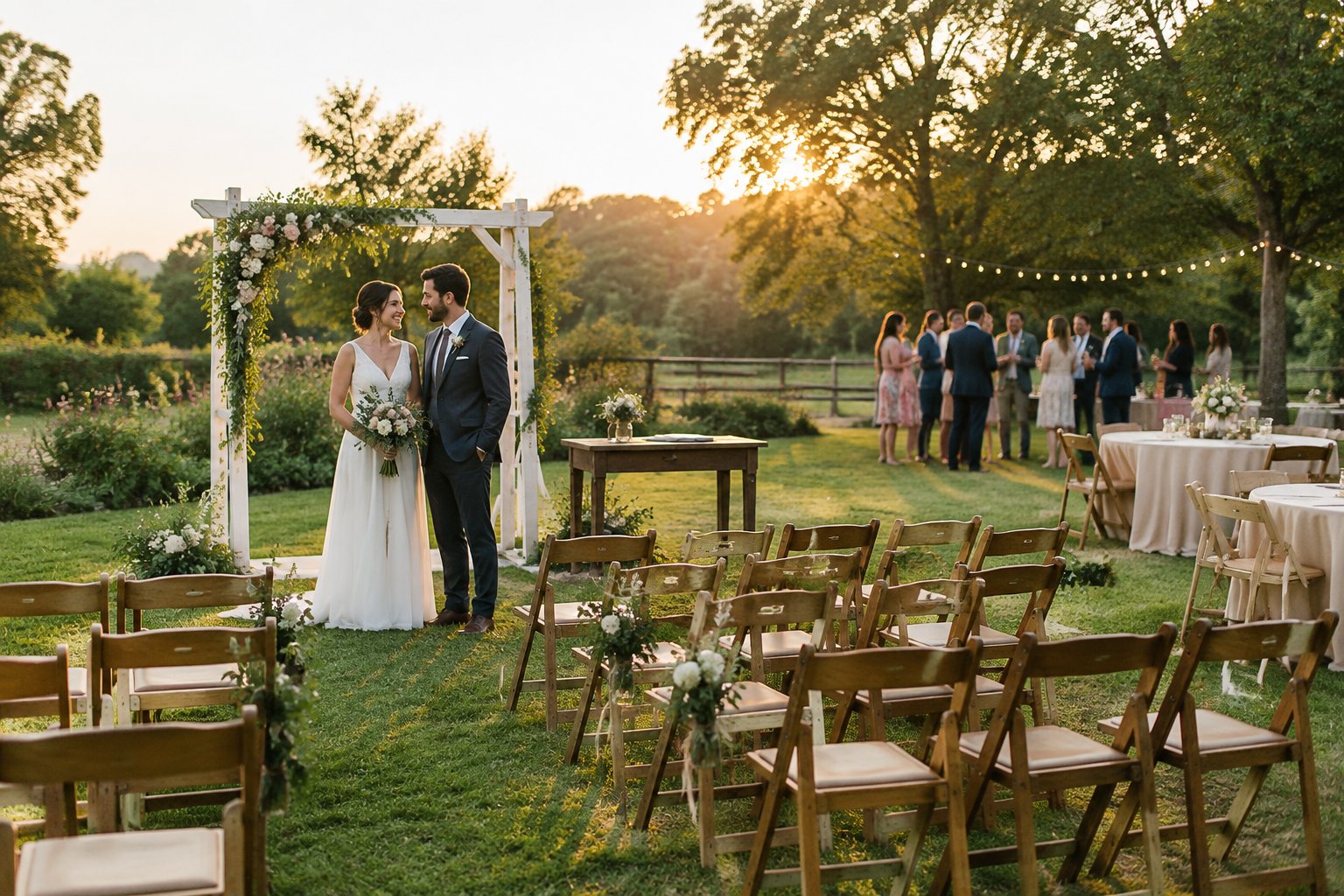
A low venue fee does not always mean a low wedding budget. You still need to price permits, chairs, restrooms, lighting, weather protection, insurance, catering, and cleanup.
Compare complete quotes before choosing among outdoor wedding venues. You can also reduce the total by choosing a weekday, limiting the guest list, and selecting a location with attractive landscaping already in place.
Browse affordable outdoor wedding venues as you build your shortlist, then contact each venue for a written quote based on your date and guest count.
Where Can You Find Low-Cost Outdoor Spaces?
Public parks, state parks, gardens, beaches, and other public spaces offer some of the lowest-cost settings for an outdoor wedding. Their rules differ by location, so check permits, guest limits, alcohol policies, music restrictions, restroom access, and cleanup requirements before you reserve a date.
A scenic site can reduce décor spending, while a bare field may require furniture, power, lighting, and a tent. Visit the space at the same time of day as your planned event to check shade, parking, noise, and guest access.
Public Parks and State Parks
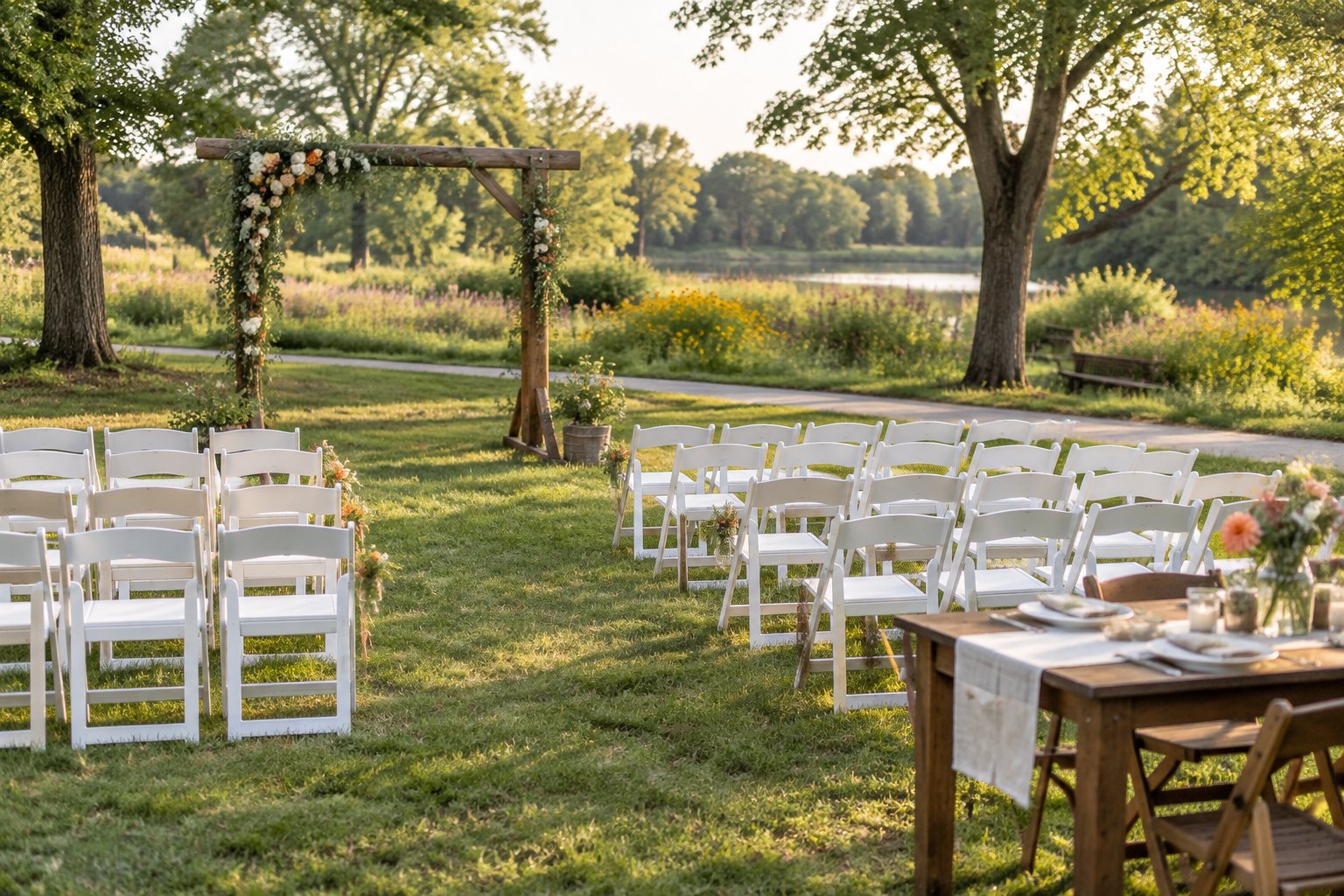
Local public parks often provide lawns, picnic shelters, mature trees, and paved paths for a park wedding. A city recreation department may charge a reservation fee, special-event permit fee, or hourly rental rate.
State parks can offer larger landscapes and designated ceremony areas. Ask whether your reservation covers only the ceremony site or also nearby picnic areas, parking spaces, and reception use.
Confirm the process for event insurance and amplified sound. A park with restrooms, tables, and a covered shelter can cost more at booking while reducing outside rentals.
Check accessibility for guests using wheelchairs or mobility aids, especially if the ceremony area sits on grass or uneven ground.
Botanical Gardens and Rose Gardens
Botanical gardens and rose gardens provide established plants, paths, and photo areas that add visual interest without extensive floral décor. Smaller gardens may offer ceremony-only reservations, morning dates, or weekday rates.
Ask whether your booking includes private use of the garden or a reserved section shared with visitors. Review rules for outside catering, candles, food service, photography, music, setup time, and closing hours.
A garden with a rain location helps protect your budget from last-minute tent or room rentals. Confirm the backup space before paying a deposit.
Public Beaches and Waterfront Parks
Public beaches and waterfront parks create a memorable setting for a beach wedding with a small site reservation. Coastal locations also require planning for wind, sun, tides, sand, public access, and limited power.
Ask the local authority about beach weddings, permits, guest capacity, alcohol, amplified music, structures, and cleanup. Check whether chairs, arches, tents, and food service are allowed on the sand.
A waterfront park with paved access, restrooms, and a nearby shelter can simplify logistics. Choose a reception area close to the ceremony site to reduce transportation and setup costs.
National Parks and Scenic Public Land
National parks and scenic public land offer striking backdrops for intimate outdoor weddings, though special-use permits and location rules apply. Permit requirements can include application fees, insurance, guest limits, parking controls, and restrictions on décor.
Keep the setup light and leave natural areas undisturbed. Ask about seasonal road closures, weather hazards, restrooms, cell service, accessibility, and nearby lodging.
A short ceremony with a separate meal at a nearby restaurant or rental hall can suit a national park wedding. This arrangement keeps equipment needs manageable while allowing you to use the landscape as the main design feature.
Private Property Options With Built-In Character
Backyards, family farms, vineyards, and small estates can reduce venue costs when the property already has scenery, parking, and usable gathering areas. You gain more control over the schedule and design, though you also take responsibility for event logistics.
Before booking, confirm local zoning rules, noise limits, guest capacity, insurance needs, restroom access, power, trash removal, and parking. A written agreement should define access hours, cleanup duties, property protection, and payment terms.
Planning a Backyard Wedding
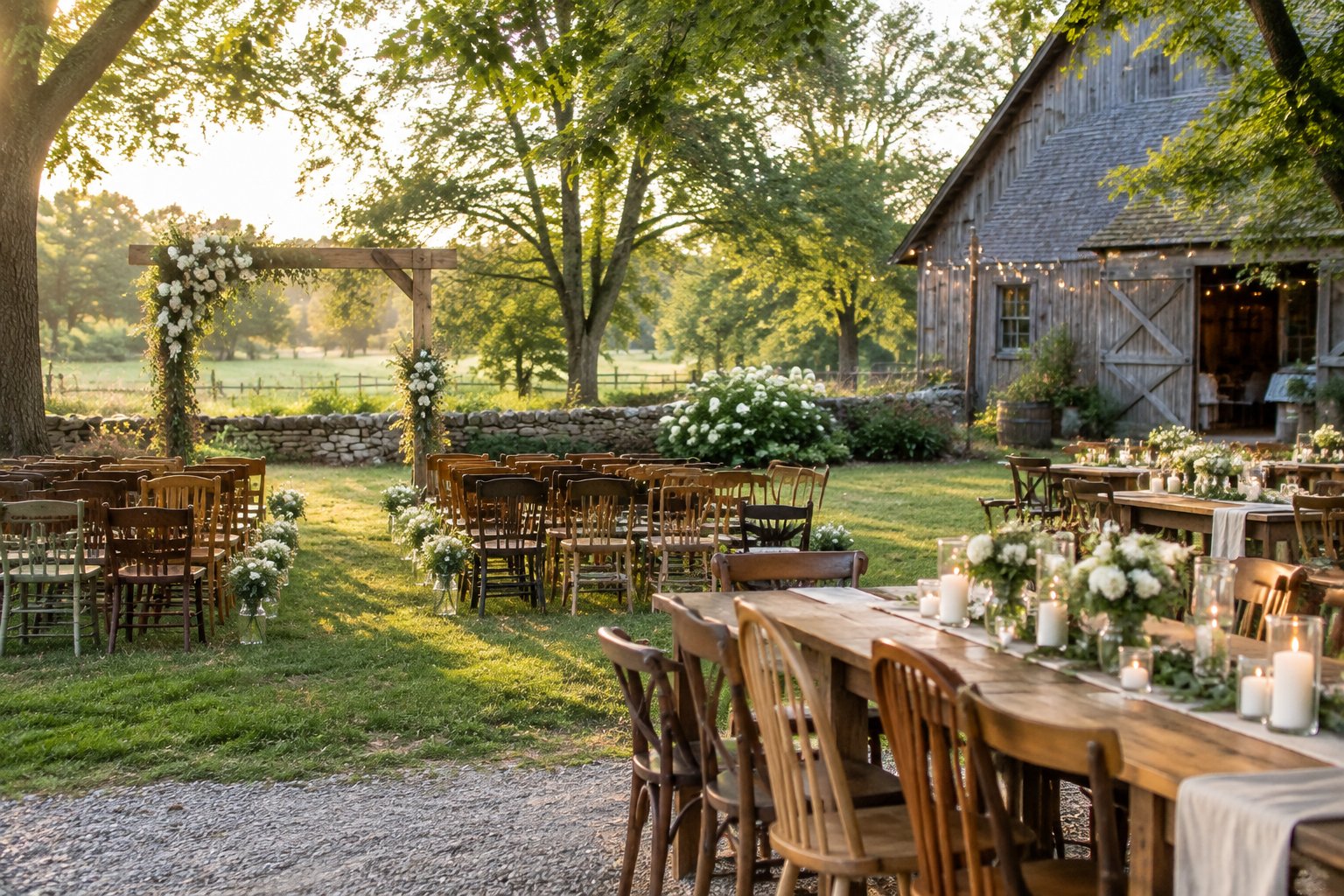
A backyard wedding works well for a small guest list and a property with level ground, usable restrooms, and a comfortable flow between ceremony and reception. The venue fee may be low when the home belongs to you, a relative, or a close friend.
Price the rentals before committing. Tables, chairs, a tent, portable restrooms, lighting, generators, trash service, and a dance floor can change the budget quickly.
Check the forecast plan, neighbor communication, and local rules for noise and parking. Protect lawns and landscaping with planned walkways, rental flooring, or designated service areas.
For legal and property questions, review guidance on whether you can hold a wedding on your property.
Family Farms and Rural Properties
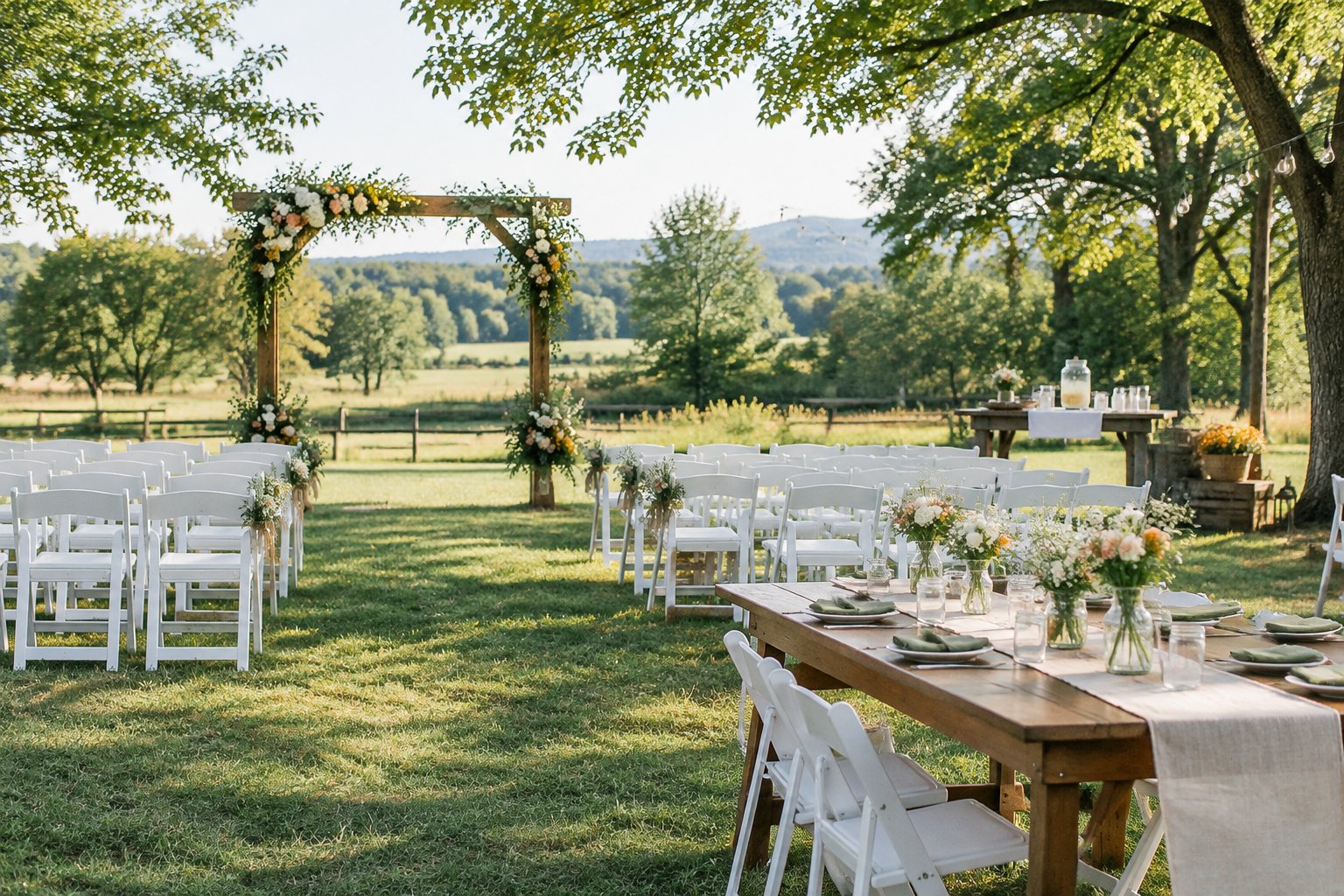
Family farms offer fields, barns, trees, and rustic structures that create built-in character for outdoor weddings. Ask whether the property hosts private events or only allows family gatherings.
A farm rental may include a ceremony area, tables, parking, and access to a barn. Other properties provide open land while you arrange every vendor and rental yourself.
Confirm restroom facilities, electrical service, road conditions, lighting, pest control, rain coverage, and transportation. Rural sites can also require shuttle service if parking is far from the ceremony area.
Vineyards and Small Estate Grounds
Vineyards and small estate grounds provide rows of vines, landscaped paths, and views that limit the need for extra décor. These spaces often suit small wedding venues and micro weddings with a focused guest list.
Ask about tasting-room access, catering requirements, wine service, ceremony timing, music limits, and photography rules. A venue that permits a short ceremony and dinner may fit your budget better than a full-day rental.
Review the guest flow from parking to ceremony, cocktail hour, dinner, and restrooms. A compact layout lowers transportation and staffing needs.
How to Use a Vacation Rental Responsibly
A vacation rental can provide a private setting for a small gathering when the owner and local rules allow events. Read the property agreement carefully and obtain written permission for your guest count, vendors, music, rentals, and event hours.
Confirm that the property has enough restrooms, parking, power, and safe outdoor space. Ask about insurance, noise monitoring, security deposits, and cleanup expectations.
Do not assume a home marketed for groups allows weddings. A property owner can set stricter event rules than the local government, and violating the agreement can put your deposit at risk.
Affordable Venues That Blend Indoor and Outdoor Space
Community centers, museums, galleries, and restaurants with patios give you outdoor atmosphere plus indoor support for meals, restrooms, preparation, or bad weather. These venues can deliver stronger value when they include furniture, kitchen access, staff, or a ready backup room.
Compare the full rental window, including setup and cleanup. Ask which spaces are private, which vendors are approved, and whether the quoted price includes tables, chairs, linens, lighting, security, and cleaning.
Community Centers With Patios or Gardens
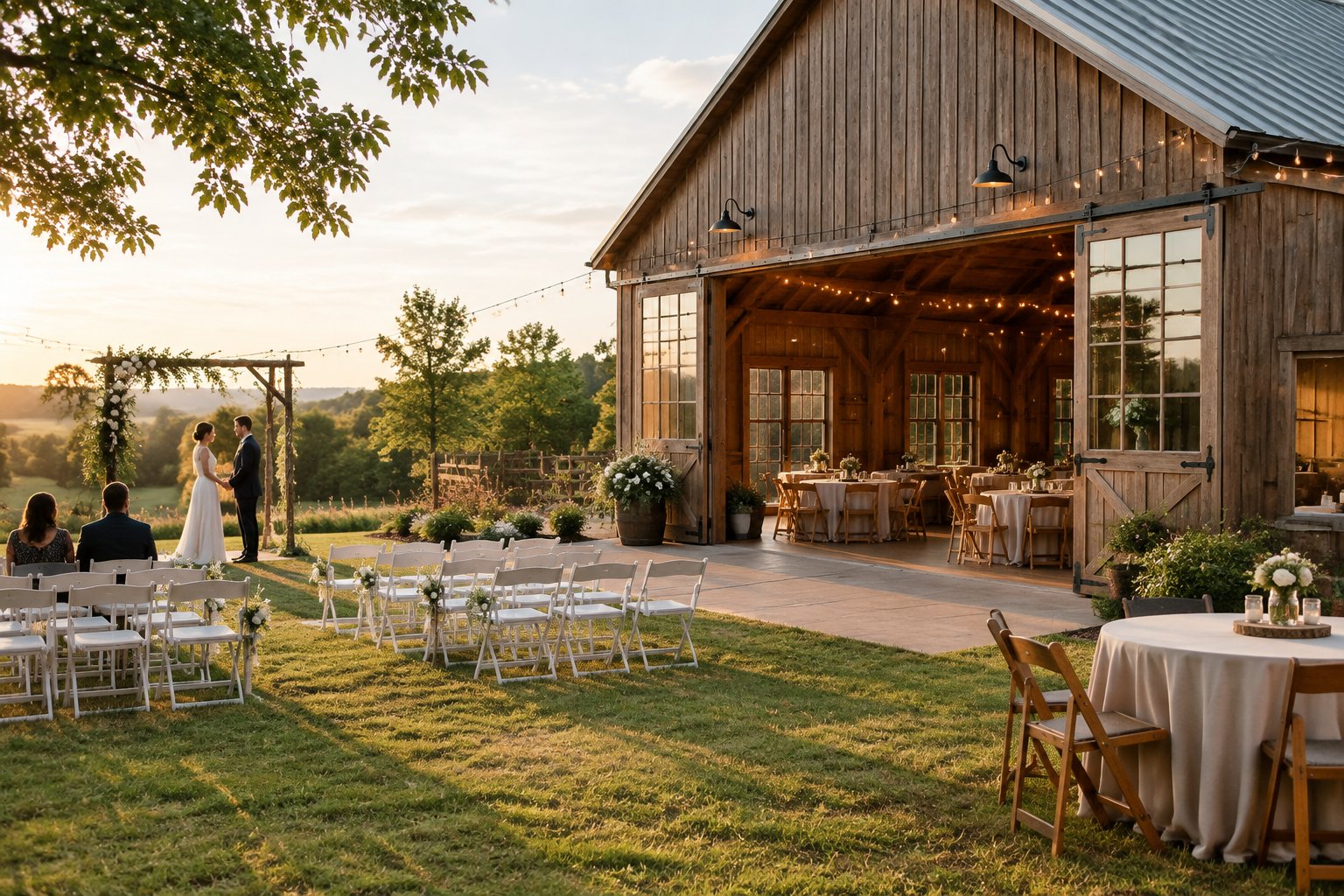
Community centers often combine a meeting hall with a patio, lawn, courtyard, or garden. The building may include restrooms, tables, chairs, a kitchen, and a weather backup.
Ask whether your rental covers both the indoor and outdoor areas. Check decoration rules, sound limits, alcohol policies, kitchen access, cleanup duties, and required insurance.
A community center suits couples who want an outdoor ceremony followed by an indoor meal or dancing. The layout also gives guests a comfortable place to cool down, warm up, or take shelter.
Museum and Art Gallery Courtyards
Museums and art galleries with courtyards offer architectural detail and built-in photo locations. A museum wedding can feel distinctive while keeping décor focused on seating, lighting, and personal details.
Ask about exhibit access, catering partners, guest capacity, event hours, music, candles, hanging décor, and setup restrictions. Some venues offer wedding packages that include staffing, tables, chairs, security, or coordination.
A courtyard with an adjacent indoor room gives you flexibility for cocktails, dinner, or a weather change. Review the complete quote because staffing and vendor requirements shape the final cost.
Restaurant Private Dining Rooms With Terraces
Restaurant private dining rooms with terraces combine a prepared kitchen, trained staff, furniture, and food service. A restaurant can be a strong choice when you want a small celebration with a shorter setup period.
Ask about minimum food and beverage spending, private-use rules, menu choices, service charges, cake fees, corkage, drinks, and terrace access. Confirm whether the terrace supports the ceremony or only cocktail service.
Restaurants also help keep the event compact. Guests can move from the ceremony to dinner without transportation, extra furniture, or a separate catering setup.
All-Inclusive Packages Versus Separate Vendors
All-inclusive wedding packages group services such as food, staff, furniture, basic linens, setup, and cleanup. Separate vendors give you more control over menu, design, and timing.
Request both pricing formats when possible. Compare the complete total for venue rental, catering, rentals, labor, insurance, taxes, service charges, and overtime.
A package delivers better value when its included services match your plans. Separate vendors can work well when you already have affordable caterers or rental contacts and the venue allows outside suppliers.
How Much Does an Outdoor Wedding Venue Really Cost?
Outdoor wedding venue cost can range from a modest permit or hourly reservation to several thousand dollars for a private property with event services. Location, guest count, date, access hours, included amenities, and vendor rules determine the final amount.
A basic public site may charge a reservation or permit fee, while a private venue may use a daily rental, per-person price, or minimum spend. Request an itemized quote for your exact date and guest count.
Permit Fees, Rental Rates, and Security Deposits
Public spaces may require a reservation fee, special-event permit, insurance certificate, or refundable damage deposit. Private venues may charge by the hour, by the day, or through a food and beverage minimum.
Ask when paid access begins. Setup, decorating, photography, vendor arrival, guest time, and cleanup may all count toward your rental period.
Confirm the deposit schedule, cancellation terms, overtime rate, tax, service charges, and refund rules. Keep copies of permits and approvals with your planning documents.
Costs That a Low Venue Fee May Not Include
A low venue fee can leave you paying separately for:
- Tables, chairs, linens, and ceremony seating
- Restrooms, power, lighting, and weather protection
- Catering, bartending, cake service, and trash removal
- Insurance, security, parking attendants, and shuttles
- Setup, cleanup, delivery, and vendor overtime
- Heaters, fans, flooring, tents, and generators
Ask the venue to mark every included item on the proposal. A landscaped site can reduce floral spending, while an open field may require a full rental package.
Guest Count, Season, and Location Price Drivers
Guest count affects furniture, food, restrooms, staffing, parking, and floor space. A smaller celebration also opens more options among inexpensive wedding venues.
Peak Saturdays and popular locations carry higher demand. Weekdays, mornings, winter dates, and shoulder seasons can offer lower rates, subject to local weather.
Urban venues may save guests transportation time while charging more for the site. Rural venues may have lower rental fees while adding shuttle, lodging, power, or restroom costs.
Compare the complete event budget for each location.
When a Wedding Package Delivers Better Value
A wedding package delivers value when it includes services you would otherwise rent separately. Food, tables, chairs, staffing, setup, cleanup, and a rain room can make a higher starting price easier to manage.
Read the package limits closely. Check menu choices, guest minimums, drink hours, service charges, vendor restrictions, ceremony access, and overtime.
Ask for a custom quote at two guest counts. A package built for a large reception may cost more than a flexible venue for a small gathering, while a smaller package may leave you paying for fewer extras.
For a wider budget comparison, review what most wedding venues cost before signing a contract.
How to Keep the Total Celebration Budget Down
You can lower the total celebration budget by choosing a weekday, keeping the ceremony and reception close together, and using the setting as part of your décor. Set a complete spending limit before touring venues, then protect funds for guest comfort, food, photography, and weather needs.
A smaller guest list affects nearly every cost line. It also lets you consider courtyards, gardens, restaurants, and private homes that cannot support a large reception.
Why Weekday Weddings Can Cost Less
Weekday weddings can open lower venue rates and more date choices. Monday through Thursday celebrations may also help you find available vendors during quieter periods.
A Friday evening or Sunday lunch can preserve a traditional schedule with a lower demand level than a Saturday night. Ask about weekday rental rates, minimum spends, staffing, and vendor access.
Give guests early notice and provide clear travel information. A daytime event can reduce lighting needs and suit a brunch, lunch, or early dinner.
Choosing a Courthouse Ceremony and Outdoor Reception
A courthouse wedding followed by an outdoor reception separates the legal ceremony from the larger celebration. You can keep the courthouse group small, then invite more guests to a garden, backyard, park shelter, or restaurant patio.
Contact your county clerk for current marriage license fees, appointment rules, identification requirements, witness rules, and waiting periods. Confirm courthouse guest limits and photography policies.
For the reception, choose a format that fits the location, such as brunch, a picnic meal, a buffet, or cake and drinks. Schedule travel time if the ceremony and reception are in different places.
Using Natural Scenery and String Lights
Natural scenery can serve as your ceremony backdrop, photo setting, and décor foundation. Position seating to face trees, gardens, water, mountains, or distinctive architecture.
Use seasonal flowers, potted plants, borrowed vases, and simple aisle markers to keep floral needs focused. String lights add evening warmth when the venue permits them and provides safe power access.
Ask about attachment rules before hanging anything from trees, fences, buildings, or lighting supports. Choose battery lighting or approved rental equipment when outlets are limited.
You can find more practical affordable outdoor wedding ideas for seating, food, décor, and guest comfort.
Questions to Ask Before Booking
Use these questions during every venue call or tour:
- What is the complete price for your date and guest count?
- Which areas are private, and which remain open to the public?
- Does the fee include setup, cleanup, tables, chairs, restrooms, parking, and lighting?
- What permits, insurance, deposits, and vendor requirements apply?
- How many hours include decorating, the event, and cleanup?
- What happens if rain, heat, wind, smoke, or another safety issue affects the event?
- Are outside caterers, bartenders, musicians, rentals, and photographers allowed?
- What are the rules for alcohol, music, candles, tents, décor, and amplified sound?
- When are payments due, and what are the cancellation and refund terms?
Write every promised inclusion into the contract. A complete quote and clear weather plan will help you compare cheap outdoor wedding venues with confidence.