
Cheap Wedding Venues Durbanville: Value-First Planning
When you search for cheap wedding venues Durbanville, focus on the full celebration cost, not only the advertised venue hire fee. The strongest value usually comes from a wedding venue that combines a suitable space with useful inclusions such as tables, chairs, catering, service staff, or a ceremony area.
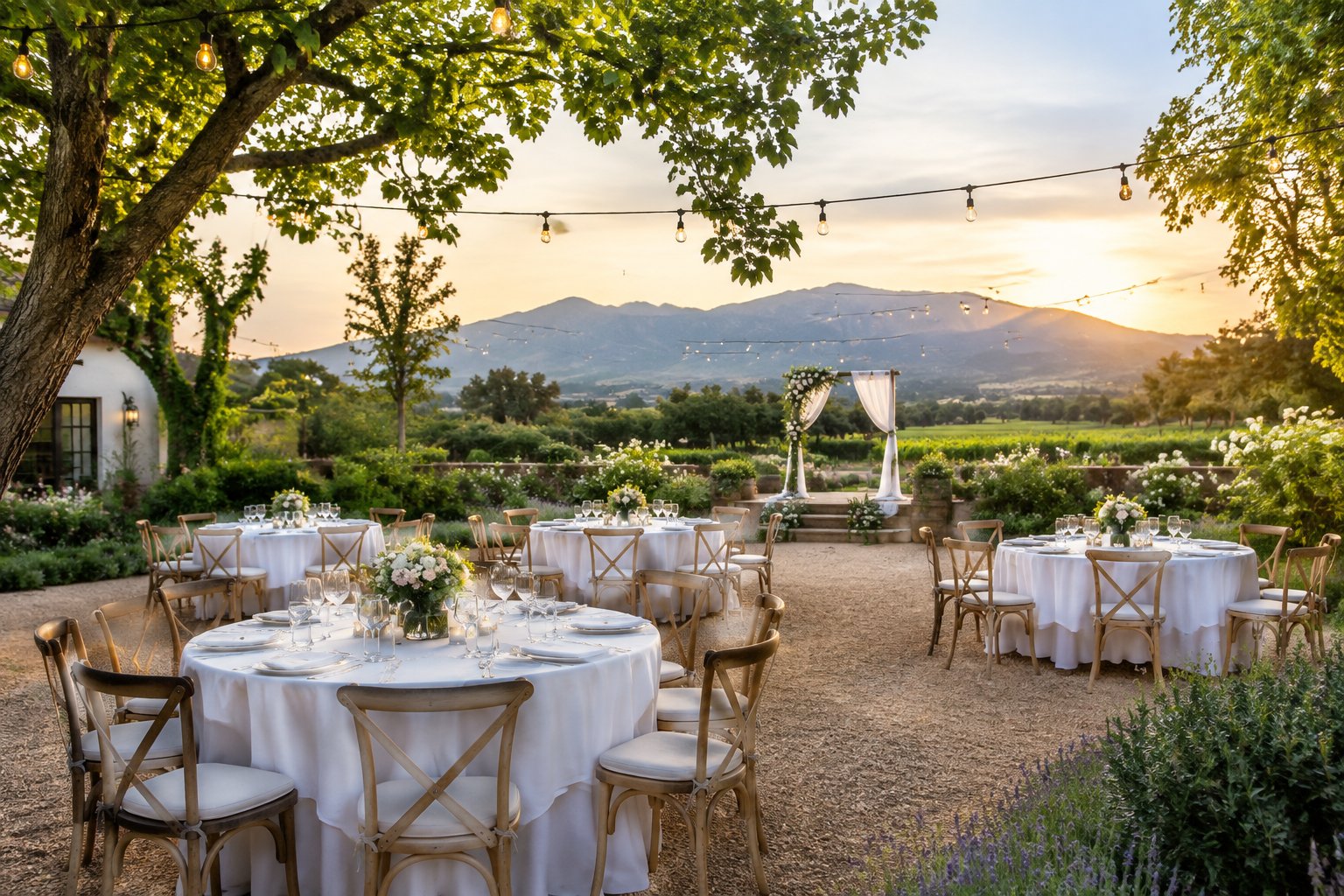
Durbanville gives you access to vineyard scenery, garden settings, farm-style spaces, and restaurants within reach of Cape Town. You can keep costs controlled by choosing the right guest count, booking outside peak dates, and comparing itemised quotes from wedding venues in Durbanville.
If you want a practical starting point, explore local Durbanville venues and request a quote that lists every charge before you schedule a viewing.
What Makes a Venue Truly Affordable?
A venue is truly affordable when its total package cost fits your wedding budget after catering, furniture, staffing, drinks, setup, and extra fees are included.
A low venue hire fee can look appealing until separate suppliers increase the final bill. Affordable wedding venues in Durbanville give you a clear picture of what you receive for the venue hire fees and which services remain your responsibility.
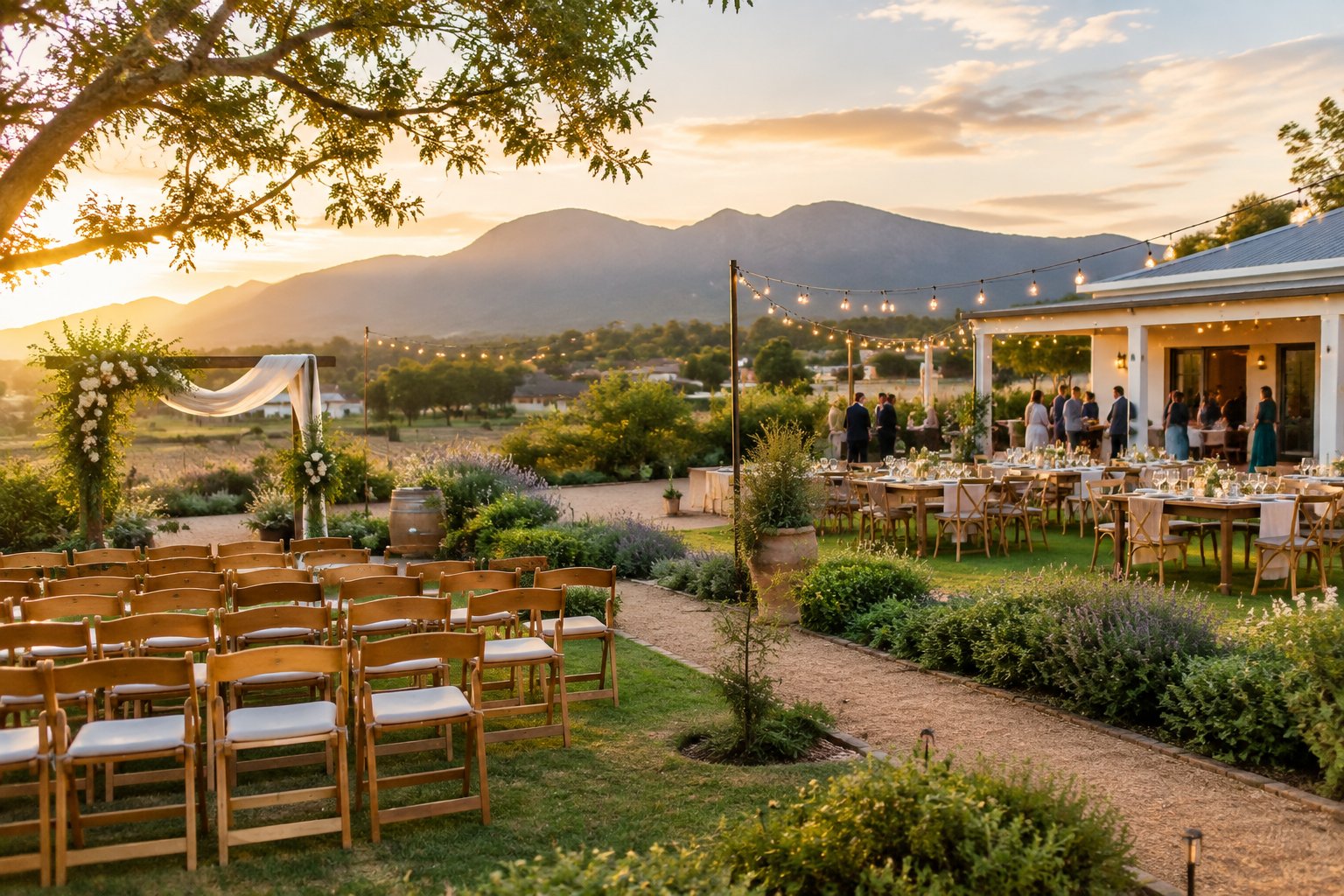
Why the Lowest Venue Hire Fee Is Not Always Cheapest
A low hire price helps when the venue already suits your guest list and includes practical essentials. A bare space may require separate payments for chairs, tables, linens, kitchen access, cleaning, security, setup labor, and breakdown.
Ask each venue for a full estimate based on your date and guest count. Compare the final amount, payment schedule, overtime rules, and cancellation terms.
A slightly higher fee can deliver better value when the venue includes furniture, staff, or catering.
Which Inclusions Deliver the Best Value?
Prioritize inclusions that would cost you money and coordination time elsewhere. Useful items include:
- Tables and chairs for your chosen layout
- Basic crockery, glassware, or linens
- Ceremony and reception access
- Catering or an approved in-house caterer
- Waiters, bar staff, and cleanup
- A dance floor, sound system, or lighting
- A rain plan and reasonable setup time
Check the quality and quantity of every inclusion. “Tables provided” does not confirm the table style, seating capacity, linen color, or setup service.
All-Inclusive Packages vs. Dry Hire
All-inclusive packages place the venue, food, service, and selected rentals into one quote. They suit couples who want easier planning and a clearer per-person cost.
Confirm whether the package includes VAT, gratuity, drinks, cake service, and the ceremony space.
Dry hire gives you access to the venue while you arrange suppliers separately. It can suit a creative couple with trusted vendors, flexible catering plans, or a smaller event.
Add delivery, setup, staffing, cleaning, and supplier coordination before deciding that dry hire costs less.
How Much Should You Budget for the Venue and Reception?
Set a venue and reception ceiling before touring, then compare the complete per-person cost across several wedding venues.
Your wedding budget should include the venue hire fees and every service needed to host guests comfortably. Guest count has a direct effect on catering, furniture, waiters, drinks, and room size, so use the same number for each quote.
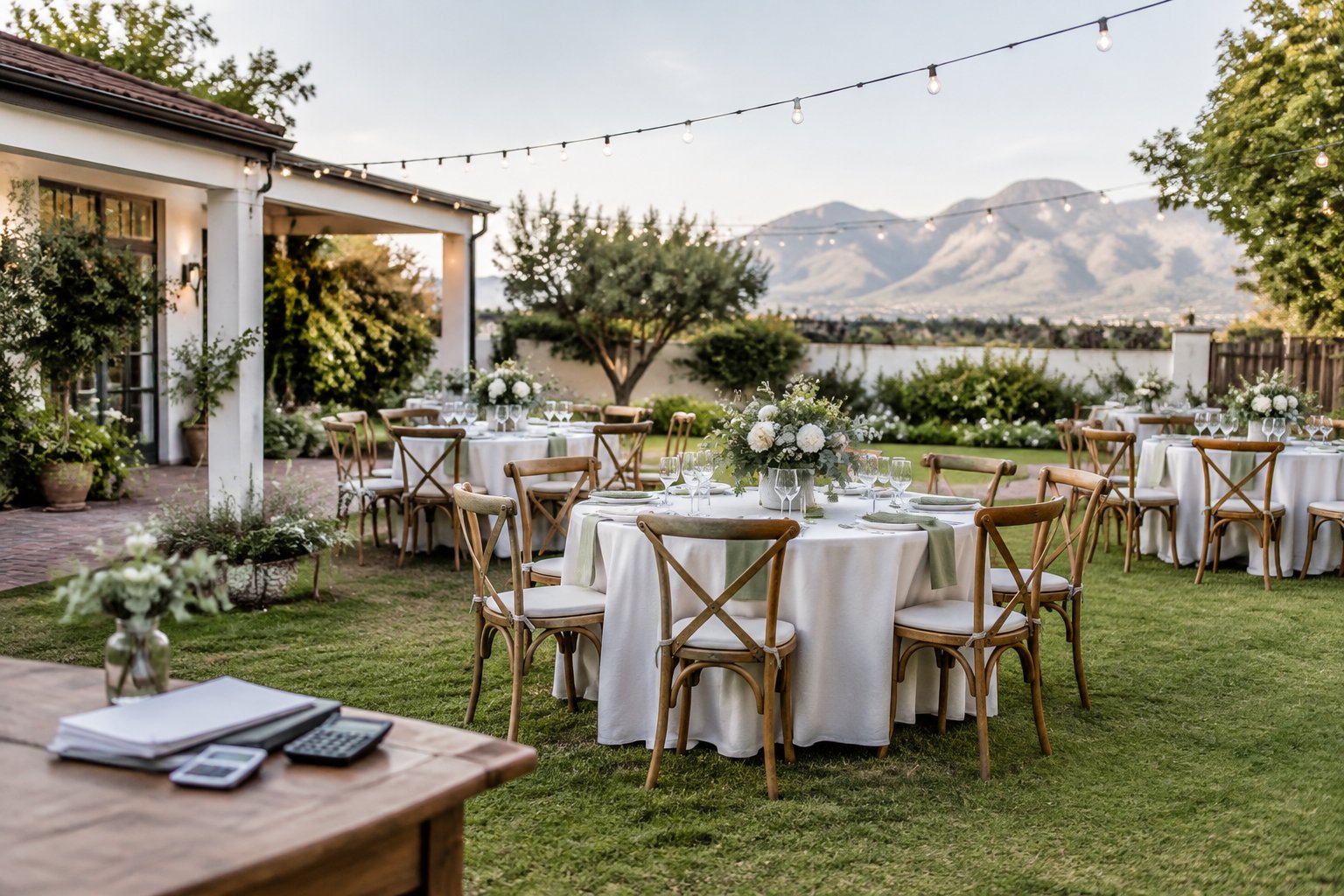
Costs to Request in an Itemised Quote
Ask for separate prices for:
- Venue hire and ceremony access
- Food per guest
- Drinks, bar staff, and corkage
- Tables, chairs, linens, crockery, and glassware
- Waiters and kitchen staff
- Setup, cleaning, and breakdown
- Sound, lighting, and dance floor
- Security, parking, and overtime
- Service charges, taxes, and deposits
Request two versions when possible: a weekday or off-season option and your preferred date. This shows whether changing the date creates a useful saving.
How Corkage Fees and Drinks Policies Affect Costs
A corkage fee applies when you bring wine, sparkling wine, or other alcohol to the venue. Corkage fees can change the value of a dry-hire venue, especially when the venue also charges for glassware, refrigeration, bartenders, or bar setup.
Ask whether outside alcohol is allowed, which drinks the venue supplies, and whether you can offer a cash bar, consumption bar, or prepaid package. Restaurants and wine estates can have specific beverage rules, so place the answer in writing before paying a deposit.
Catering, Furniture, and Waiters: What Is Included?
Catering quotes should state the menu, serving style, dietary options, staffing level, service hours, and dessert or cake arrangements. Confirm whether waiters clear tables, replenish water, serve wine, and assist with the buffet.
Furniture details deserve the same care. Check the number of seats, table sizes, linen options, high chairs, lounge furniture, and delivery fees.
A reception package with these items included can simplify your wedding planning and reduce separate rental orders.
Which Durbanville Venue Styles Fit a Smaller Budget?
Garden venues, restaurants, and wine farm venues often suit value-focused weddings because their setting reduces the need for heavy decoration.
Choose a style that matches your guest count and meal plan. A smaller celebration can make a restaurant or intimate estate room cost-effective, while a larger list may work better in a flexible function venue with clear package pricing.
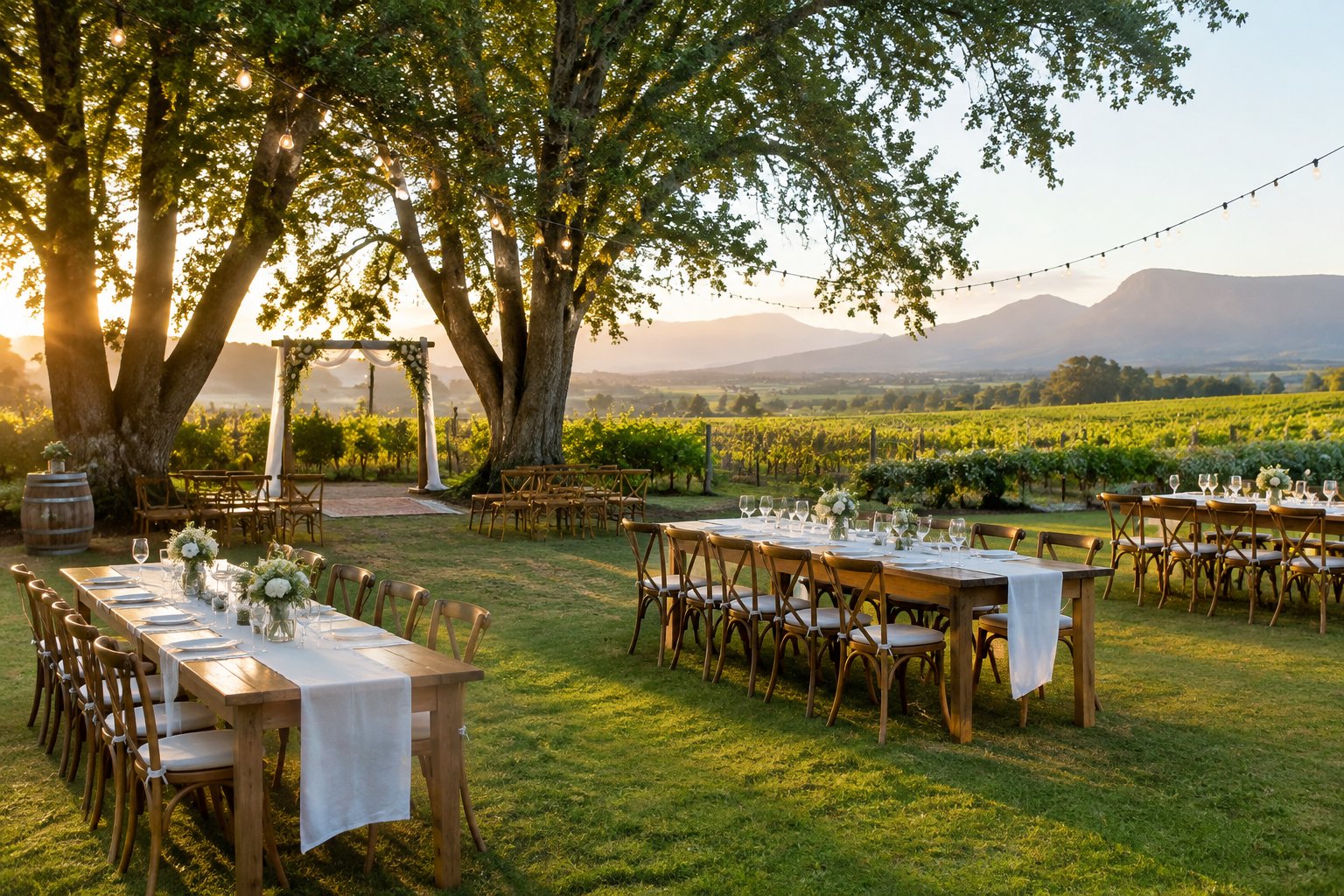
Wine Farm Venues With Built-In Scenery
Wine farm venues give you vineyards, mountain views, open lawns, and established photo locations. Cape Dutch architecture and farm buildings can create a strong visual style with modest floral decoration.
Ask about seasonal pricing, minimum guest numbers, wine purchasing rules, transport, and wet-weather access. A scenic ceremony area helps you avoid spending heavily on backdrops and extra styling.
Garden Venues for Daytime Celebrations
Garden venues work well for daytime ceremonies, brunch receptions, and intimate weddings. Natural light reduces the need for complex lighting, while existing trees, paths, and planting provide a finished backdrop.
Confirm the shaded seating plan, restroom access, power supply, rain cover, and end time. A daytime booking can also reduce lighting and bar hours when the venue prices those services separately.
Restaurants and Intimate Reception Spaces
Restaurants suit smaller guest lists that prioritize food and relaxed service. Your meal, kitchen, tables, and waiters may come through one team, which keeps supplier coordination manageable.
Ask about private-room hire, minimum spend, menu flexibility, cake service, music limits, and the length of your booking. Review the seating plan in person because a restaurant layout may suit dinner well while offering limited space for dancing.
Function Venues for Larger Guest Lists
Function venues provide adaptable rooms for larger celebrations, including space for a ceremony, meal, dance floor, and guest movement. Their value improves when furniture, staffing, setup, and cleanup are included.
Match the room capacity to your real guest list. Paying for a large hall for a small group can leave you with extra decor and furniture costs to make the space feel balanced.
Ask about partitioning, floor plans, and minimum spend requirements.
Local Venues to Compare for Value
Compare Eureka Estate, Rondekuil, Meerendal Wine Estate, Eensgezind, D’Aria, and Cassia Restaurant at Nitida Wine Farm using the same guest count and quote checklist.
Each option represents a different value structure. Estate venues can provide scenery and ceremony spaces, while food-led restaurants may simplify reception planning.
Published packages and inclusions change, so request current terms for your preferred date.
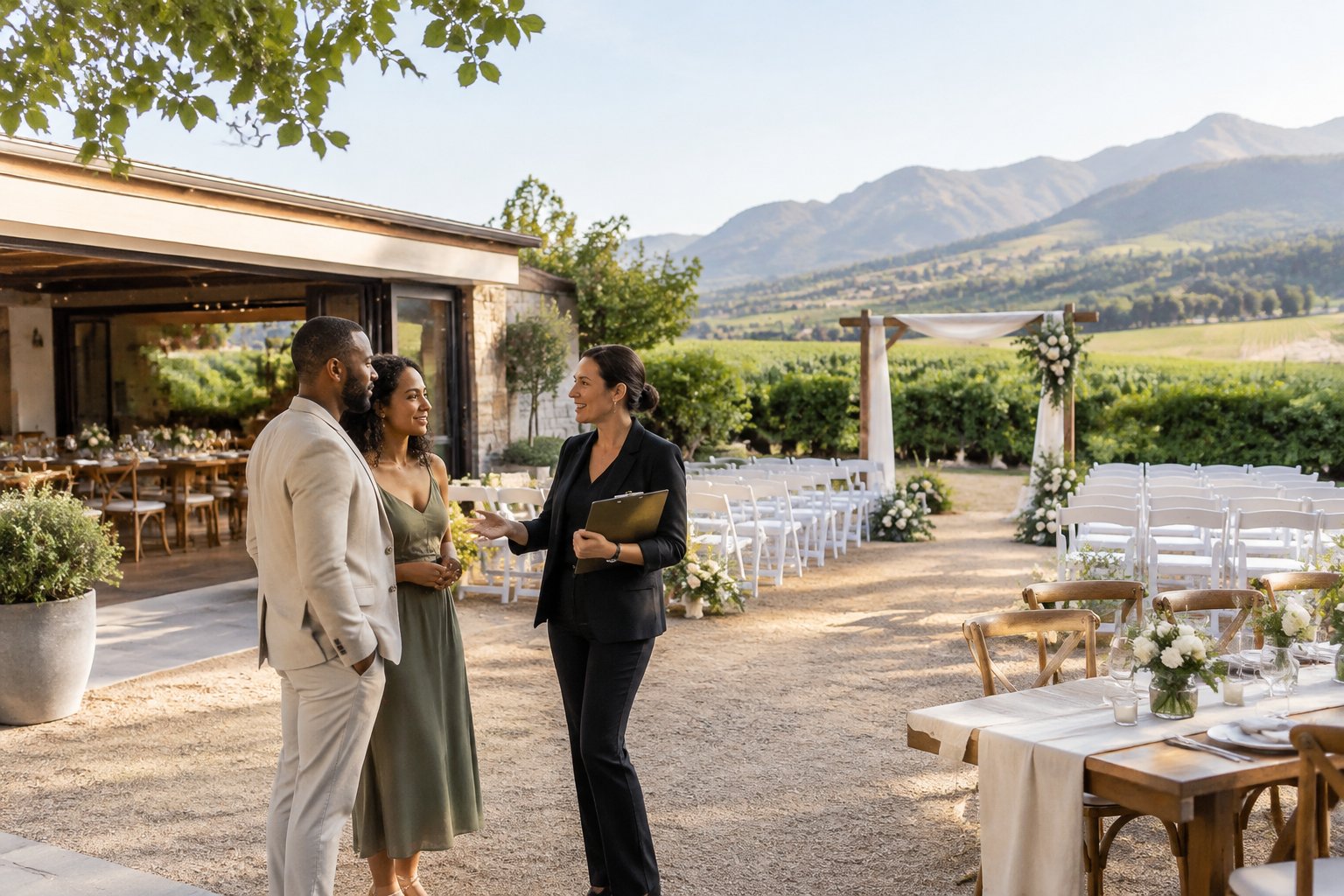
Eureka Estate and Rondekuil for Packaged Celebrations
Eureka Estate and Rondekuil are useful comparisons when you want a countryside setting with a structured celebration plan. Rondekuil is near Durbanville and promotes wedding facilities designed around budget-conscious planning, with space for larger receptions and accommodation options for groups.
Ask both venues what their package includes for the ceremony, reception, catering, furniture, staffing, accommodation, and dancing. Compare the required guest count and menu minimum with your actual invitation list.
Meerendal Wine Estate and Eensgezind for Estate Settings
Meerendal Wine Estate and Eensgezind offer the estate-style atmosphere many couples seek in the Durbanville wine valley. Their scenery can support a polished wedding design with fewer rented backdrops and decorative structures.
Request details about ceremony locations, reception rooms, wet-weather plans, wine policies, corkage, supplier access, and seasonal rates. Check the distance between ceremony and reception areas when planning transport for older guests or anyone with mobility needs.
D’Aria and Cassia Restaurant at Nitida Wine Farm for Food-Led Weddings
D’Aria and Cassia Restaurant at Nitida Wine Farm suit couples who place food, wine, and a relaxed guest experience high on the priority list. A restaurant-led format can reduce the number of separate catering and service decisions.
Ask about private dining, full-venue hire, menu choices, minimum spend, bar arrangements, music, and dancing. Compare the food and beverage commitment with a traditional venue hire fee plus outside catering quote.
| Comparison point | Estate venues | Restaurant-led venues |
|---|---|---|
| Best fit | Ceremony and reception | Intimate reception |
| Main value | Scenery and setting | Food and service |
| Guest size | Small to large | Small to medium |
| Key cost check | Package minimum | Food and beverage minimum |
| Drinks question | Wine and corkage rules | Bar and menu policy |
How to Book Without Costly Surprises
Book only after the venue confirms capacity, minimum spend, access hours, supplier rules, weather arrangements, and every added fee in writing.
A clear contract protects your wedding planning and gives you a reliable figure for the reception. Keep the signed quote, payment schedule, menus, floor plan, and contact details together so changes are easy to track.
Match Capacity and Minimum Spend to Your Guest List
Choose a space that fits your confirmed guest range, including the dance floor and service areas. Ask whether the venue charges a minimum number of guests or a minimum food and beverage spend.
Calculate the minimum spend using your likely attendance, menu price, drinks plan, taxes, service charges, and vendor meals. If the number feels high, ask about a smaller room, weekday date, lunch reception, or off-season booking.
Check Access Times, Weather Plans, and Supplier Rules
Confirm when you can enter for decorating, when vendors can unload, and when guests must leave. Short access windows can create setup labor charges or force you to hire a coordinator.
For outdoor weddings, inspect the covered ceremony and reception options. Ask who supplies tents, flooring, heaters, umbrellas, backup power, and rain-day furniture.
Review rules for candles, confetti, amplified music, external caterers, alcohol, decor installation, and cleanup.
When a Wedding Planner Can Save Money and Stress
A wedding planner can help when your venue has several suppliers, strict access rules, or a large guest list. A planner can compare quotes, build the timeline, manage setup, and keep your venue team informed.
You may need less planning support for a small restaurant reception with a set menu and in-house staff. Ask the venue whether a coordinator is included, what that person handles, and whether you need separate help for vendor management on the wedding day.