
Cost of Wedding Bands: Prices and Buying Factors
A wedding band costs about $300 to $3,000 per ring for many U.S. couples, with plain alternative-metal bands near the low end and platinum, diamond, or custom designs reaching far higher. Your metal, ring width, stone details, craftsmanship, and brand all shape the final wedding band cost, so a personal budget gives you a better starting point than a national average.
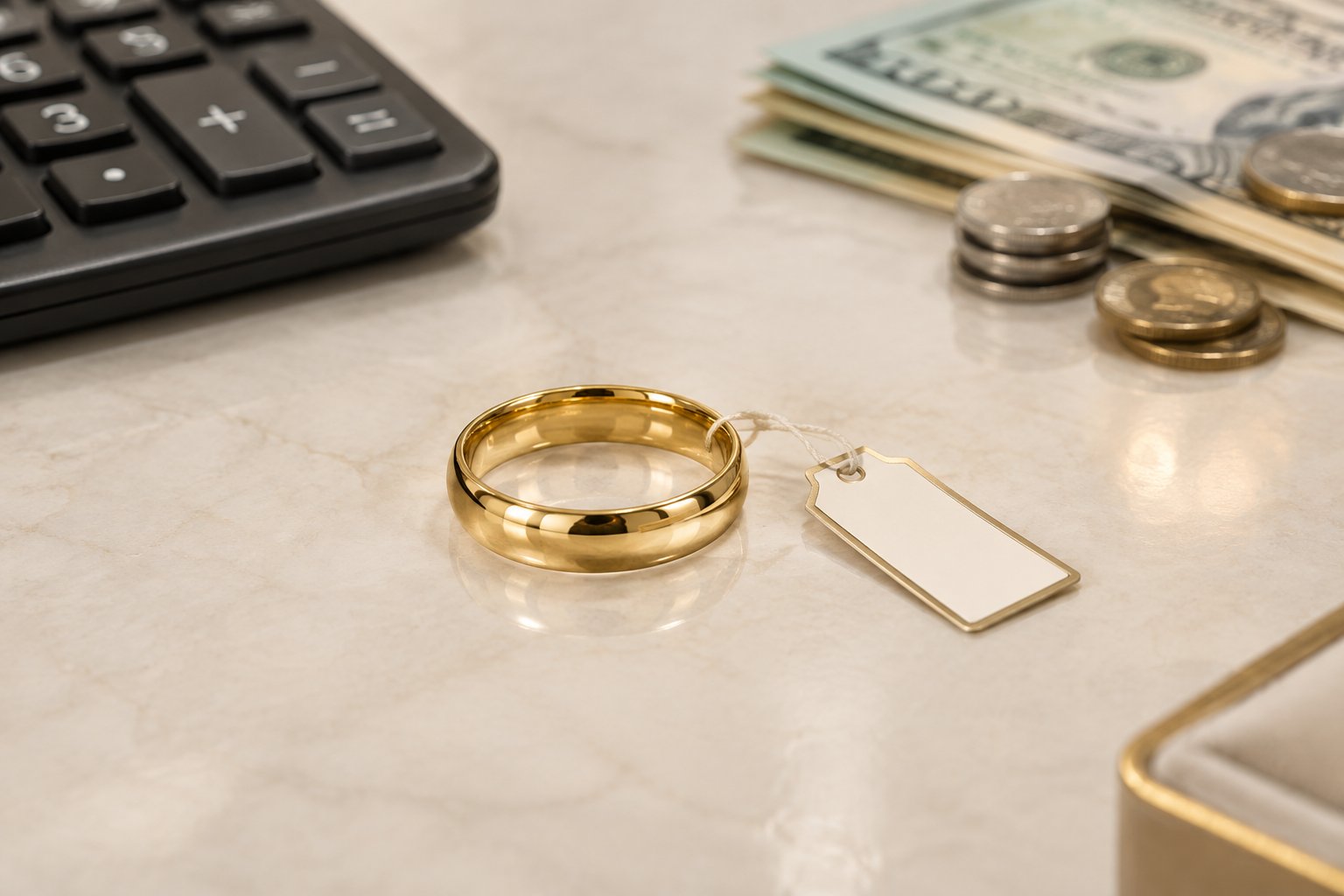
A plain 14k gold wedding band may cost several hundred dollars, while a diamond wedding band in platinum can cost several thousand. You can also find titanium, tungsten, or sterling silver styles at accessible prices. Set your spending limit before you browse, then choose the features that deserve the largest share of it.
A useful starting point is to price each ring separately and add room for sizing, engraving, taxes, and future care. If you want help placing rings within your wider celebration budget, review how to allocate a wedding budget before you shop.
What Is a Realistic Price Range for Wedding Bands?
A realistic U.S. budget is about $500 to $2,000 per ring, or roughly $1,200 to $3,500 for a pair, with simple bands below that range and elaborate diamond designs above it. Your lifestyle and priorities should guide the final number.
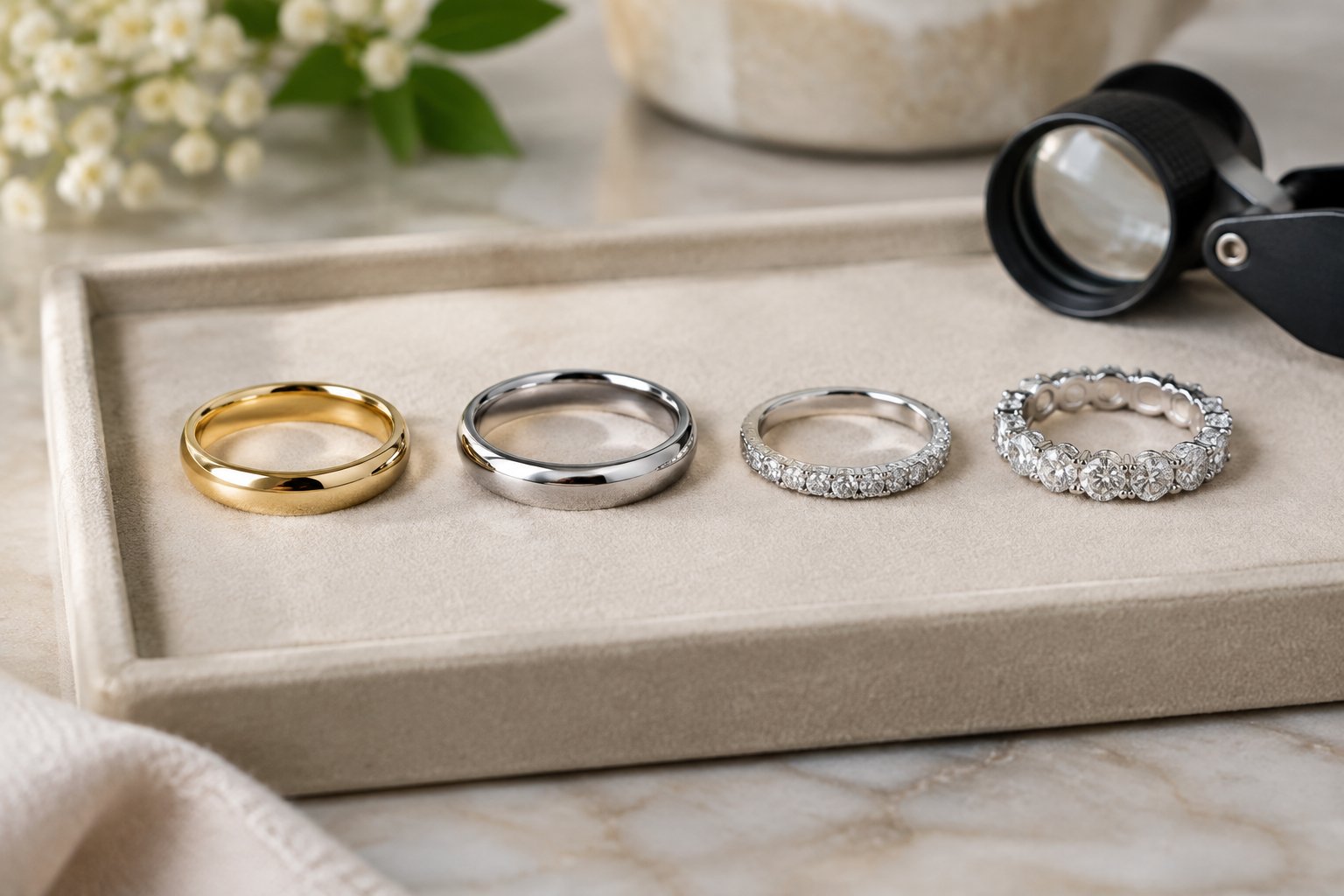
Typical Per-Ring and Couple Budgets
A plain band in titanium, tungsten, or silver may start below $300. A 14k gold band with a polished finish often falls near $500 to $1,200, while a wider platinum or diamond band can pass $2,000.
For a pair, you might plan:
- Entry-level pair: $300 to $1,000
- Classic gold pair: $1,000 to $3,000
- Diamond or platinum pair: $2,500 to $8,000 or more
- Custom or designer pair: $4,000 and up
Women’s wedding bands often cost more when they include diamonds, detailed settings, or a shape designed to fit an engagement ring. Men’s wedding bands often use more metal because of their width, while plain designs keep the price moderate.
Why Published Averages Differ
Published averages measure different purchases. One source may count a single women’s band, while another combines both rings or includes an engagement ring. Location, ring width, metal prices, retailer markup, and the share of diamond designs in the sample also change the result.
The Knot is one reference couples use for wedding spending data, yet its figures may not match the price you see in a local jewelry store. Treat an average wedding band cost as a planning marker, not a required spending level.
How Wedding Bands Compare With Engagement Rings
An engagement ring often costs more because it centers on a larger stone and a more complex setting. A wedding band uses a continuous strip of metal and may have no stones, so its price can stay much lower.
If your engagement ring cost already takes up a large part of your jewelry budget, a plain or lightly accented band can create a balanced set. You can compare broader wedding jewelry estimates through how much is an average wedding ring.
How Metal Choice Changes the Final Price
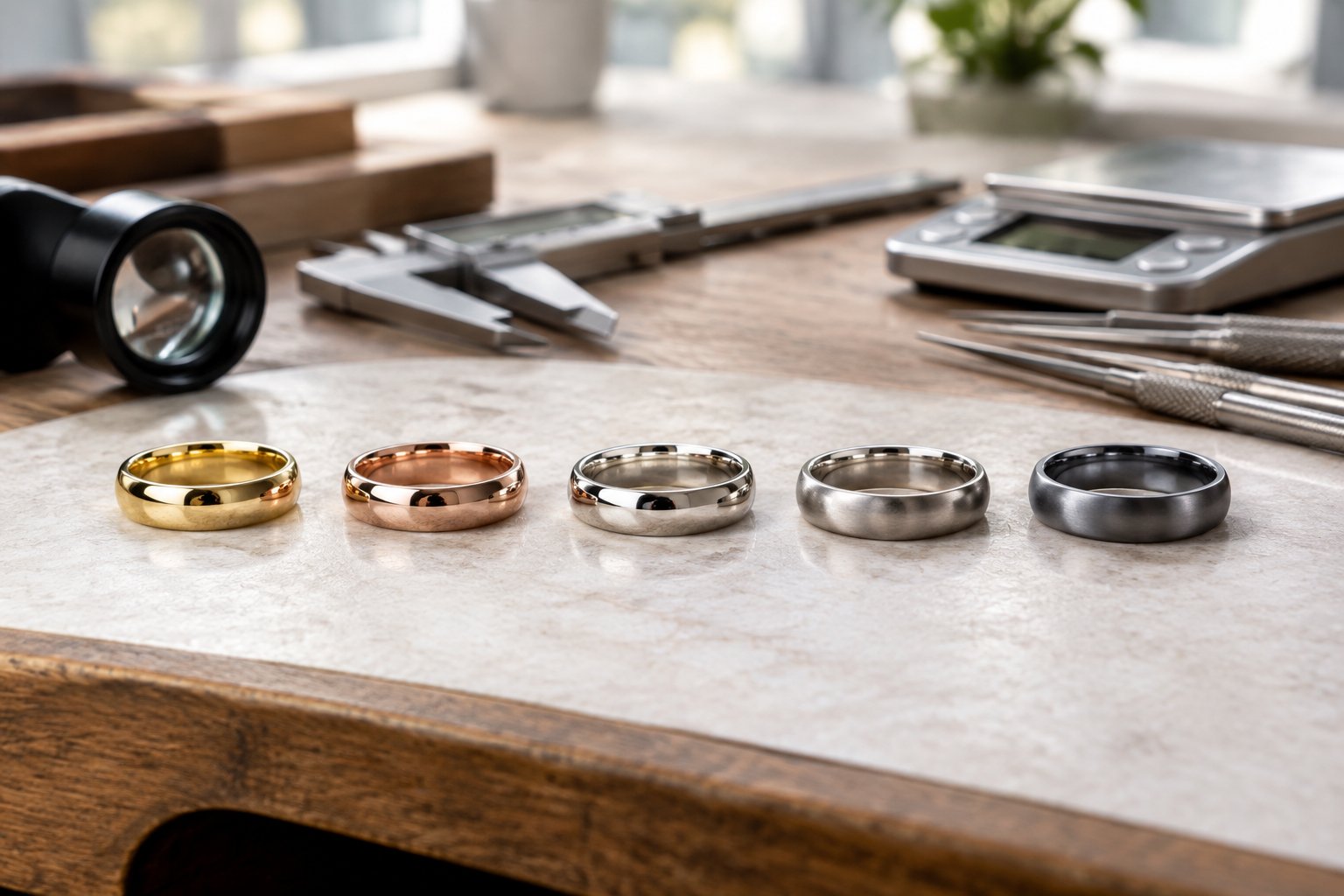
Metal choice affects both the purchase price and long-term care, with platinum at the premium end and 14k gold or alternative metals offering more accessible entry points. Weight, purity, color, skin sensitivity, and resizing needs all influence the best choice.
14k Gold vs. 18k Gold
14k gold contains about 58.3% pure gold and combines strength with a moderate price. It suits daily wear and gives you a wide range of design choices.
18k gold contains 75% pure gold, so it has a richer color and a higher material cost. Its higher gold content also makes it softer, which can lead to more visible wear over time. For an everyday band, 14k gold is a practical value choice.
White Gold, Yellow Gold, and Rose Gold
The color of gold changes its alloy mix and appearance:
- 14k white gold: Bright, silvery, and commonly finished with rhodium plating. Plan for periodic replating if you want a strong white shine.
- 14k yellow gold: Warm and classic, with no rhodium layer to maintain.
- 14k rose gold: Pink-toned from its copper alloy, with a romantic look and straightforward care.
The karat and weight affect price more than the color alone. A wide 14k rose gold ring may cost more than a narrow 14k white gold ring because it uses more metal.
When Platinum 950 Is Worth the Premium
Platinum 950 contains about 95% platinum and offers a dense, naturally white finish. It is durable, suitable for many sensitive-skin wearers, and easy for a skilled jeweler to resize or repair.
You pay more because platinum is dense and uses a high-purity alloy. Its surface develops a soft patina as the metal shifts with wear, and polishing can restore a brighter finish. Choose platinum 950 when you value weight, heirloom use, and a naturally white metal enough to support the added cost.
Alternative Metals and Their Trade-Offs
Titanium and tungsten offer lower-cost options with modern styling. Titanium feels light and resists corrosion, while tungsten feels heavier and resists scratches.
Sizing requires attention before purchase. Titanium and tungsten rings are difficult or impossible to resize through standard jewelry methods, so confirm your size and ask about the seller’s exchange policy. Cobalt chrome, ceramic, zirconium, and stainless steel provide additional alternative-metal choices, each with its own finish and repair options.
What Do Diamond and Gemstone Details Add?
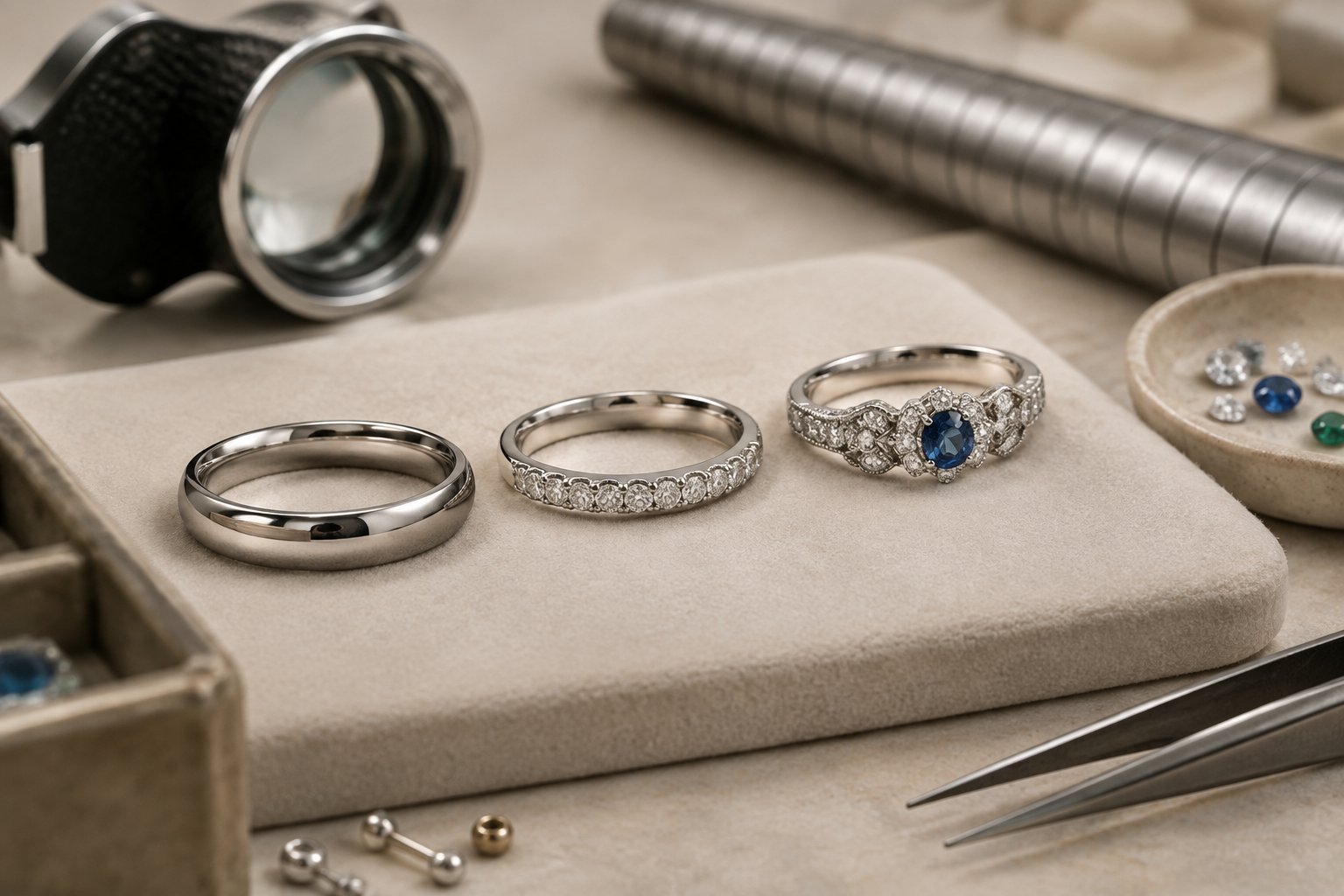
Diamond and gemstone details can move a wedding band from several hundred dollars to several thousand, with stone type, quality, carat weight, setting style, and coverage driving the increase. A small accent row keeps spending controlled, while an eternity design uses more stones and labor.
Natural Diamonds vs. Lab-Grown Diamonds
Natural diamonds form underground and carry a higher price tied to mining, rarity, and market demand. Lab-grown diamonds have the same crystal structure and physical properties as natural diamonds, with production costs that are often much lower.
A lab-grown diamond lets you choose a larger total carat weight within the same wedding band budget. If you prefer a natural stone, you can control cost by choosing smaller diamonds or reducing the number of stones.
Diamond Quality, Carat Weight, and Total Carat Weight
Diamond quality includes cut, color, clarity, and carat weight. Cut has a strong effect on visible sparkle, while color and clarity allow room for savings when small stones hide minor differences.
Carat weight measures one diamond. Total carat weight adds every diamond in the band. A ring with twenty small stones may have the same total carat weight as a ring with fewer larger stones, yet the setting, labor, and visual effect will differ.
A grading report from GIA can document a larger center stone or an important diamond purchase. For small accent stones, ask how the seller grades and discloses them.
Diamond Accents and Gemstone Accents
Diamond accents add brightness without requiring a full diamond-covered band. Pavé, channel, bezel, and prong settings each affect labor, security, and appearance.
A colored gemstone creates another path to personality and value. Sapphire and sapphires in blue, pink, or other shades offer strong daily-wear potential, though their price changes with color, treatment, origin, and size. Ask whether the stone is natural, lab-grown, or treated before comparing prices.
Half-Eternity vs. Full Eternity Designs
A half-eternity band places stones across the visible top half. It uses fewer stones, costs less, and leaves a solid section that supports future resizing.
A full eternity band, with stones around the entire circle, creates continuous sparkle from every angle. It requires more stones and labor, and resizing is difficult because changing the circumference affects the stone pattern. Choose your exact size carefully before ordering a full eternity band.
Which Design and Fit Choices Affect Value?
A band’s width, metal weight, comfort details, finish, and custom work can change its price by hundreds of dollars. Design features also affect how the ring feels during daily wear and how easily a jeweler can service it later.
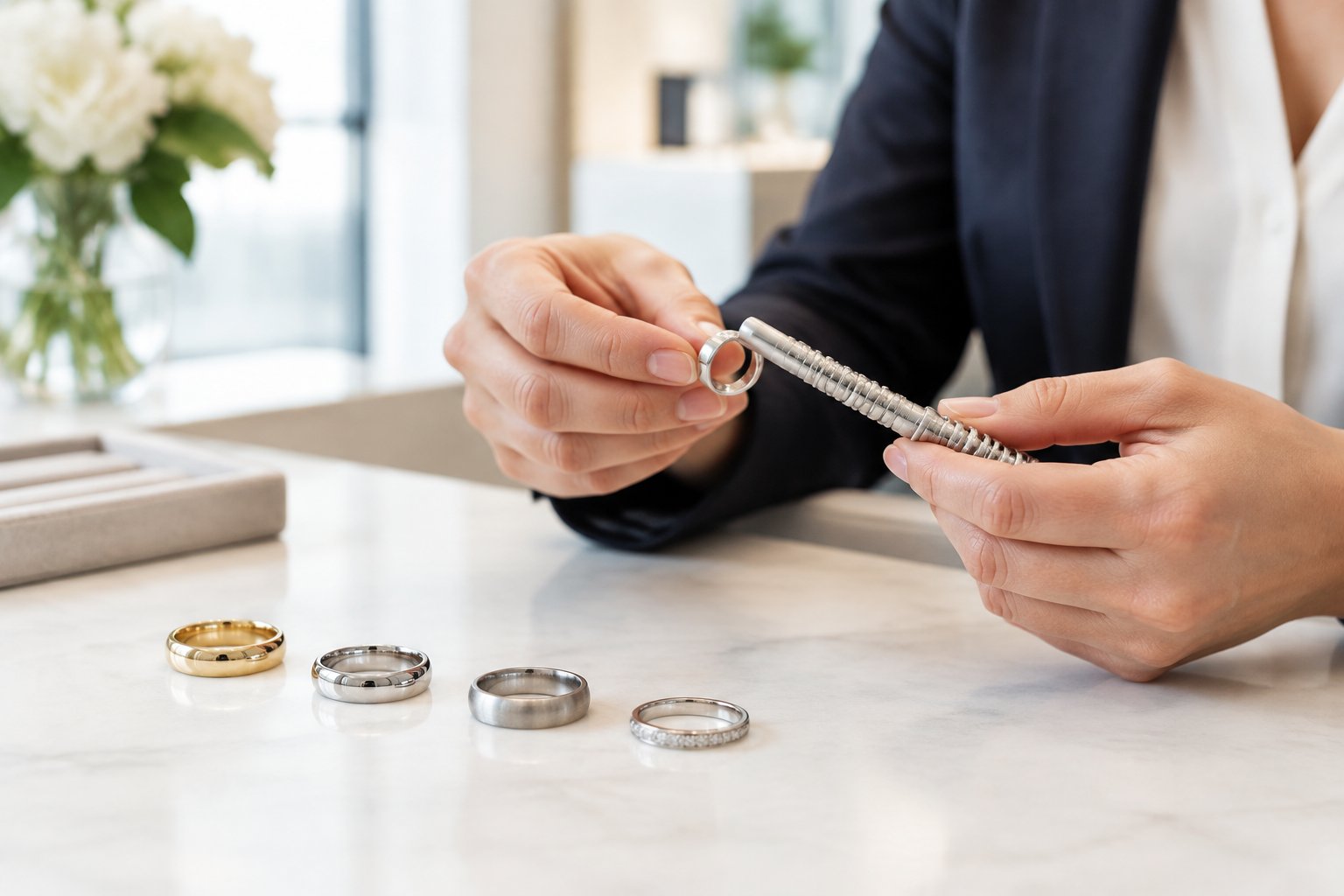
Band Width, Ring Width, and Metal Weight
A wider band uses more metal, so its price rises when every other feature stays the same. A 2mm to 4mm ring creates a slimmer look and uses less material. A 6mm to 8mm band gives you a stronger visual presence and a heavier feel.
Thickness also affects strength. An extremely thin band may bend with daily wear, especially in a softer alloy. Ask for the ring’s thickness as well as its width before you buy.
Comfort-Fit Bands for Everyday Wear
Comfort-fit bands have rounded inner edges that help the ring slide over your knuckle and feel smoother against your skin. The rounded interior can require additional metal and finishing, though the price difference is modest for many designs.
Try on both a standard interior and comfort-fit interiors if you plan to wear the ring every day. A wider band can feel tighter even when both rings have the same size.
Finishes, Milgrain Edging, and Engraving
A high-polish finish reflects more light and shows fine scratches over time. A brushed finish creates a muted surface that suits modern styles and can make small marks less visible.
Milgrain edging adds tiny beaded details along a border, while custom engraving places text, symbols, or dates inside or outside the band. Hand engraving costs more than machine engraving because it requires specialized labor. Ask whether engraving affects the return or resizing policy.
Custom Work and Designer Pricing
Custom work adds design time, model preparation, fabrication, and approval steps. A one-of-a-kind shape or fitted band also requires careful measurements, especially when it must sit beside an engagement ring.
Designer pricing includes the name, design language, quality controls, and retail position of the brand. A Tacori band, for example, may carry a premium for its signature design and craftsmanship. Request a written quote that separates metal, stones, labor, engraving, taxes, and delivery.
How Can You Stay Within Your Ring Budget?
You stay within your ring budget by fixing a total limit first, then protecting the features you care about while comparing complete prices and policies. A modest width change, lab-grown diamond, or simpler setting can reduce the bill without changing the ring’s meaning.
Choose Features That Matter Most
Write down your top priority before you shop. You might care most about a specific metal, a matching engagement-ring profile, daily comfort, or diamond sparkle.
Use the remaining choices to control cost:
- Select 14k gold for a balance of durability and price.
- Reduce band width when the look still works for your hand.
- Choose a half-eternity design for visible sparkle with fewer stones.
- Consider lab-grown diamonds or sapphires.
- Keep engraving short and place it inside the band.
- Compare polished and brushed finishes in the same metal.
Avoid stretching your budget for features you will rarely notice. Your ring should fit comfortably within your savings plan and wedding expenses.
Compare Online Retailers and Local Jewelers
Compare complete ring prices from retailers such as James Allen, Blue Nile, Brilliant Earth, and Ritani, along with quotes from local jewelers. Check the metal purity, band width, stone count, total carat weight, setting style, warranty, and shipping charges before comparing totals.
Online listings make it easy to change specifications and see price shifts. A local jeweler gives you the chance to handle samples, check fit, discuss custom work, and ask about future service. Keep your comparison notes in a spreadsheet or on a keyboard-accessible document so each quote uses the same specifications.
Check Sizing, Resizing, and Return Policies Before Buying
Confirm whether the ring can be resized, how many sizes the seller covers, and whether the work costs extra. Gold and platinum bands support standard resizing, while full eternity, titanium, and tungsten designs create tighter limits.
Read the return window, restocking fee, engraving rule, exchange terms, and shipping coverage before placing a custom order. Order sizing bands or visit a jeweler if you are unsure, especially for a wide ring or a design with a comfort-fit interior.
Build a Coordinated Set Without Overspending
Your wedding bands can coordinate through one shared detail, such as matching metal color, a similar finish, or the same engraving style. Matching every feature can raise the combined wedding ring cost when one partner prefers diamonds and the other prefers a plain band.
Consider buying the bands separately if the engagement ring needs a custom contour or if your budgets differ. Compare the finished set on your hand, then reserve money for sizing, insurance, maintenance, and repairs before approving the purchase.