
Do You Have to Exchange Rings at a Wedding? Exploring Traditions and Alternatives
Weddings are all about love and personal choices. If it doesn’t feel right for you, you do not have to exchange rings at a wedding. Many couples are rethinking traditional customs, and the ring exchange is one of those moments that can be personalized to fit your values and beliefs.
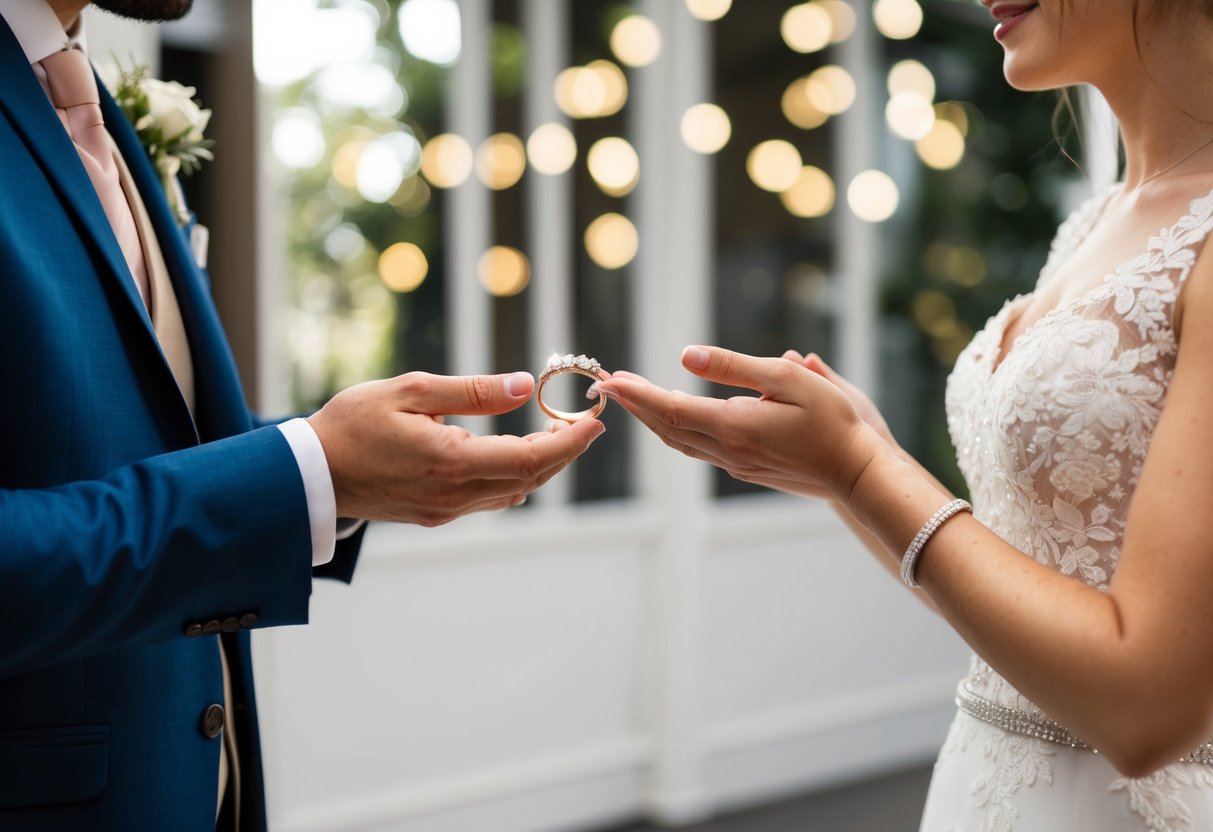
During a wedding ceremony, some couples choose to follow the classic order of vows followed by ring exchange, while others may opt to skip this step altogether. It’s important to remember that your wedding day should reflect your unique relationship. Whether you decide to exchange wedding rings or not, the commitment you make to each other is what truly matters.
If you’re curious about the significance of rings or the reasons some couples forego this tradition, you’re not alone. Understanding the varying practices can help you make the best decision for your special day and ensure that every moment feels right for you.
The Symbolic Role of Rings in Weddings
Rings in weddings hold deep meaning, symbolizing love and commitment between partners. They connect the past to the present and reflect individual values and traditions. Understanding their significance can enhance your appreciation for this cherished ritual.
Historical Significance of Wedding Rings
The tradition of exchanging wedding rings dates back to ancient Egypt, where rings made of braided grass symbolized enduring love. Egyptians believed in the circle’s shape, as it represented something without an end.
As the practice evolved, rings were crafted from precious metals like gold. This represented not only love but also wealth and status. Throughout history, different cultures adapted the custom, incorporating unique meanings and materials.
In Christianity, rings symbolize the covenant between couples and their faith. This religious undertone reinforces the promise of loyalty and devotion, making the ring exchange a powerful moment in the ceremony.
Modern Interpretations of Ring Symbolism
Today, the meaning of wedding rings can vary greatly between couples. Many people still see rings as a strong symbol of love and commitment. It’s common to choose rings that reflect personal styles or shared values.
Some couples opt for nontraditional materials or designs to express their uniqueness. You might find rings made of wood, ceramic, or alternative gemstones that hold special meaning.
The ring exchange is often timed with the vows, emphasizing the connection between the commitment and the symbol of the ring. The words spoken during the exchange add a layer of personal significance, making this moment even more memorable.
Personalizing Your Ring Exchange
Personalizing your ring exchange can make this special moment unique to you and your partner. By focusing on the wording and the timing of the exchange, you can create an experience that reflects your relationship and values.
Exchange of Rings Versus Vows
The exchange of rings often follows the vows during a wedding ceremony. While traditional, you can change the order to suit your preferences. For instance, you might choose to exchange rings before reciting your vows. This can symbolize your commitment ahead of time.
When it comes to ring exchange wording, you can get creative. Consider writing personalized vows that express your love and commitment. Have your officiant include these vows during the ring exchange. This adds depth and meaning, making the moment even more special.
Creating Your Own Traditions
Creating your own traditions can enhance the significance of your ring exchange. Think about including handfasting as part of the ceremony. This is a symbolic act that ties your hands together, representing your union.
You might also include specific rituals or sentiments that are meaningful to you as a couple. For example, you can share a brief story about how you met before the ring exchange. This personal touch can make the ceremony feel more special and connected to your journey together.
Legal and Ceremony Considerations
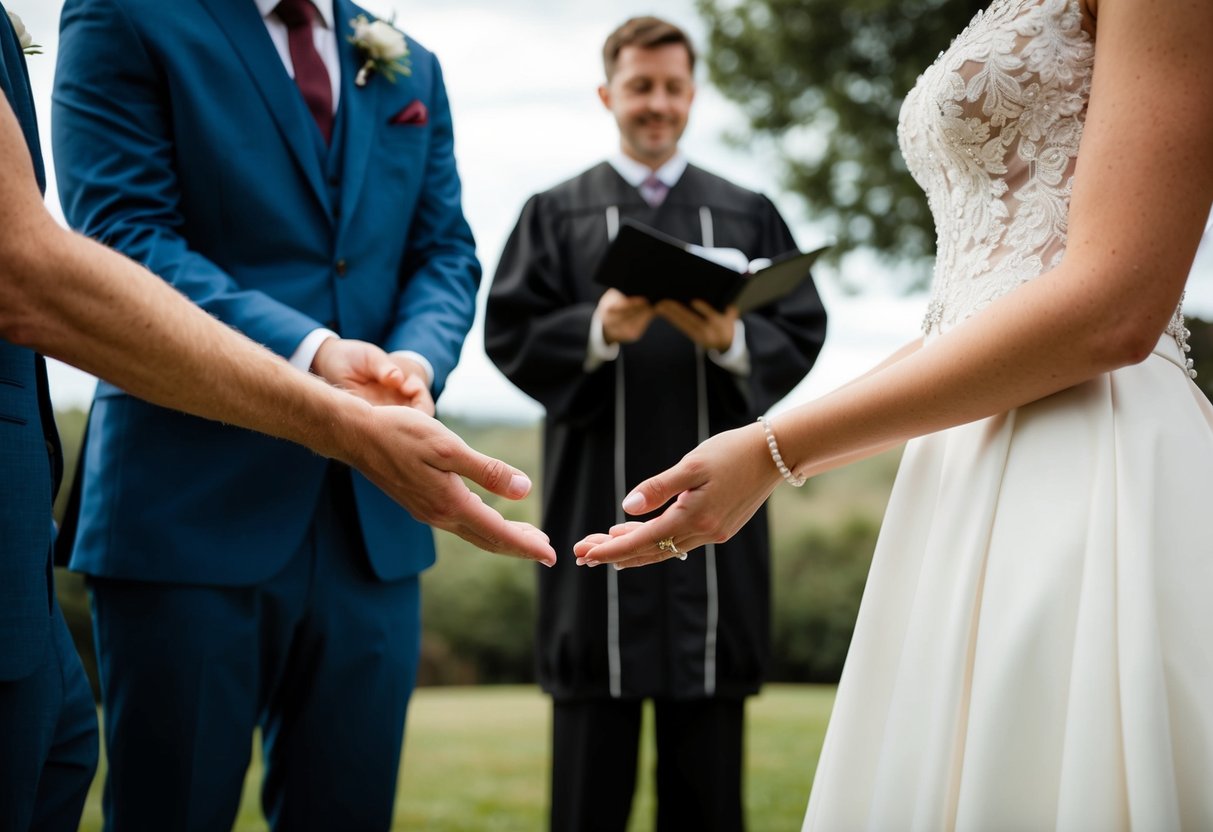
When planning your wedding, it’s important to know the legal requirements and the role of the officiant. Understanding these aspects will help ensure that your wedding ceremony goes smoothly.
Requirements for a Legal Wedding
To have a legal wedding, you need a marriage license. This license is usually obtained from your local county clerk. Requirements can vary by state, so it’s wise to check the specific rules in your area.
Most places require both partners to present valid identification and may ask for witnesses. It’s essential to complete the process with an approved officiant, who can conduct everything properly according to the law.
If you choose a civil wedding, it generally involves a straightforward ceremony without religious elements. Cost may also be lower for civil ceremonies, and they can be as simple or personalized as you wish.
Role of the Officiant in Ring Exchanges
The officiant plays a key part in the ring exchange ceremony. They guide you through the process, which is often included in the wedding ceremony order. While exchanging rings is a common tradition, it’s not mandatory for a legal marriage.
If you decide not to exchange rings, you don’t need to notify the officiant, but it’s a good idea to communicate your plans. This will help avoid any awkward moments during the ceremony.
Whether you choose to include ring exchanges or not, the officiant ensures that all legal aspects are respected, making your special day meaningful and compliant.
Wedding Party Roles in Ring Ceremonies
The wedding party plays an essential role in the ring exchange ceremony. Each member has specific responsibilities that help make the moment special and organized.
Responsibilities of the Ring Bearer
The ring bearer is often a child, like a nephew or niece, but can be anyone you choose. Their main job is to carry the wedding rings down the aisle. This is usually done in a special pillow or box.
It’s important to discuss the ring bearer’s role ahead of time. Make sure they understand what they need to do during the ceremony. This helps reduce any nervousness they might feel. You may even consider doing a practice run to make them comfortable.
Keep in mind that this moment is often captured in wedding photos, so having a confident ring bearer can add to the charm. Choosing someone close to you gives the moment extra meaning.
Support Roles of the Best Man and Maid of Honor
The best man and maid of honor play important roles during the ring exchange.
The best man is responsible for keeping the wedding bands safe until they are needed. He should ensure that the rings are easily accessible when it’s time for the couple to exchange them.
The maid of honor also supports during this ceremony. She can help by making sure the bride is prepared and calm. This could involve holding her bouquet or adjusting her dress.
Both the best man and maid of honor contribute to making the moment memorable. They are essential in creating a loving atmosphere, and their support is crucial as you exchange vows and rings.