
Do You Kiss Before or After Signing the Registry? Exploring Wedding Traditions and Timing
Deciding when to share your first kiss as a married couple can be a fun topic to think about during wedding planning. It often comes down to personal preference and the flow of your ceremony. Many couples choose to kiss before signing the registry to enhance the moment and create a memorable experience for everyone involved.

Kissing before the signing can make the ceremony feel more complete, while also building anticipation for the final “you may now kiss the bride” moment. On the other hand, some couples prefer to sign first and then seal the moment with a kiss afterward. Either way, your choice can add a personal touch to your ceremony.
As you plan your big day, consider what feels right for you and your partner. This simple decision can reflect your style as a couple and set the tone for the rest of the celebration.
The Significance of the First Kiss
The first kiss at your wedding carries special meaning and is filled with emotion. It symbolizes the start of your journey together as a married couple. This moment reflects deep traditions and heartfelt customs that go back for centuries.
Symbolism and Traditions
The first kiss represents more than just a romantic gesture. It’s a powerful symbol of your unity as husband and wife. When the officiant says, “You may now kiss,” it marks the official beginning of your married life.
Traditionally, this kiss is seen as a way to seal your vows. In ancient times, kissing was even considered a legal contract. Kissing at your wedding is about love, commitment, and the promise to share your lives.
This moment is often the highlight of the ceremony. It captures the joy and excitement you both feel. Many couples remember this kiss as one of the most cherished parts of their wedding day.
Conducting the Ceremony
Conducting your wedding ceremony involves several important steps. Understanding the order in which events take place can help you prepare for your special day. The officiant plays a crucial role in guiding you through these moments.
Order of Events
In a typical wedding ceremony, the order of events is designed to flow smoothly. It usually starts with the officiant welcoming everyone. This is followed by the exchange of vows, which is a heartfelt moment for the couple to express their love and promises to each other.
After the vows, the couple often exchanges rings. This symbolizes their commitment to one another. Once the rings are exchanged, the officiant will introduce the pronouncement. At this point, many couples choose to kiss.
Lastly, the couple signs the marriage license. This final act makes their union official. The order can vary based on personal preferences or traditions, so feel free to adapt it to suit your style.
Role of the Officiant
The officiant’s role is vital in conducting the ceremony. They ensure everything runs smoothly and that each part of the ceremony is clear to you and your guests.
During the ceremony, your officiant will guide you through the exchange of vows and the ring ceremony. They will also make the pronouncement, signaling that you are officially married.
If you are unsure about any part of the ceremony, do not hesitate to ask your officiant for guidance. They are there to support you.
Considering your wishes, they can help create a memorable experience that reflects you as a couple. Involving them in your plans can help make your wedding day smooth and enjoyable.
Documentation and Legalities
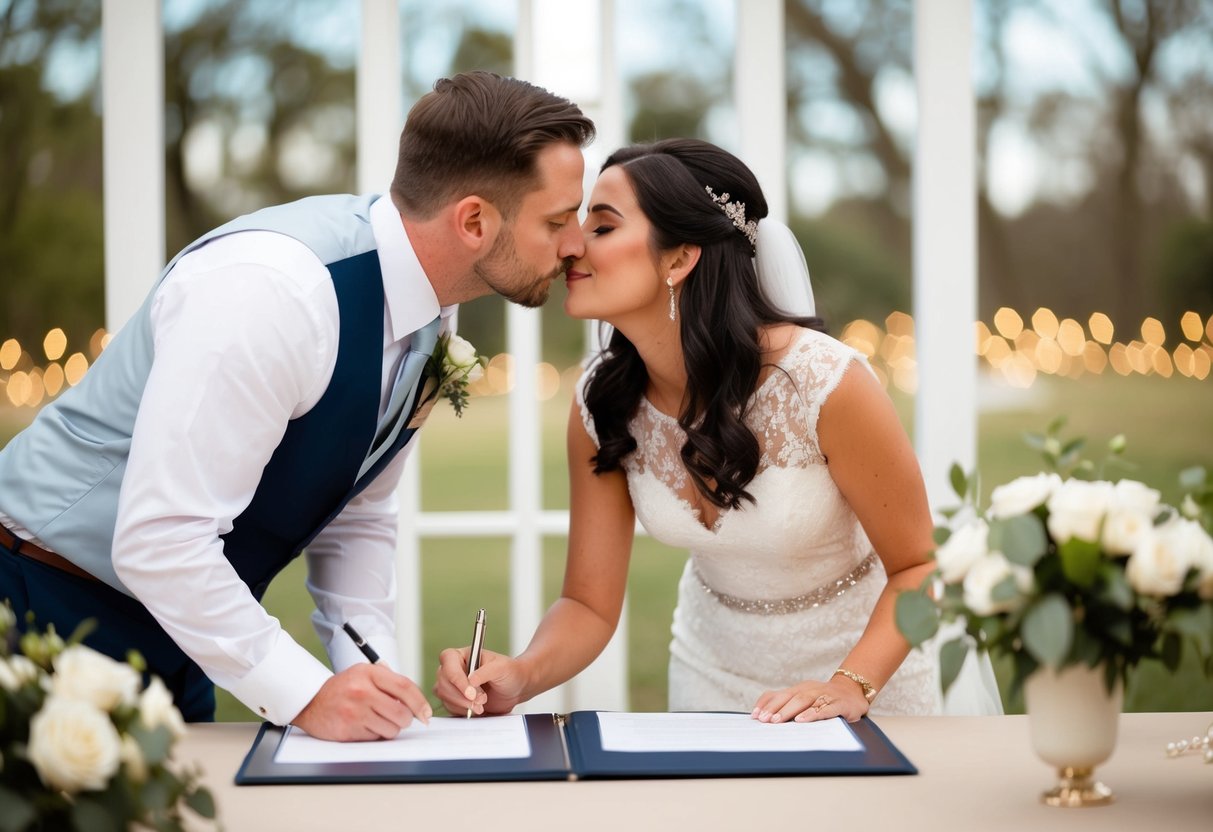
When planning your wedding, understanding the legal aspects of marriage documentation is essential. This includes knowing about the marriage license, who needs to sign it, and the role of witnesses in the process.
Understanding Marriage Paperwork
In Ontario, you’ll need to obtain a marriage license before your wedding day. This license must be signed to make your marriage official. Make sure you have it ready well in advance.
The signing of the registry typically happens during the ceremony, with your officiant overseeing the process. Generally, two witnesses from your wedding party must also sign.
It’s important to remember that some couples choose to kiss either before or after the signing. This decision can affect the flow of your ceremony, but legally, it doesn’t alter the requirement of signing the license to complete the marriage.
Finalizing the Union
After you sign the registry, it’s time for the big moment—the kiss. This kiss is significant as it symbolizes the finalization of your union. When the officiant says, “You may now kiss the bride” or “You may now kiss,” it marks a joyful transition in your lives.
Following the kiss, you usually celebrate with a recessional, walking together down the aisle as a married couple. Feel free to express your love with a smile, wave, or embrace as you both step into this new chapter.
The excitement continues as friends and family cheer for you, recognizing this special moment in your lives. Remember, the kiss is not just a tradition but a beautiful representation of your love and commitment.