
Does the Groom Pay for Any Flowers? Understanding Wedding Floral Expenses
When planning a wedding, it can sometimes feel confusing to know who pays for what, especially when it comes to flowers. Traditionally, the groom’s family is responsible for the personal flowers, such as the bride’s bouquet and boutonnieres for the groomsmen. This is one aspect of wedding etiquette that still holds value today, even as modern couples often share costs with their families.

As you create your wedding budget, it’s helpful to understand these customs to avoid any misunderstandings. It can also open up discussions about how you and your partner want to approach expenses related to the wedding flowers.
When planning your wedding, it’s important to know who pays for which flowers. The responsibilities often fall on the groom’s family and include specific personal items for the wedding party.
Financial Responsibilities of the Groom’s Family
The groom’s family traditionally covers the costs of certain floral items. This includes the flowers for the groomsmen, which often consist of boutonnieres. A boutonniere is a small flower worn on the lapel of the suit.
In addition, the groom’s family may also pay for corsages. Corsages are usually worn by the mothers and grandmothers of the couple. This helps to honor important family members during the ceremony.
The groom’s family also has to discuss these financial responsibilities early with both families to avoid confusion and ensure everyone knows what to expect.
The Role of Personal Flowers
Personal flowers play a significant role in the wedding. These include the bridal bouquet and the bridesmaids’ bouquets, which are typically the responsibility of the bride’s family.
However, the groom’s family also participates by providing the groom’s bouquet or floral accessories.
This collaborative effort helps create a balanced approach to wedding expenses.
By clearly defining who pays for what, you can create a budget that works for everyone. This can lessen any potential financial stress.
Understanding Wedding Flower Expenses

When planning your wedding, it’s important to know who pays for which flowers. The responsibilities often fall on the groom’s family and include specific personal items for the wedding party.
Financial Responsibilities of the Groom’s Family
The groom’s family traditionally covers the costs of certain floral items. This includes the flowers for the groomsmen, which often consist of boutonnieres. A boutonniere is a small flower worn on the lapel of the suit.
In addition, the groom’s family may also pay for corsages. Corsages are usually worn by the mothers and grandmothers of the couple. This helps to honor important family members during the ceremony.
The groom’s family also has to discuss these financial responsibilities early with both families to avoid confusion and ensure everyone knows what to expect.
The Role of Personal Flowers
Personal flowers play a significant role in the wedding. These include the bridal bouquet and the bridesmaids’ bouquets, which are typically the responsibility of the bride’s family.
However, the groom’s family also participates by providing the groom’s bouquet or floral accessories.
This collaborative effort helps create a balanced approach to wedding expenses.
By clearly defining who pays for what, you can create a budget that works for everyone. This can lessen any potential financial stress.
Key Floral Elements in a Wedding
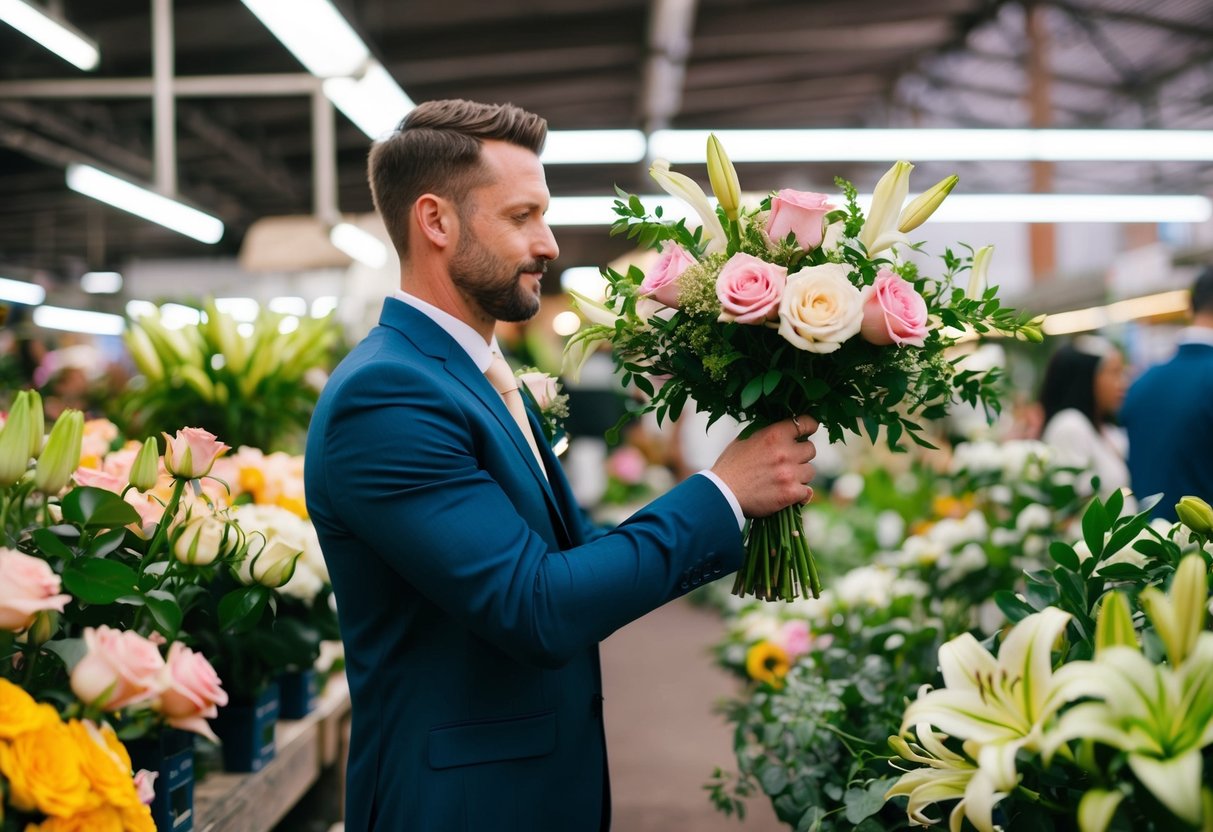
Flowers play a significant role in weddings, enhancing both the ceremony and the reception. They add beauty and elegance, making your special day even more memorable. Understanding the key floral elements can help you plan better.
Ceremony and Reception Flowers
For the ceremony, flowers create a stunning backdrop. You might choose ceremony flowers that align with your wedding theme. Think about an arch or an aisle lined with blooms that reflect your colors.
At the reception, wedding reception flowers can decorate tables and the venue. Centerpieces are often the main focus. You could use tall arrangements for a grand effect or smaller, more intimate ones to create warmth.
Don’t forget practical flowers like petals for the aisle. They add a romantic touch without being overwhelming. Working closely with your wedding florist helps ensure your vision comes to life.
Special Flowers for the Wedding Party
The wedding party deserves special attention when it comes to flowers. The bridal bouquet is often the star of the show. You can choose flowers that match your theme and colors, making it uniquely yours.
For your bridal party, consider boutonnieres for the groomsmen and corsages for mothers and grandmothers. These small touches can make a big difference in photos. Don’t overlook the mini bouquets that can be given to junior bridesmaids or flower girls.
By collaborating with your wedding florist, you can ensure that each piece fits perfectly into your overall wedding decor. The right choice of flowers helps to tie everything together beautifully.
Additional Considerations for the Groom

As you plan for your wedding, it’s important to think about your responsibilities. This includes not just paying for flowers, but also managing gifts and various expenses related to the celebrations.
Gifting Etiquette and Responsibilities
When preparing for the wedding, consider your role in gifting. Typically, you are expected to give gifts to your groomsmen as a thank-you for their support. This can be something personal like a custom item, or a shared experience like a group outing.
Also, keep in mind the gifts for other events. At the rehearsal dinner, you might want to thank close family and friends. A thoughtful gift or a simple token can show appreciation. For events like the welcome party, engagement party, or bridal shower, small gestures can go a long way. Skills in balancing costs while ensuring your appreciation is felt will serve you well.
Managing the Overall Wedding Expenses
Wedding costs can add up quickly. While you may cover specific items like flowers, you should also think about other expenses. This includes your groomsmen gifts, rehearsal dinner, and welcome party.
It’s wise to create a budget that includes all these costs. For example, set aside funds for each item:
- Groomsmen gifts: Allocate a reasonable amount per person.
- Rehearsal dinner: This could be a larger expense depending on the guest list.
- Welcome party: Consider if this is necessary and how much you are willing to spend.
By staying organized, you can keep track of all wedding expenses, ensuring you don’t overspend or forget any crucial items as the big day approaches.
Closing Wedding Preparations

As the big day approaches, it’s essential to focus on two important tasks: finalizing the marriage license and preparing for your honeymoon. These steps ensure everything is in place for your special day and post-wedding celebration.
Finalizing the Marriage License and Official Fees
Before you say “I do,” make sure you have your marriage license ready. This document is crucial for your wedding to be official. Each state has different rules, so check the requirements, including how far in advance you need to apply.
The marriage license fee can vary, but it’s usually between $50 to $150. Remember to bring the necessary identification, like a driver’s license or passport. Don’t forget to factor in the officiant fee, which can range from $100 to $500 depending on the person you choose.
Make an appointment with your officiant to ensure they have the correct paperwork and to discuss any specific details about your ceremony. This will help everything flow smoothly on the day.
Preparing for the Honeymoon and Post-Wedding Events
After the wedding, it’s time for the honeymoon! Start by deciding where you’d like to go. Popular destinations could include tropical beaches, charming cities, or national parks.
Think about the honeymoon costs, including travel, accommodation, food, and activities. Create a budget to help manage expenses. Many couples save up in advance or even create a honeymoon registry to help cover the trip.
Don’t forget to plan any post-wedding events, like a brunch or gathering with close family and friends. These moments can be a lovely way to celebrate your union.
Make a list of what you need for these events to ensure they are enjoyable and stress-free.