
Does the Groom’s Mother Walk Down the Aisle? Understanding Her Role in the Wedding Ceremony
When planning a wedding, you may wonder about the role of the groom’s mother during the ceremony. Traditionally, the groom’s mother walks down the aisle with the groom or may take her seat after the parents of the groom, depending on the couple’s preferences. Understanding this custom can help you decide what feels right for your wedding.
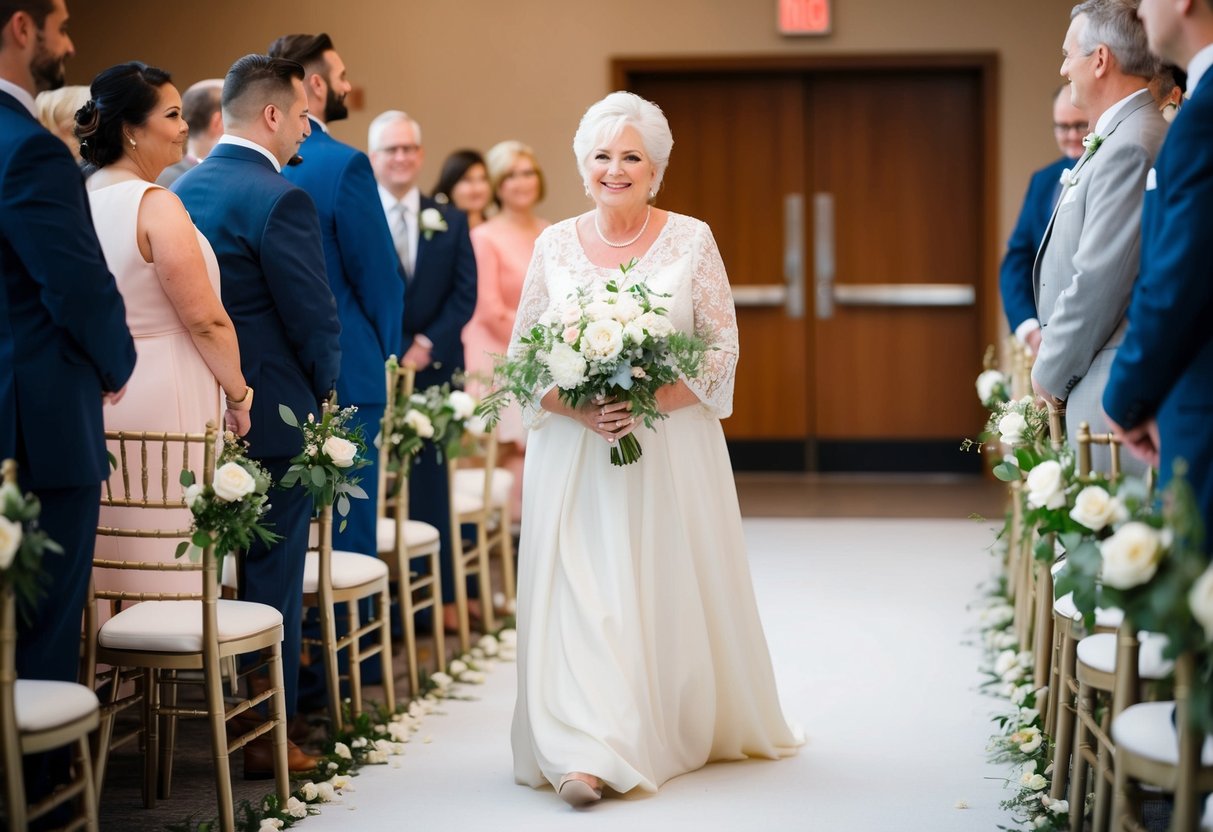
Every wedding is unique, and many couples choose to personalize who walks where during the processional. Some might opt for the groom to walk down solo or even with his mother, showcasing a special bond. This choice allows you to reflect your own family dynamics and create a memorable moment in your ceremony.
As you think through your wedding details, consider what will make your day feel special. Reflecting on the roles family members play can help everyone feel included and cherished during the celebration.
Wedding Processional Basics

Understanding the wedding processional is key to creating a smooth ceremony. You’ll find out about the traditional order of who walks down the aisle and what role each person plays.
Traditional Processional Order
In a typical wedding processional, there is a specific order that helps guide everyone involved. It usually starts with the grandparents, followed by the parents of the groom. Your groom’s mother often walks down the aisle alongside the groom’s father, taking their seats on the right side.
Next, the mother of the bride walks down alone or with a family member, sitting in the front row on the left. After this, the bridal party enters. This includes the bridesmaids and groomsmen, followed by the flower girl and ring bearer. Lastly, the bride makes her grand entrance, often escorted by her father or another meaningful person.
This sequence is significant as it honors both families and sets a respectful tone for the ceremony.
Roles of The Groom’s Parents

The parents of the groom have significant roles during the wedding ceremony. Both the father and mother contribute to the special day by supporting their son and participating in the processional.
Father of the Groom
The father of the groom typically plays a key role in the wedding. He may escort the groom down the aisle, showing family support. If both parents are present, they often walk together, emphasizing their unity.
Before the ceremony, he might help greet guests and thank them for attending. His presence sets a comforting tone for the day. He can also mingle with other family members and friends, strengthening relationships.
During the reception, sharing a dance or speech can highlight his pride. If parents are divorced, the father might still be involved, depending on family dynamics. This bond is important and helps create many cherished memories.
Mother of the Groom
The mother of the groom often has a vital role too. She might walk down the aisle with the father of the groom or be seated earlier. Some couples choose for her to walk her son down the aisle, symbolizing their close relationship.
At the reception, she can help with planning and may participate in special dances. It’s common for her to greet guests and share fond stories about her son. Her involvement helps show family love and connection.
The mother may also assist in coordinating family members and keeping everyone on schedule. This can make the day flow smoother. Regardless of her exact duties, her presence is a treasured part of the celebration.
Cultural and Religious Variations
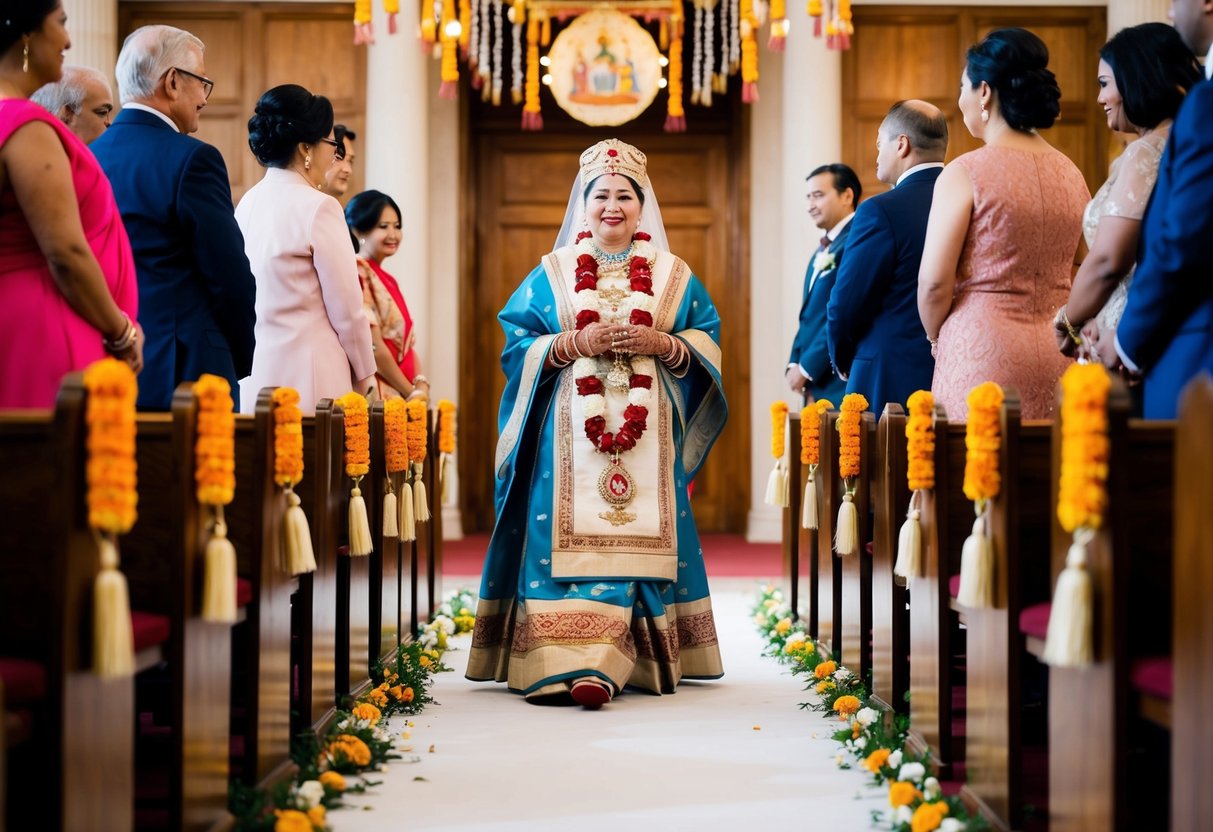
When planning a wedding, understanding how different cultures and religions approach the processional can add a personal touch to your ceremony. Each tradition has unique customs that may influence whether the groom’s mother walks down the aisle.
Christian Wedding Traditions
In Christian weddings, the processional order can vary based on denominational customs. Typically, the groom waits at the altar while the bride walks down the aisle, often escorted by her father. The groom’s mother usually takes her seat before the ceremony begins, showing support but not walking down the aisle with her son. In some nondenominational ceremonies, however, she may accompany the groom as a symbol of unity. Catholic wedding processional orders may also include additional family and friends before the bride makes her entrance.
Jewish Wedding Customs
In Jewish ceremonies, the processional is marked by specific traditions, like the use of a chuppah, which is a canopy symbolizing the home the couple will build together. The groom typically walks down the aisle during the Jewish wedding processional, often before the bride arrives. While the groom’s mother might not walk with him, she plays an important role during the ceremony by standing with the family. The arrival of the bride is a special time, and her escort down the aisle is a highlight of the event.
Hindu Wedding Practices
Hindu weddings feature vibrant customs, like the baraat, which is a joyful procession of the groom. During this lively event, the groom, often on a horse or with family, makes his way to the mandap, the wedding altar. The groom’s mother does not typically walk him down the aisle but may join him at the mandap. In this way, she participates in the celebration while honoring tradition. The emphasis is on the groom’s journey from bachelorhood to married life, creating a meaningful experience for everyone involved.
Modern Adaptations and Planning Tips
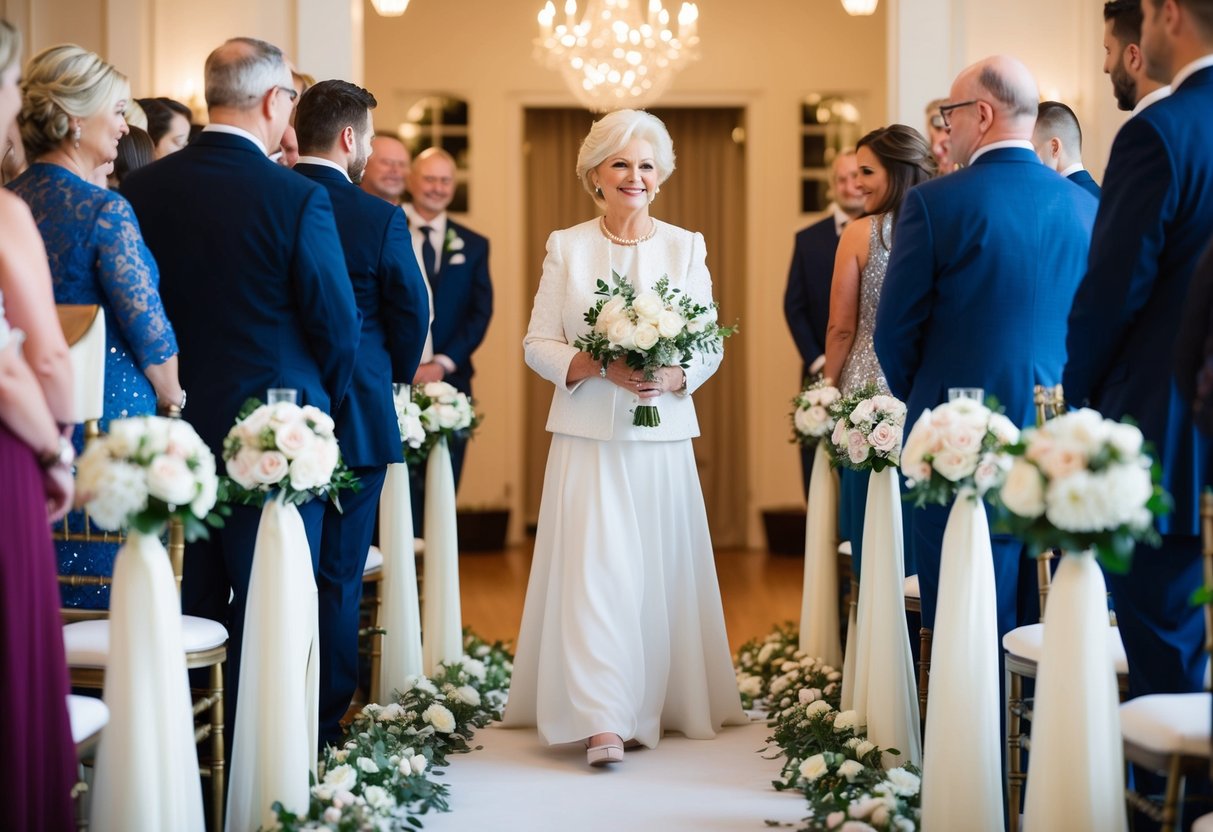
As weddings evolve, many couples embrace modern adaptations in their ceremony structure. You have the freedom to mix traditions with new ideas, creating a processional that’s uniquely yours. Consider how you can personalize this part of your wedding day.
Contemporary Ceremony Structure
In modern weddings, the structure of the ceremony procession can differ greatly from traditional norms. You don’t have to stick strictly to the conventional order.
For example:
- The bride’s mother may enter with her spouse or walk alone, reflecting personal relationships.
- The groom’s mother might walk down the aisle, symbolizing her significant role in this moment.
- You can even choose to have both mothers escorted together, showcasing family unity.
Think about your ceremony space and how it can enhance these choices. Discuss with your planner how to best utilize the space for an inviting and beautiful processional.
Coordinating with Your Wedding Planner
Your wedding planner can be a great help in crafting a smooth ceremony. They understand different wedding customs and can give advice on combining traditional and new elements.
Share your vision about including your mother or any other significant person in the processional. Here are some helpful tips:
- Communicate clearly: Discuss every detail about your preferred order and any unique ideas you have.
- Rehearse: Make time for a rehearsal. This ensures everyone knows their roles and feels comfortable.
- Consider timing: Your planner can help ensure that the flow of the ceremony fits your schedule, keeping guests engaged.