
Food Catering Weddings Cost: What to Budget For
Food catering weddings cost averages about $80 per guest for a full reception meal in the United States, with many celebrations landing between $40 and $150 per person before some taxes, service charges, bar packages, and gratuity. Your final bill depends on guest count, menu, service style, location, rentals, and staffing.

A 100-guest wedding could therefore spend about $8,000 for food and service before added charges. Smaller weddings can have a higher per-person price because caterers set minimums, while larger celebrations add staff, equipment, and bar needs.
Start by setting your guest count, choosing the dining experience you want, and asking each wedding caterer for a complete, itemized proposal. A clear quote lets you protect your budget while giving your guests a meal they will enjoy.
How Much Should You Budget Per Guest?
Plan on $40 to $150 per guest for wedding catering, with about $80 per person serving as a useful starting point for a full meal. Your location and package details can move that figure sharply.
Catering costs include more than ingredients. Labor, setup, service, rentals, beverages, taxes, and gratuity all affect the wedding catering cost. Use your estimated guest count and service style to build a working budget before requesting quotes.
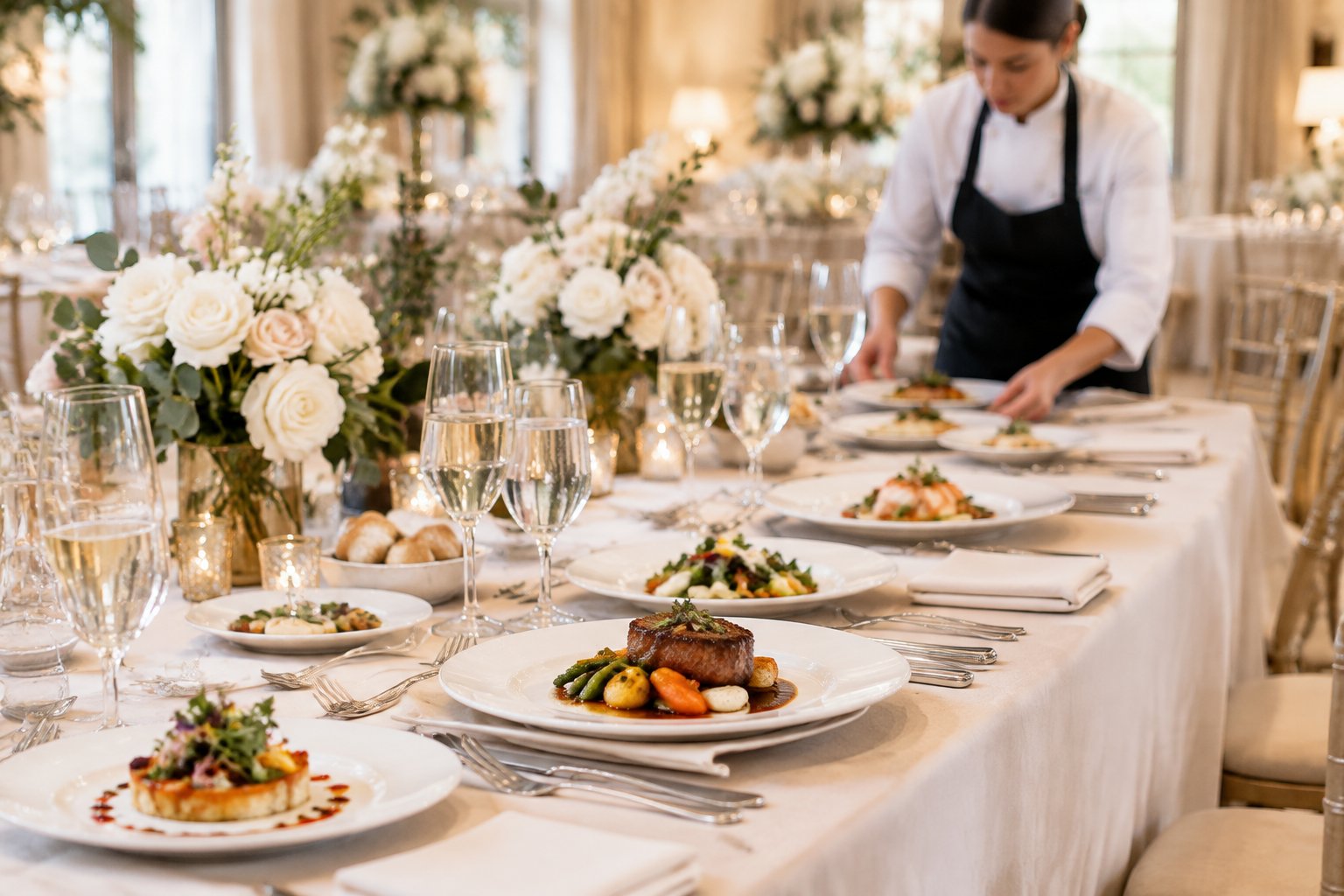
Average Wedding Catering Cost by Guest Count
These planning examples use an $80 food-and-service estimate per guest:
|
Guest count |
Estimated food and service |
|---|---|
|
50 |
$4,000 |
|
100 |
$8,000 |
|
150 |
$12,000 |
|
200 |
$16,000 |
Your final wedding catering costs can fall below or above these figures. A buffet with a seasonal menu may land near the lower end, while a plated dinner with premium proteins and full bar service pushes the total higher. A small celebration can still face a $2,500 to $4,000 caterer minimum, which raises the average wedding catering cost per person.
Location also plays a major role. Urban venues, remote sites, and destination weddings may require added transportation, labor, rentals, or venue fees.
A Simple Wedding Catering Calculator Formula
Use this wedding catering calculator formula:
Guest count × food and service price per guest = base catering estimate
Then add separate costs for:
-
Cocktail-hour appetizers
-
Bar service
-
Rentals
-
Vendor meals
-
Service charges
-
Sales tax
-
Gratuity
-
Cake cutting or late-night food
For example, 125 guests at $80 per person creates a $10,000 base estimate. If your contract adds a 20% service charge, 8% tax, and 15% gratuity, the final figure will rise substantially. Ask whether each percentage applies to the food subtotal, the full package, or a different amount.
A guest list calculator helps you test several headcounts before you commit to a venue or menu. Run the estimate at your expected count plus a small buffer so late RSVPs do not upset your budget.
Why Your Guest List Changes the Total So Quickly
Most wedding catering prices grow with every additional guest because each person needs food, drinks, tableware, service, and seating support. Adding 25 guests at $80 per person increases the base estimate by $2,000 before fees.
Guest count also changes staffing and equipment. A 50-person reception may need one buffet line, while a 150-person event might need two lines, more servers, extra glassware, and larger preparation areas.
A smaller guest list does not guarantee a low per-person rate. Fixed expenses such as delivery, kitchen preparation, setup, and staffing minimums still need to be covered. Ask each caterer for both the minimum event spend and the price at your expected headcount.
What Does a Wedding Catering Quote Include?
A wedding catering quote should show the wedding food, labor, rentals, service charges, taxes, and optional extras as separate line items. The safest quote is an itemized proposal that states exactly what you receive and what remains outside the package.
Some packages include beverages and equipment hire, while others price them separately. Compare the final projected total, not just the advertised cost per plate.
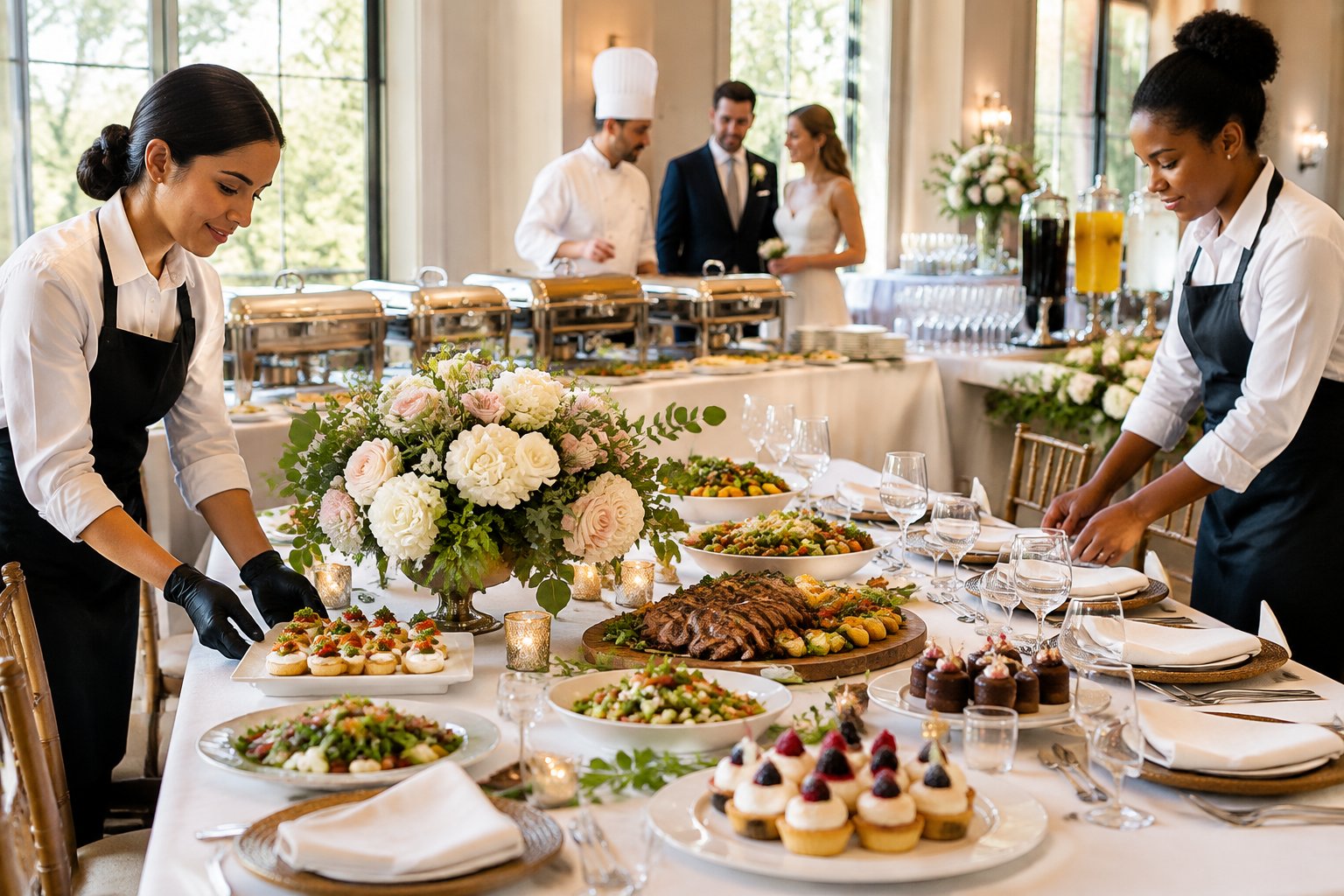
Food for the Drinks Reception and Wedding Breakfast
Your menu may include cocktail hour appetizers, passed canapés, a starter, an entrée, side dishes, bread, dessert, and late-night food. In the United States, the main reception meal is sometimes called the wedding breakfast, even when it takes place in the evening.
Ask how many appetizer pieces each guest receives and how long the drinks reception lasts. A longer cocktail hour needs more food. Confirm whether children receive the full menu or a lower-priced meal.
Dessert also deserves a clear line. Your caterer may provide cake, plated dessert, a sweets table, coffee, and tea, or you may bring these from another vendor. Vendor meals for photographers, DJs, planners, and other suppliers should appear in the headcount.
Service, Staff, and Equipment
Staff costs cover chefs, servers, bartenders, captains, setup crews, and cleanup teams. The proposal should state the number of staff members, their service hours, arrival time, departure time, and overtime rate.
Equipment hire may include plates, flatware, glassware, serving pieces, chafing dishes, linens, tables, bars, and kitchen equipment. Upgraded chargers, specialty glassware, and premium linens often cost extra.
Ask whether delivery, setup, breakdown, trash removal, and venue kitchen use are included. Outside caterers may also face a venue fee. Check the venue rules before choosing a vendor so you can include every required charge.
Tax, Service Charges, and Gratuities
A service charge often falls between 18% and 24% of food and beverage charges. It pays the catering company for operating costs and event logistics, while gratuity is a separate tip for the service team unless your contract says otherwise.
Sales tax depends on your state and the taxable items in your package. Gratuity may be calculated before tax, after tax, or on selected services. Have the caterer show the exact calculation in writing.
Ask these questions before signing:
-
Is the service charge included in the advertised price?
-
Does it go to the staff or the company?
-
Is gratuity required, suggested, or included?
-
Which items are taxable?
-
What happens if the guest count changes?
How Service Style Affects Your Spend?
Buffet service and cocktail-style menus usually cost less than plated dinners because they require fewer servers and less individual plating. Your layout, timeline, menu, and guest needs should guide the choice.
The food itself is only part of the difference. Service style changes labor, equipment, floor space, guest flow, and the amount of control you have over meal timing.
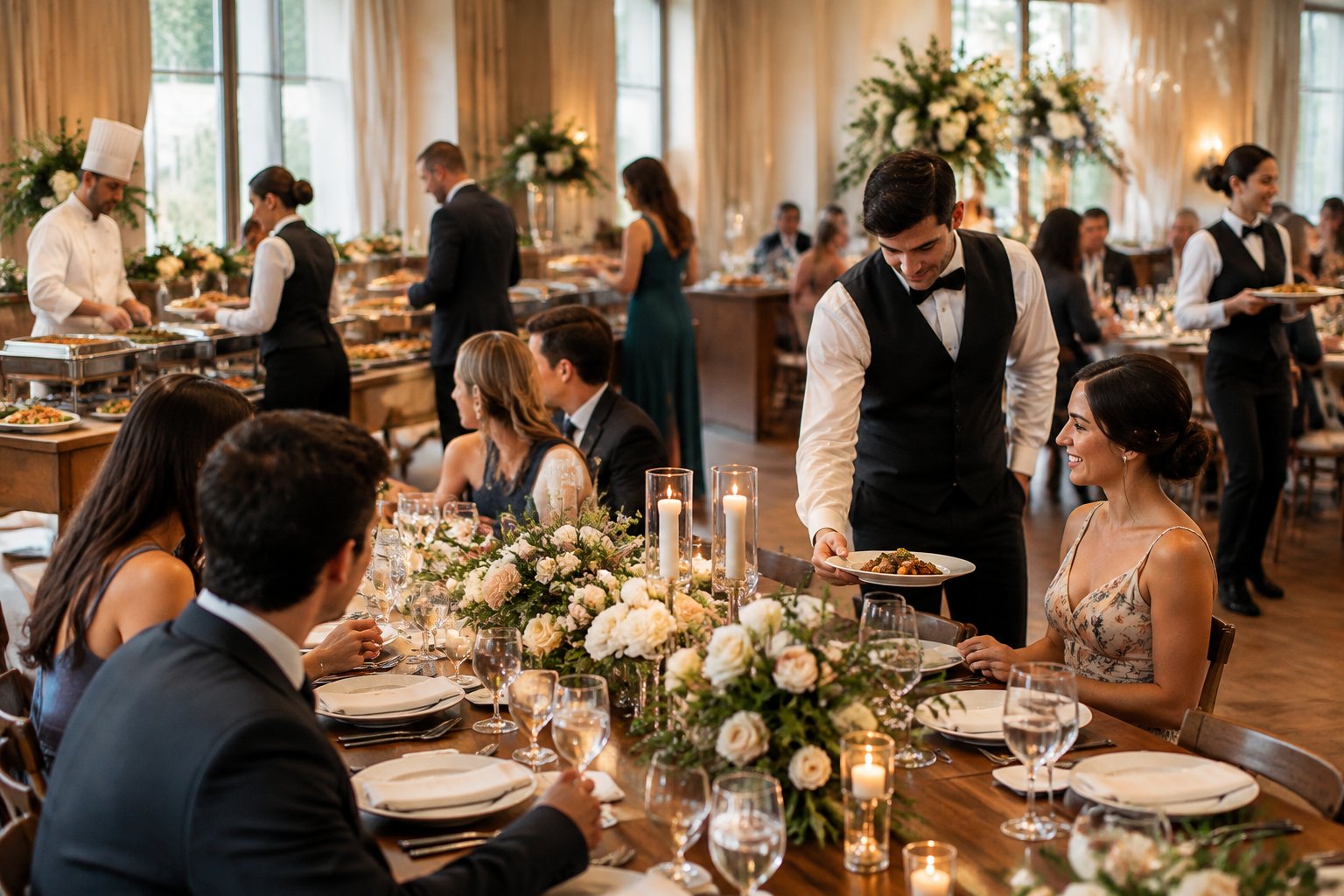
Buffet Service vs. a Plated Dinner
Buffet service often runs about $40 to $65 per person for food and basic service. Guests choose their portions, and you can offer several entrée and side options. The caterer still needs staff to refill dishes, guide the line, clear tables, and manage food safety.
A plated dinner often costs about $65 to $85 per person before added charges. Servers deliver each course to the table, which creates a formal experience and gives you more control over timing. You also need accurate entrée selections and careful tracking of dietary meals.
|
Criteria |
Buffet service |
Plated dinner |
|---|---|---|
|
Typical food and service |
$40 to $65 per guest |
$65 to $85 per guest |
|
Staffing need |
Lower |
Higher |
|
Menu variety |
High |
RSVP-based |
|
Meal timing |
Flexible |
Highly scheduled |
|
Best fit |
Relaxed receptions |
Formal receptions |
Family-style service sits between the two in price. Large platters create a communal feel, though tables need enough room for serving dishes.
Food Stations and Interactive Dining
Food stations spread the meal across the reception space. Examples include a carving table, pasta counter, taco bar, salad station, or dessert display. Costs often range from $45 to $75 per person, with chef-attended stations priced higher.
Interactive food stations add entertainment and let guests build meals around their preferences. They also need extra floor space, power, cooking equipment, signage, and staff. Ask your venue where stations can go without blocking the bar, dance floor, or exits.
A hybrid menu can control costs while keeping the experience engaging. You might serve a plated starter, then open stations for the main meal. Confirm that the caterer has enough staff to keep each station stocked throughout dinner.
Food Trucks and Cocktail-Style Receptions
Food trucks can cost about $15 to $40 per person for food, although travel, staffing, permits, minimums, and multiple trucks add to the bill. They work well for casual outdoor receptions and late-night snacks.
A cocktail-style reception with substantial appetizers may cost about $35 to $55 per person. Your invitations should make the format clear so guests know to expect small portions and standing service. Include filling choices such as sliders, tacos, skewers, or small bowls when the event overlaps a normal mealtime.
Check the venue’s power, parking, weather, and access rules before booking a truck. A backup plan helps protect service if the outdoor setup changes.
Bowl Food and Other Flexible Formats
Bowl food gives guests warm portions served in small bowls while they mingle or sit informally. It works for menus such as curry, pasta, rice bowls, chili, or grain-based dishes.
This format can reduce formal table service while offering more substance than passed appetizers. It still needs enough staff to circulate food, clear used dishes, and keep hot items at safe temperatures.
You can also combine formats. Passed canapés followed by bowl food and a dessert station creates movement throughout the reception. Ask for a per-person estimate that includes every service period, since separate food moments each add labor.
Costs That Are Commonly Left Out of the First Quote
Corkage, cake cutting, dietary meals, late-night food, overtime, and minimum-spend rules can raise the first quote by hundreds or thousands of dollars. Ask for these items before you compare proposals.
A low menu price can look appealing until venue rules, outside desserts, bar service, and extra hours appear on the contract. Request an all-in estimate based on your actual event schedule.
Corkage and Bar-Related Charges
A corkage fee covers the labor and equipment involved in serving alcohol you provide. A caterer might charge by bottle for wine or champagne and add separate service charges for beer, glassware, bartenders, mixers, ice, and cleanup.
Ask whether the venue permits outside alcohol and whether a licensed bartender must serve it. Compare the total cost of a hosted bar, limited beer-and-wine service, signature cocktails, or a supplied beverage package.
Also confirm the service period. Extending the bar by one hour may add bartending, alcohol, glassware, and venue costs at the same time.
Cake Cutting and Dessert Service
Cake cutting fees often range from $1 to $8 per slice when you bring a cake from another bakery. The charge covers cutting, plating, serving, and washing dishes.
Dessert service may also include display stands, plates, forks, coffee, tea, scooping, refrigeration, or a dessert attendant. Ask whether your cake must arrive pre-sliced or whether the caterer handles the full service.
If your venue requires its preferred bakery or caterer, check whether the cake fee changes. A dessert station, cookies, pies, or late-night sweets can be priced per guest or as a flat rental.
Dietary Requirements, Late Food, and Minimum Spends
Vegan, vegetarian, gluten-free, dairy-free, and allergen-safe meals need clear planning. Some caterers include these meals in the base package, while others charge for specialty ingredients or separate preparation.
Give the caterer your dietary count before the final deadline. Ask how the team prevents cross-contact and labels buffet dishes. A menu built around naturally inclusive dishes can make service easier for everyone.
Late food adds ingredients, staff hours, serving equipment, and cleanup. Confirm the serving time and portion size. Also review the minimum spend, delivery distance, overtime rate, guest-count deadline, cancellation terms, and payment schedule before you sign.
How to Compare Caterers and Control the Final Bill
Compare wedding caterers by the final contracted total, staffing plan, included rentals, and service terms instead of the menu price alone. This approach shows which proposal delivers the experience you want at a manageable cost.
Ask every caterer to quote the same guest count, menu style, service hours, bar package, dietary needs, and rental standard. Then place the proposals side by side.
In-House Catering vs. an External Wedding Caterer
In-house catering comes through the venue and may simplify scheduling, kitchen access, staffing, rentals, and billing. The venue may offer set packages with fewer menu decisions, which helps when you want a streamlined planning process.
An external wedding caterer gives you more freedom to compare cuisines, service styles, menus, and price points. Your venue may require an approved list, charge a kitchen fee, or set insurance and cleanup rules for outside vendors.
Ask both options for the complete price, including venue fees, delivery, rentals, taxes, staffing, and gratuity. A lower food subtotal does not guarantee a lower final bill.
Menu Choices That Deliver Better Value
Seasonal ingredients help keep food costs in check because they are more available. Ask your caterer which produce, proteins, and desserts offer the best value for your wedding date.
A focused menu can feel generous when you choose one strong entrée, satisfying sides, and well-planned appetizers. You can also save by serving beer and wine with one signature cocktail, selecting a buffet, choosing an off-peak date, or limiting late-night food to a smaller portion.
Request a tasting before you approve the menu. Confirm portion sizes, substitutions, children’s meals, leftovers, and the plan for dietary guests. These details prevent last-minute upgrades.
Questions to Ask Before You Sign a Catering Contract
Use these questions during each consultation:
-
What is included in the per-person price?
-
What is the minimum food and beverage spend?
-
How many servers, bartenders, chefs, and captains will attend?
-
Are setup, breakdown, delivery, cleanup, and rentals included?
-
What service charge, tax, and gratuity will apply?
-
Is the cake cutting fee included?
-
What is the corkage fee for outside alcohol?
-
How are vendor meals priced?
-
What are the overtime and cancellation terms?
-
When is the final guest count due?
-
How are allergies and special diets handled?
-
What happens if the menu, venue, or guest count changes?
Once you have written answers, compare the all-in totals and payment schedules. Choose the proposal that clearly supports your guest experience, staffing needs, and financial limit.