
French Wedding Venues Chateau Unique: A Planning Guide
A French château gives you a historic setting, private grounds, and the chance to turn your wedding into a full destination experience. Among French wedding venues, Château Unique stands out for exclusive rentals, distinctive ceremony and reception spaces, and chapels on the property. That combination suits you if you want your dream wedding venue to feel personal, elegant, and connected to French heritage.
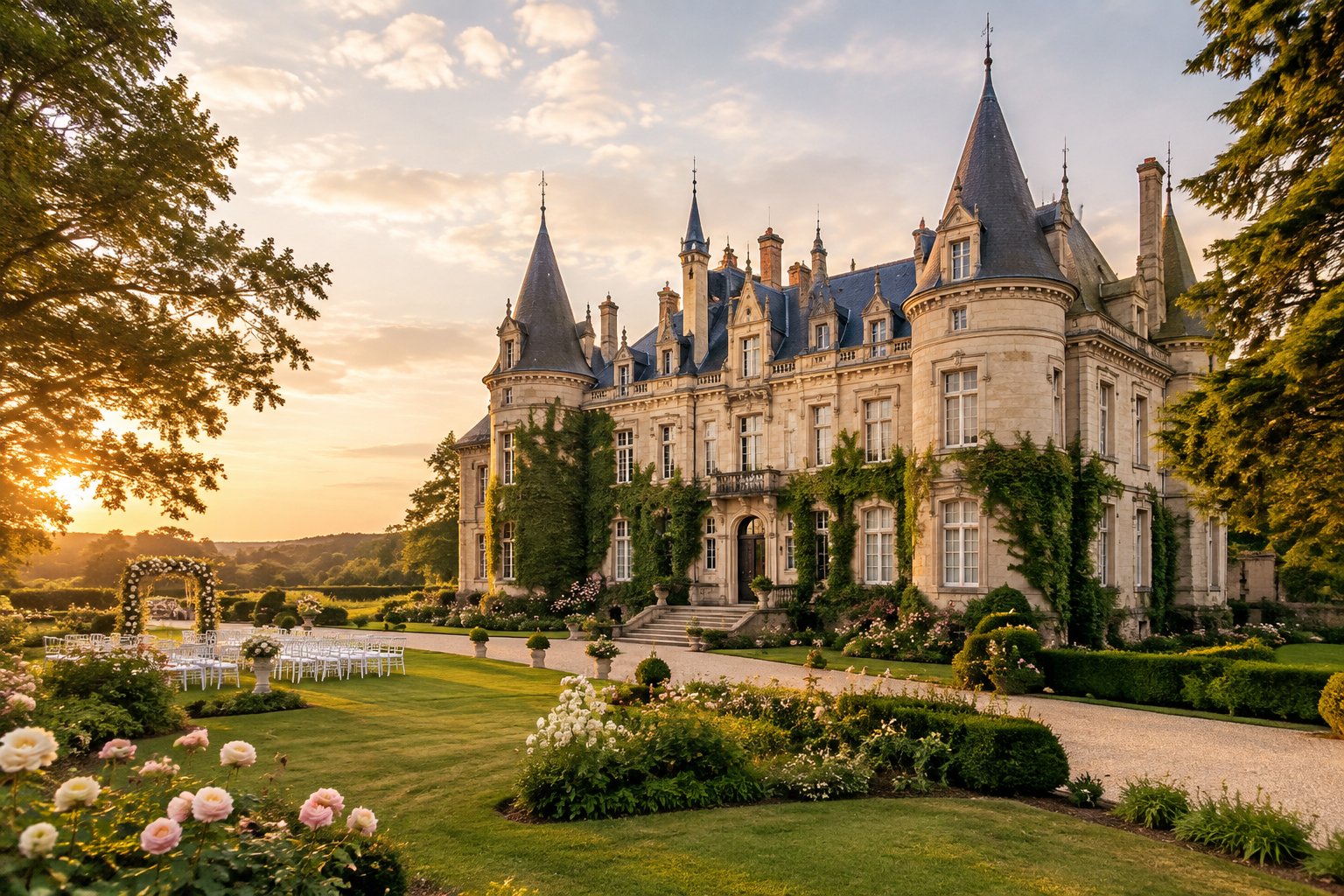
You can host your ceremony, wedding breakfast, cocktails, and guest stay within one carefully chosen estate. Start by setting your guest count, preferred region, travel plan, and full budget, then explore available dates with Château Unique to shape your celebration around the spaces you love.
What Makes a Château Wedding Venue Unique?
A château wedding venue combines historic architecture, private grounds, and dedicated spaces for a ceremony, reception, and wedding stay.
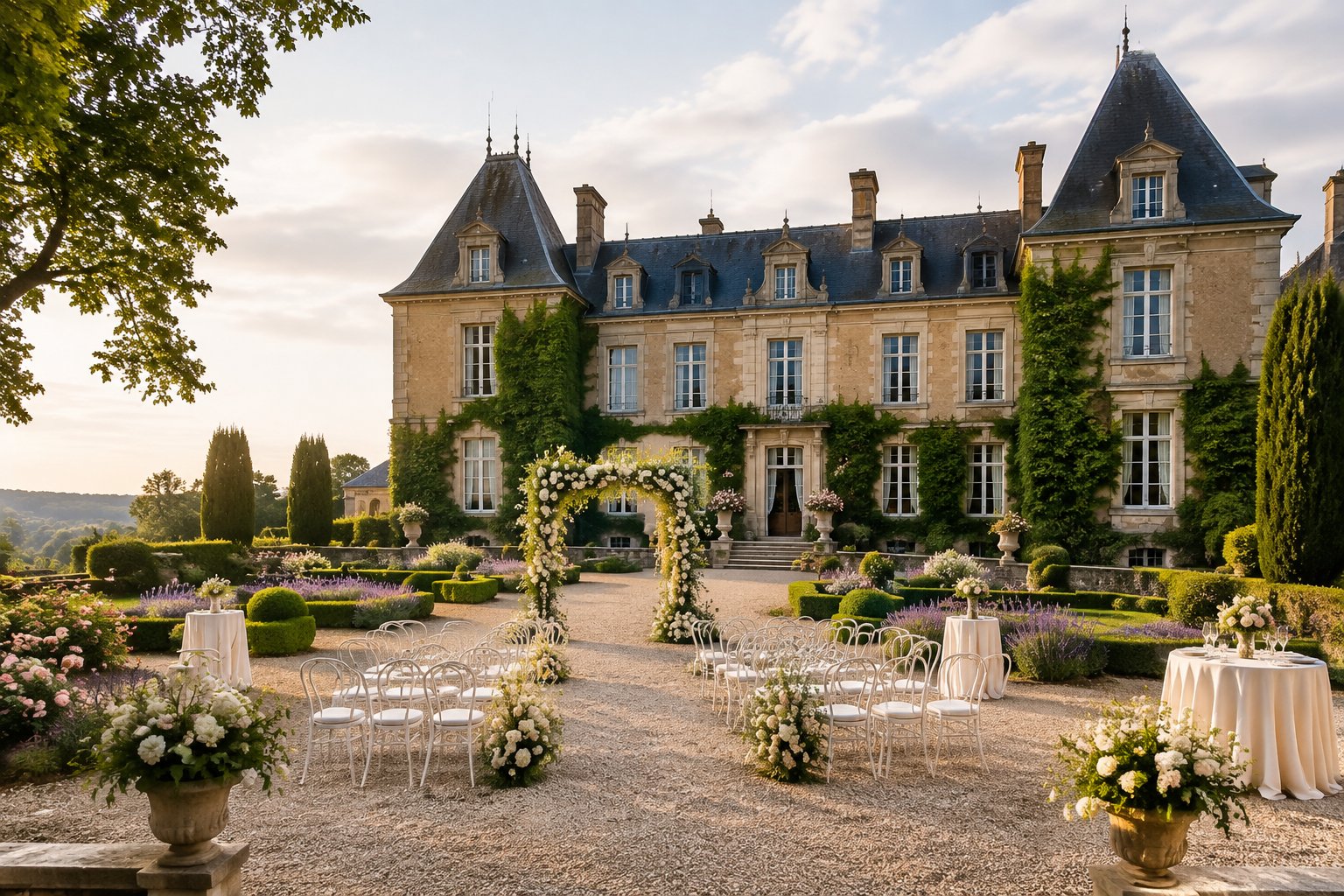
A historic château can give your French château wedding a strong sense of place from the moment guests arrive. High ceilings, stone details, formal gardens, parkland, and period rooms create a setting with built-in character. Practical features such as an on-site chapel, swimming pool, honeymoon suite, and on-site accommodation shape how comfortably your guests experience the property.
Château vs. Domaine, Mas, and Other French Estates
In France, a château refers to a historic residence that may range from a fortified medieval property to an elegant country house. A domaine is tied to working land such as vineyards, olive groves, or farmland. A mas is a Provençal farmhouse with thick stone walls and a relaxed rural feel, while a bastide offers a more formal Provençal country-house style.
The name gives you a starting point, yet the property’s layout determines the wedding experience. Review reception rooms, bedroom numbers, kitchen access, ceremony rules, parking, and sound limits before you fall in love with the architecture.
The Appeal of Exclusive-Use Historic Estates
Exclusive use gives you private access to the agreed rooms and grounds during your booking. You can welcome guests with a dinner, hold your ceremony on the estate, host the reception, and share a farewell breakfast without another event taking place beside yours.
Ask how many nights the hire includes, when suppliers can arrive, and whether setup and cleanup time form part of the rental. A private estate works best when your contract clearly states which spaces, bedrooms, furniture, and facilities belong to your booking.
Which Features Create a Memorable Wedding Weekend?
The most useful features connect your wedding events into one stay. An on-site chapel supports a ceremony with a strong sense of tradition. Formal gardens suit vows and cocktails, while an orangery, ballroom, courtyard, or vaulted room gives your dinner a defined atmosphere.
Look for guest spaces that support relaxed time between events. A swimming pool, parkland, games area, or comfortable lounge gives your group places to gather. Check whether the honeymoon suite has private access, whether guests share bathrooms, and how far additional lodging is from the château.
A multi-day wedding celebration also needs a weather plan. Confirm where guests will dine during rain, where musicians can set up, and which historic rooms permit candles, dancing, amplified sound, and floral installations.
Choose a French Region That Fits Your Celebration
The Loire Valley suits fairytale architecture, Provence brings warm outdoor scenery, and Bordeaux supports vineyard-focused celebrations, while Paris and the French Riviera simplify access for many international guests.

Your region affects the building style, food, wine, weather, guest travel, and venue pricing. Compare the landscape you want with the airports, train routes, and driving time your guests will accept.
Loire Valley for Fairytale Architecture
The Loire Valley gives you turrets, Renaissance details, long garden paths, and grand reception rooms. Estates near Tours and the surrounding Loire towns work well for a formal château celebration with a storybook setting.
Choose this region when architectural drama ranks high on your list. Your guests can combine the wedding weekend with visits to historic castles, gardens, and local villages. Ask about transport from Paris and whether the estate provides enough bedrooms for your preferred guest list.
Provence and Languedoc for Sun-Soaked Scenery
Provence brings olive trees, cypress, stone walls, lavender fields, and long outdoor dinners. Areas near Arles, Aix-en-Provence, and Lorgues suit celebrations with Mediterranean food, local rosé, and warm evening light.
Languedoc, including towns near Narbonne, gives you vineyards, historic estates, and a slower countryside setting. Build a shade plan for summer ceremonies, reserve cooling equipment when needed, and confirm an indoor space for sudden weather changes.
Bordeaux and Cognac for Vineyard Celebrations
Bordeaux and Saint-Émilion are strong choices when wine forms part of your wedding identity. You can welcome guests with Bordeaux wine, arrange a vineyard visit, or build your rehearsal dinner around regional food.
Cognac offers another southwest option with estate scenery and a strong local drinks tradition. Guest transport requires careful planning because rural properties can sit a long distance from airports, train stations, and hotels.
Near Paris, Versailles, and the French Riviera for Easy Access
Properties near Paris or Versailles make arrival easier for guests flying from the United States. You can combine a private estate with city sightseeing, museums, and a short transfer from major transport links.
The French Riviera offers sea views, luxury hotels, and dramatic settings near Èze. Costs for venue hire and lodging rise in popular coastal areas, so request a full estimate early. Check parking, shuttle routes, summer heat, wind exposure, and music curfews before booking a hillside or coastal property.
Brittany and Burgundy for Characterful Escapes
Brittany gives you coastal scenery, stone architecture, and a cooler garden atmosphere. It suits you if you want a wedding with regional food, local character, and a relaxed countryside pace.
Burgundy offers historic estates, vineyards, and refined food traditions. Plan an indoor ceremony or reception for spring and autumn dates, and confirm how far guests must travel between the estate, lodging, and nearby towns.
Standout Estates for Different Wedding Styles
The strongest estate shortlist matches your guest count, preferred region, accommodation needs, and design style before you compare decorative details.
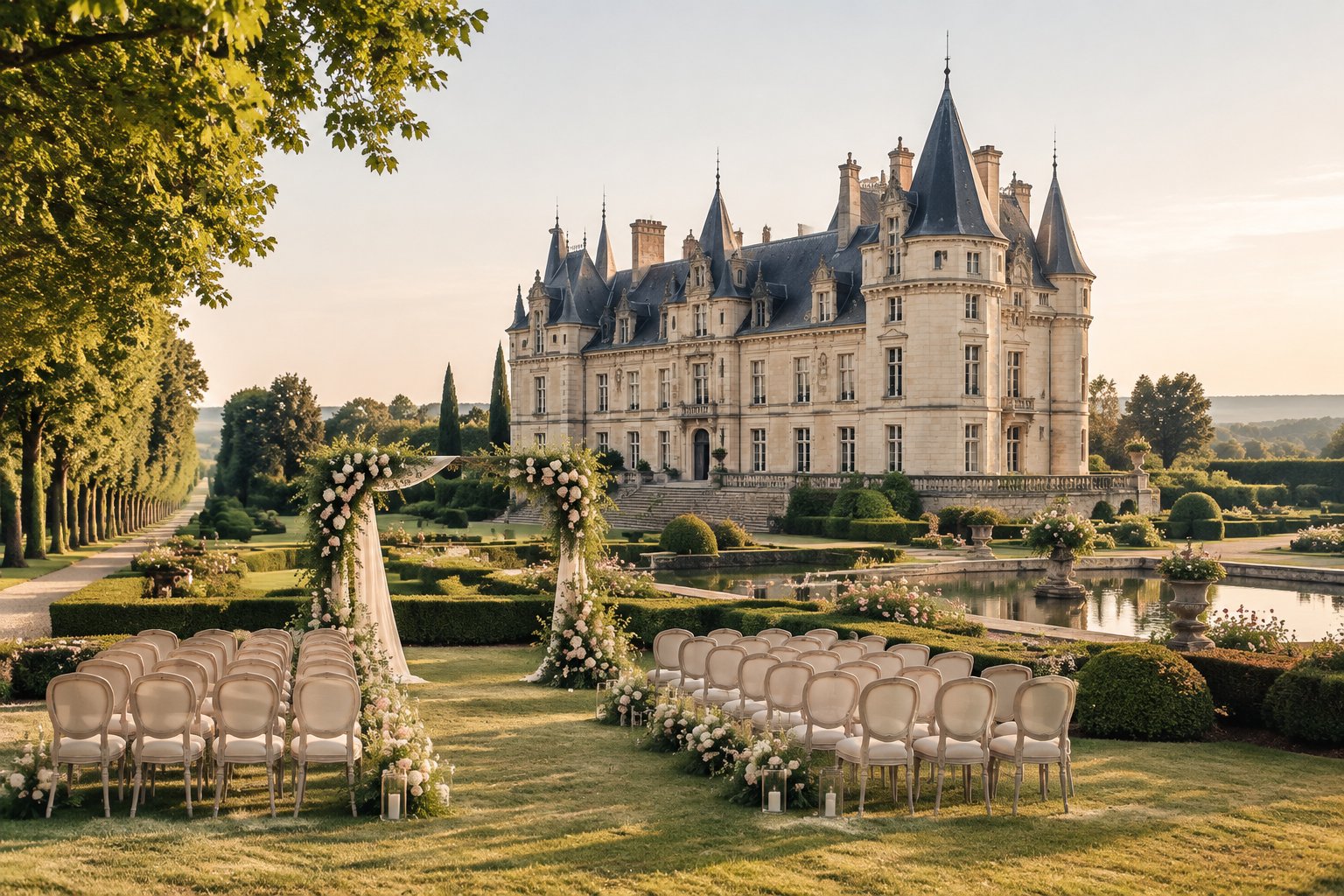
Use the names below as starting points for your search, then verify current availability, capacity, accommodation, supplier rules, and contract terms. Property names and accents can vary across listings, so confirm the exact location before you plan travel.
Grand Loire Valley Celebrations
Chateau Challain offers the grand, storybook character many couples seek in a Loire Valley wedding. Its scale suits celebrations that place architecture, formal rooms, and a full estate stay at the center.
Château de Paon adds another Loire option for couples drawn to historic grounds and a romantic countryside setting. Château de Vallery also suits a large, immersive celebration with period interiors and private-estate appeal.
When reviewing these properties, ask about ceremony capacity, dinner layouts, bedroom arrangements, and the distance between guest rooms and late-night entertainment.
Elegant Paris-Area and Northern France Escapes
Château Bouffémont brings polished interiors and proximity to Paris, making it suitable for a refined celebration with easier airport access. Château de Villette offers grand architecture and formal grounds near the capital.
Chateau de Vallery, Château d’Aveny, Domaine des Halles, and Château de Vauchelles broaden your options across northern France. Château de Vitry-la-Ville adds a stately Champagne-area setting for couples who want historic rooms and countryside privacy.
Confirm transfer times from Charles de Gaulle Airport, nearby hotel capacity, and local sound restrictions before sending invitations.
Vineyard and Countryside Weddings in the Southwest
Chateau Gassies and Château Gassies are names associated with an elegant Bordeaux-area style, while Chateau Rigaud and Chateau de la Couronne suit couples looking for vineyard or countryside scenery.
Chateau de Garde, Château l’Hospitalet, and Château de Paon offer different ways to bring wine, regional food, and outdoor entertaining into your celebration. Ask whether the estate has its own wine program, supports tastings, and provides covered space for dinner.
Chateau Mathilde and Château de Vitry-la-Ville can also appeal to couples seeking historic design with a rural setting. Review transport times and nearby accommodation before choosing a remote property.
Provençal Châteaux and Mas-Style Retreats
Chateau les Crostes and Château La Tour Vaucros suit sun-filled celebrations with gardens, vineyards, and outdoor dining. Le Mas de la Rose and Château du Pujolet offer a softer farmhouse or Provençal retreat feel for smaller groups.
Chateau Fengari and Château de Villette provide additional options for couples comparing privacy, architecture, and guest comfort. Château de Garde and Château l’Hospitalet can work well when wine-country scenery supports your wedding design.
For any Provençal property, confirm shade, pool access, air conditioning, rain cover, late-night sound rules, and the plan for guest transport.
How to Compare Capacity, Stays, and Wedding Packages
Compare a venue by the number of guests it hosts, the nights included, the services bundled into its wedding packages, and the spaces available in every weather condition.
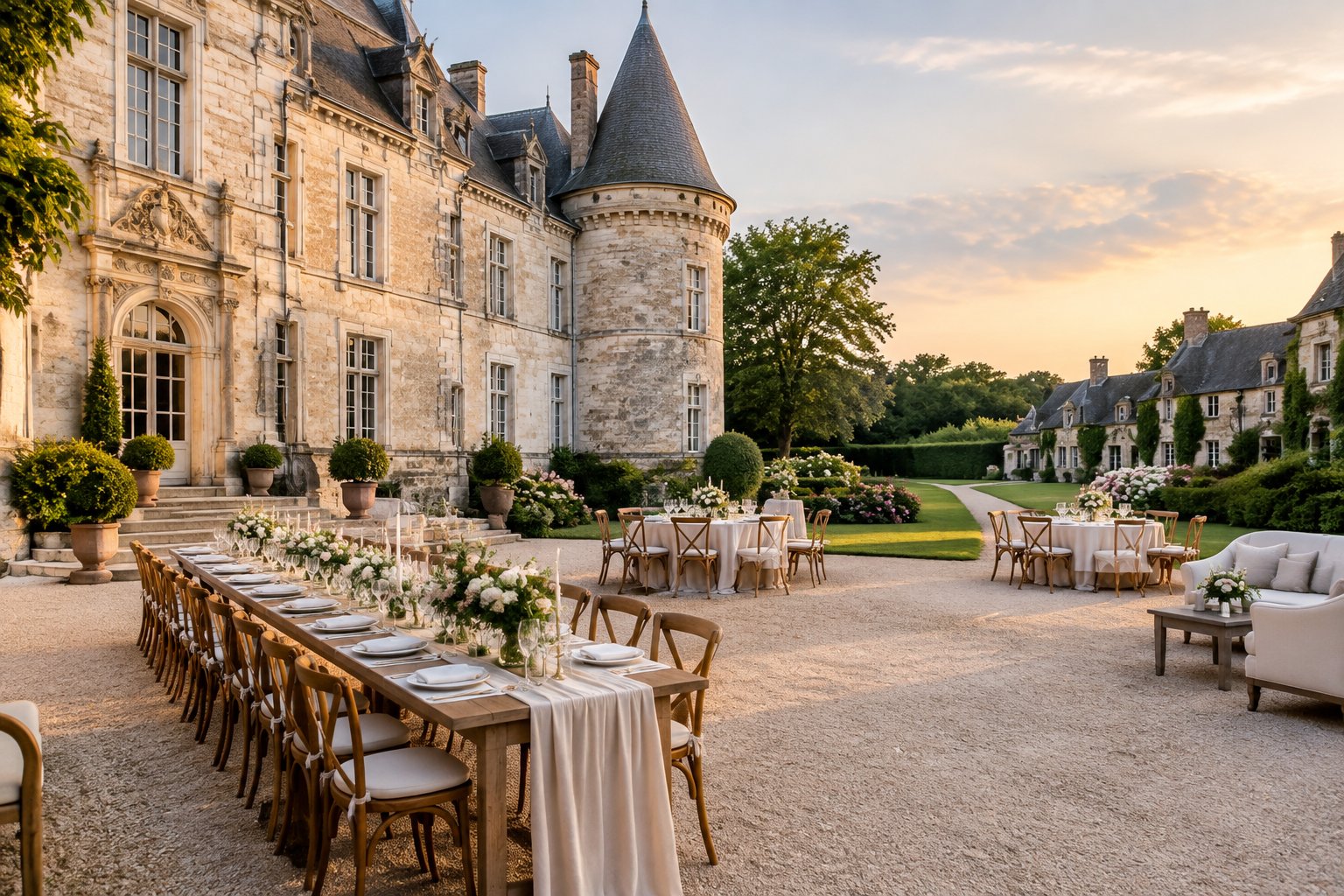
A beautiful estate becomes easier to judge when you turn its offer into clear numbers. Write down sleeping capacity, event capacity, hire dates, catering terms, planner support, and supplier access for every property you contact.
How Many Guests Can Stay on Site?
Separate the ceremony guest count from the overnight guest count. A château might host 120 people for dinner while offering bedrooms for 20, leaving you to arrange nearby hotels and shuttles for the rest of your group.
Request a room list with bed types, bathrooms, accessibility details, check-in times, and rates for extra nights. Ask whether the honeymoon suite sits in the main building, whether guests can use facilities such as an indoor pool or spa, and how luggage moves between buildings.
A multi-day wedding works best when the people closest to you can stay on the estate. For a larger guest list, map every nearby lodging option before you sign.
Dry Hire vs. All-Inclusive Wedding Packages
Dry hire gives you access to the property while you arrange services such as catering, rentals, flowers, music, and transport. It offers more control over suppliers and design, with more planning work for you or your wedding planner.
All-inclusive wedding packages combine selected venue services into one quote. Review the exact inclusions, guest minimums, tax treatment, menu choices, staffing, furniture, lighting, and overtime terms.
You can compare all-inclusive wedding venues in France when you want a clearer package structure. Ask whether the package price changes with your date, guest count, or accommodation needs.
What In-House Catering and Supplier Support Mean
An in-house chef or catering team knows the kitchen, service routes, table layouts, and venue rules. This arrangement can simplify timing and communication during your wedding weekend.
Some estates work with approved caterers or wedding planners, while others let you select outside suppliers. Ask about corkage, kitchen access, staffing fees, rental delivery, menu tastings, dietary requests, and the person who coordinates vendors on the wedding day.
A local wedding planner also helps with translations, transport, timelines, legal paperwork, and supplier meetings. Put every required service in writing so your package quote remains clear.
How to Plan Indoor and Outdoor Spaces
Assign each event a primary space and a weather backup. Your ceremony might use the chapel or gardens, cocktails might move to a terrace, and dinner might take place in an orangery, ballroom, or courtyard.
Measure guest seating, dance-floor space, bar placement, restrooms, power access, and catering routes. Ask whether rain cover is permanent or requires a rented tent. Confirm where guests wait during a room change and how far the backup space sits from the main building.
Properties in the Relais & Château style often emphasize hospitality and heritage, yet your contract still needs exact operational details.
How Much Does a French Château Wedding Cost?
A destination wedding in France can range from a smaller estate celebration to a luxury weekend costing well into six figures, with venue prestige, guest count, season, accommodation, and services driving the final total.
What Drives Venue Hire and Accommodation Costs
Venue hire rises with location, architecture, privacy, demand, and the number of days reserved. A landmark estate near Paris or the Riviera carries a different price structure from a rural property in the Dordogne or Languedoc.
Accommodation adds another major cost. Count the bedrooms included, extra nights, cleaning fees, taxes, and lodging for your planner or vendors. Check whether exclusive use covers the entire property or selected rooms.
Historic restoration also shapes the quote. A château with grand salons, extensive parkland, a private chapel, or a pool may include more maintenance and staffing in its rate. Compare the full package value instead of focusing on the rental figure alone.
Budgeting for Food, Wine, and Guest Transport
Catering costs reflect guest count, menu style, staffing, rentals, service hours, and the kitchen model. A seated dinner with multiple courses requires a different budget from a relaxed buffet or market-style meal.
Wine service can include a welcome drink, dinner pairings, Champagne, corkage, or an estate tasting. Request beverage prices by bottle or guest so you can plan accurately.
Transport needs its own line in your budget. Include airport transfers, hotel shuttles, ceremony transport, late-night returns, and accessibility needs. Rural estates may require several vehicles across multiple days.
Use how to allocate a wedding budget to divide spending before you request detailed venue quotes.
When to Book and What to Confirm Before Signing
Reserve your preferred château as early as possible for summer weekends, popular regions, and larger guest lists. Ask about weekday and shoulder-season dates if you want more flexibility.
Before signing, confirm the venue fee, dates and access hours, accommodation, deposit schedule, cancellation terms, taxes, insurance, catering rules, supplier restrictions, sound limits, cleanup, damage deposits, and rain plans.
Request a sample timeline and a complete list of included furniture, staffing, lighting, ceremony spaces, and guest facilities. Compare that document with every quote so you know which costs remain outside the package.