
Garden Style Wedding Venues: How to Choose Yours
A garden wedding gives you natural scenery, soft light, and a romantic setting that already feels complete. For most couples, a botanical garden wedding venue is the strongest choice because it combines established landscaping with dedicated ceremony, reception, and indoor backup spaces. Private estates, vineyards, rose gardens, and conservatories offer distinct styles when you want more privacy or a specific setting.
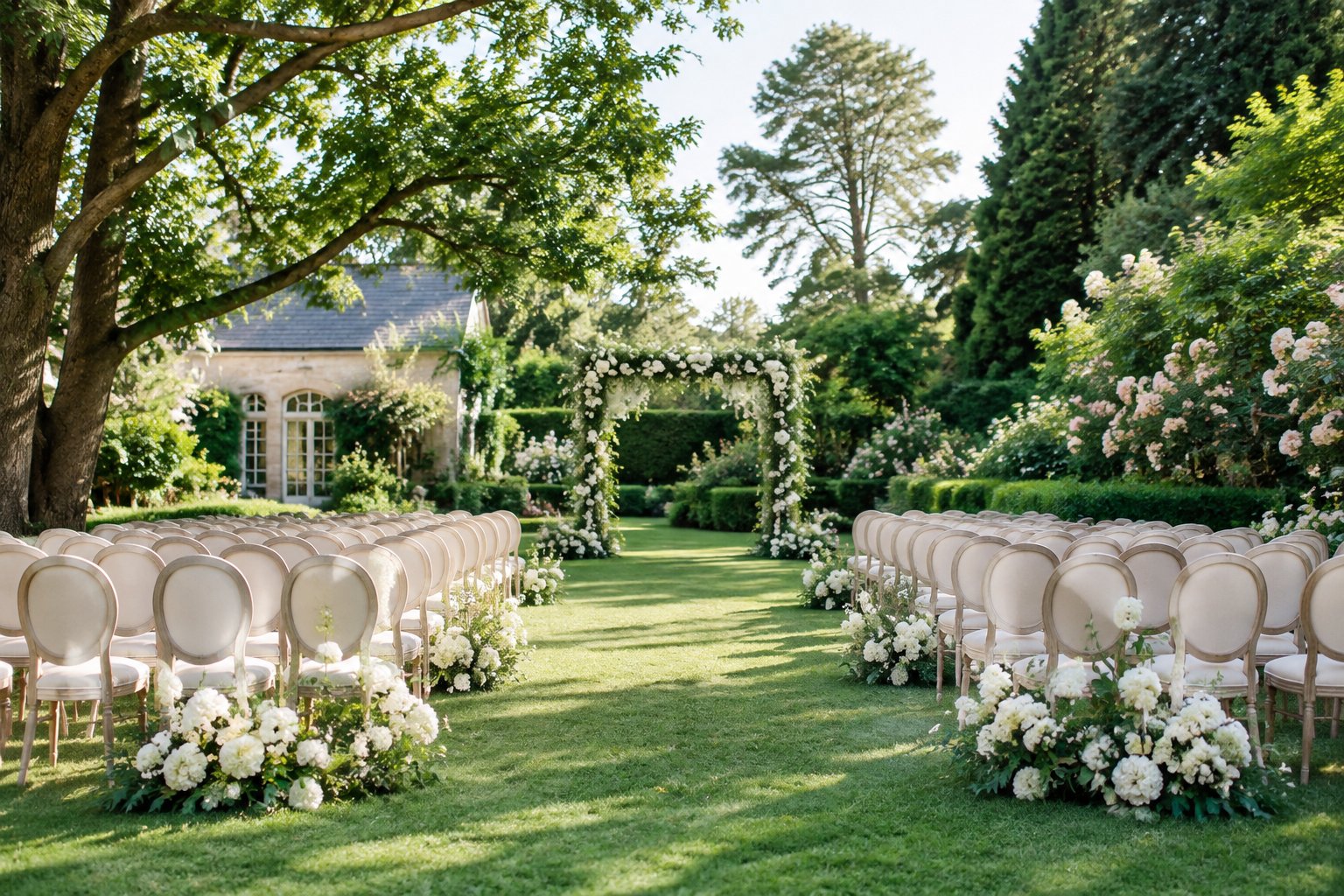
As you compare garden wedding venues, focus on guest comfort as closely as scenery. Check the rain plan, walking paths, restrooms, parking, lighting, vendor rules, and the way guests will move from the ceremony to the reception. A beautiful lawn becomes much easier to enjoy when every practical detail is ready.
Start your search with garden wedding ideas and schedule tours during the season you plan to marry. Seeing the grounds in similar light and weather will help you choose with confidence.
What Defines a Garden-Style Setting?
A garden-style setting uses living plants, designed outdoor spaces, and natural views as the main visual foundation for your wedding. Botanical gardens, private estates, vineyards, rose gardens, wildflower fields, and conservatories all fit the style when the landscape shapes the guest experience.

The best garden wedding venues connect beauty with usable event space. Look for comfortable seating areas, stable paths, shade, power, nearby restrooms, and a clear route to the reception.
Botanical Gardens, Estates, and Vineyards
A botanical garden wedding gives you curated plant collections, mature greenery, and several spots for an outdoor wedding ceremony. Many botanical garden wedding venues also include a glass conservatory, courtyard, pavilion, or indoor reception room.
An estate wedding venue adds architecture and privacy. Manicured gardens around a historic home create formal views, while vineyards bring open rows of vines and a relaxed countryside feel. Ask whether the venue reserves the grounds exclusively for your celebration and how many guests each area supports.
Rose Gardens, Wildflower Meadows, and Conservatories
A rose garden wedding suits a polished, romantic palette with clipped hedges, fragrant blooms, and structured paths. Wildflower meadows create a looser setting with movement, texture, and seasonal color.
A glass conservatory gives you the feeling of an outdoor celebration with stronger protection from rain, wind, and temperature changes. Check ventilation, guest capacity, flooring, lighting, and dance space before booking.
Outdoor Ceremony Spaces That Work for Receptions
The strongest outdoor wedding venues make the transition from ceremony to reception easy. A nearby lawn, terrace, tent, or conservatory lets guests move without long walks while staff reset the ceremony area.
Review the layout in person. Confirm where dinner, dancing, cocktails, restrooms, catering, and guest seating will go. A level surface supports tables and a dance floor, while shaded areas help guests stay comfortable during warm weather.
How to Choose the Right Setting for Your Wedding
Choose a garden wedding venue that fits your guest count, privacy needs, weather plan, and service expectations before you choose décor. A venue tour should answer practical questions about movement, timing, access, and included rentals.
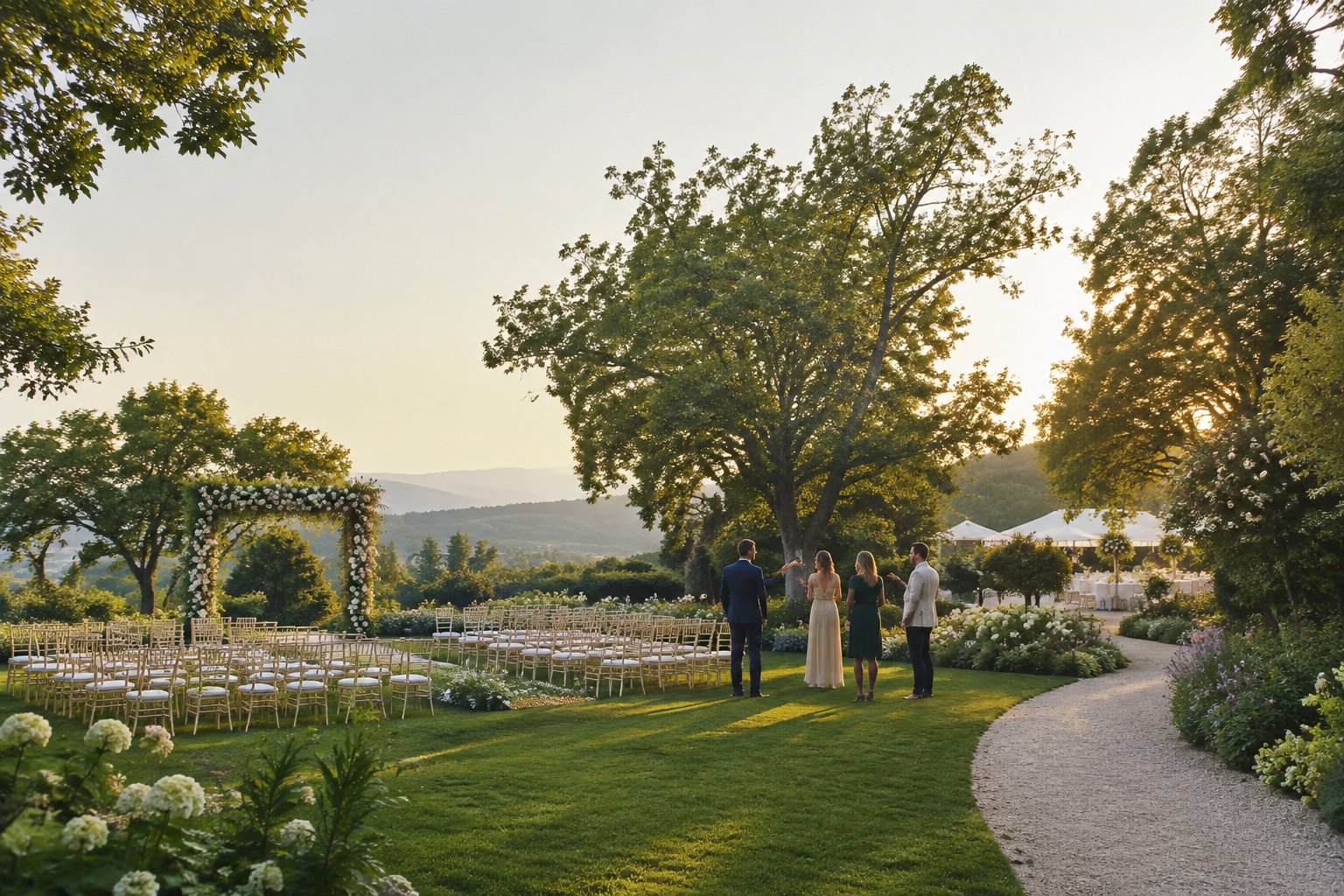
Your wedding planning becomes easier when the setting supports the day you want. Write down your priorities before touring, then compare each venue using the same list. You can also review how to pick a wedding location before you set appointments.
Match the Venue to Your Guest Count and Privacy Needs
Ask for seated capacity during the ceremony, dinner, and dancing. A garden that feels spacious during a tour may feel crowded once you add tables, a bar, a band, a dance floor, and service areas.
Private estates offer controlled access and a personal atmosphere. Botanical gardens may provide more plant variety and professional event support. If you want a quiet celebration, ask about public visiting hours, other events, guest entry points, and exclusive-use policies.
Evaluate the Rain Plan and Indoor-Outdoor Flow
A dependable rain plan names a specific indoor room or tent and shows how it will hold your entire guest list. Ask when the venue makes the weather call, who moves furniture, and whether the backup space includes flooring, climate control, lighting, and restrooms.
Walk the route between the ceremony, cocktail hour, dinner, and dancing. Covered walkways, nearby indoor rooms, and clear signs help your guests move comfortably when weather changes.
Ask What Is Included Before You Book
Request an itemized list covering tables, chairs, linens, setup, cleanup, lighting, sound, parking, security, restrooms, catering, and event staff. Confirm the rental period, rehearsal access, vendor arrival times, music curfew, alcohol rules, insurance needs, and décor restrictions.
Ask whether your photographer can access the full property and whether extra fees apply to gardens, conservatories, tents, generators, shuttles, or overtime. A written package gives you a clearer planning budget than a base rental price alone.
When Should You Schedule a Garden Celebration?
Schedule your wedding when the venue’s plants, temperature, daylight, and weather patterns support the guest experience you want. Visit during the same month and time of day as your proposed date so you can check bloom timing, shade, sunset, and ground conditions.
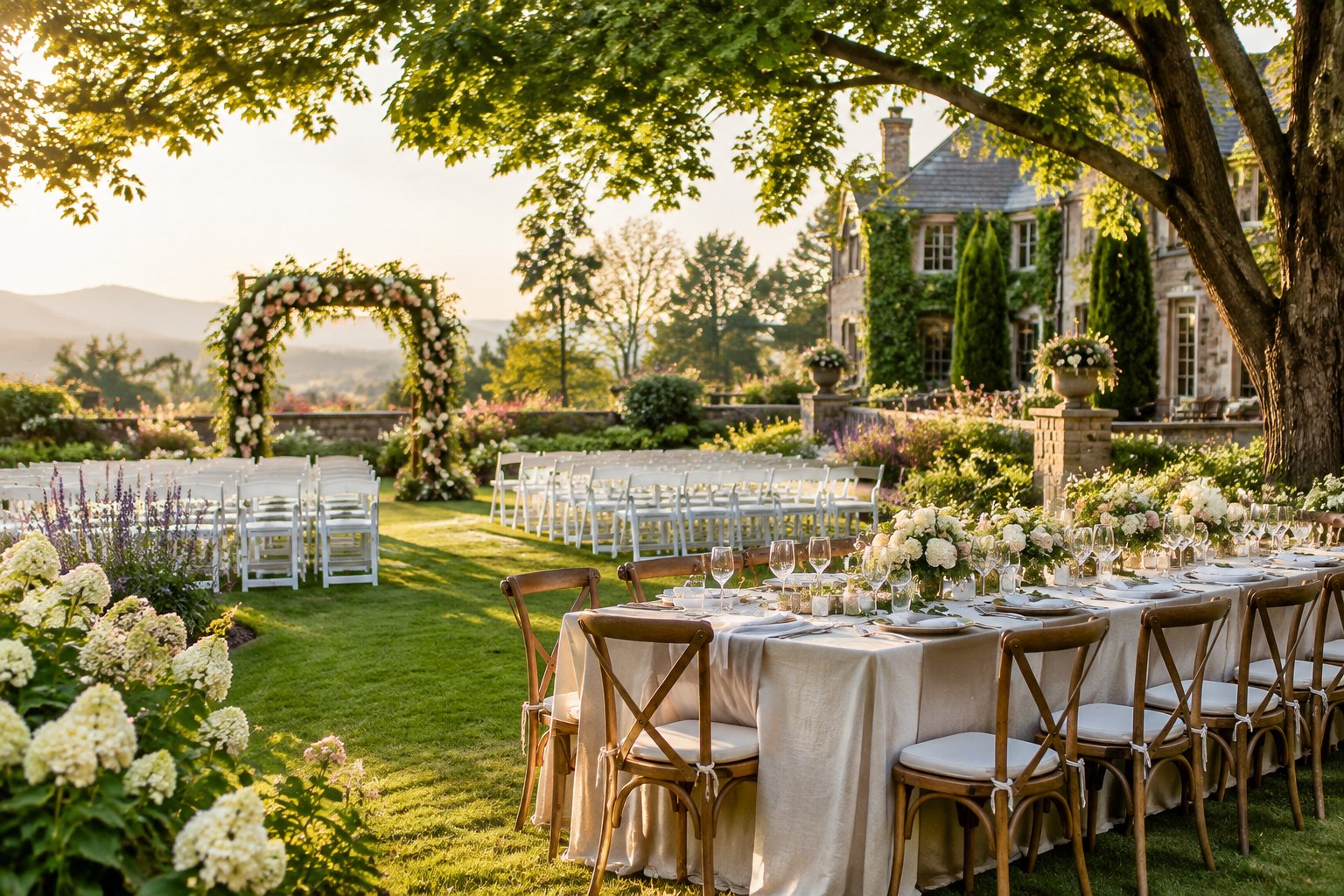
Seasonal details shape your flowers, attire, menu, photography plan, and comfort needs. Ask the venue for past images from your target month and speak with a florist about local availability.
Spring Blooms: Wisteria, Peonies, and Cherry Blossoms
Spring brings fresh greenery and popular blooms such as wisteria, peonies, and cherry blossoms. Bloom dates shift by region and weather, so a venue’s spring appearance from one year may not repeat on the same calendar date.
Cooler temperatures suit daytime ceremonies, though spring rain requires a strong indoor or tented backup. Wet ground also affects heels, carts, accessibility, and outdoor furniture placement.
Summer and Fall Color Without Peak-Season Surprises
Summer offers long daylight and full gardens, with lavender, roses, vines, and dense greenery creating rich color. Schedule ceremonies later in the day when heat is a concern, and confirm shade, water stations, fans, and cooling options.
Fall brings changing leaves, seed heads, late flowers, and warm earth tones. Popular weekends fill quickly, so ask about Friday, Sunday, and shoulder-season dates if you need more flexibility.
How to Plan Around Heat, Rain, and Early Sunsets
Use the forecast as one planning factor and build comfort into the layout. Provide shaded seating, water, fans, umbrellas, blankets, or heaters according to the season. Discuss insects, wind, muddy paths, and lawn care with the venue.
Shorter fall daylight affects your ceremony start time and photography schedule. Plan lighting for paths, restrooms, dining tables, entrances, and the dance floor. Moss, foliage, and darker corners also need careful lighting to remain safe and visible.
Standout Botanical and Conservatory Locations
Standout botanical wedding venues pair distinctive plant collections with event infrastructure, giving you strong ceremony views and memorable reception spaces. Confirm current wedding packages, guest limits, private-use rules, and seasonal availability with each location.
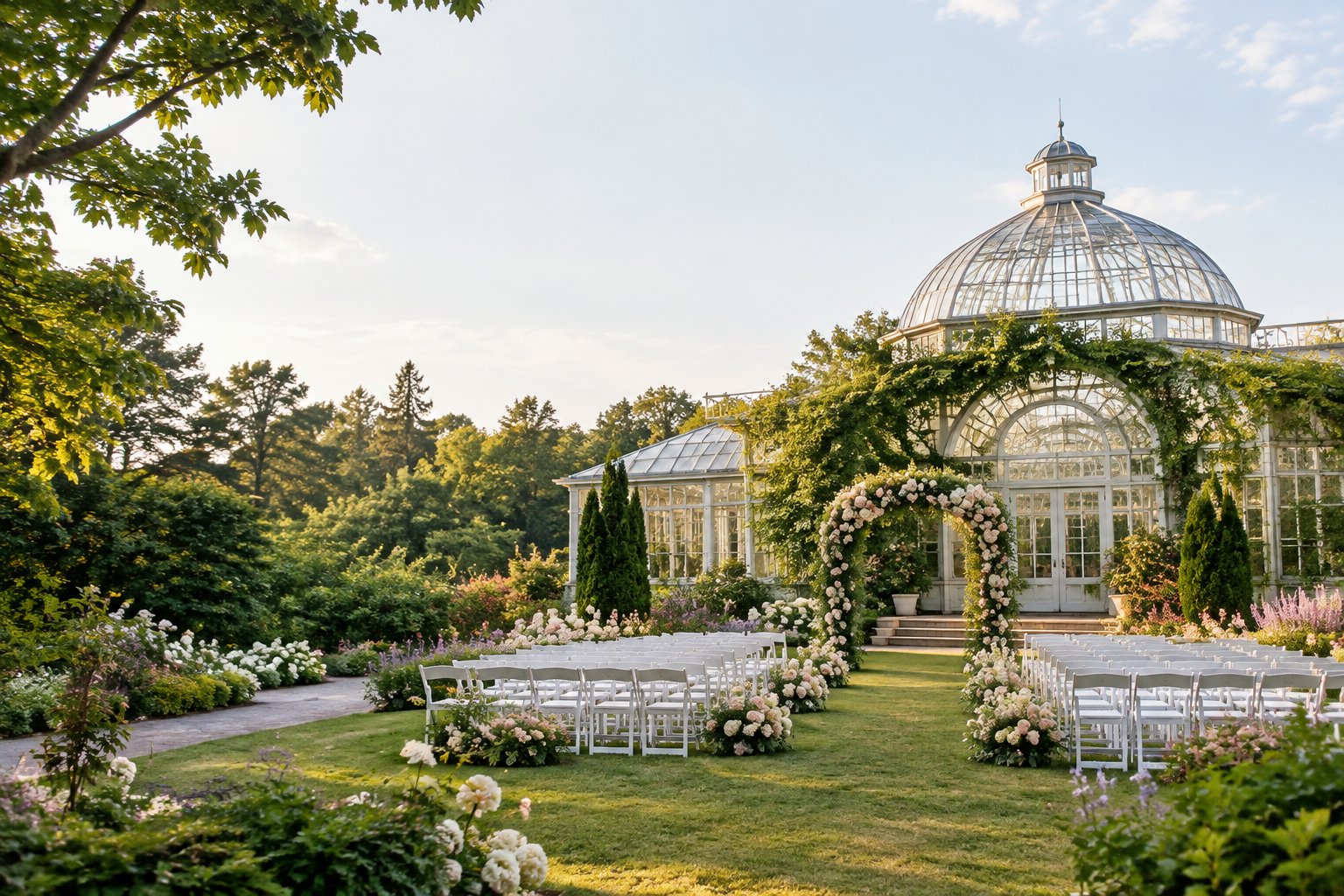
These locations also show how varied a garden wedding can feel. Urban gardens create a dramatic city setting, while conservatories provide architectural detail and weather protection.
Northeast Icons in Brooklyn and the Bronx
The Brooklyn Botanic Garden offers a peaceful garden setting within Brooklyn, New York, with formal plantings and city access. Its garden rooms support different visual styles, so ask which spaces are available for ceremonies, portraits, and receptions.
The New York Botanical Garden in the Bronx, New York, brings broad landscapes, seasonal plant displays, and elegant event environments. Its scale suits couples who want varied photo locations, though you should confirm guest transportation and event routes.
City Gardens From Chicago to Denver
The Chicago Botanic Garden in Glencoe, Illinois, gives you landscaped grounds, water views, and spaces designed around plant collections. Its suburban location offers a different pace from a downtown venue.
Denver Botanic Gardens brings regional character through structured gardens and outdoor spaces suited to Colorado’s light and landscape. Ask about weather timing, guest shade, and elevation-related comfort needs.
Franklin Park Conservatory and Botanical Gardens in Columbus, Ohio, combines indoor plant displays with outdoor areas and a distinctive architectural setting. Plan the guest route carefully so the ceremony and reception spaces feel connected.
Southern Gardens in Miami and Atlanta
Planterra Conservatory in Miami, Florida, offers a greenhouse-inspired atmosphere with lush plant material and a protected event environment. Ask about ventilation, air conditioning, lighting, and reception capacity for warm-weather celebrations.
The Atlanta Botanical Garden in Atlanta, Georgia, provides varied garden landscapes and city access. Its spaces can support formal, tropical, or garden-themed wedding designs, with each area creating a different guest experience.
Estate and Garden Venue Examples by Region
Estate gardens give you a private, architectural setting with room for formal ceremonies, portraits, and receptions. Compare each property by travel time, indoor capacity, weather backup, vendor policy, and the amount of garden access included in the rental.
California Gardens and Coastal Estates
Golden Gate Park in San Francisco, California, offers a broad urban park setting with gardens, paths, and landmark scenery. Public locations require careful review of permits, access rules, noise limits, and weather plans.
Calamigos Ranch in Malibu, California, combines landscaped grounds with a private ranch atmosphere. Ask how ceremony and reception spaces connect, which areas are exclusive, and how guest transportation works across the property.
New Jersey Estate Gardens
Crossed Keys Estate in Andover offers a countryside estate setting with gardens and event spaces suited to a private celebration. Ask about the ceremony lawn, tent or indoor plan, catering rules, and access for older guests.
The Morven Museum & Garden in Princeton pairs historic character with landscaped grounds. Its setting suits couples who want garden portraits and an elegant cultural backdrop.
The Skylands Manor in Ringwood, within Skylands, provides formal architecture and surrounding natural scenery. Crystal Plaza in Livingston offers an estate-style setting with garden possibilities and reception support.
Park Savoy Estate in Florham Park and Park Chateau Estate in East Brunswick provide additional New Jersey options for couples seeking landscaped grounds with dedicated event facilities. Review each venue’s current package details, guest capacity, and weather plan before comparing prices.
Alternative Outdoor Settings to Consider
A public park, private backyard, farm, vineyard, arboretum, or historic home can create a garden atmosphere with a different level of control. Public spaces may require permits and restrictions, while private properties need careful planning for restrooms, power, parking, catering, and waste removal.
Use affordable outdoor wedding venues to widen your search, then verify every practical service directly with the venue owner.
Design Ideas That Let the Landscape Lead
The best garden wedding ideas build around the plants and architecture already present at the venue. Use flowers, linens, lighting, and furniture to frame the landscape so guests can see and enjoy it throughout the celebration.
Choose Flowers That Complement Existing Plantings
Walk the property with your florist and note the dominant colors, textures, and bloom shapes. Choose arrangements that echo the setting through local flowers, greenery, vines, lavender, wildflowers, moss, or roses from nearby rose gardens.
A restrained palette keeps the venue visible. Potted herbs, bud vases, meadow-style arrangements, and seasonal branches add detail without covering every surface. Ask about plant protection rules before placing décor in beds or around trees.
Create a Garden-Inspired Ceremony Without Blocking Views
Place the ceremony arch where it frames the best landscape view. Use an open structure with airy flowers or greenery when a solid backdrop would hide trees, water, architecture, or garden paths.
Keep aisle décor low and secure it against wind. Confirm whether chairs, arches, candles, petals, hanging pieces, and aisle runners need approval. Good sightlines help every guest follow the ceremony and give wedding photographers more angles for natural portraits.
Make Evening Celebrations Feel Warm and Intentional
Layer lighting across the spaces guests use. String lights, lanterns, candles, pin spots, and softly lit pathways create warmth while keeping steps and entrances visible.
Use warm bulbs that flatter skin tones and foliage. Light the bar, restrooms, catering areas, dinner tables, and dance floor as well as the main garden. Test the setup after sunset so your wedding photographers can work with the actual brightness, shadows, and background views.