
Garden Wedding Venues Xenia, Ohio: A Planning Guide
Garden wedding venues in Xenia, Ohio, give you a relaxed outdoor setting with lawns, mature trees, flowers, and space for both your ceremony and reception. Orchard Lane Events stands out for couples who want garden views with modern rustic style, since its patio overlooks rolling Greene County farmland and its indoor banquet hall supports receptions in changing weather.
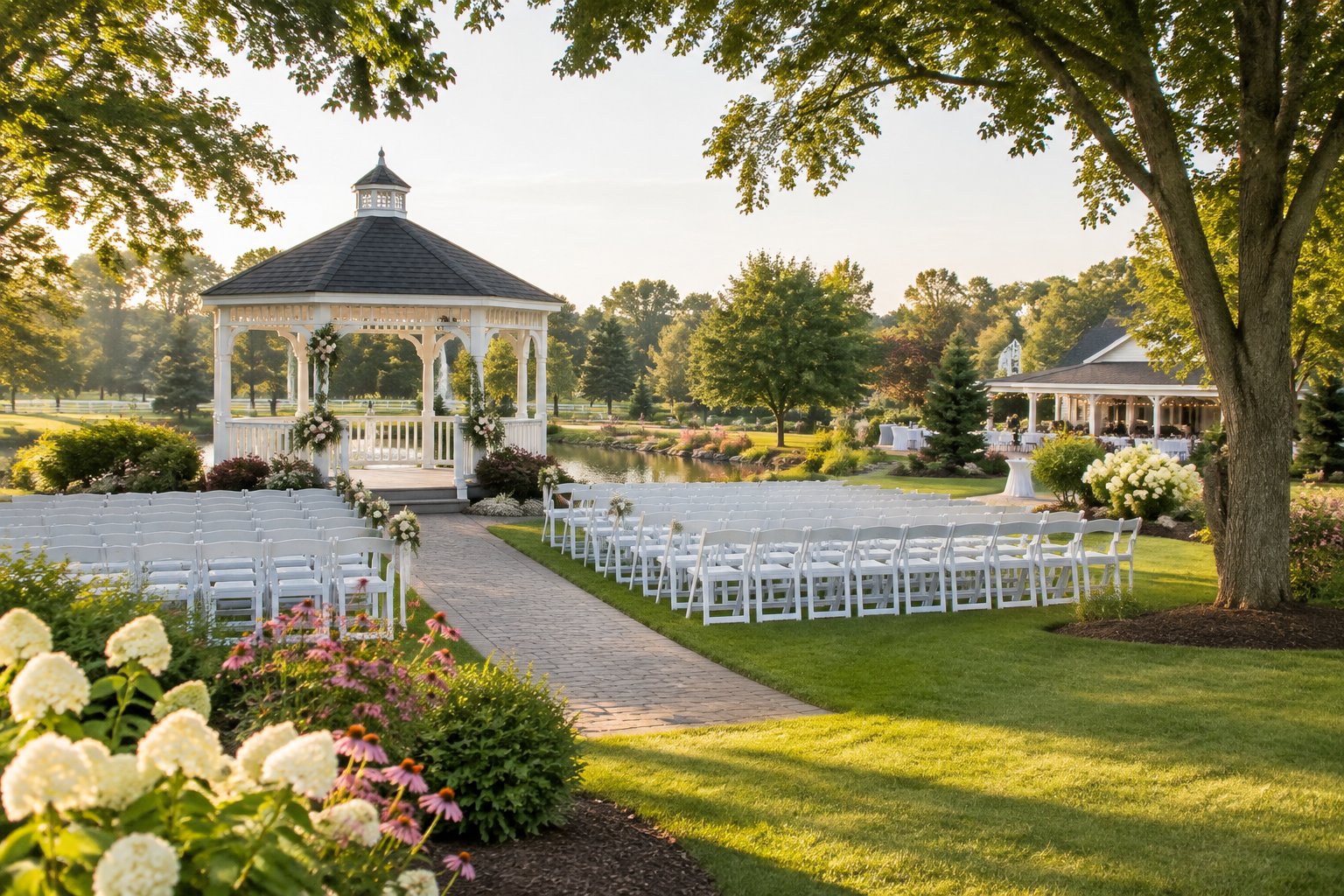
Your venue choice shapes guest comfort, photography, vendor costs, and the flow of the wedding day. Xenia places you near farms, barns, historic spaces, and Dayton-area event venues, giving you room to match the setting to your guest list and wedding style.
Start your search by comparing ceremony views, weather plans, access, parking, package details, and vendor rules. When you find a venue that fits, schedule a tour and ask for a complete estimate before choosing your date.
What to Look for in a Garden Setting
The strongest garden wedding venues combine attractive outdoor spaces with a practical plan for rain, guest movement, parking, and reception service. Walk the property during a tour and note how guests will move from the wedding ceremony to cocktail hour, dinner, and the dance floor.
Ceremony Views, Natural Light, and Photo Backdrops
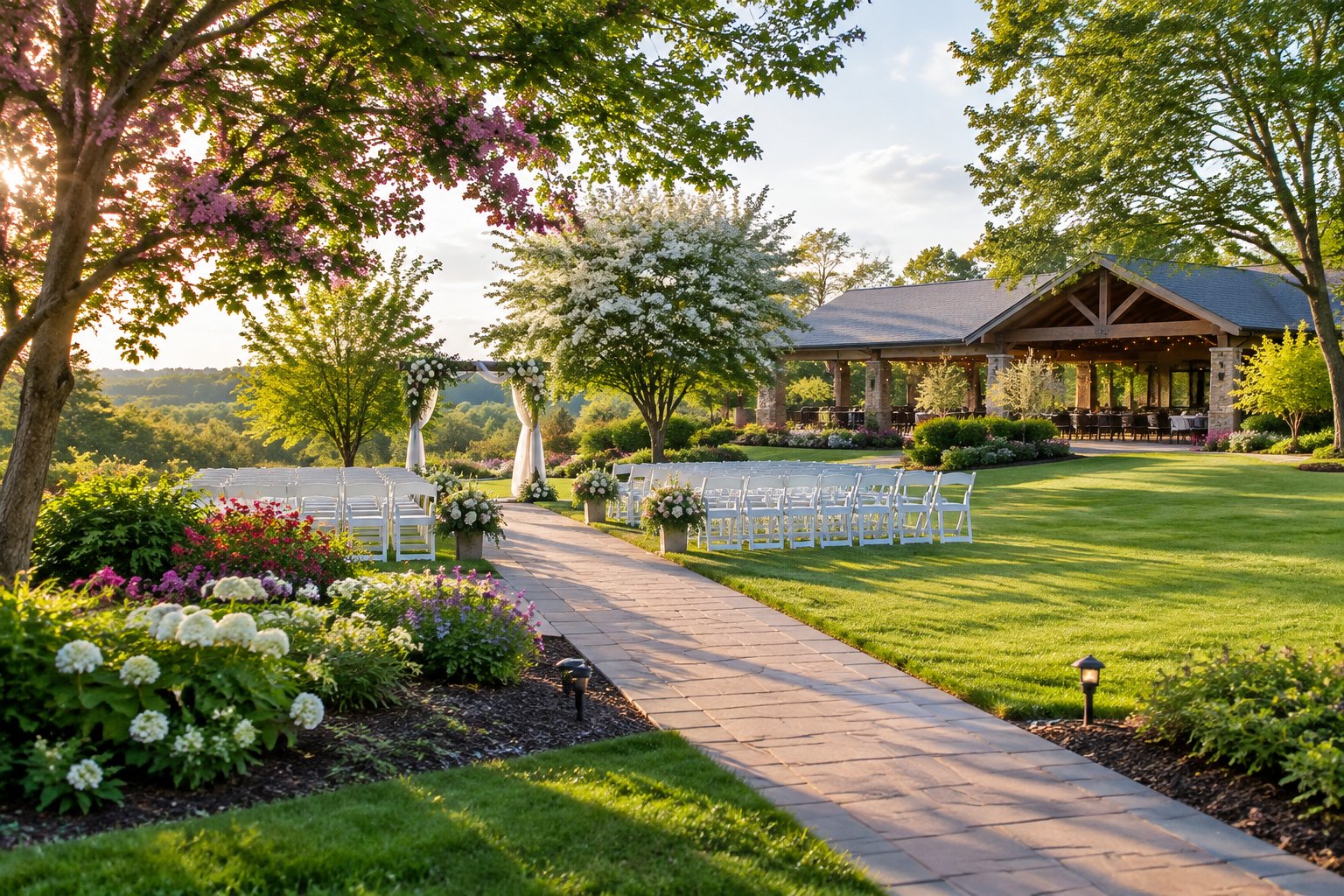
Look for gardens with a clear ceremony focal point, such as a floral arbor, gazebo, pond, orchard, or tree-lined path. Ask where the sun falls during your ceremony time. Natural light affects guest comfort and the color of your photos, especially during late afternoon events.
Check the walking distance between the ceremony and reception spaces. A short, level route helps older guests and anyone using mobility equipment. Ask your photographer where portraits are allowed and whether the venue has shaded areas for family photos.
Covered Patios and Indoor Rain Plans
A covered patio gives you a useful transition space for cocktails, dining, or photographs. Ask whether it has lighting, fans, heaters, screens, and enough room for your guest count.
Your rain plan should name the backup space, the decision deadline, and the person who makes the call. Confirm whether the indoor room can hold the ceremony, reception tables, buffet, bar, and dance floor at the same time.
Accessibility, Parking, and Guest Comfort
Accessible wedding venues should provide firm paths, usable restrooms, seating options, and entrances without steep steps. Ask about golf carts or shuttles for guests who cannot walk across large gardens.
Review parking capacity, overflow parking, lighting, restroom locations, and transportation options. If guests are coming from Cincinnati or Dayton, ask about nearby hotels and shuttle timing.
Xenia-Area Venues to Put on Your Tour List
Your tour list can include garden properties in Xenia, rustic farms near town, and larger event spaces across the Dayton area. Match each venue to your guest count, preferred level of service, and tolerance for travel between the ceremony and reception.
Orchard Lane Events for Orchard Views and Modern Rustic Style
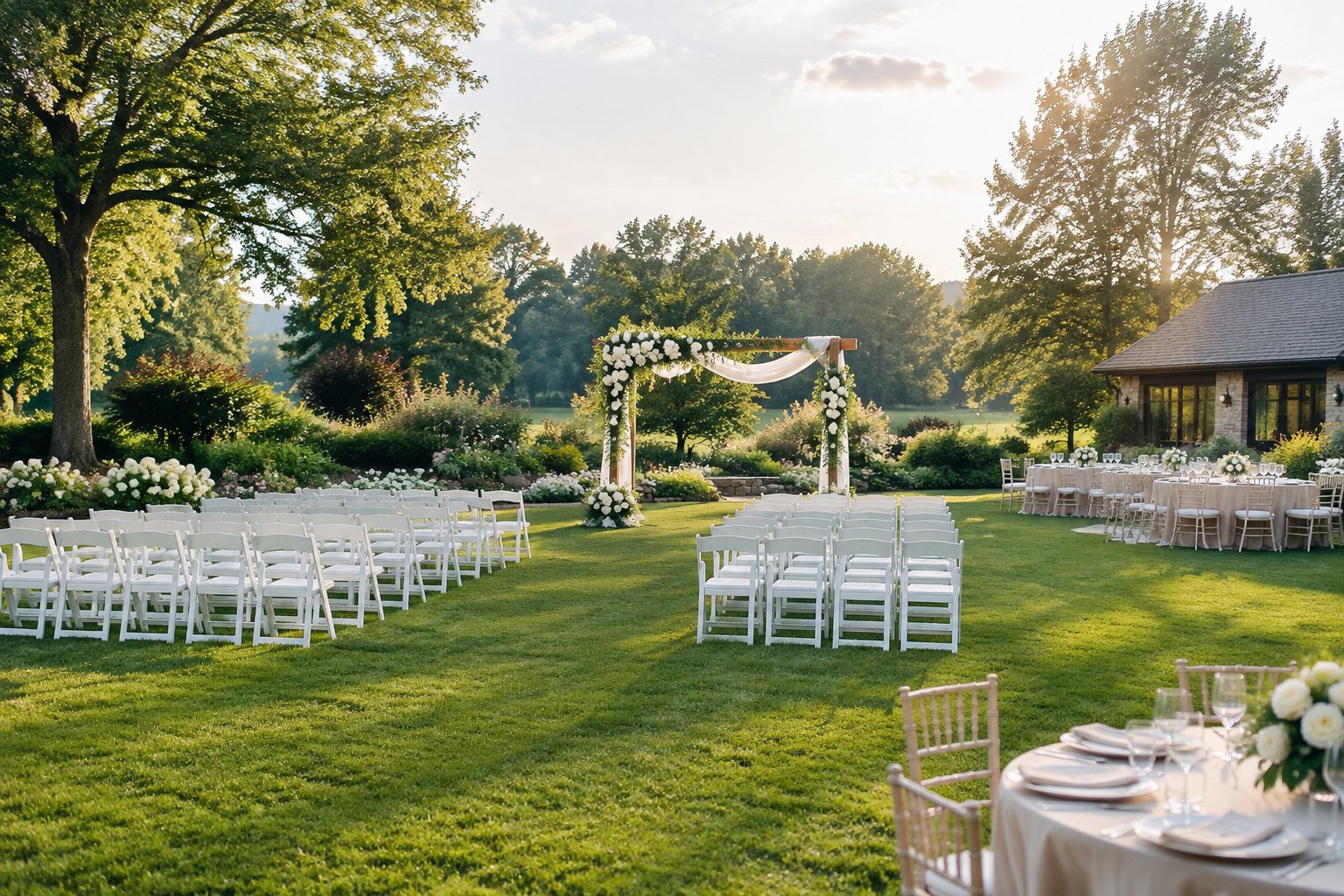
Orchard Lane Events combines an historic apple orchard setting with a renovated barn-style banquet hall. Its patio sits at a high point in Greene County and provides views across surrounding farmland. The venue lists capacity for up to 125 guests, with indoor and uncovered outdoor spaces.
You can host ceremonies, receptions, rehearsal dinners, engagement parties, bridal showers, and elopements there. Published services include getting-ready rooms, bar services, outside vendors, tables, chairs, parking, and cleanup. Ask how the patio layout changes with your guest count and where dancing will take place.
Estate, Farm, and Barn Options Near Xenia
The Estate at Sunset Farm, Canopy Creek Farm, Whispering Hearts Event Center, Silver Creek Stables, The Bicentennial Barn, and The Pasture give you several countryside styles to compare. These properties may suit a rustic wedding with open lawns, wooded views, farm buildings, or landscaped ceremony areas.
Silver Creek Stables lists indoor and outdoor spaces for up to 250 guests on 73 acres. Its published amenities include a ceremony arch, dance floor, tables, chairs, lighting, dressing areas, parking, setup, cleanup, and a day-of coordinator. Its rules include approved outside catering, licensed bar service, and liability insurance, so review the current contract before booking.
Historic, Golf, and Downtown Alternatives Near Dayton
The Dayton Masonic Center and Springfield Metropolis offer formal banquet halls with more controlled indoor layouts. The Golf Club at Yankee Trace brings golf and country club scenery, while Bridgeport Depot offers a historic downtown atmosphere.
These event venues work well when you want gardens or outdoor portraits paired with a dependable indoor wedding reception. Ask about ceremony locations, guest capacity, parking, catering requirements, music end times, and transportation between hotels and the venue.
Which Venue Type Fits Your Wedding Vision?
Choose the venue type that supports your guest experience from arrival through the last dance. Garden estates create a romantic setting, farms add rural character, and indoor-outdoor spaces give you more control over weather and timing.
Garden Estates and Country Farms
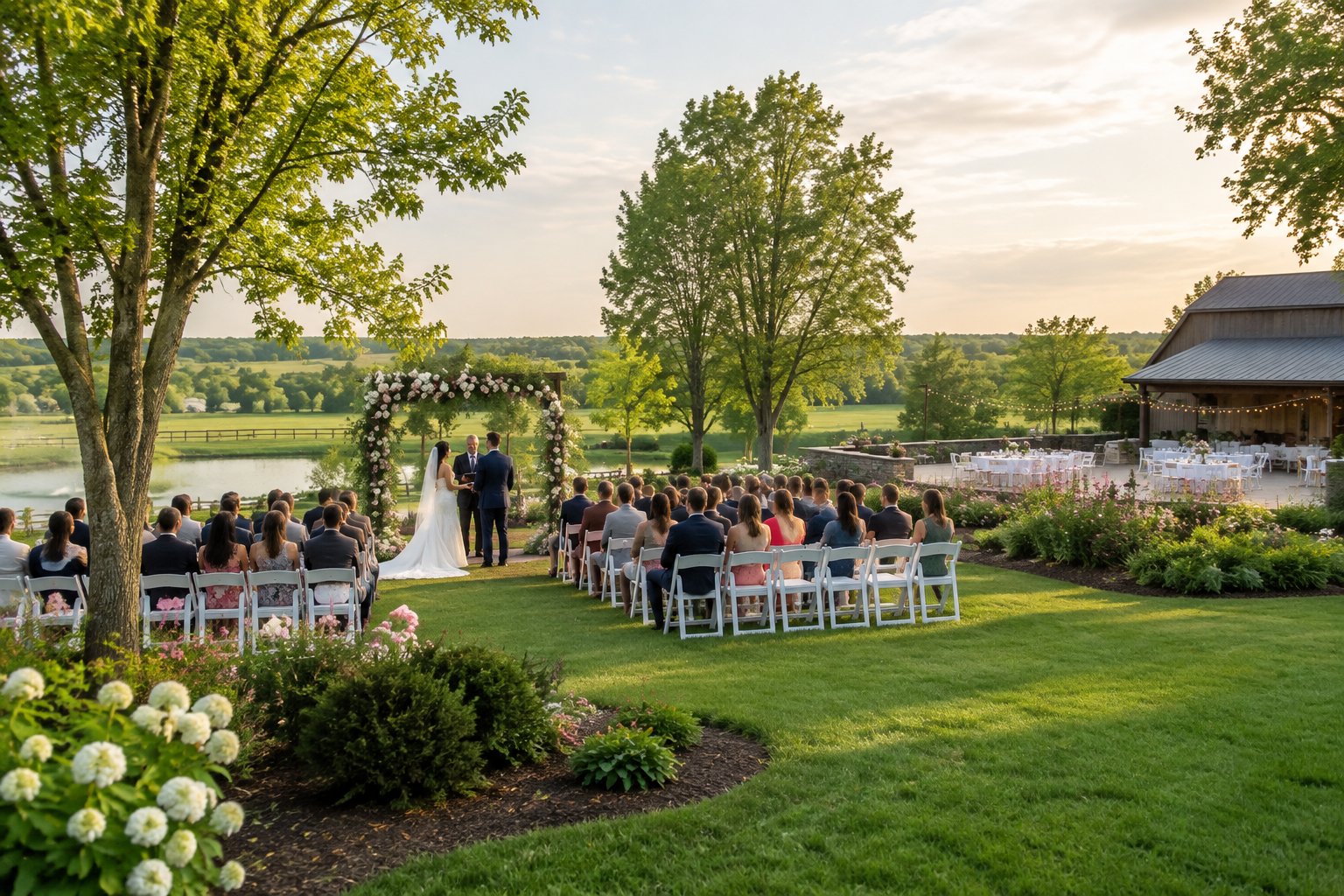
Garden estates and country farms suit couples who want flowers, lawns, mature trees, ponds, and open-air ceremonies. They also provide natural photo backdrops that need less added décor.
Ask whether the property includes a rain-ready reception room, getting-ready spaces, restrooms near the garden, and lighting after sunset. Farm venues can feel private and scenic, though you should confirm road conditions, parking surfaces, and transportation plans.
Barns With Landscaped Outdoor Spaces
Barn venues pair a strong indoor reception setting with outdoor ceremony lawns, patios, orchards, or wooded areas. This format works well for a rustic wedding with dinner and dancing inside after outdoor vows.
Review ceiling height, climate control, restroom access, power, lighting, and the space needed for your band or DJ. Ask whether tables, chairs, dance floors, décor, and cleanup are included in the rental.
Hotels, Restaurants, and Indoor-Outdoor Event Spaces
Hotels, restaurants, ballrooms, aquariums, zoos, museums, galleries, breweries, vineyards, wineries, inns, resorts, and lodges offer distinct guest experiences. Hotels support room blocks and easy guest access, while restaurants and breweries may simplify food and beverage planning.
Country clubs, retreats, ranches, beaches, and private estates bring different scenery and service models. Compare the ceremony view, reception layout, guest travel, menu choices, bar policy, and event end time before you choose based on appearance alone.
How to Compare Packages, Services, and Costs
Compare the full wedding cost at your guest count, including rental time, food, drinks, staffing, rentals, taxes, insurance, and add-ons. A low site fee can grow when you add every service separately.

All-Inclusive Packages vs. Select Services vs. Raw Space
All-inclusive packages may combine the venue, in-house catering, bar services, event rentals, staffing, setup, cleanup, and coordination. They reduce the number of vendors you manage and make the first budget easier to estimate.
Select-services venues let you choose specific items, such as tables, chairs, linens, or an event coordinator. Raw space gives you control over catering, décor, rentals, and vendors, with more planning work attached.
Ask each venue for an itemized quote. Confirm the deposit, payment schedule, cancellation terms, overtime rate, service charges, taxes, and required liability insurance.
Catering, Bar, and Rental Inclusions to Confirm
Ask whether catering services come from the venue, a preferred caterer, or an approved outside company. Review menu pricing, staffing, china, glassware, linens, water service, cake cutting, and late-night food.
For wedding bar services, confirm who supplies alcohol, bartenders, mixers, glassware, permits, and insurance. Check whether the bar includes beer and wine only or also spirits.
List every rental item in writing, including ceremony chairs, reception tables, cocktail tables, a bar, a dance floor, lighting, and outdoor heaters. Wedding cake services may be included, restricted to approved bakers, or priced separately.
Getting-Ready Rooms, Lodging, and Staffing
A bridal suite and dressing room give your wedding party a private place to prepare. Ask when you receive access, whether restrooms and mirrors are included, and whether the groom’s party has a separate space.
For a 150-guest wedding, confirm restroom counts, parking, loading access, setup hours, and the number of event staff assigned to your day. Ask about on-site accommodations, nearby hotels, room blocks, transportation, cleanup, and who coordinates vendors during the reception.
Questions to Ask Before You Book
Ask for written answers about weather, event scheduling, vendor rules, and guest logistics before you sign. A clear contract should match what you saw on the tour and what the venue promised during planning.
How Does the Weather Backup Work?
Ask when the venue makes the weather call, who makes it, and how quickly staff can reset the ceremony. Confirm whether the backup space holds your guests, chairs, décor, cocktail hour, dinner, and dance floor.
Ask about heat, fans, umbrellas, tent policies, muddy-ground procedures, and access for vendors. Request a sample rain-day timeline so you know when the change affects transportation, photography, and guest seating.
What Events Can the Venue Host Beyond the Wedding Day?
Ask whether the venue hosts your rehearsal dinner, welcome party, after party, farewell brunch, couples luncheon, engagement party, wedding shower, baraat, or elopement. Confirm rental hours, pricing, catering rules, cleanup, and whether another event shares the property.
If you plan several gatherings, ask whether one contract covers them or each event requires separate booking terms. Check whether early access is available for décor and rehearsal setup.
Which Outside Vendors and Digital Options Are Allowed?
Ask whether you may hire your own wedding florists, wedding photographers, wedding videographers, wedding planners, and wedding beauty professionals. Confirm preferred-vendor rules, outside-vendor fees, insurance requirements, delivery windows, and cleanup duties.
Ask about microphones, Wi-Fi, livestreaming, recording, and seating for remote wedding participants. Put approved vendors and digital services in the contract so your ceremony and reception plans remain clear.