
How Can I Be Officiate a Wedding? A Friendly Guide to Getting Started
Becoming a wedding officiant is a rewarding experience that allows you to play a crucial role in one of the most significant moments in a couple’s life. To officiate a wedding, you need to meet certain legal requirements, which often vary by state and sometimes even by local jurisdiction. Researching these laws is the first step to ensure you can perform the ceremony legally.

If a friend or family member has asked you to officiate, it’s essential to understand the importance of your role. You’ll want to ensure that the ceremony reflects the couple’s wishes and includes the traditions that matter most to them. This personal touch makes the day even more special.
Getting ordained can be a straightforward process, especially with online options available today. Once you’re ordained, you can focus on crafting the perfect ceremony while keeping all legal aspects in mind. It’s an exciting journey that lets you be part of something truly beautiful.
Getting Ordained as a Wedding Officiant
Becoming an ordained wedding officiant is a straightforward process. You have various options to get ordained, either online or through local organizations. Understanding these options is key to choosing what suits you best.
Understanding Different Ordination Options
When you decide to become a wedding officiant, you must first understand the ordination options available. Many people choose to get ordained online. Websites like the Universal Life Church and American Marriage Ministries offer straightforward procedures for ordination.
These organizations typically do not require extensive training. Instead, they provide quick online applications. You fill out your information and often receive your ordination credentials via email. Ensure you check local laws, as some states may have different requirements for officiants.
Online Ordination Process
The online ordination process is usually simple and efficient. Here’s a quick breakdown of how it works:
-
Choose an Organization: Select a reputable site, like Universal Life Church or American Marriage Ministries.
-
Complete the Application: Fill out the online form with your details. Information typically includes your name, address, and email.
-
Receive Credentials: After approval, you’ll get a printable officiant license or ID number. This document confirms your ordination and is necessary for performing weddings.
This process allows you to get ordained in a matter of minutes from the comfort of your home.
Local vs. Online Ordination
Choosing between local and online ordination depends on your needs and circumstances. Local ordination often requires more steps, including in-person meetings and possibly training sessions. Some local organizations may provide support and guidance throughout the process, which can be helpful if you prefer face-to-face interactions.
On the other hand, online ordination through groups like the Universal Life Church is faster and more flexible. It offers the convenience of completing everything online.
Consider both options and see which one aligns best with your preferences and local legal requirements for officiating weddings.
Preparing for the Wedding Ceremony
Preparing for the wedding ceremony involves several important tasks that ensure everything runs smoothly. You’ll need to create a ceremony script, conduct a rehearsal, develop public speaking skills, and personalize the ceremony to reflect the couple’s love. Let’s explore each of these steps.
Creating a Ceremony Script
Start by crafting a solid ceremony script. This document will guide you through the entire ceremony.
Include essential parts such as:
- Opening remarks: Welcome the guests and introduce the couple.
- Wedding vows: Ensure the couple’s vows are included, whether traditional or personalized.
- Rituals: Add any unique traditions or readings.
Make it flow naturally by organizing the sections in a logical order. Keep the tone respectful and warm.
Don’t forget to collaborate with the couple on their preferences. It’s important to reflect their personality in the script. Consider using a detailed guide to help you structure it well.
Rehearsal Guidelines
A successful wedding requires a good rehearsal. Schedule this at least a few days before the big day.
During the rehearsal, focus on:
- Order of events: Go through each part of the ceremony to ensure everyone knows their role.
- Timing: Keep track of how long each part will take.
- Logistics: Plan how the couple will enter and exit.
Encourage the couple and the bridal party to practice walking down the aisle. This will create a comfortable atmosphere on the wedding day.
Make notes on anything that needs special attention, like music cues or positioning. This preparation will make the actual ceremony much smoother.
Public Speaking Skills
Good public speaking skills are essential for officiating a wedding. You want to engage the audience and convey emotions.
Here are tips to enhance your speaking abilities:
- Practice: Rehearse your script multiple times. This builds confidence.
- Tone and pace: Use varied tones and maintain a steady pace. Avoid rushing.
Try to make eye contact with the guests. This helps create a connection. Also, consider your body language—stand tall and open.
Practicing in front of friends or family can provide valuable feedback. Their input will help you improve your delivery.
Personalizing the Ceremony
Adding personal touches makes the ceremony special. Speak with the couple about their love story and values.
Consider including:
- Unique readings: Choose poems, songs, or passages that resonate with the couple.
- Special rituals: Such as candle lighting or sand pouring, to symbolize their union.
Integrate anecdotes about the couple’s journey together. This enhances the emotional connection with the guests.
By personalizing the ceremony, you not only celebrate their love but also create lasting memories for everyone involved.
Legal Considerations for Officiating a Wedding
As you prepare to officiate a wedding, it’s important to know the legal requirements involved. This includes understanding marriage licenses, state laws, and the registration process for officiants. Each of these elements plays a key role in ensuring the ceremony meets legal standards.
Marriage License and Certificate
Before the wedding, the couple needs to obtain a marriage license. This document is essential for legal recognition of the marriage. They should apply for the license at their local government office.
Requirements can vary by state, so it’s crucial to check specific guidelines. Some places require fees, identification, or even a waiting period.
After the ceremony, you will sign the marriage license along with the couple and a witness. This signed document is then returned to the local office to obtain a marriage certificate. The marriage certificate serves as proof that the couple is legally married.
Understanding State Marriage Laws
Every state has different marriage laws that dictate how ceremonies should be conducted. Make sure to familiarize yourself with the specific rules in your state. This might include who can officiate, any required training, and necessary documentation.
Some states allow a friend or family member to officiate after obtaining a specific license or registration. Others may require the officiant to be a registered minister or a representative of a religious organization.
Check your local laws to ensure your officiating is valid. This prevents any issues that could arise later regarding the legality of the marriage.
Completing the Officiant Registration Process
To legally officiate a wedding, you may need to undergo a registration process. This often involves applying for a wedding officiant license or minister registration. The process can differ by location, so be thorough in your research.
Typically, you’ll need to fill out an application and pay a fee. Some jurisdictions also require proof of identity and sometimes a background check.
Once registered, keep a copy of your officiant credentials handy on the wedding day. This ensures that you can show proof of your authority to lead the ceremony if needed.
Day-of Wedding Duties for the Officiant
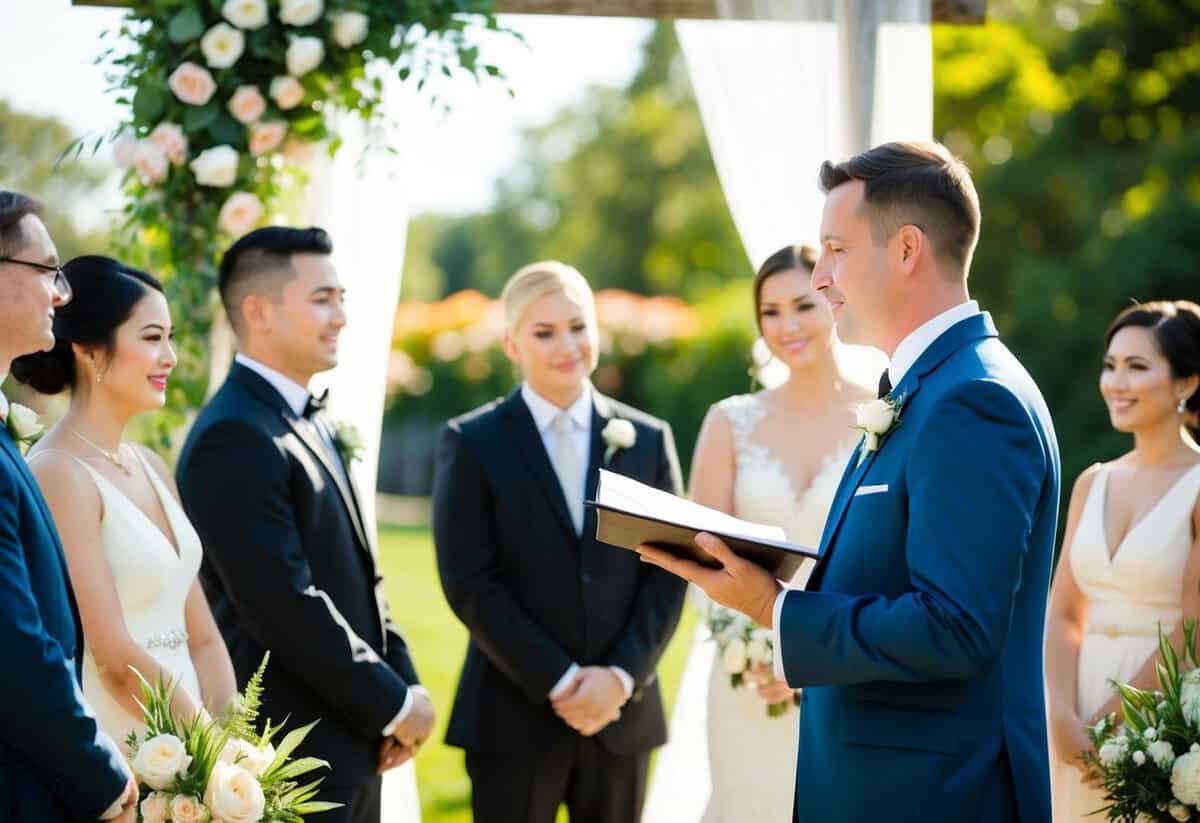
As the officiant, you have important responsibilities on the wedding day to ensure everything runs smoothly. Your main tasks include conducting the ceremony, making the official pronouncement, and handling the necessary paperwork. Each duty is vital to creating a memorable experience for the couple and their guests.
Conducting the Wedding Ceremony
You’ll begin your day by coordinating with the couple and wedding coordinators. Arrive early to check the venue and ensure everything is in place. During the ceremony, start by welcoming guests and introducing yourself.
Guide the couple through the ceremony, including the declaration of intent. This is the moment where they affirm their commitment to each other. Maintain a calm and comfortable demeanor to help ease any nerves they might have. Each moment should feel personal and heartfelt.
Ensure that everyone knows when to speak and when to be silent. Keep an eye on the timing and flow of the ceremony. Make adjustments as needed to stay on schedule.
The Pronouncement and Recessional
Once the vows are exchanged, it’s time for the big moment: the pronouncement! This is where you officially declare the couple as married. Be sure to speak clearly and joyfully, as this is a highlight of the ceremony.
After the pronouncement, lead the couple and the guests in the recessional. This is an exciting time where the newlyweds walk down the aisle together as a married couple. Encourage guests to celebrate and cheer for them as they exit.
This joyful moment sets the tone for the reception and begins their celebration as a married couple.
Handling the Marriage Documentation
After the ceremony, you will need to handle the marriage documentation. Make sure that the couple and witnesses sign the marriage license as required by law. This is a crucial step in making their marriage legal.
Double-check that all signatures are clear and legible. Once signed, you will often need to return the license to the local clerk’s office. This ensures the couple’s marriage is officially recorded.
Keep in mind that different places have specific rules regarding documentation. Familiarize yourself with local requirements before the wedding day to avoid any last-minute issues.