
How Does Booking a Block of Rooms for a Wedding Work? Guide
A hotel room block gives your wedding guests a set of rooms at an agreed rate, with a deadline to reserve them. You arrange the block with the hotel, then your guests book and pay for their own rooms through a group link or code. The details that shape your costs are the type of block you choose, how many rooms you request, and what the agreement says about unbooked rooms.

A clear plan helps you offer guests a convenient place to stay while keeping your financial risk in check. Start by asking a few hotels near your venue for their group rates and block terms, then compare the offers before you commit.
What Is a Wedding Hotel Room Block, and How Does It Work?

A wedding hotel room block is a group of rooms held for your guests at one hotel, often at a negotiated rate. You choose the dates and room count with the hotel, and guests reserve their rooms before the block’s booking deadline.
What the Hotel Sets Aside for Your Guests
The hotel holds a set number of rooms for your wedding guests on specific dates. Your wedding room block may include more than one room type, such as standard rooms and suites, depending on hotel availability.
A block can cover the wedding night or include extra nights for guests traveling farther. Check that the dates line up with your schedule, especially if guests are arriving the day before the ceremony. A wedding hotel block is a planning arrangement; each guest still needs to complete a reservation.
Who Books and Pays for Each Room
Your guests book their own rooms and pay the hotel directly unless you make a separate arrangement with the hotel. Some couples pay for rooms for immediate family or the wedding party, so confirm who is responsible for each reservation.
If you are working out who pays for the hotel room on the wedding night, make the plan clear to the people involved before anyone books.
The hotel may ask you to sign a contract for the block. If you agree to a minimum room commitment, you could be responsible for charges if guests book fewer rooms than required.
How the Group Rate and Booking Link Work
The hotel sets a rate for the rooms in your block, then provides a booking link or group code for guests. A guest uses that link or code to select a room and complete the reservation with the hotel. Guests should check the rate, dates, room type, and cancellation terms before confirming.
Ask how guests can book by phone if they have trouble with the link. You can also check whether the group rate applies to extra nights or specific room types.
How Do Courtesy and Contracted Blocks Differ?

A courtesy block gives you a set of rooms to offer guests with no room minimum, while a contracted block includes terms that can make you financially responsible for unbooked rooms. Your choice affects how much inventory the hotel holds and what you owe if bookings fall short.
| Feature | Courtesy block | Contracted block |
|---|---|---|
| Room commitment | No required minimum in many offers | Minimum may apply |
| Unbooked rooms | Released by the cutoff date | May count toward your commitment |
| Financial risk | Lower | Depends on contract terms |
| Rate and room supply | Set by the hotel | Negotiated in the agreement |
When a Courtesy Block Makes Sense
A courtesy block works well when you want to offer guests a group rate and have room for bookings without taking on a minimum commitment. The hotel holds rooms until a cutoff date, then releases any rooms guests have not reserved.
Ask how many rooms the hotel will include and when the cutoff falls. If demand grows, find out whether you can request more rooms and whether the rate will stay the same.
What to Check in a Contracted Block
A contracted block can secure a larger number of rooms or a specific rate, with the trade-off of a commitment you need to understand. Read the agreement for the room minimum, the booking cutoff, deposit terms, and any required payment dates.
Check who pays for each room and what happens if guests cancel. Ask the hotel to explain any terms you do not recognize, and request changes in writing before signing.
How Attrition and Cancellation Terms Affect You
An attrition clause sets the share or number of rooms you must fill before the hotel can charge you for a shortfall. For example, an agreement might require you to meet a minimum percentage of the block, but the exact rule and calculation depend on the contract.
Ask whether the hotel calculates the requirement by room nights or total reservations, and whether canceled bookings count. Review the cancellation terms as well, including when you can reduce the block or end the agreement without a fee.
When Should You Book, and How Many Rooms Should You Reserve?

Contact hotels as soon as you have your wedding date and venue, then estimate room demand from the guests who will travel and need a place to stay. An early start gives you time to compare availability, rates, and contract terms before sharing details with guests.
How Far Ahead to Contact Hotels
Start contacting hotels about 9 to 12 months before the wedding when possible. For a busy destination, a holiday weekend, or a popular wedding month, reach out earlier because rooms and group rates may be limited.
Room blocks are one part of a wider planning timeline, so consider them alongside other early bookings. If you are deciding when to start booking things for your wedding, include hotel outreach soon after you set the date and location.
Estimate Rooms Based on Traveling Guests
Build your estimate from guests who need lodging, not from the full guest list. Ask close family and friends about their travel plans, then consider how many people will share each room.
For a destination wedding, your guest count estimate can help you plan room needs alongside attendance. Start with a modest number of rooms if you are unsure, especially when the block is contracted.
Ask the hotel whether it can add rooms later if guests book quickly. You can also compare your estimate with how many guests you expect at the wedding to see whether your room count fits the guest list.
Plan for Peak Dates and High-Demand Destinations
A wedding during a local festival, holiday weekend, or major event can make nearby rooms harder to find. Check the hotel’s availability for all wedding dates and ask whether the quoted rate applies to each night.
For a destination wedding, allow extra time for guests to make travel plans and arrange lodging. A wedding location that works for your guests can also shape how many people need rooms and which hotel areas are convenient.
How Much Does a Wedding Room Block Cost?
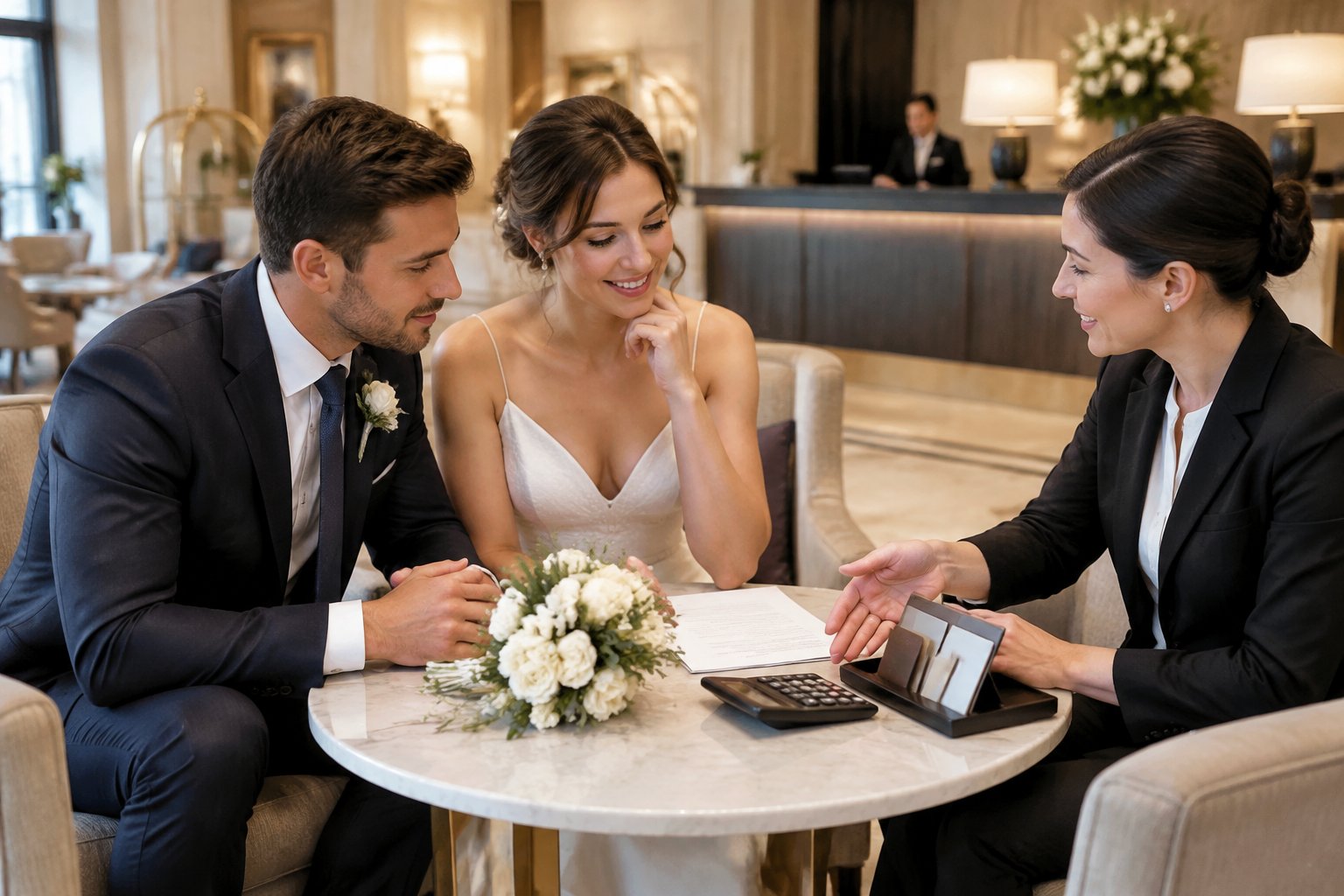
Your upfront cost may be zero for a courtesy block, while a contracted block can include deposits or charges tied to room minimums. Guests pay the room rate for their own reservations, and your possible costs depend on the contract, fees, and booking results.
Group Rates, Taxes, and Additional Fees
The hotel quotes a group rate based on the dates, room types, and number of rooms requested. Compare that rate with the hotel’s public price for the same dates and room type, and ask whether the group rate includes taxes or other charges.
Ask about parking, resort fees, breakfast, and any other costs guests will see at checkout. Share the full expected price with guests so they can compare their options.
Deposits, Minimums, and Unused-Room Charges
Courtesy blocks often let you reserve rooms without a deposit, while a contracted block may require a deposit or a minimum number of bookings. Your agreement should spell out when payments are due and how the hotel handles rooms that guests leave unused.
Before you sign, ask for a sample calculation of any shortfall charge. Confirm whether the hotel applies it to rooms, room nights, or another measure, and make sure the calculation matches the attrition terms in the agreement.
Perks to Ask About During Negotiations
Ask whether the hotel can include useful extras in the group offer, such as a suite upgrade, a welcome area, or discounted parking. You can also ask about a shuttle, complimentary breakfast, or an extended booking deadline.
Focus on perks your guests will use, and get every agreed detail in writing. A clear list of included benefits helps guests know what the rate covers.
How Do You Choose a Hotel and Book the Block?
Compare hotel location, guest price, room options, and contract terms before you agree to a block. Written proposals make it easier to weigh the full offer, including any possible charges.
Compare Hotels Near the Venue at Different Price Points
Choose hotels that are easy for guests to reach from the venue, with a range of prices if your guest list includes different budgets. Check travel time, parking, breakfast options, accessibility, and whether the hotel has enough rooms for your estimated demand.
If you plan to arrange transportation, consider how the hotel’s location fits the route and schedule. A lower nightly rate may come with added fees, so compare the total cost guests will pay.
Request and Compare Written Proposals
Contact the hotel’s group sales or reservations team and share your wedding date, room count, room types, and the nights you need. Ask each hotel to provide its group rate, cutoff date, deposit terms, and any minimum booking requirement in writing.
Compare the full terms side by side. If a rate or perk is unclear, ask the hotel to explain it before you decide.
Review the Agreement Before Signing
Read the contract closely and check the room count, dates, group rate, payment schedule, cancellation rules, and attrition clause. Confirm how the hotel will track reservations and when unused rooms return to general availability.
Ask for edits or clarification in writing, then keep a copy of the signed agreement. If a clause could create a large bill, consider having a wedding planner or attorney review it before you commit.
How Should You Share the Block Details With Guests?
Give guests the booking link or group code, the hotel’s location, the rate, and the deadline in one clear message. Send the information early enough for guests to make plans, then follow up before the cutoff.
Set and Communicate the Booking Deadline
Ask the hotel for the exact cutoff date and confirm whether rooms remain available after it. Tell guests to book before that date because the hotel may release unreserved rooms or change the rate afterward.
Set your own reminder ahead of the hotel’s cutoff so you have time to check bookings and ask about more rooms if needed.
Share the Link on Your Wedding Website and Invitations
Add the link or group code to your wedding website, along with the hotel address, dates covered, rate details, and booking deadline. You can include a short note on an invitation details card that directs guests to the website for lodging information.
If you list more than one hotel, make it easy for guests to compare price, distance, and transportation options. Keep the block information current if the hotel changes availability or extends the deadline.
Send Reminders and Confirm Final Arrangements
Send a friendly reminder a few weeks before the cutoff, especially to guests who have said they need a room. If guests have questions about their reservations, direct them to the hotel’s booking contact so the hotel can confirm their details.
After the cutoff, check with the hotel about the final room count, any remaining inventory, and arrival arrangements. Update your wedding website if the original booking link or rate is no longer available.