
How Many Hotel Rooms Should I Block for My Wedding? A Guide
For your wedding, estimate rooms by counting out-of-town guests who need overnight lodging, grouping them by household, and predicting how many will book your hotel room block. Start with a conservative estimate, then choose block terms that let you add rooms as demand becomes clear.

Your guest count gives you a starting point, but your expected attendance and guests’ travel plans help you make a better estimate. You can estimate how many guests will come and use that number to begin listing who may need a place to stay. Then compare hotel options and ask about flexible terms before you commit.
How Do I Estimate Rooms From Out-of-Town Guests?

Start with the guests who need lodging, convert them into likely room-sharing groups, then estimate how many will choose your block. Your estimate will be more useful when it reflects your guest list and travel plans, not a blanket percentage.
Start With Guests Who Need Overnight Lodging
Make a list of guests who live too far away to travel home after the wedding. Include people who are flying in, guests with a long drive, and anyone you know will want to stay close to the celebration. Local guests may still book a room, but count them separately so they do not inflate your core estimate.
Next, group guests by likely room. A couple sharing one room counts as one room, and a family may need one or two rooms depending on its size and preferences. If you expect about 50 out-of-town guests, for example, and most will share, your initial estimate could be around 25 rooms.
Adjust that number for guests staying with family, booking vacation rentals, or traveling alone. A closer look at what percentage of out-of-town guests may come to your wedding can also help you build a realistic attendance estimate.
Adjust for Attendance, Room Sharing, and Block Uptake
Not every invited guest will attend, and not every attendee who needs lodging will book through your block. Use your RSVP forecast, then ask guests about their plans if you can. Your relatives may know which family members plan to stay together, while your wedding party may already have lodging in mind.
Apply a block-uptake estimate to the rooms you expect guests to need. For example, if your list points to 25 rooms and you expect about two-thirds of those guests to use the block, begin with roughly 17 rooms. Treat this as a planning estimate, since guests may book with points, choose another hotel, or stay with friends.
Use a Wedding Room Block Calculator as a Cross-Check
A wedding room block calculator can help you check your math using guest count, travel patterns, room sharing, and expected attendance. Enter your best estimates, then compare the result with your household-by-household list. If the two numbers differ, review who needs a hotel and how many guests are likely to share.
A calculator provides a starting point, not a promise of bookings. For a destination event, a tool for estimating guest count for a destination wedding can help you refine the attendance figure before you set the room count.
How Wedding Type and Guest Mix Shift the Estimate
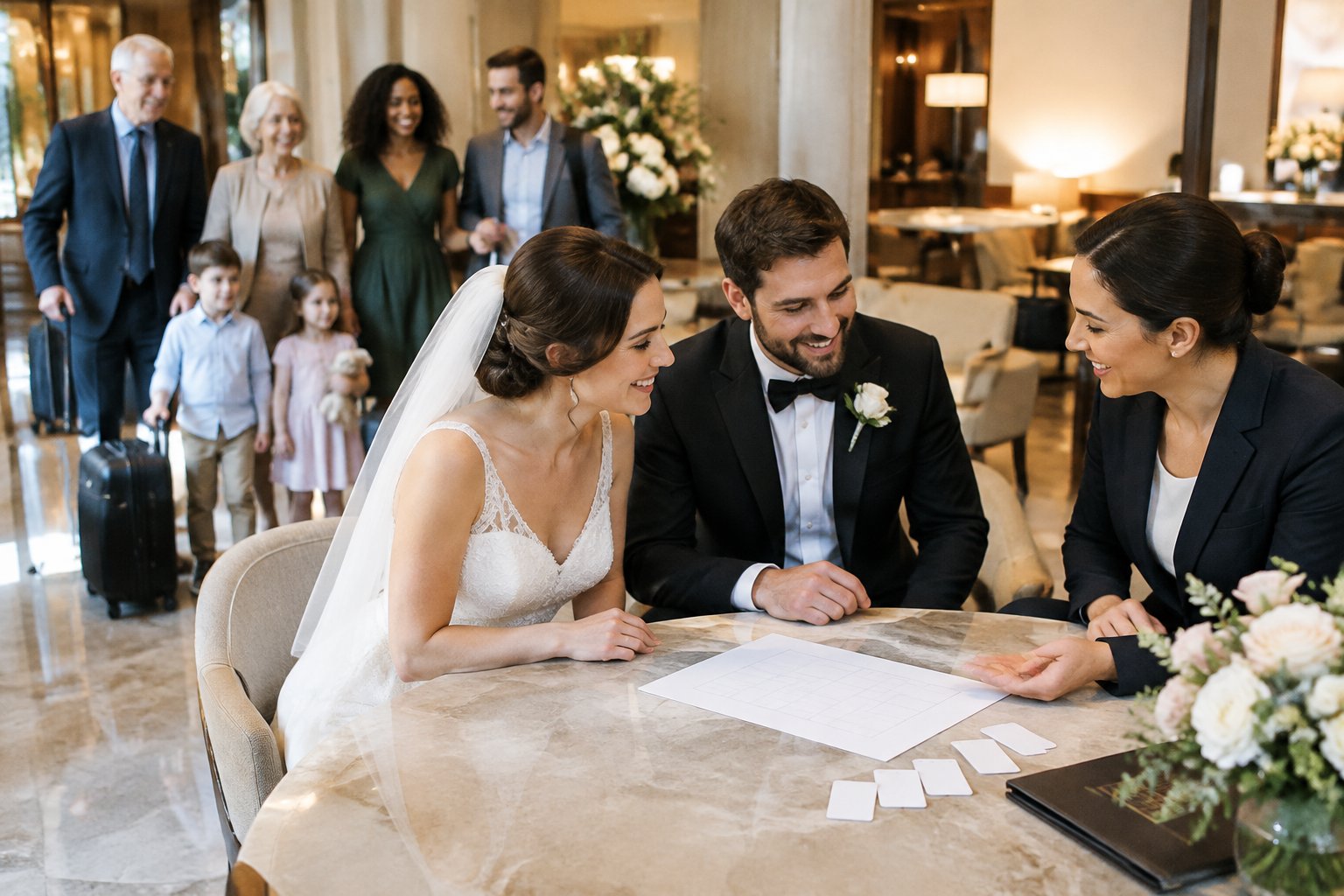
Your wedding location and guest mix shape how many out-of-town guests need rooms and how many nights they may stay. Use your travel details to adjust the estimate before you ask hotels for rates.
Compare Local, Semi-Destination, and Destination Weddings
For a local wedding, many guests may live nearby and drive home, so your block can focus on distant relatives and friends. A semi-destination wedding brings more guests from outside the area, while a destination wedding often means most attendees need lodging for more than one night.
Consider distance and the event schedule together. A guest who lives a few hours away may stay for a late reception, while a guest flying in may need a room for several nights. If you have a welcome event or next-day brunch, include those dates when you ask about availability.
Account for Couples, Families, and Solo Travelers
Your room count depends on how guests travel. Couples and friends may share, families may need extra space, and solo travelers usually need their own room. Use what you know about each group instead of dividing the full guest count by two.
Keep a simple list with a rough room estimate beside each household. Mark guests who have family nearby or who may share a rental. That gives you a clearer range before you request a block.
Consider Alternative Lodging and Multi-Day Events
Guests may choose vacation rentals, stay with relatives, or book at a different hotel. If your venue is in an area with many lodging choices, expect some guests to spread out. A small town with limited hotels may push more guests toward the properties you recommend.
For a multi-day celebration, estimate rooms by night. Your busiest night may be the wedding night, while fewer guests stay for an extra night. Ask hotels whether the room count can differ across dates so you are not committing to the same number every night.
How Do Block Terms Affect the Number to Reserve?

Your contract terms set the financial risk behind your hotel room block. A flexible courtesy block can support a cautious estimate, while a contracted block calls for closer attention to the minimum commitment and rules for unused rooms.
Choose Between a Courtesy Block and a Contracted Block
A courtesy block holds rooms at an agreed rate until a cutoff date, then releases unbooked rooms without charging you for them. A contracted block may offer a firm room commitment or other terms, but it can also make you responsible for some rooms guests do not book.
Ask each hotel which block types it offers and whether a courtesy block is available for your dates. Guests generally pay for their own accommodations, so make the booking details easy to find; you can also review who pays for hotel rooms at a wedding as you plan your guest information.
Understand Minimum Commitments and Attrition Clauses
A minimum commitment is the number of rooms you agree to fill or pay for under the contract. An attrition clause sets how much of the block your guests must book to avoid a penalty. The exact terms vary by hotel, so ask how the hotel calculates the shortfall and whether it measures bookings across all nights or night by night.
Before signing, work out the cost if bookings fall below the required level. Compare that possible bill with the value of the group rate and any included benefits. Choose a contracted block only when your estimate and budget support the commitment.
Check the Allowable Shrinkage in the Contract
Allowable shrinkage is the portion of your contracted rooms that can go unbooked without a penalty. A contract might let you reduce or leave a set share of the block unused, but the details depend on the hotel’s terms.
Check whether the allowance applies to the full stay or each night separately. Also ask when you can reduce the block, how to request a change, and whether rooms booked directly with the hotel count toward your pickup. Get each answer in writing before you agree to the room count.
How Can I Limit Financial Risk if Rooms Go Unbooked?

You can limit your risk by starting with a cautious room count and agreeing on clear ways to adjust it. Track bookings against your estimate, then act before the hotel’s cutoff or review dates.
Start Conservatively and Add Rooms as Demand Builds
If your contract has an attrition clause, base the initial block on likely bookings, not the maximum number of guests who might attend. A smaller block is easier to manage when your attendance estimate is uncertain. Ask the hotel how quickly it can add rooms if guests book early and availability remains.
Keep your estimate by night, since demand may rise on the wedding night and fall on other dates. If you have a courtesy block, ask whether you can increase it as guests reserve rooms.
Negotiate a Mitigation Clause and a Clear Cutoff Date
A mitigation clause gives you credit when the hotel resells rooms you were responsible for under the contract. Ask how the hotel tracks resold rooms and how that credit appears on your final bill. A clear cutoff date also tells guests when unbooked rooms return to the hotel’s general inventory.
If the hotel offers review dates, ask to reduce your block at those points based on actual pickup. Put the dates, room counts, and terms in writing so you know when you can make changes.
Track Bookings and Remind Guests Before the Deadline
Ask the hotel for regular pickup reports, then compare reservations with your estimate. A gap may mean guests have booked elsewhere, have not reserved yet, or do not need a room. If you can, ask guests where they plan to stay so you can distinguish late bookings from lower demand.
Share the booking link on your wedding website and send a friendly reminder well before the cutoff. Guests may appreciate a prompt to reserve while the group rate is available.
When Should I Add Hotels or Expand the Block?
Book early for high-demand dates, and expand your hotel room block when booking activity supports it. A second hotel can give out-of-town guests another price point and help you serve more guests without placing every room in one contract.
Book Earlier for Peak Dates and Destination Weddings
Start contacting hotels well ahead of your wedding if your date falls during a busy season, a major local event, or a destination weekend. Early conversations give you more time to compare availability and block terms. If your guests need travel details before making plans, share your date with them using guidance on when to send save-the-dates.
Ask about room availability across every night you need, including the night before the wedding. Confirm the rate, cutoff date, and any minimum-stay rules before you post booking information.
Offer Guests Options at Different Price Points
A second hotel can help guests choose a stay that fits their budget and preferences. Look for options with practical differences, such as distance from the venue, breakfast, or parking costs. Share the full price details you receive so guests can compare the stay, not just the nightly rate.
You can ask each property for a smaller block if demand is uncertain. Keep track of bookings by hotel so you can see which option guests prefer.
Ask the Hotel to Add Rooms When Pickup Is Strong
Contact the hotel when bookings approach the room limit or guests report that rooms are hard to reserve. Ask whether it can add rooms at the group rate and whether the current cutoff date still applies.
Hotels control availability, so request confirmation before telling guests that extra rooms are secured. Check pickup before each contract review date and keep a record of room counts by night.
That gives you clear numbers when you ask for more rooms or adjust the block.