
How Much Does Wedding Catering Cost? 2026 Price Guide
Wedding catering costs about $80 per guest on average in the U.S. in 2026, with a planning range of roughly $50 to $150 per person before package-specific extras. For 100 guests, that midpoint works out to about $8,000, though your quote depends on the menu, service, drinks, rentals, and fees included.

To set a useful budget, check whether each quote covers food alone or a full reception service. Ask caterers for itemized estimates based on your guest count and venue, then compare the final totals before you book.
What Is the Average Cost Per Guest?
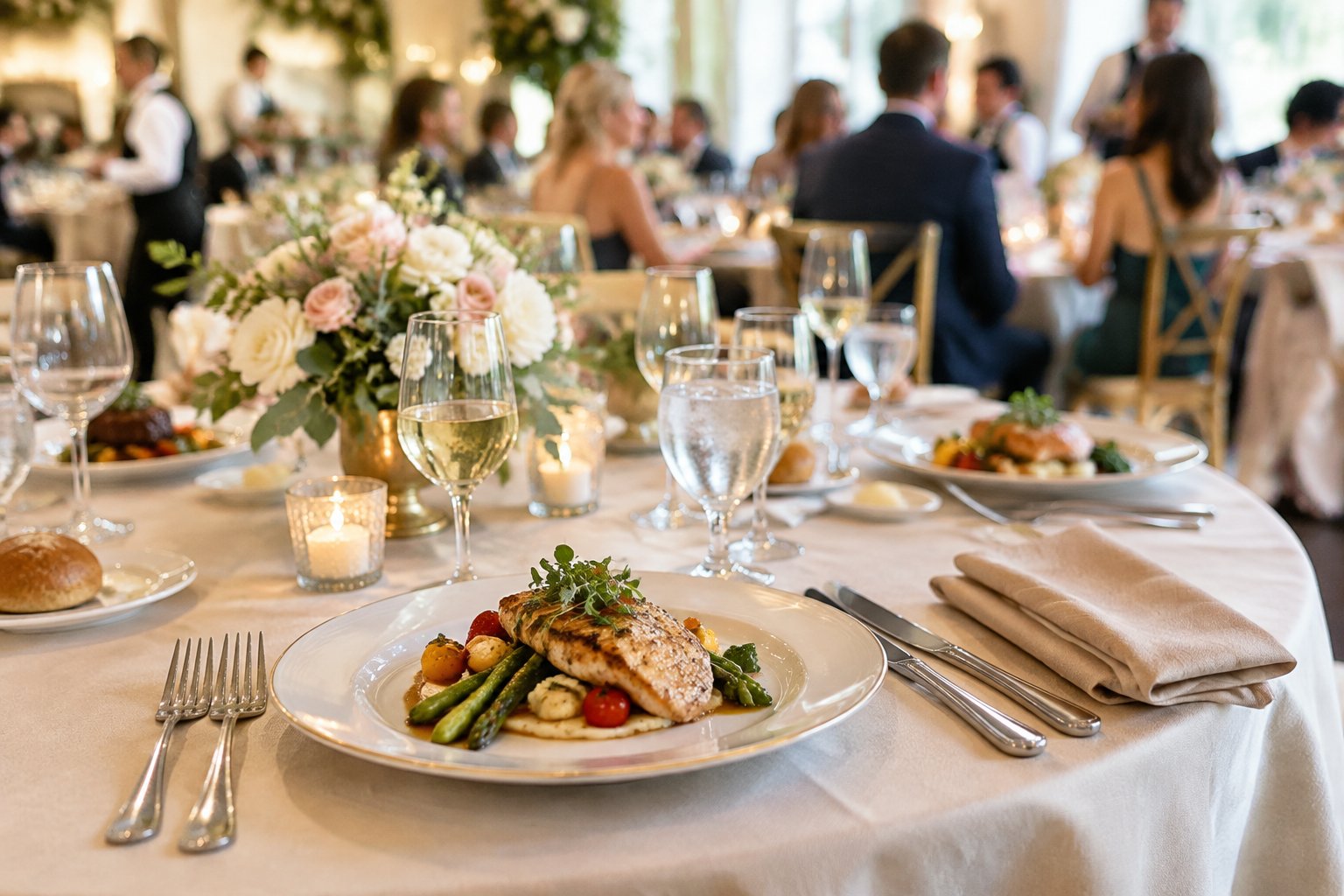
A practical U.S. wedding catering cost estimate is about $50 to $150 per guest, with $80 as a useful midpoint for 2026 planning. Your wedding catering cost per person can sit outside that range when you choose premium ingredients, add drinks, or need extra equipment and staff. Regional prices and venue rules also shape wedding catering prices.
How Do Food-Only and Full-Service Prices Compare?
A food-only estimate covers the meal and preparation, while full-service pricing can include staff, setup, cleanup, rentals, and beverage service. A lower per-person quote may cover fewer parts of the event, so compare the included services before you judge the price.
For example, a menu quote of $65 per person for 100 guests starts at $6,500 for food. If the full-service proposal adds staff and rentals, your final bill will be higher. Ask each caterer to show those costs as separate line items.
As you set your budget, compare the cost of a wedding meal per person with the package details. A multi-course menu also changes the estimate, so consider how a three-course wedding meal fits your plans.
What Does a Typical Per-Person Estimate Include?
A per-person estimate may cover the menu and food preparation, while staffing, beverages, rentals, tax, and service charges appear separately. Your written proposal should say which items are included and how the caterer calculates each added cost.
Check for server and bartender hours, plates, glassware, linens, and serving equipment. Ask whether vendor meals, cake service, and cleanup are part of the package. With those details in hand, you can calculate the expected total instead of relying on the menu price alone.
How Does Guest Count Change the Total?
Your guest count drives the largest variable part of your wedding catering cost breakdown because each added guest needs food and may affect staffing and rentals. Using the $80-per-person midpoint gives you a quick starting estimate; fixed fees and package details can shift the final amount.
What Could Catering Cost for 50, 100, or 150 Guests?
At $80 per person, a simple estimate is $4,000 for 50 guests, $8,000 for 100, and $12,000 for 150. A broader $50-to-$150 planning range gives you a clearer sense of how different menus and service levels affect the budget.
| Guest count | At $50 per guest | At $80 per guest | At $150 per guest |
|---|---|---|---|
| 50 | $2,500 | $4,000 | $7,500 |
| 100 | $5,000 | $8,000 | $15,000 |
| 150 | $7,500 | $12,000 | $22,500 |
These figures are starting estimates before any separate fees. Give caterers the same expected headcount when you request quotes, and update the number before the contract deadline. If you are still building your list, use a method to estimate how many guests will come before you settle on a package.
How Do Minimums and Fixed Fees Affect Small Weddings?
A small reception can have a higher per-person total when a caterer sets a minimum spend or charges fixed fees for delivery, staffing, or equipment. For example, a $1,000 staffing fee has a larger effect on a 30-person event than on a 100-person event.
Ask whether the minimum applies to food, the full package, or the event total. Confirm any room, kitchen, or travel charges with the venue and caterer before you sign.
How Do Service Styles Affect the Price?

Your service style affects labor, food portions, and how guests move through the reception. Buffet catering, plated meals, food stations, and drop-off catering each call for a different setup, so compare the full proposal and event flow.
How Does Buffet Catering Compare With Plated Service?
A buffet gives guests a choice of dishes and portions, while plated service delivers a planned meal to each table. A buffet may need fewer table servers, while plated service calls for coordinated serving and clearing. Food quantities and staffing plans shape the price for both styles.
| Feature | Buffet | Plated service |
|---|---|---|
| Guest experience | Guests choose dishes | Guests receive a set meal |
| Meal pace | Flexible | Set by serving schedule |
| Staffing focus | Replenishing the buffet | Serving and clearing tables |
| Food planning | Plan for guest-selected portions | Plan by meal choice and RSVP |
A buffet may fit a relaxed reception where guests enjoy choosing their meal. Plated service suits a set schedule with speeches or other planned moments during dinner. Ask for each style to be priced with the same menu so you can compare the labor and service plan.
When Do Food Stations or Drop-Off Catering Make Sense?
Food stations work well when you want guests to mingle and choose from several dishes. Each station adds setup needs, and staffed stations may need an attendant. A smaller number of focused stations can keep the menu easy to manage.
Drop-off catering delivers prepared food for you or your venue team to serve. It can suit a casual event when the venue allows outside food and you have a clear plan for setup, holding, and cleanup. Before choosing, ask about delivery timing and what equipment the meal requires. Knowing how wedding caterers work can help you ask useful questions about staffing and event logistics.
Which Extras Can Raise the Final Bill?
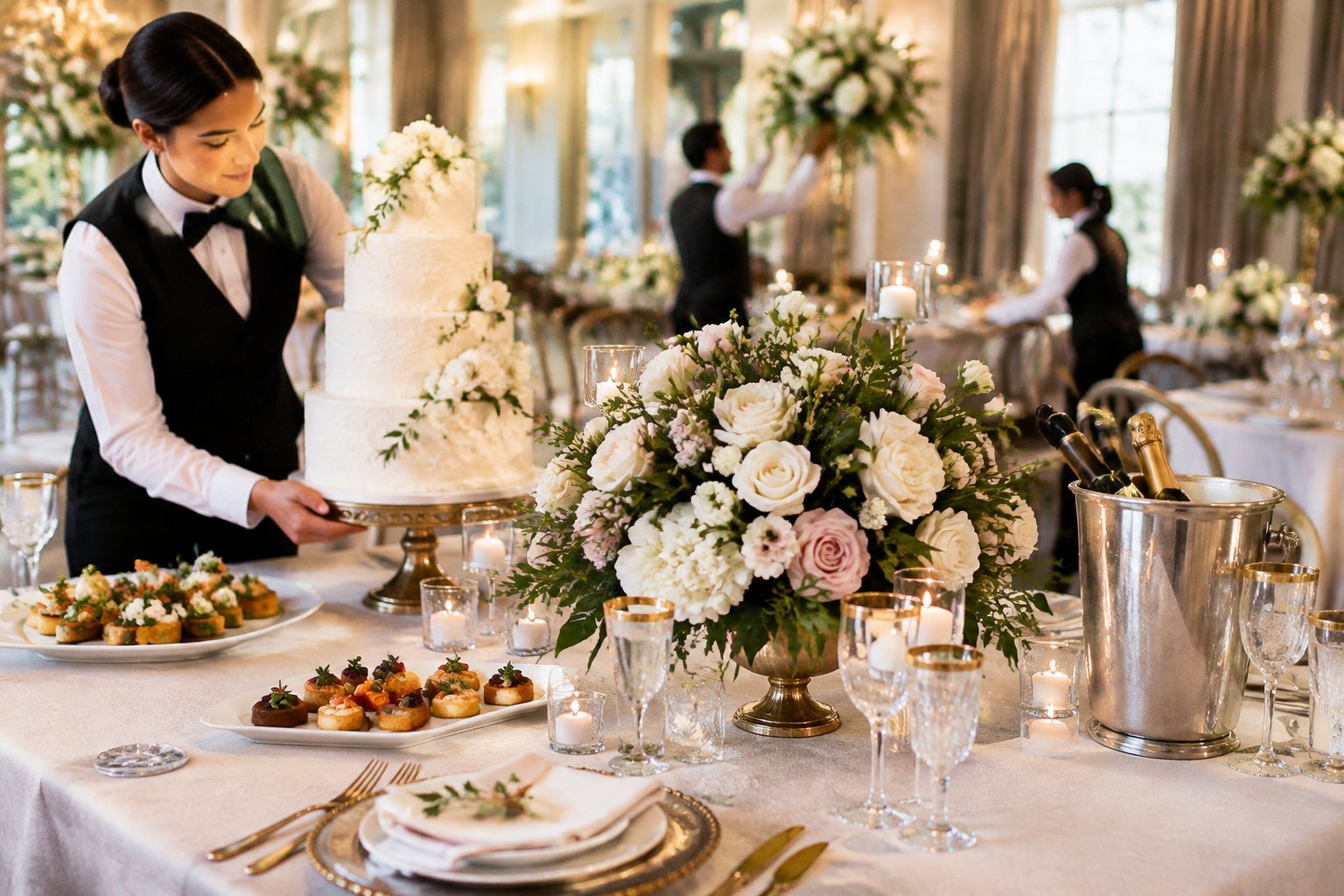
Drinks, rentals, service charges, and extra staff hours can push your final bill above the food estimate. Ask wedding caterers to list each extra and explain whether it is a flat fee, per-person charge, or hourly rate.
How Much Can an Open Bar Add?
An open bar adds costs for alcohol, mixers, bartenders, glassware, and the service period. Your total depends on the drink selection and pricing method, such as a per-person package or charges based on consumption. Request estimates for the same number of service hours and the same beverage list.
You can keep the selection focused by offering beer and wine, or adding one signature cocktail. Confirm whether nonalcoholic drinks, ice, and bar setup are included in the estimate.
What Are the Differences Between an Open Bar and a Cash Bar?
With an open bar, you pay for the drinks your guests receive under the caterer’s pricing plan. With a cash bar, guests pay for their own alcoholic drinks. The caterer may still charge you for bartenders, setup, or other bar services, so ask which costs remain yours.
| Bar setup | Who pays for drinks? | Costs to confirm |
|---|---|---|
| Open bar | You or the hosts | Drink package or consumption rate |
| Cash bar | Guests | Bartender, setup, and service fees |
Which Fees Should You Check in the Contract?
Review service charges, gratuity, tax, delivery, travel, rentals, and overtime before signing. A service charge may not include staff tips, so ask how the fee is used and whether gratuity is separate.
Check for a cake cutting fee, vendor meals, kitchen access charges, and extra-hour rates. If you plan to bring your own alcohol, ask about corkage fees. Confirm that the contract names the guest-count deadline and explains how changes affect your total. If you are budgeting for dessert too, ways to save money on your wedding cake can help you plan that cost.
How Can You Save on Wedding Catering?
You can lower your wedding catering bill by focusing the menu, choosing a service format that fits your venue, and comparing itemized quotes. Start with your guest count and priorities, then ask the caterer to price a few clear options.
Which Menu and Service Choices Keep Costs Down?
Seasonal ingredients and simpler menu choices can reduce food costs while still giving guests a satisfying meal. Choose one or two main dishes, and ask the caterer to meet common dietary needs with shared menu options where possible.
A buffet or family-style meal may reduce some table-service labor, while a casual menu can keep ingredient costs in check. A smaller appetizer selection and one dessert option can also help you focus spending on the meal. For more ideas, consider affordable foods for a wedding and ways to keep food costs down at a wedding.
How Can You Compare Caterer Quotes Fairly?
Give each caterer the same guest count, menu, service style, event hours, and beverage plan. Then compare the estimated final totals, including staffing, rentals, delivery, service charges, and taxes.
Ask questions about unclear line items and request written revisions when you change the menu or headcount. You can also use guidance on choosing the right wedding caterer to weigh service details alongside the price.
Before booking, confirm the final guest-count deadline, payment dates, and overtime rate in the contract.